Artwork
Trailing Arbutus
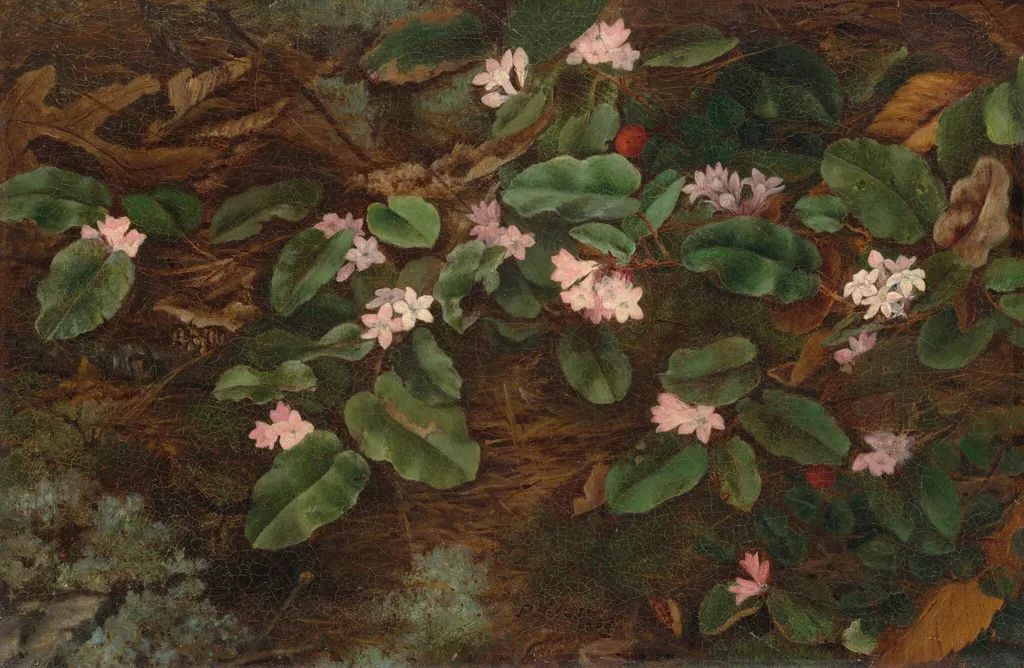
Trailing Arbutus is an oil painting by the American Folk Art artist Fidelia Bridges. It dates from 1863 and is held in the collection of the National Gallery of Art.
- Inscription
- Inscribed:lower center: F. Bridges / 1863
About this work
Subject & Meaning
5 cm and is executed in oil on wood, a format documented in the National Gallery of Art's provenance records.
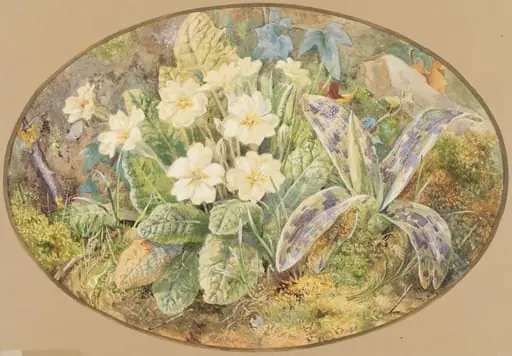
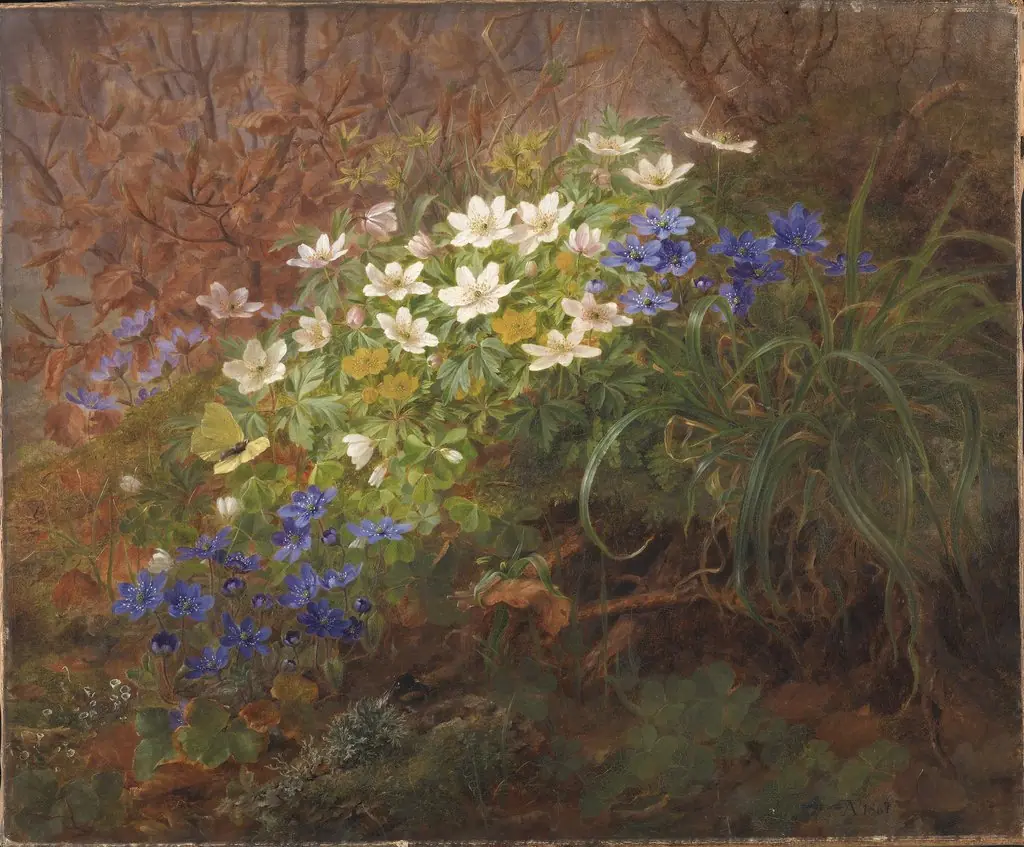
Trailing Arbutus depicts a single sprig of wild arbutus blossom, a plant associated in 19th-century American symbolism with early spring, renewal, and feminine modesty. Bridges renders the flower in delicate oil tones to emphasize its fragile presence, linking natural observation with an idealized notion of purity and seasonal rebirth. The work therefore functions as a visual metaphor for the emergence of hope after winter, reflecting contemporary aesthetic values that celebrated the quiet beauty of native flora.
The painting was created in 1863 by Fidelia Bridges, an American watercolorist known for her botanical subjects, and entered the National Gallery of Art collection in 2018 as a gift from Abigail Booth Gerdts. Its subject aligns with Bridges' broader iconographic focus on modest, ephemeral blossoms that carry symbolic weight related to domestic virtue and natural cycles.
Trailing Arbutus measures 19.7 cm by 30.5 cm and is executed in oil on wood, a format documented in the National Gallery of Art's provenance records.
Technique & Style
Executed in 1863, the work is painted in oil on a wood panel support measuring 19.7 cm in height by 30.5 cm in width. The handling is delicate, emphasizing fine botanical detail with smooth, blended passages and careful attention to the translucent petals and veined leaves of the trailing arbutus. Stylistically, the composition adheres to the mid-19th-century American still-life tradition, combining naturalistic observation with restrained compositional balance.
History & Provenance
Trailing Arbutus is an 1863 oil on wood painting by Fidelia Bridges. It entered the National Gallery of Art collection through a gift in 2018 from William H. Gerdts and Abigail Booth Gerdts, who had acquired it from Godel & Co., New York, following its sale at Sotheby's in New York on 10 October 2007 (catalogue no. 128, titled _Primroses_). The work is housed at the National Gallery of Art in Washington, D.C.
The work is held by the National Gallery of Art, Washington, D.C., where it entered the collection in 2018 as a gift from William H. and Abigail Booth Gerdts.
It is recorded with accession number 2018.15.1. The painting was previously sold at Sotheby’s, New York, on 10 October 2007 (lot 128), then acquired by Godel & Co., New York, for the donors.
Overview
Created in 1863, Trailing Arbutus is an oil painting on wood by American artist Fidelia Bridges. The work presents a modest branch bearing oval green leaves and clusters of five‑petaled light pink blossoms, set against a muted brown ground that hints at earth tones and subtle foliage. The surface bears a cracked texture, adding a tactile quality to the composition.
Context
The painting emerges from a mid‑19th‑century American art scene that valued direct study of nature. Bridges’ focus on botanical subjects aligns with contemporary scientific illustration trends, while her modest, folk‑art approach situates the work within a broader movement that sought to document the natural world with clarity and modesty.
Own this work as a print
Artist & collection

Artist
Fidelia Bridges (May 19, 1834 – May 14, 1923) was an American artist of the late 19th century.