Artwork
Orpheus and Eurydice
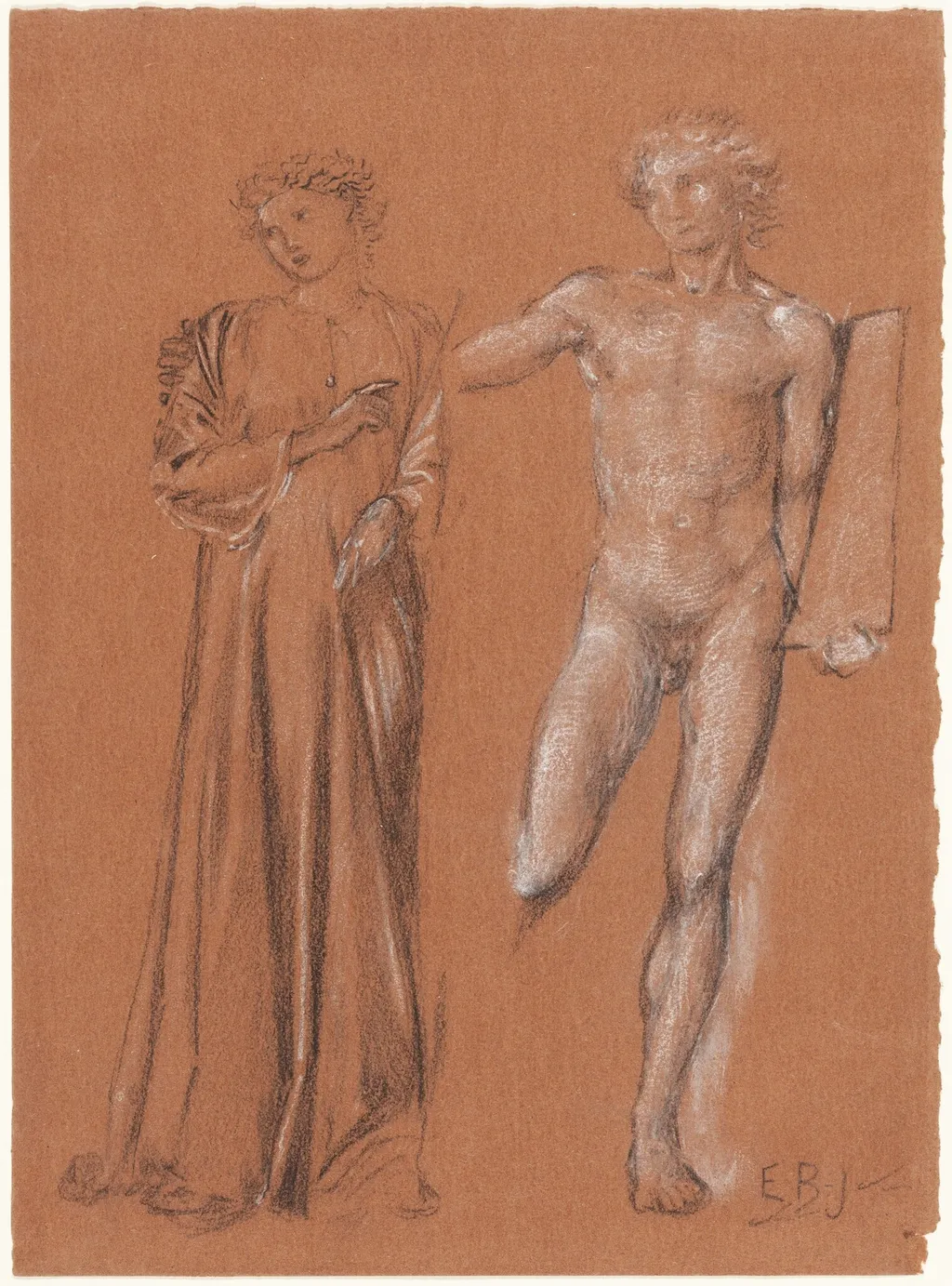
Orpheus and Eurydice is a graphite drawing by the Romanticist artist Edward Coley, Sir Burne-Jones. It dates from 1866 and is held in the collection of the National Gallery of Art.
- Inscription
- Inscribed:lower right in black chalk: E B-J
About this work
Overview
Orpheus and Eurydice is a drawing created by Sir Edward Coley Burne-Jones in 1866, rendered in black and white chalk with graphite on brown paper.
Subject & Meaning
The drawing depicts a scene from ancient myth, where Orpheus glances back at Eurydice as they exit the Underworld, a moment that seals their fate. The figures' sorrowful and yearning expressions convey the emotional weight of the narrative.
Technique & Style
The work showcases Burne-Jones's characteristic dreamy quality, achieved through the use of chalk and graphite on brown paper, which lends a soft, melancholic atmosphere to the scene.
Own this work as a print
Artist & collection


![Two Nude Youths [recto], by Federico Barocci](https://artifactworldgallery.com/img/federico-barocci--two-nude-youths-recto--a057469b757ac46c-w320.webp) Two Nude Youths [recto]
Two Nude Youths [recto] Study of a Man's Figure, Holding Rod behind Back
 Study of a Standing Male Nude, with a Study of Head in Three-Quarter Profile
 A woman approaching a kneeling man
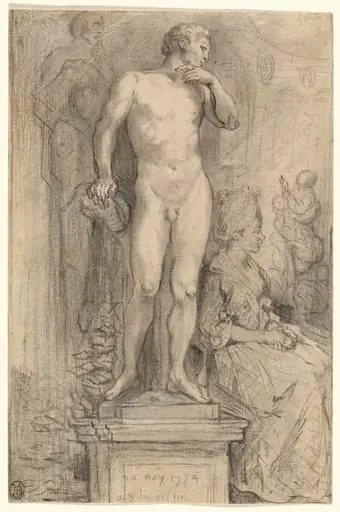 Rendezvous in the Palais Royal
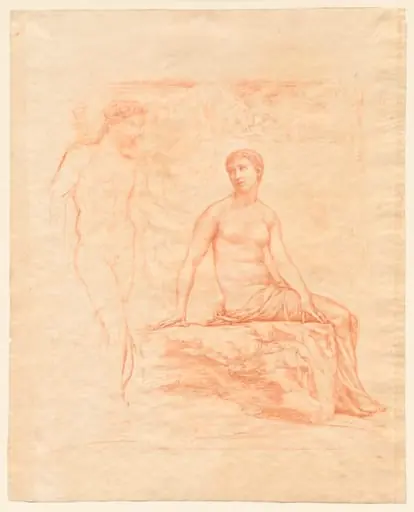 Bacchus and Ariadne
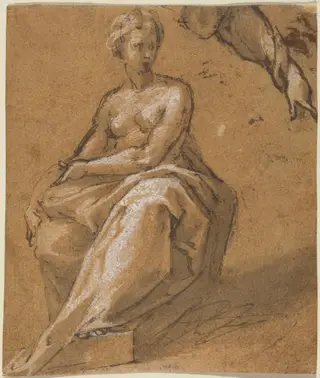 Seated Nude with Drapery
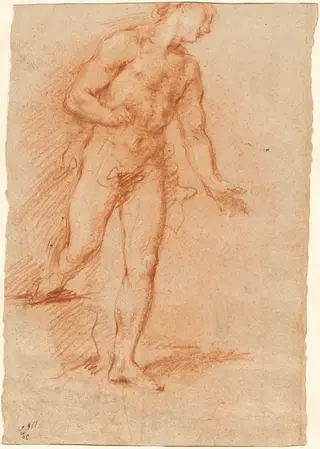 Male Nude
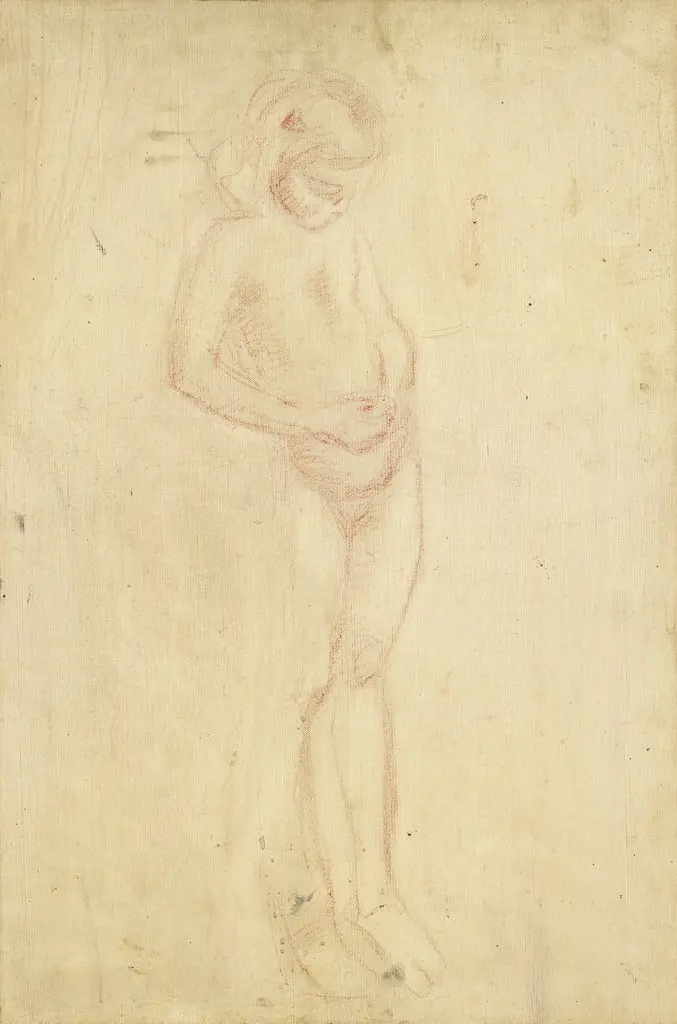 Naked Small Girl
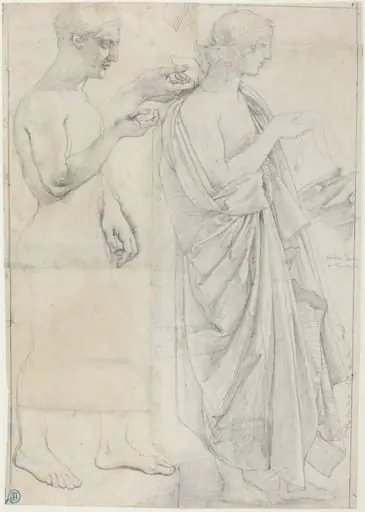 Two Studies of Virgil
![Standing Draped Man [recto], by Jacopo da Empoli](https://artifactworldgallery.com/img/jacopo-da-empoli--standing-draped-man-recto--b3cdc92a1134339d-w320.webp) Standing Draped Man [recto]
Standing Draped Man [recto]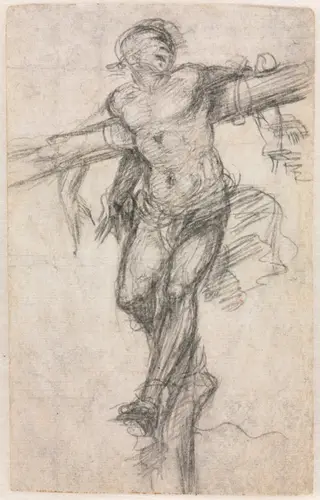 The Unrepentant Thief