Artwork
Exaltation of the Holy Cross; St. Aper; St. Euphemia; St. Lambert
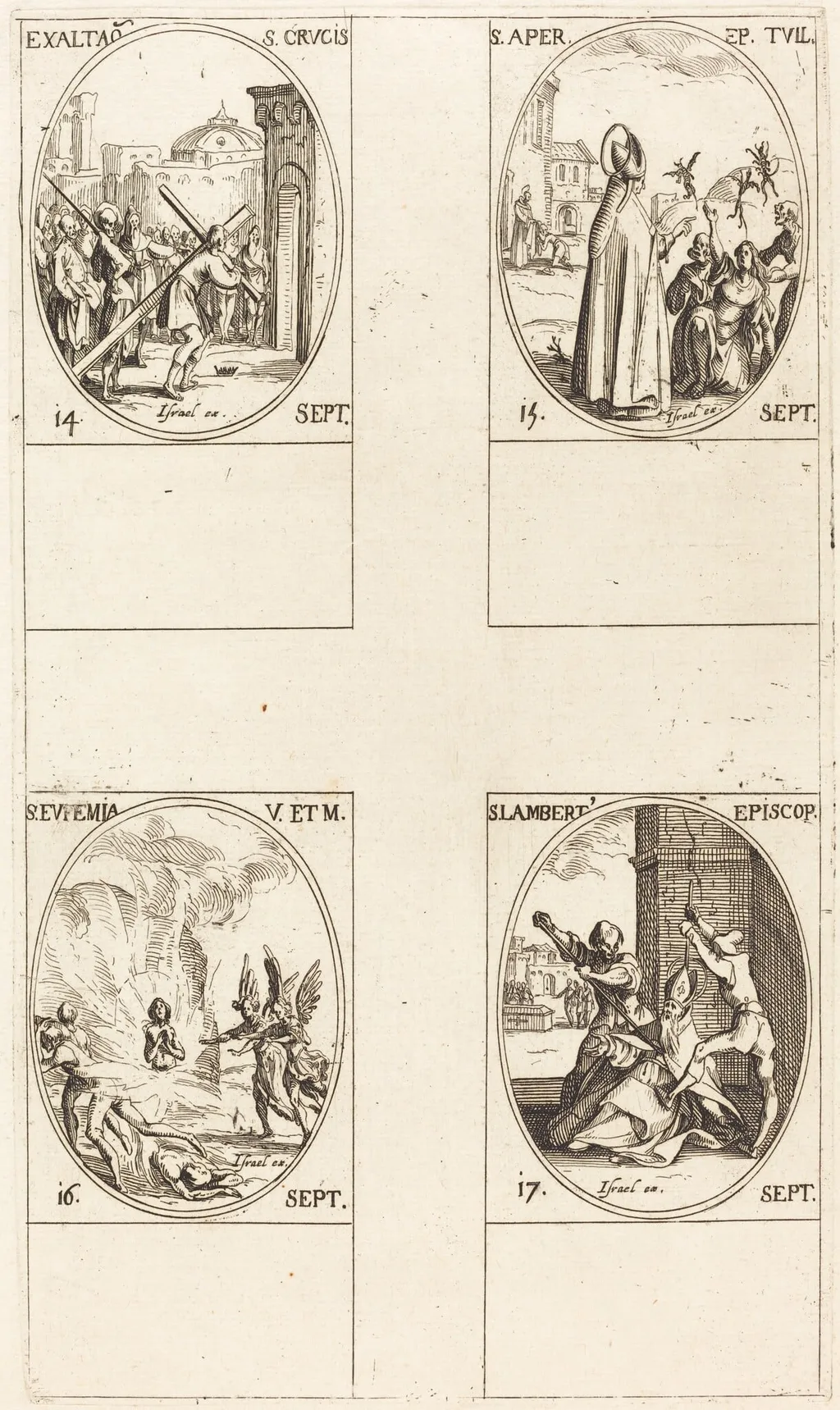
Exaltation of the Holy Cross; St. Aper; St. Euphemia; St. Lambert is an ink print by the Baroque artist Jacques Callot. It dates from 1634 and is held in the collection of the National Gallery of Art.
About this work
Overview
Around 1634, Jacques Callot, a prolific French printmaker from Lorraine, produced a small composite etching on laid paper that brings together four distinct religious vignettes. The work, titled Exaltation of the Holy Cross; St. Aper; St. Euphemia; St. Lambert, arranges four oval scenes in a tight grid, each rendered in fine, black‑and‑white line work typical of Callot’s meticulous approach.
Subject & Meaning
The final scene presents a robed figure being lifted upward, evoking the ascension or intercession associated with St.
The upper left panel shows a procession bearing a tall cross, illustrating the exaltation of the Holy Cross. Adjacent, a robed saint holds a model of a building, likely referencing St. Aper’s patronage of architecture. The lower left depicts an angel overseeing a woman near a burning tower, a visual cue to the martyrdom of St. Euphemia.
The final scene presents a robed figure being lifted upward, evoking the ascension or intercession associated with St. Lambert.
Technique & Style
Executed as an etching, the composition relies on delicate incised lines that convey dense crowds and intricate architectural details. Callot’s use of laid paper enhances the texture, while the tight oval frames create a sense of intimacy and narrative focus. The precision of the line work reflects his reputation for observational depth within the baroque print tradition.
History & Provenance
Part of Callot’s extensive output of more than 1,400 prints, this piece exemplifies his engagement with religious subjects alongside his better‑known military and courtly scenes. The work likely circulated among collectors of devotional imagery in the mid‑17th century, though specific ownership records remain scarce.
Context
During the early 1630s, the Counter‑Reformation encouraged vivid visual representations of saints and holy events. Callot’s composite format aligns with contemporary devotional prints that combined multiple narratives to educate and inspire viewers, while his technical skill placed him among the leading old‑master etchers of the period.
Own this work as a print
Artist & collection
Artist
Jacques Callot (French: ; c. 1592 – 1635) was a baroque printmaker and draftsman from the Duchy of Lorraine. He is an important person in the development of the old master print. He made more than 1,400 etchings that…

 Holy Family at supper
 Restoration of the Aqueduct at Pisa
 Restoration of the Aqueduct at Pisa
 Square in Paris with Many Figures
 Square in Paris with Many Figures
 Horsemen Attacked by Robbers
 HOW WILL A COVERED PART BE CORRECTED?HOW WIKA A COVERED HEART DEED CORRECTED?
![Christ Walking on the Water [second plate], by Jacques Callot](https://artifactworldgallery.com/img/jacques-callot--christ-walking-on-the-water-second-plate--2069f3bfe4cb2126-w320.webp) Christ Walking on the Water [second plate]
Christ Walking on the Water [second plate]
- The Nativity; St. Stephen; St. John; Holy Innocents
 St. Giles; St. Lupus; St. Anne; St. Nonnosus
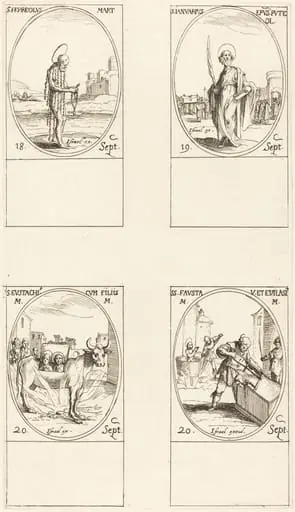 St. Ferreolus; St. Januarius; St. Eustachius & his Children; Sts. Fausta & Evelasius
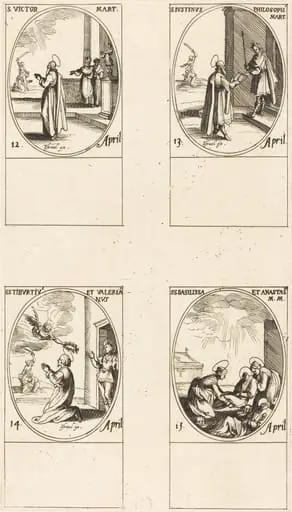 St. Victor; St. Justinus; Sts. Tiburtius and Valerianus; Sts. Basilissa and Anastasia
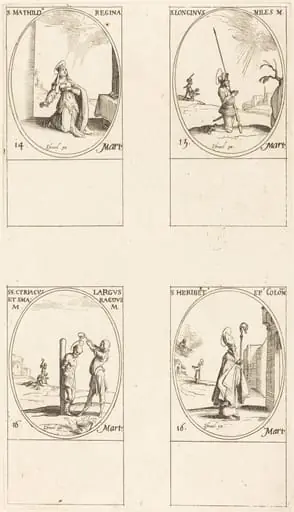 St. Matilda; St. Longinus; St. Cyriacus; St. Heribert
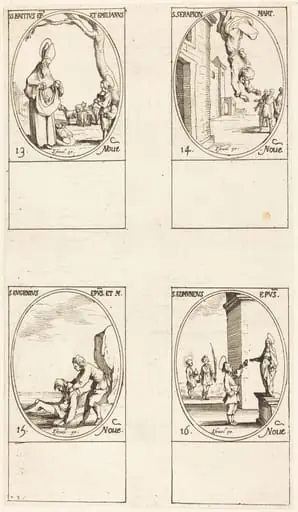 St. Brice; St. Serapion; St. Eugenius; St. Edmund
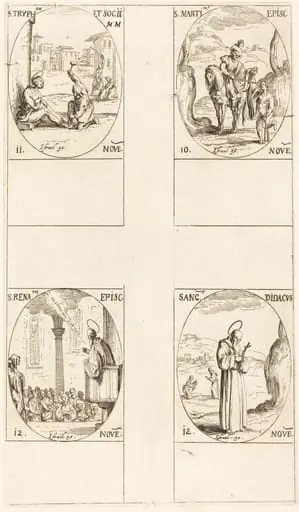 St. Martin; St. Tryphon and Companions; St. Renatus; St. Didacus
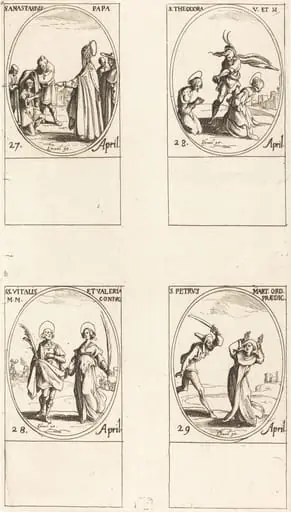 St. Anastasius; St. Theodora; Sts. Vitalis and Valeria; St. Peter Martyr
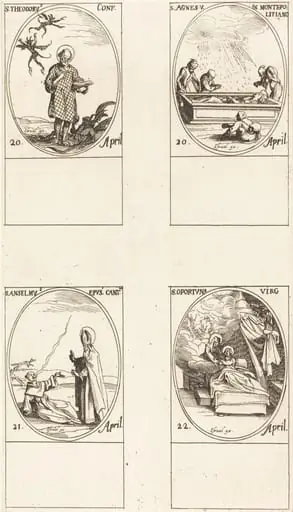 St. Theodorus; St. Agnes of Monte Pulciano; St. Anselme, Archbishop of Canterbury; St. Opportuna and Virgin
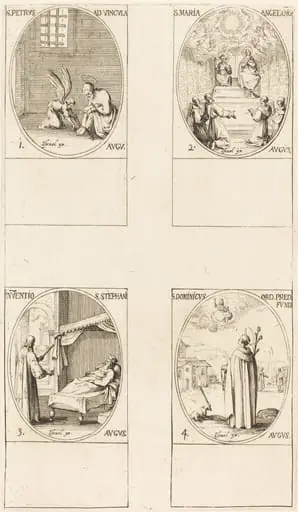 St. Peter, Apostle; St. Mary of Angels; Discovery of the Body of St. Stephen; St. Dominicus