Artwork
St. Theresa; St. Placidus and Flavia; St. Bruno; St. Faith
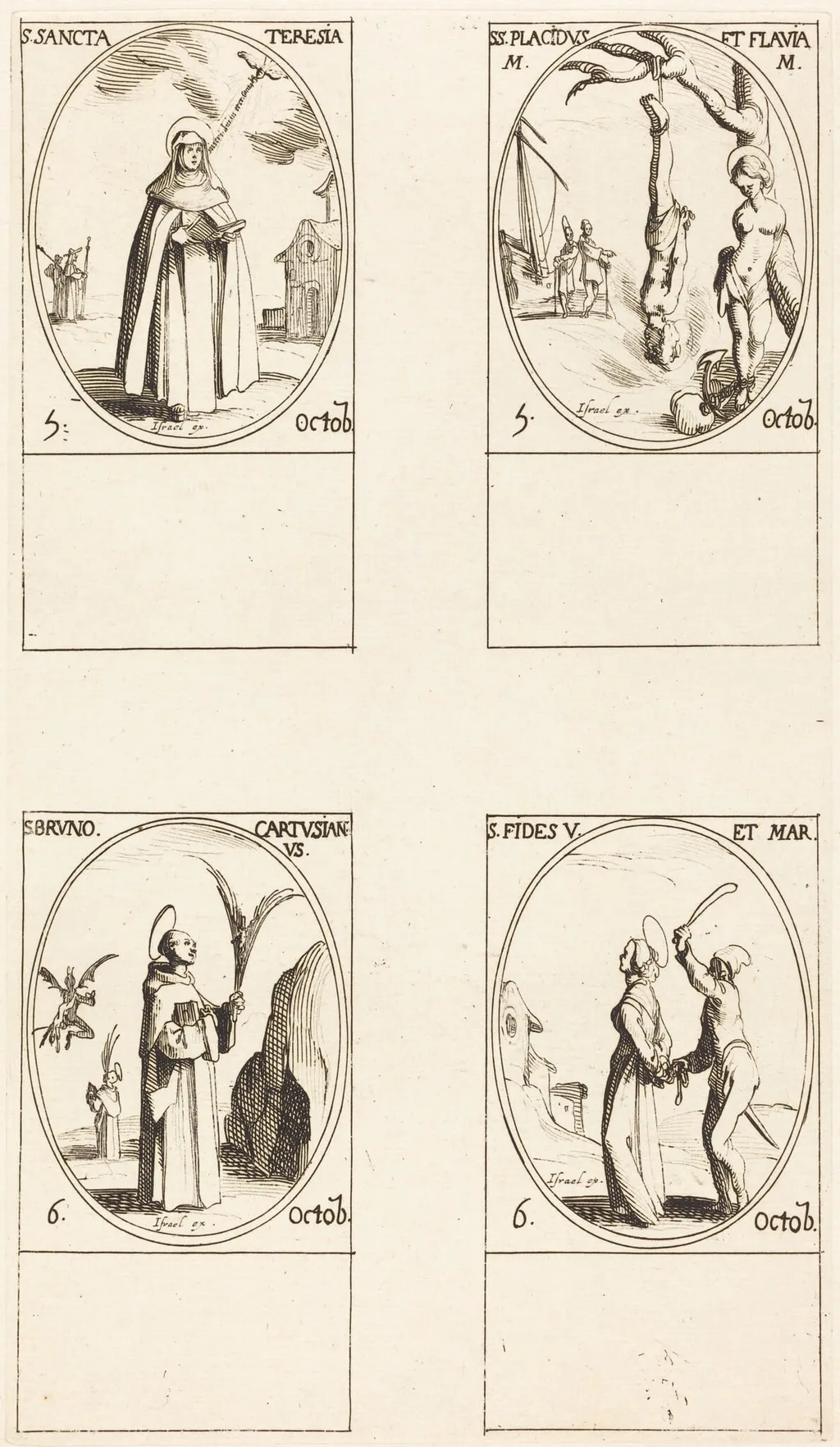
St. Theresa; St. Placidus and Flavia; St. Bruno; St. Faith is an ink print by the Baroque artist Jacques Callot. It dates from 1634 and is held in the collection of the National Gallery of Art. Created around 1634, this work consists of four separate oval etchings on laid paper, each portraying a different saint.
About this work
Overview
Created around 1634, this work consists of four separate oval etchings on laid paper, each portraying a different saint. The French baroque printmaker Jacques Callot, active in the Duchy of Lorraine, assembled the images into a single composition that reflects his prolific output of religious subjects alongside his broader thematic range.
Subject & Meaning
The individual panels present St. Theresa before an architectural backdrop, St. Placidus and Flavia within a landscape featuring a sail‑boat, St. Bruno standing beside a large fish, and St. Faith also positioned before a building. Each saint is isolated within an oval frame, emphasizing their distinct narratives while collectively underscoring themes of piety and sanctity.
Technique & Style
Callot employed fine, closely spaced lines characteristic of his etching practice, rendering textures and depth with meticulous detail. The use of laid paper contributes a subtle tonal quality, and the oval borders lend a refined, orderly appearance that unifies the four scenes despite their varied settings.
History & Provenance
Part of Callot’s extensive corpus of more than 1,400 etchings, this set exemplifies his engagement with religious iconography during the early 17th century. While specific ownership records are scarce, the work reflects the artist’s typical practice of producing series that could be disseminated to collectors and devotional audiences of the period.
Context
In the Baroque era, devotional prints served both private contemplation and public instruction. Callot’s choice to depict multiple saints within a single sheet aligns with contemporary trends of compiling saintly exemplars, offering viewers a compact visual anthology of holy figures.
Artist & collection
Artist
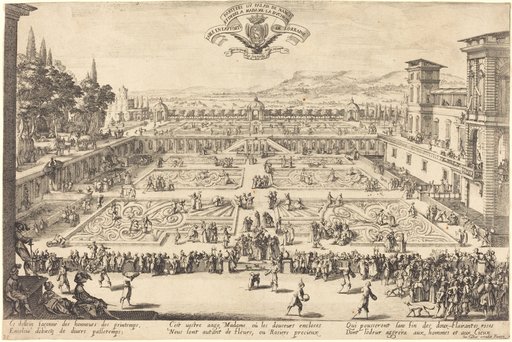
Jacques Callot (French: ; c. 1592 – 1635) was a baroque printmaker and draftsman from the Duchy of Lorraine. He is an important person in the development of the old master print. He made more than 1,400 etchings that…

 Holy Family at supper
 Restoration of the Aqueduct at Pisa
 Restoration of the Aqueduct at Pisa
 Square in Paris with Many Figures
 Square in Paris with Many Figures
 Horsemen Attacked by Robbers
 HOW WILL A COVERED PART BE CORRECTED?HOW WIKA A COVERED HEART DEED CORRECTED?
![Christ Walking on the Water [second plate], by Jacques Callot](https://artifactworldgallery.com/img/jacques-callot--christ-walking-on-the-water-second-plate--2069f3bfe4cb2126-w320.webp) Christ Walking on the Water [second plate]
Christ Walking on the Water [second plate]
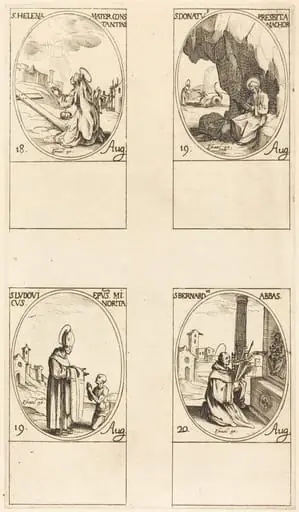 St. Helen; St. Donatus; St. Ludovicus, Bishop; St. Bernard
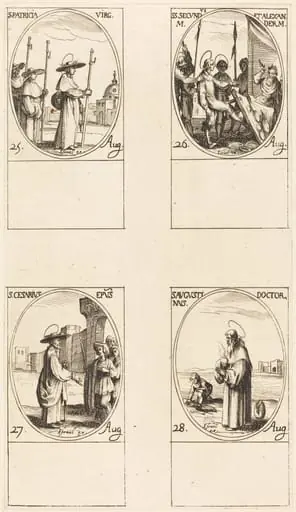 St. Patricia; Sts. Secundus and Alexander; St. Cesarius; St. Augustine
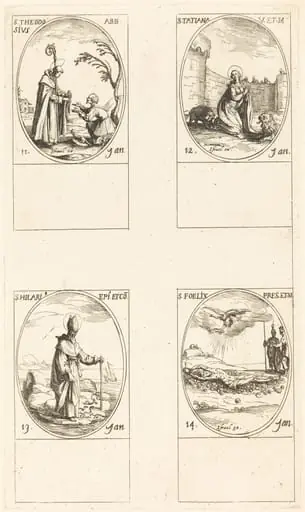 St. Theodosius; St. Tatiana; St. Hilary; St. Felix
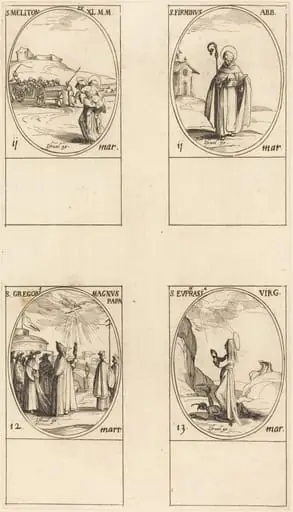 St. Meliton; St. Firminus; St. Gregory the Great; St. Euphrasia
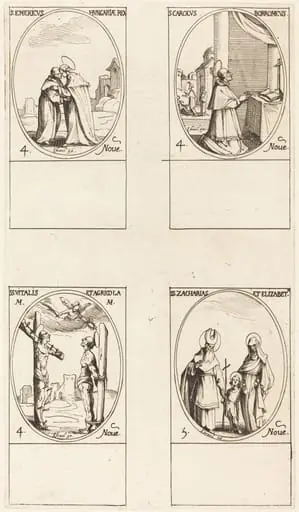 St. Emeric; St. Charles Borromeo; St. Vitalis & Agricola; Sts. Zachary & Elizabeth
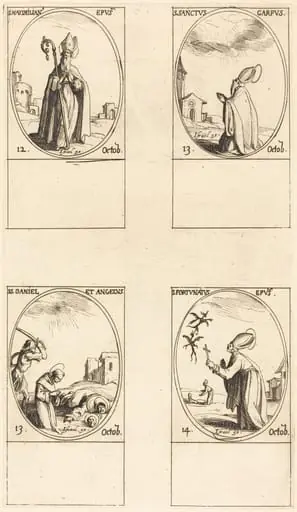 St. Maximilian; St. Carpus; St. Daniel and Angelus; St. Fortunatus
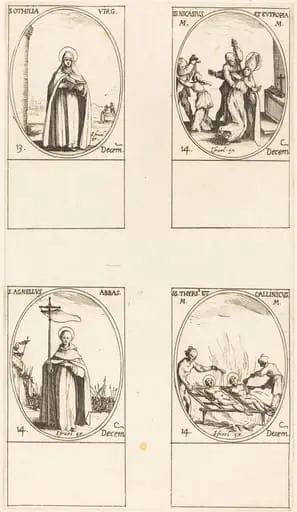 St. Othilia; Sts. Nicasius & Eutropia; St. Agnelus; Sts. Thyrsus & Callinicus
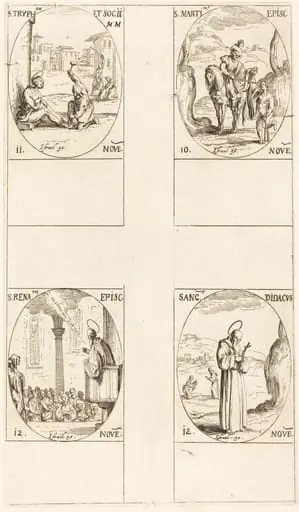 St. Martin; St. Tryphon and Companions; St. Renatus; St. Didacus
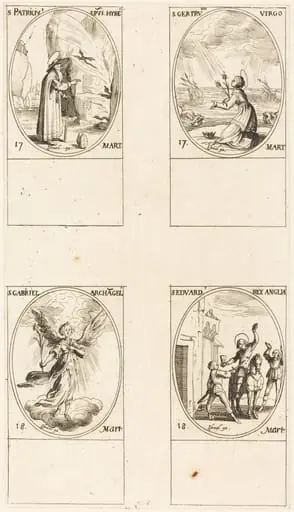 St. Patrick; St. Gertrude; St. Gabriel, Archangel; St. Edward