Artwork
'Oasis'
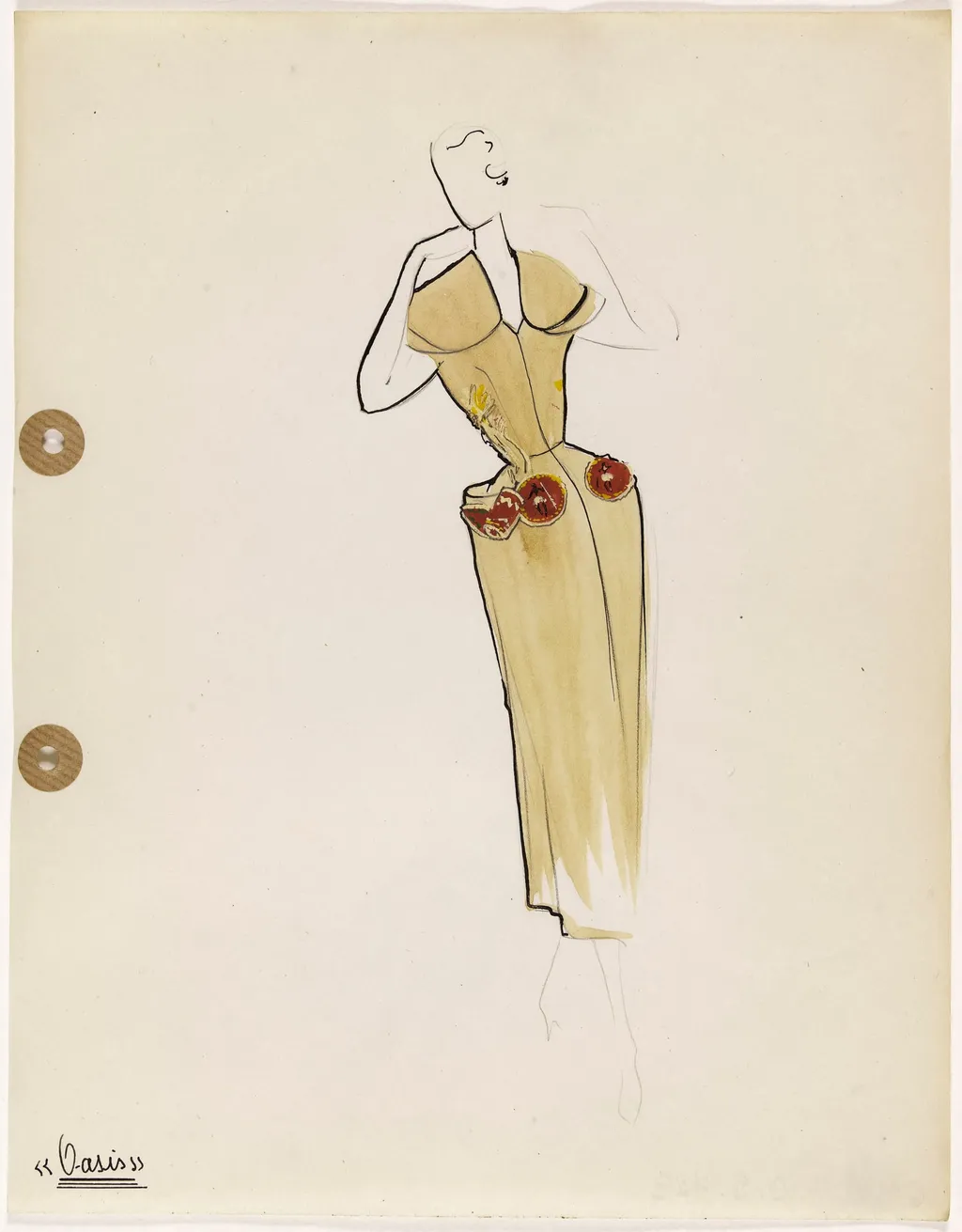
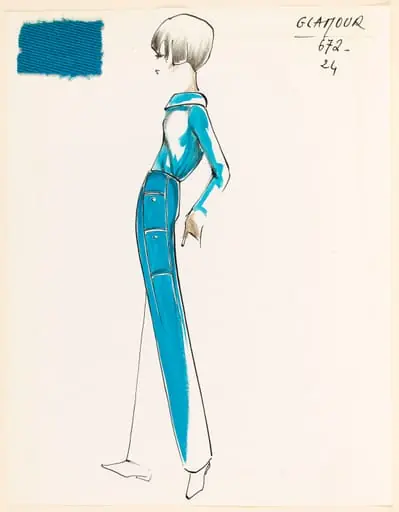
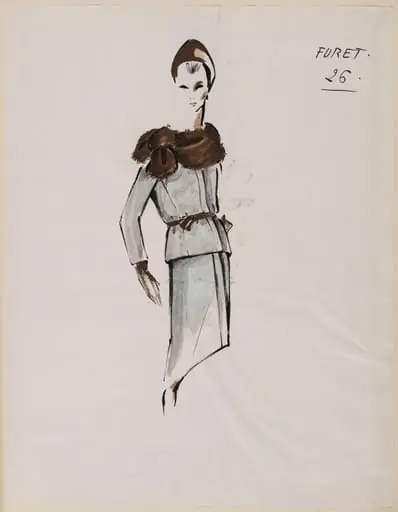
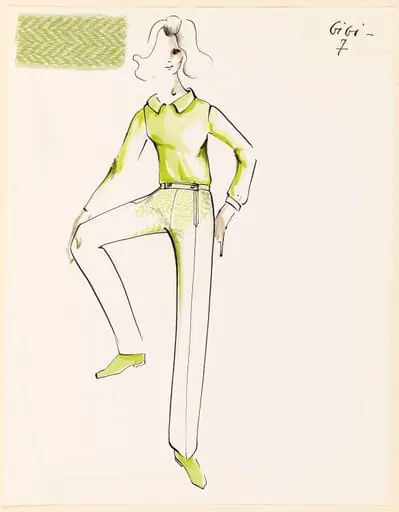
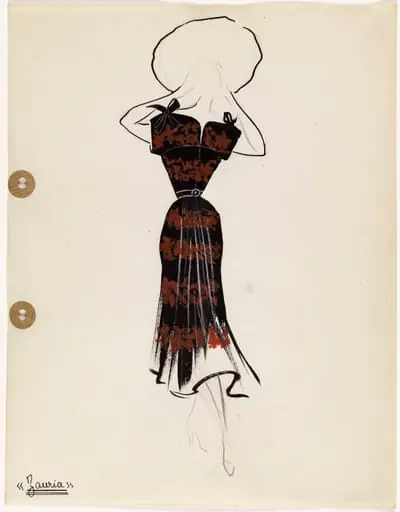
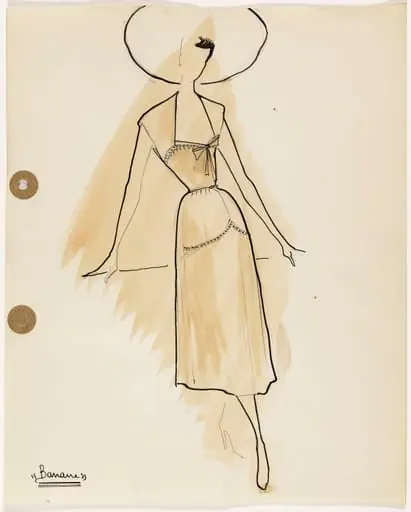
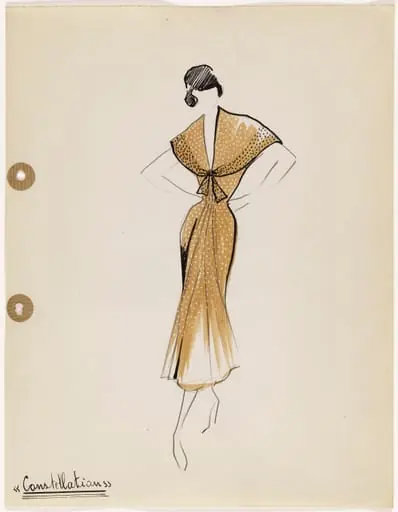
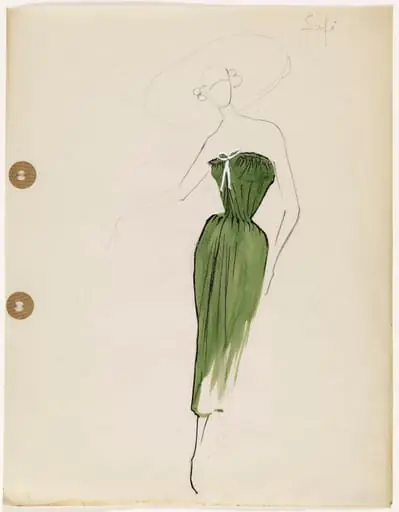
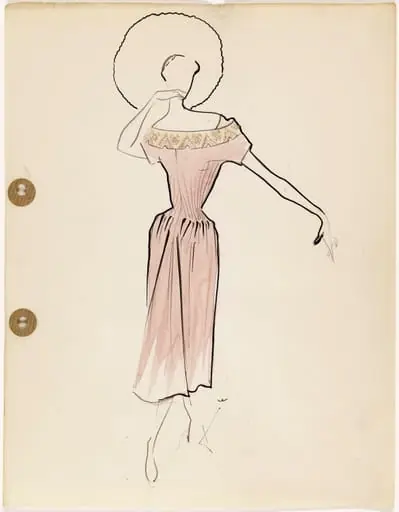
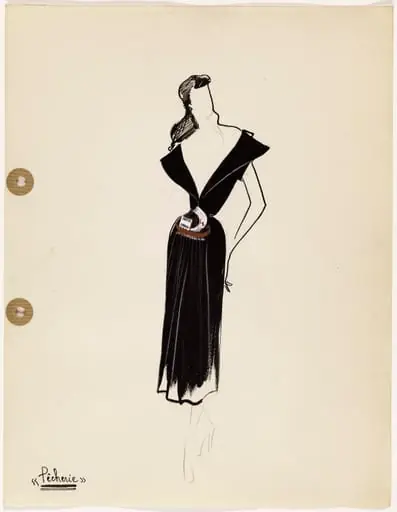
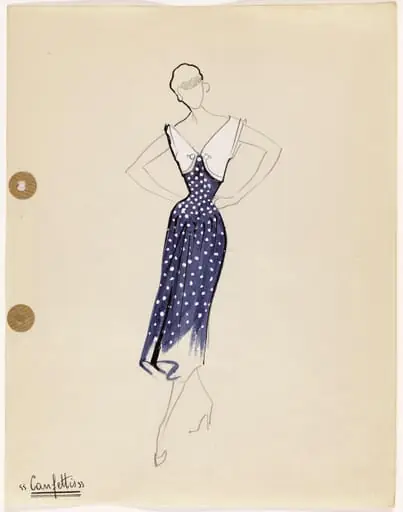
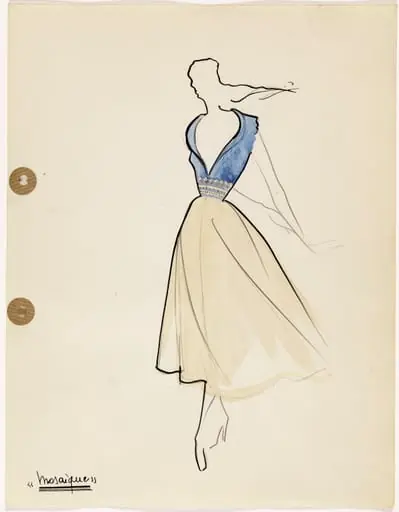
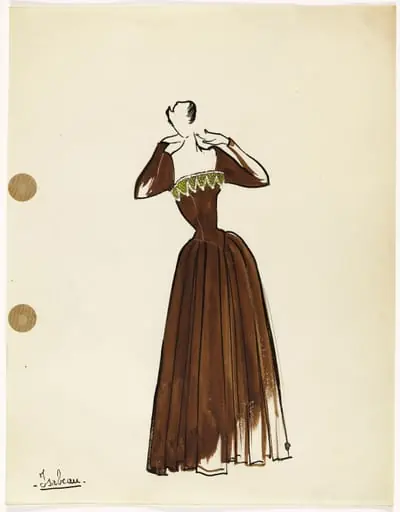
'Oasis' is a drawing by Carven. It dates from 1949 and is held in the collection of the Palais Galliera - Musée de la Mode de la Ville de Paris.
About this work
Overview
Created in 1949, 'Oasis' is a pencil drawing by the artist Carven, currently held in the collection of the Museum of Ethnography.
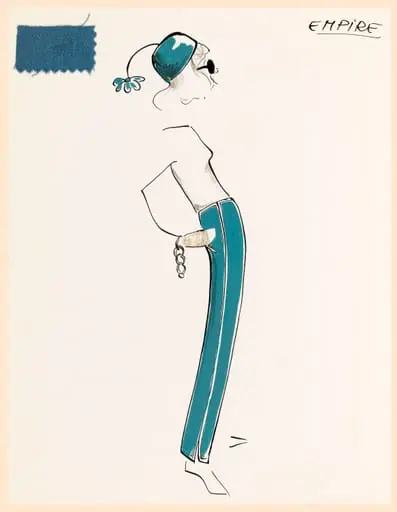
Created in 1949, 'Oasis' is a pencil drawing by the artist Carven, currently held in the collection of the Museum of Ethnography. The work presents a solitary figure in a relaxed, sideways stance, rendered with swift, fluid lines and minimal shading. Its unfinished appearance suggests it was made as a preparatory study rather than a polished composition, capturing a moment of quiet observation rather than a formal portrait.
Subject & Meaning
The figure, gender-neutral in presentation, stands with one arm raised behind the head and the other resting on the hip, suggesting a pause or moment of repose. The two red circles on the chest, applied with deliberate contrast, may reference symbolic adornment, ritual attire, or cultural markers. Their placement draws attention without clear narrative, leaving interpretation open to cultural or personal associations.
Technique & Style
Carven employed loose, gestural pencil strokes to define the figure’s form, emphasizing movement over detail. Light tonal washes suggest volume without heavy modeling, and the absence of background elements focuses attention entirely on the body. The red circles, likely added with ink or watercolor, introduce a sharp chromatic contrast, interrupting the monochrome sketch with a deliberate, almost emblematic accent.
History & Provenance
The drawing entered the Museum of Ethnography’s collection following its creation in 1949, though its acquisition path prior to institutional custody remains undocumented. No exhibition history or public record of its earlier ownership is publicly available, suggesting it was likely acquired directly from the artist or through a private donation tied to the museum’s ethnographic focus.
Context
Made in the postwar period, 'Oasis' reflects a broader interest among artists in capturing everyday or culturally specific figures with immediacy. Carven’s approach aligns with contemporaneous ethnographic documentation practices, where sketches served as visual records of dress, posture, and gesture, valued for their spontaneity rather than artistic finish.
Legacy
Though Carven’s broader oeuvre is not widely published, 'Oasis' endures as a quiet example of mid-century observational drawing within ethnographic collections. Its value lies in its unembellished record of form and detail, offering insight into how artists engaged with cultural subjects during a time when fieldwork and visual anthropology were evolving in tandem.
Artist & collection
Artist
These delicate ink-on-paper drawings capture the quiet poetry of everyday things: pinecones, reeds, apples.
Museum
Palais Galliera - Musée de la Mode de la Ville de Paris
Continue through works from the same source collection.