Artwork
Poussière d'or
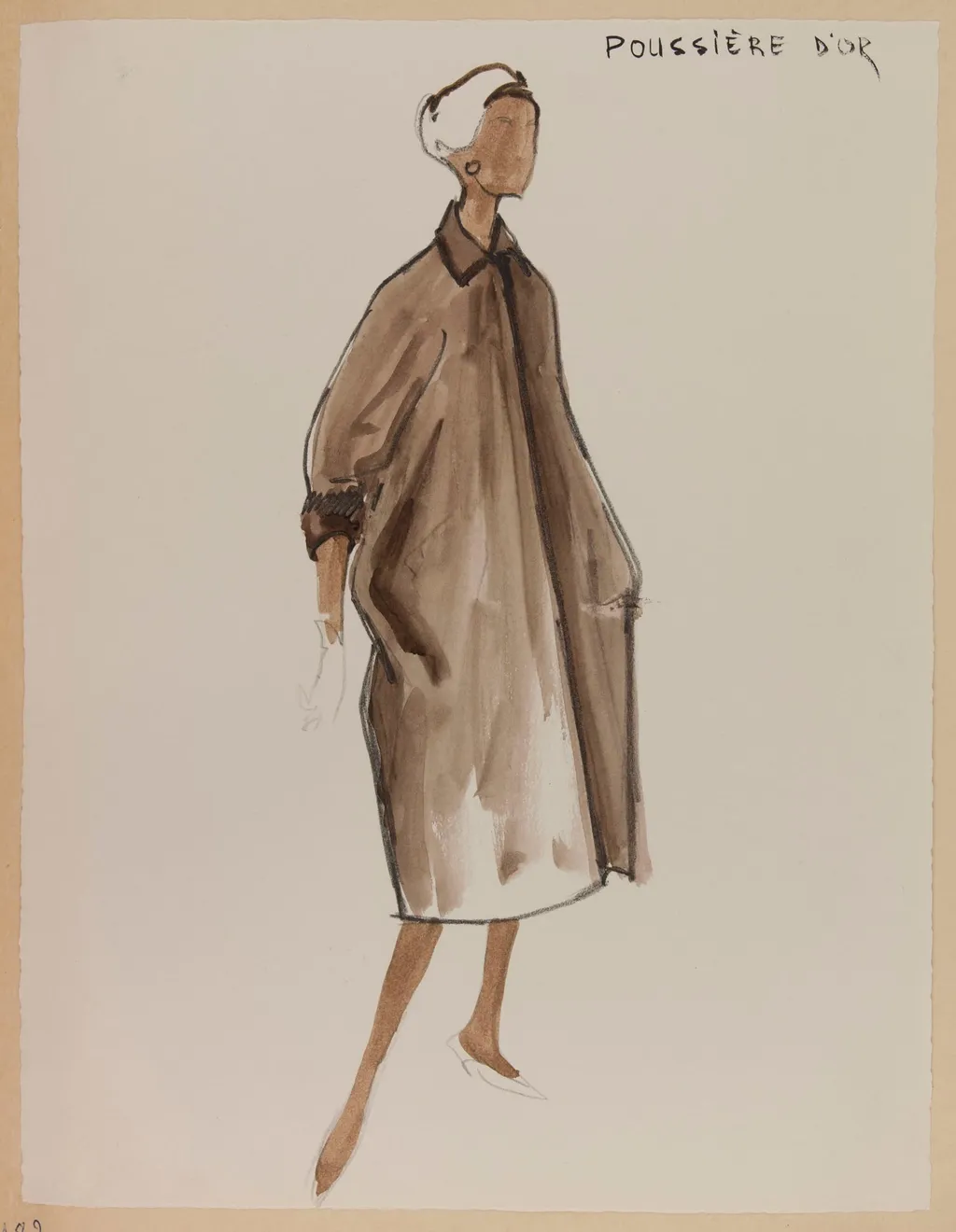
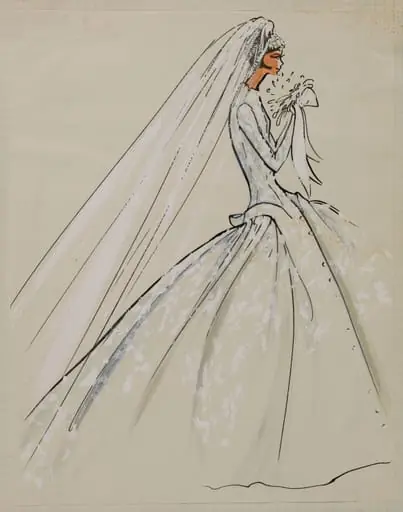
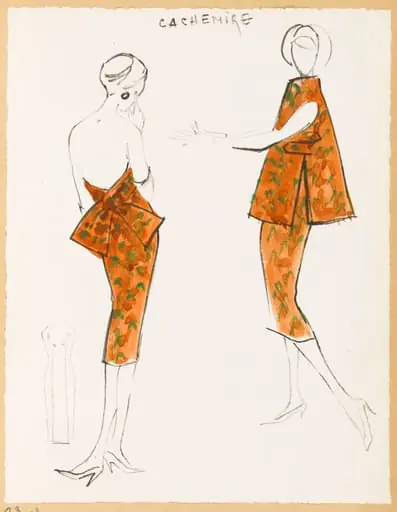
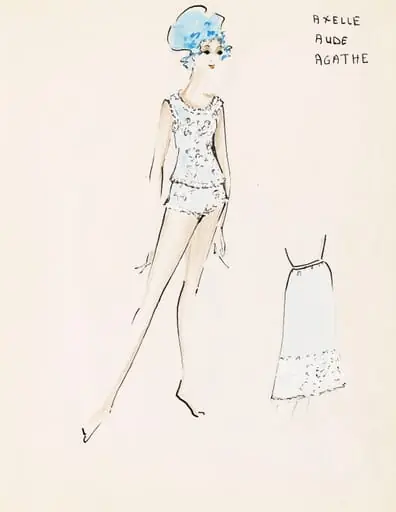
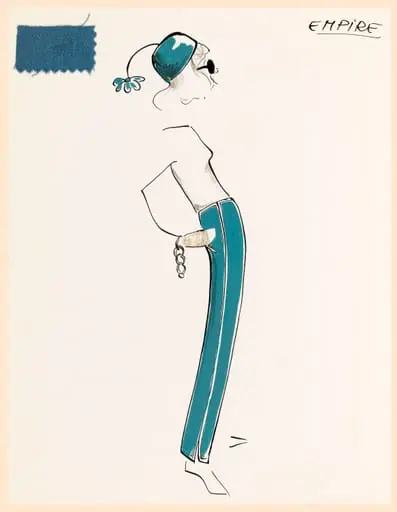
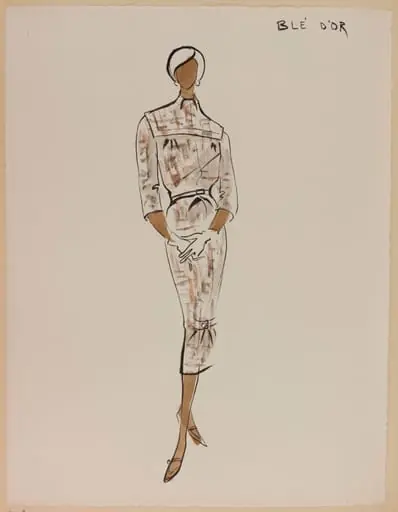
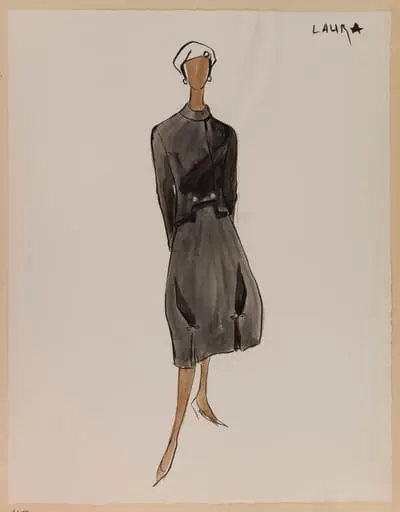
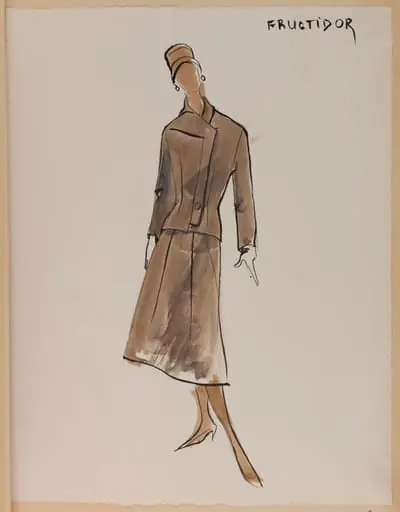
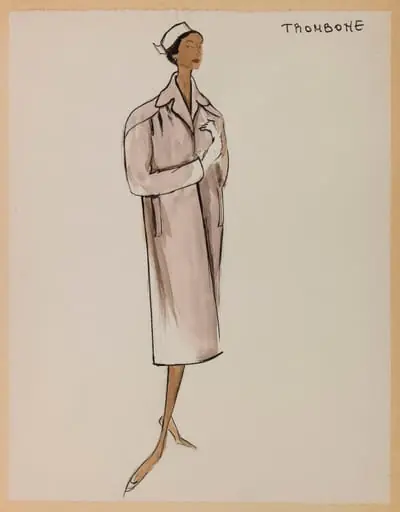
Poussière d'or is a drawing by Carven. It dates from 1956 and is held in the collection of the Palais Galliera - Musée de la Mode de la Ville de Paris.
About this work
Overview
The work is held in the collection of the Museum of Ethnography, where it is preserved as a personal study rather than a finished composition.
Poussière d'or is a small, informal sketch attributed to the artist Carven, dated around 1956. Executed in ink or graphite, it captures a solitary figure in motion, rendered with rapid, unrefined strokes. The work is held in the collection of the Museum of Ethnography, where it is preserved as a personal study rather than a finished composition. Its modest scale and spontaneous quality suggest it was made as a quick observational note.
Subject & Meaning
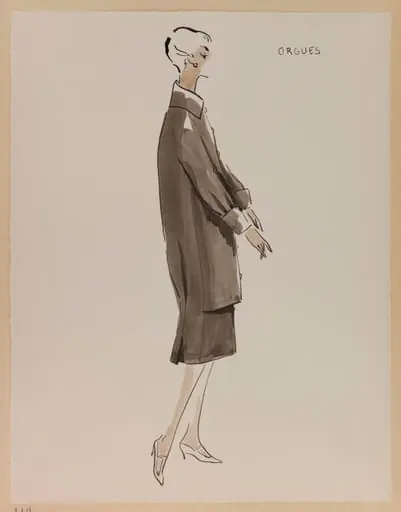
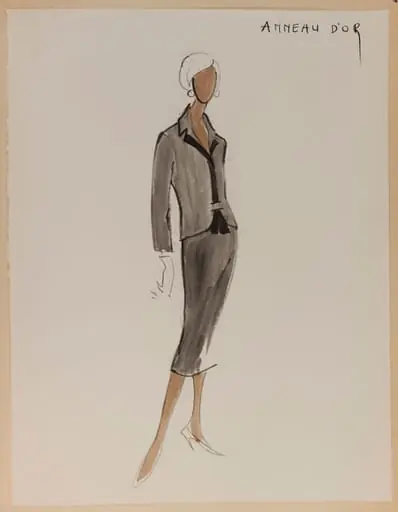
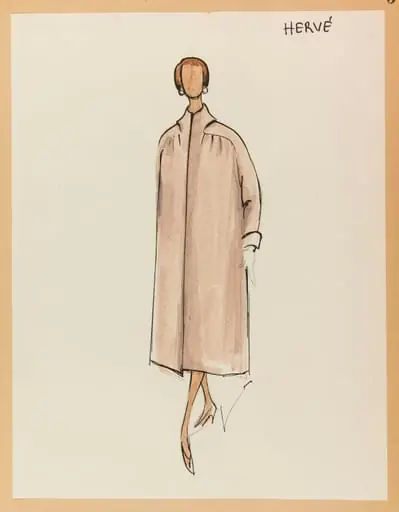
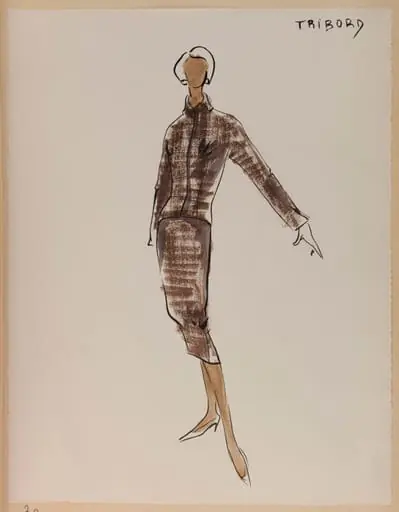
The figure depicted walks alone, dressed in a long coat fastened by a belt and crowned with a low-pulled hat, suggesting anonymity or quiet solitude. The title, meaning 'golden dust,' may allude to the subtle texture of the fabric or the ambient light catching its surface, though no literal gold appears. The phrase evokes transience, perhaps the fleeting impression of a passerby, or the ephemeral glow of a moment caught in motion.
Technique & Style
Carven employed loose, gestural lines to convey the weight and drape of the coat, emphasizing movement over detail. The sketch lacks shading or refinement, relying instead on the rhythm of the hand to suggest form. The handwriting-like quality of the marks reinforces its immediacy, as if drawn in real time. This approach reflects a preference for spontaneity, aligning with the artist’s habit of recording fleeting visual impressions.
History & Provenance
The work entered the Museum of Ethnography’s collection in the late 20th century, likely through donation or acquisition of the artist’s personal archive. No documentation confirms its original context or intended audience. Its presence among ethnographic materials suggests curators valued it as a record of everyday human presence, rather than as a formal artistic statement.
Context
Created in postwar Europe, Poussière d'or reflects a broader interest in capturing ordinary life with minimal means. While Carven is not widely known, this sketch aligns with contemporaneous practices among artists who favored sketchbooks over studio work. The emphasis on pedestrian figures and unadorned attire mirrors a cultural shift toward valuing quiet, unremarkable moments over grand narratives.
Legacy
Poussière d'or remains a quiet example of personal observation in a time when artistic expression often leaned toward abstraction or political statement. It endures not for its technical ambition but for its honesty, a single, unembellished glimpse of a stranger in motion. Its preservation in an ethnographic setting underscores its role as a document of human behavior, not just artistic form.
Artist & collection
Artist
These delicate ink-on-paper drawings capture the quiet poetry of everyday things: pinecones, reeds, apples.
Museum
Palais Galliera - Musée de la Mode de la Ville de Paris
Continue through works from the same source collection.