Artwork
Zèbre
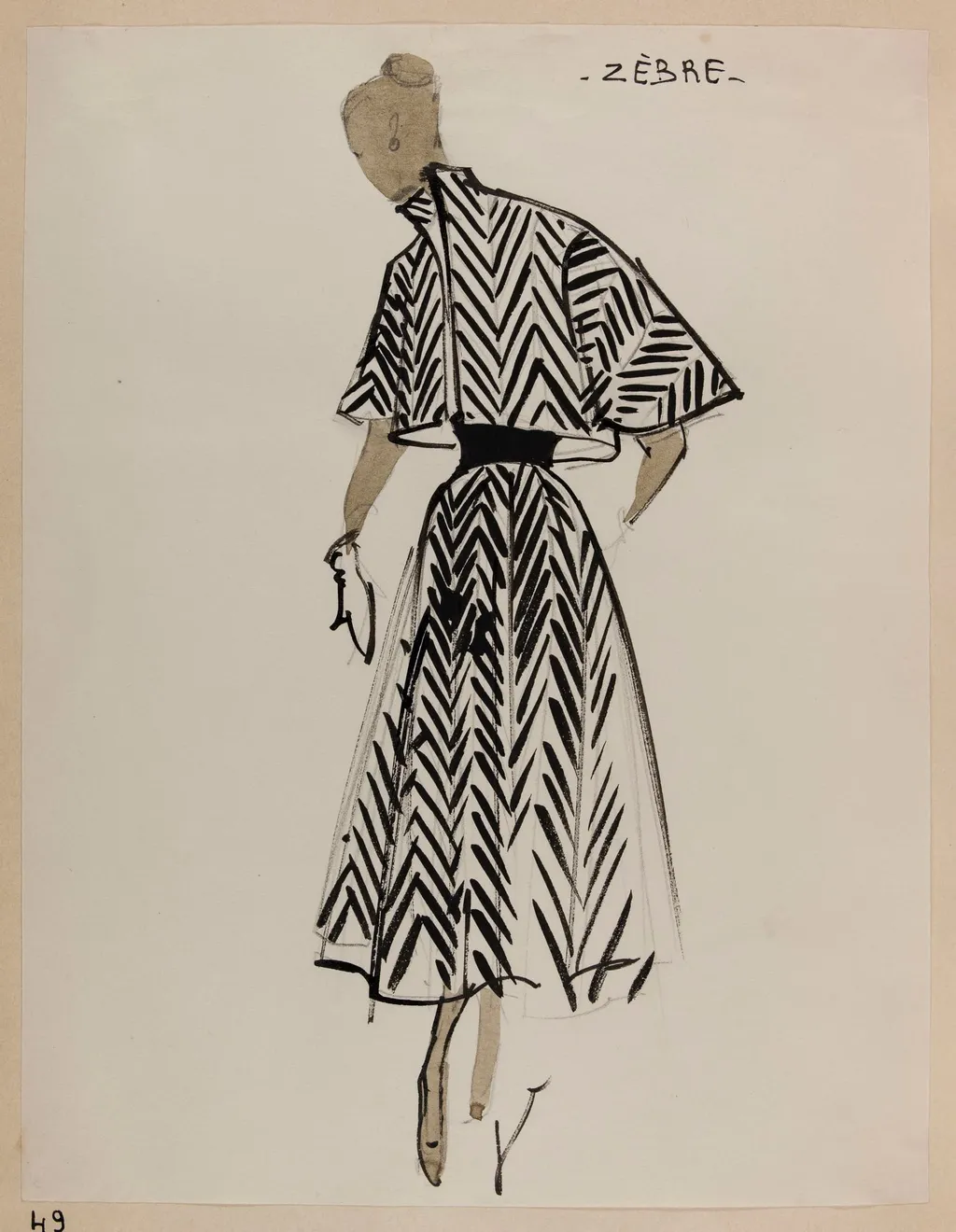
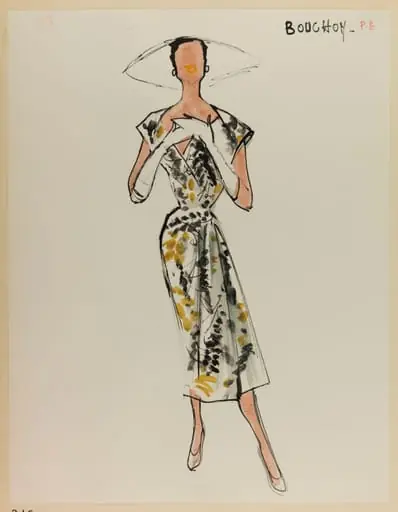
Zèbre is a drawing by Carven. It dates from 1952 and is held in the collection of the Palais Galliera - Musée de la Mode de la Ville de Paris.
About this work
If you're interested in learning more about the artist behind this piece, you can look up Carven, the French fashion house that created this design in 1952.
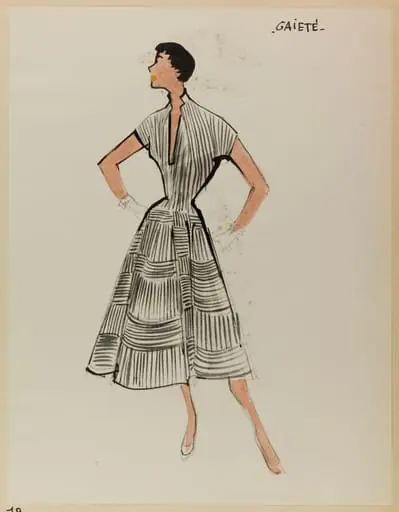
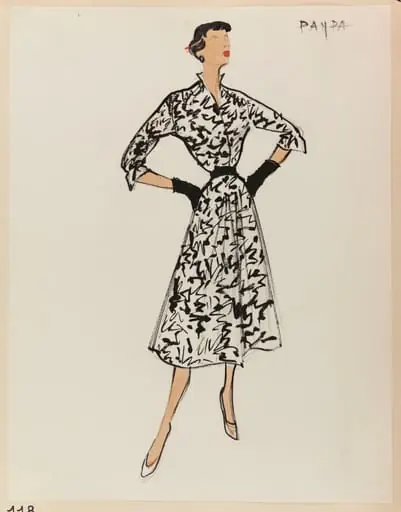
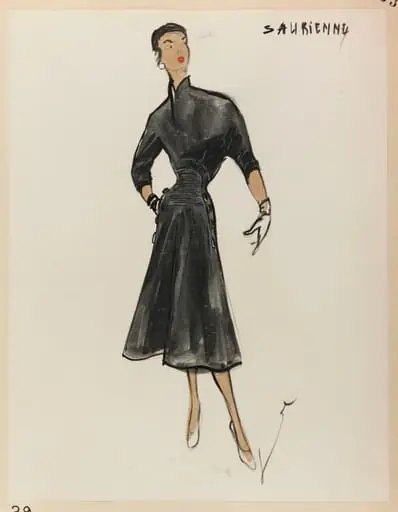
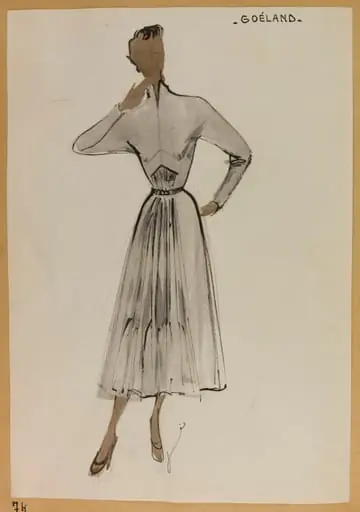
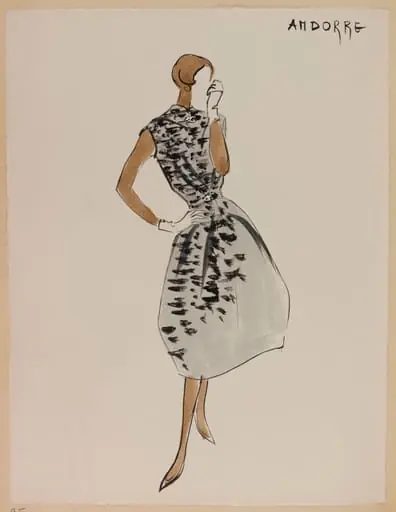
This image is a drawing of a woman's dress, titled "Zèbre" by Carven. The dress features a black and white zebra stripe pattern and has a full skirt with a black belt around the waist. The woman's face is not visible, and she is shown from the back.
The drawing is done in a simple yet elegant style, with clean lines and minimal details. The focus is on the dress and its pattern, which gives the impression of movement and energy.
If you're interested in learning more about the artist behind this piece, you can look up Carven, the French fashion house that created this design in 1952.
Overview
Created in 1952 by the French fashion house Carven, Zèbre is a fashion illustration depicting a woman’s dress rendered in black and white. The drawing emphasizes the garment’s design rather than the wearer’s identity, with the figure shown from behind and the face omitted. Executed with restrained linework, the piece functions as a design record, capturing the silhouette and pattern of a seasonal collection.
Subject & Meaning
The subject is a dress, not a person. The zebra-striped pattern, bold and rhythmic, conveys motion and modernity, aligning with postwar fashion’s interest in dynamic forms. The black belt cinching the waist reinforces structure, while the full skirt suggests volume and flow. The absence of facial features shifts focus entirely to the clothing as an autonomous object of design.
Technique & Style
Rendered in ink or graphite, the illustration uses clean, unadorned lines to define form. Details are minimized, no texture, shading, or background, allowing the stripe pattern to dominate. The economy of line reflects a design aesthetic rooted in clarity and precision, typical of fashion sketches intended for production rather than artistic expression.
History & Provenance
The drawing entered the collection of the Museum of Ethnography as part of a broader effort to document 20th-century fashion as cultural artifact. Its preservation reflects institutional recognition of haute couture as a material expression of its time. The work’s origin in Carven’s atelier situates it within the Parisian fashion system of the early 1950s.
Context
In postwar France, fashion houses like Carven revived couture with renewed emphasis on silhouette and pattern. Zèbre reflects a trend toward graphic, animal-inspired motifs that echoed both natural forms and the modernist fascination with abstraction. The dress’s design resonated with a public seeking freshness after years of wartime austerity.
Legacy
As a preserved design sketch, Zèbre contributes to the historical record of mid-century fashion innovation. It illustrates how couturiers translated visual ideas into wearable form, and how institutions began to treat fashion drawings as significant cultural documents. The work remains a quiet testament to the precision and intentionality of mid-century design practice.
Artist & collection
Artist
These delicate ink-on-paper drawings capture the quiet poetry of everyday things: pinecones, reeds, apples.
Museum
Palais Galliera - Musée de la Mode de la Ville de Paris
Continue through works from the same source collection.