Artwork
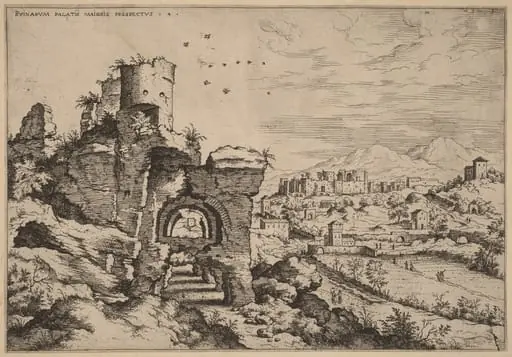
Ruins on the Palatine with the Septizonium
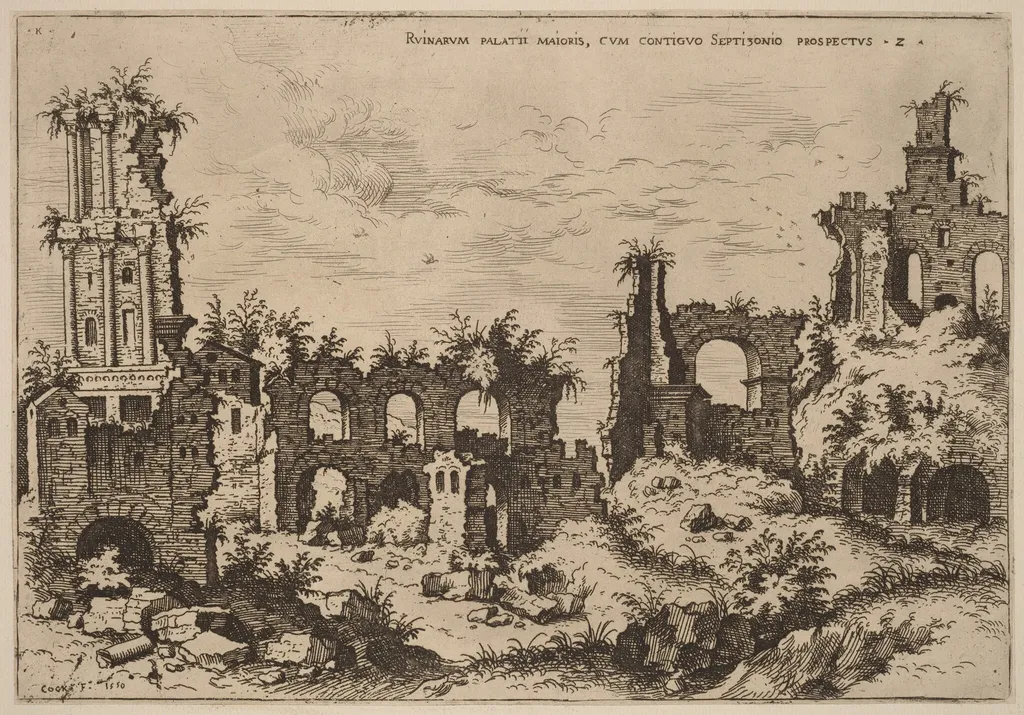
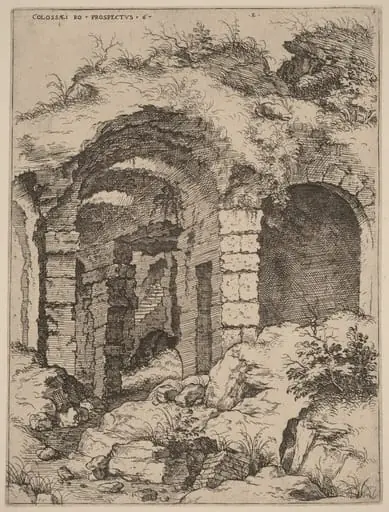
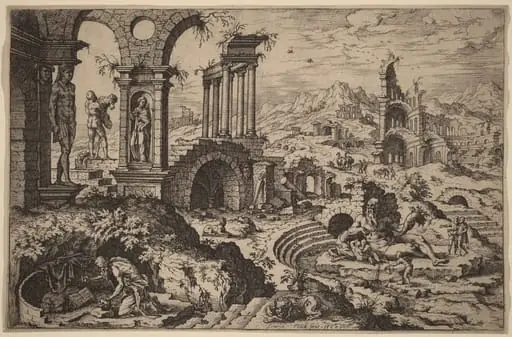
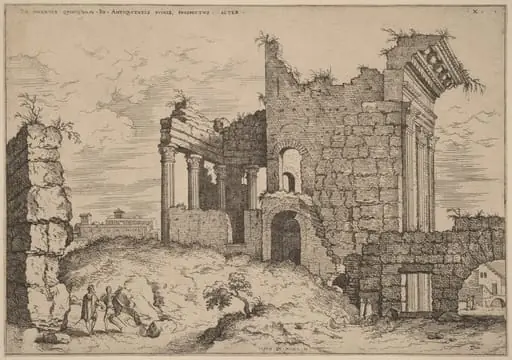
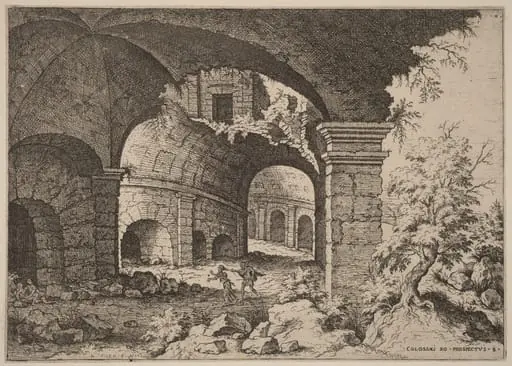
Ruins on the Palatine with the Septizonium is an ink print by the Renaissance artist Hieronymus Cock. It dates from 1550 and is held in the collection of the National Gallery of Art.
- Inscription
- Inscribed:upper left in plate: .K.; upper center to upper right in plate: RVINARVM PALATII MAIORIS, CVM CONTIGVO SEPTIZONIO PROSPECTVS .2.; lower left in plate: COCK F. 1550
About this work
Overview
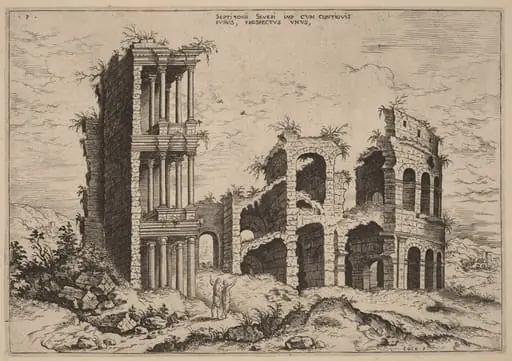
Hieronymus Cock’s Ruins on the Palatine with the Septizonium is an early modern etching executed on laid paper, dated to around 1550. The print presents a panoramic view of the Palatine Hill in Rome, foregrounding the decayed arches of the Septizonium beneath a cloud‑filled sky, with diminutive figures placed for scale.
Subject & Meaning
The image captures the remnants of the Septizonium, a once‑grand Roman structure, emphasizing the passage of time and the allure of antiquity that fascinated 16th‑century scholars. By juxtaposing the ruined architecture with fleeting human activity, Cock underscores both the durability of stone and the transitory nature of human presence.
Technique & Style
Created through copper‑plate etching, the work employs fine line work to render texture and depth, while the laid paper’s faint ribbing adds a subtle tonal quality. Cock’s handling of light and shadow conveys atmospheric perspective, and the composition balances architectural detail with a broad, almost topographical view.
History & Provenance
Cock, a Flemish painter and prolific print publisher based in Antwerp, produced the etching as part of his extensive output, over 1,100 prints in his career. The print was likely issued through his own workshop, facilitating its circulation among collectors, scholars, and travelers across northern Europe.
Context
The mid‑16th century saw a surge of interest in classical ruins, driven by humanist studies and the Grand Tour. Cock’s depiction of Roman architecture contributed to this cultural trend, providing a visual reference that complemented textual descriptions and helped disseminate knowledge of ancient sites beyond Italy.
Own this work as a print
Artist & collection
Artist
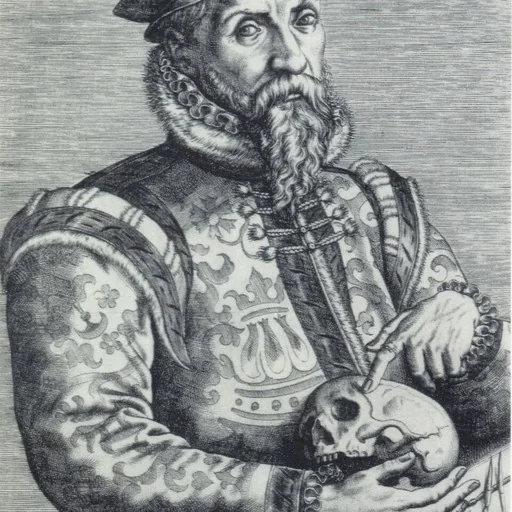
Hieronymus Cock, or Hieronymus Wellens de Cock, (1518 – 3 October 1570) was a Flemish painter and etcher as well as a publisher and distributor of prints.