Artwork
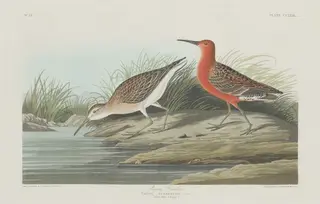
A Curlew Sandpiper
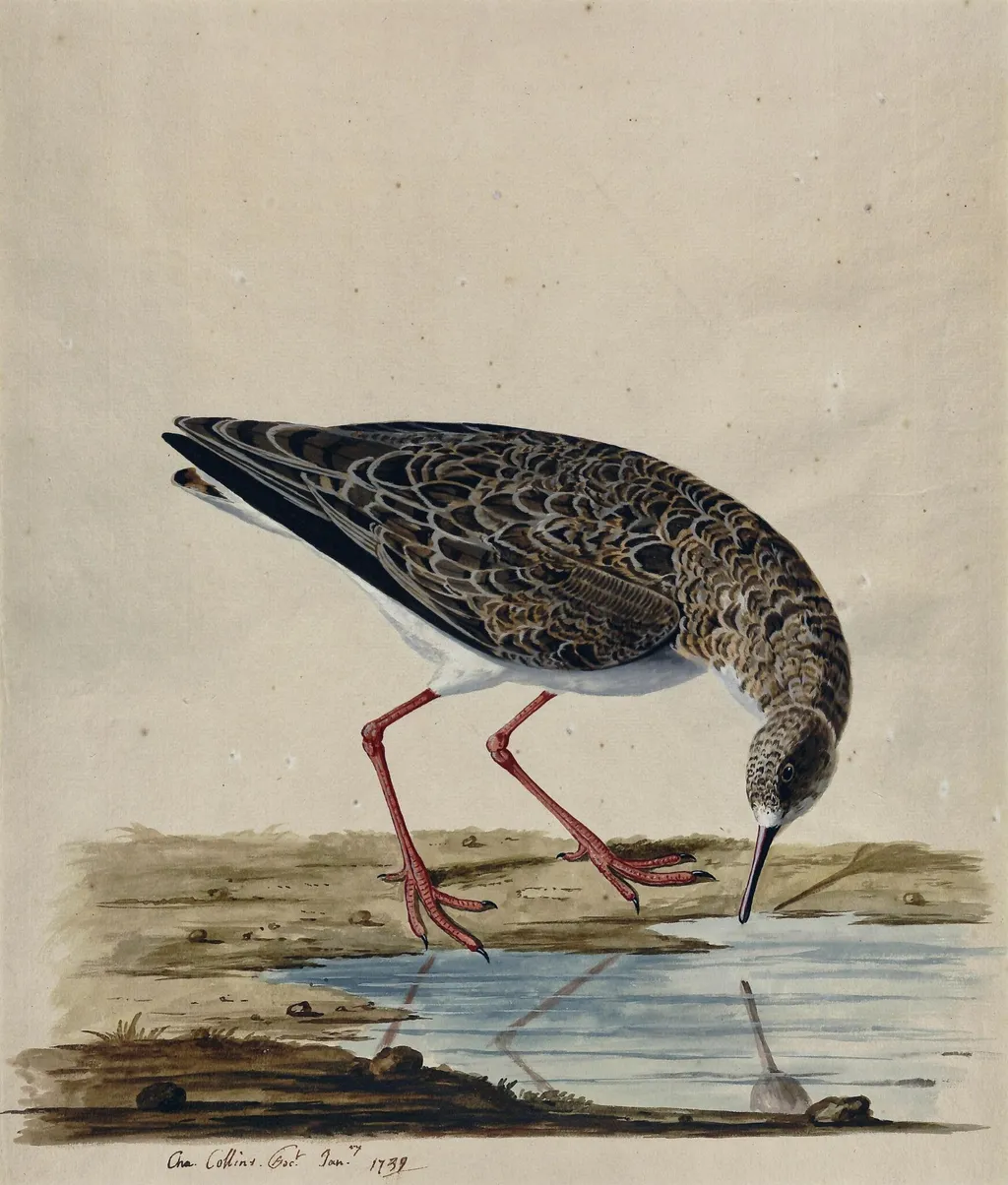
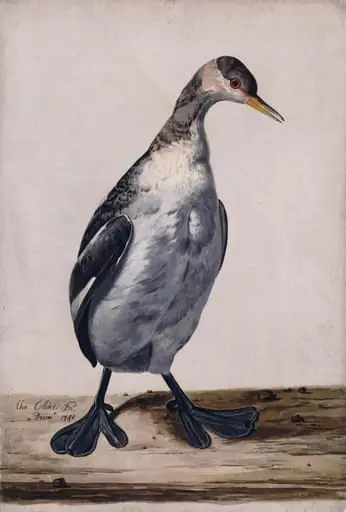
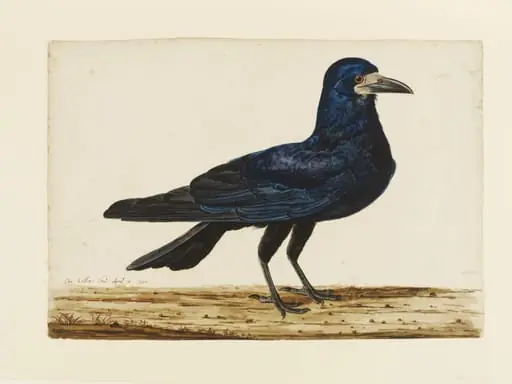
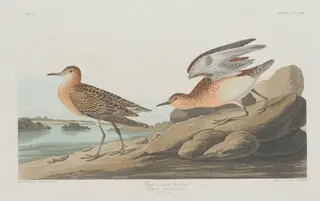
A Curlew Sandpiper is a watercolor work on paper by the Baroque artist Charles Collins. It dates from 1739 and is held in the collection of the Victoria and Albert Museum.
About this work
Overview
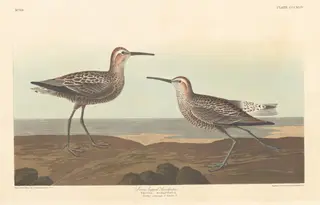
A Curlew Sandpiper, created in 1739 by Charles Collins, is a watercolour on paper work featuring a solitary bird in a coastal setting.
Subject & Meaning
The artwork focuses on a Curlew Sandpiper, accurately depicted with a curved beak, brown and white plumage, and pink legs, set against a serene, rocky shoreline with calm water and floating sticks.
Technique & Style
Collins employed meticulous watercolour techniques to capture the detailed texture of the bird's feathers and the rocky terrain, reflecting the era's emphasis on precise nature studies.
History & Provenance
Created in 1739, the work is characteristic of Charles Collins' bird paintings; for more on the artist's oeuvre, see additional entries on Collins.
Context
This piece aligns with 18th-century artistic practices that valued detailed, realistic depictions of natural subjects, often for scientific or observational purposes.
Own this work as a print
Artist & collection
Artist
Charles Collins (c. 1680 – 1744) was an Irish painter. Collins was primarily a painter of animals and still life. He was one of the first still life artists in Britain of great quality, following the tradition of…