Artwork
Vestatemplet med dets omgivelser
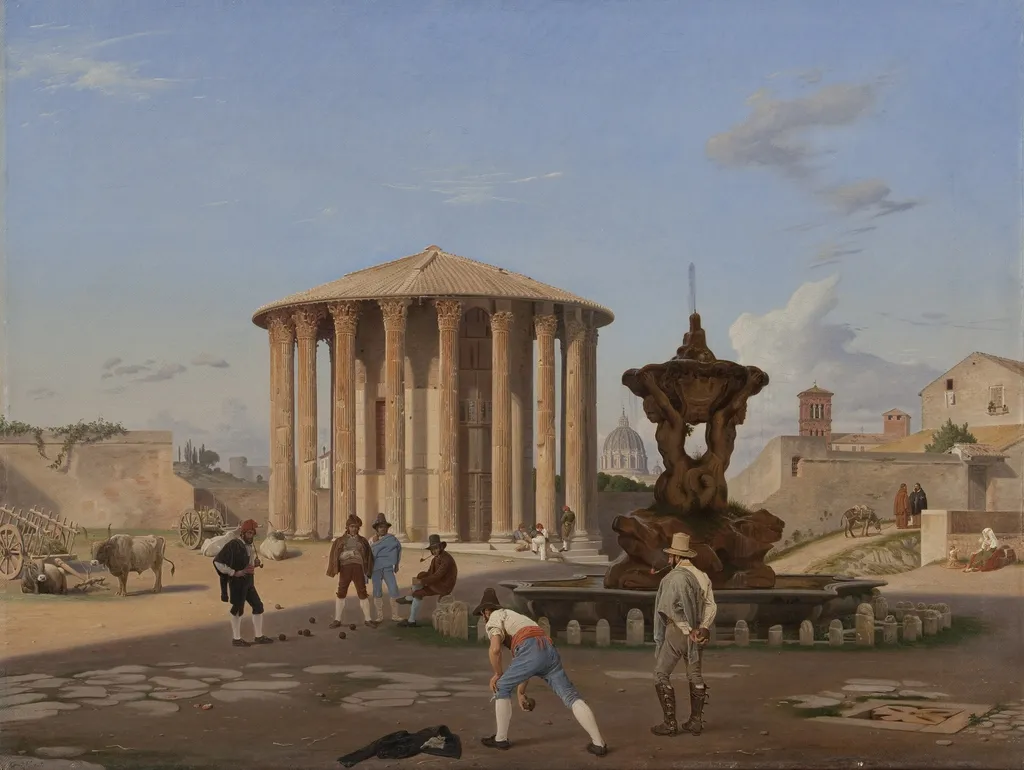
Vestatemplet med dets omgivelser is an oil painting by Constantin Hansen. It dates from 1837 and is held in the collection of the Statens Museum for Kunst.
About this work
Subject & Meaning
Human figures are present, actively engaged in playing petanque, which introduces a contemporary leisure activity into the historical context.
The painting depicts the Temple of Vesta situated within its surrounding landscape, featuring specific architectural and leisure elements. The scene includes a fountain adjacent to the temple structure, contributing to the classical atmosphere of the setting. Human figures are present, actively engaged in playing petanque, which introduces a contemporary leisure activity into the historical context.
Through this composition, the work represents a blend of ancient Roman architecture and daily life, capturing the site as a place of both historical significance and modern recreation.
Technique & Style
Executed in 1837, this work is an oil painting on canvas by Constantin Hansen. The composition measures 75.5 cm in height and 100 cm in width. Visually, the piece depicts the Temple of Vesta within its surrounding environment, incorporating specific details such as a fountain and figures engaged in a game of petanque. These elements combine to present a scene populated by human activity alongside the architectural subject.
History & Provenance
The work was created by Constantin Hansen in 1837, as indicated by the artist’s date on the painting’s record and the canonical date for the work’s inception.
It has remained in public ownership in Denmark, where it is held by the Statens Museum for Kunst in Copenhagen. The museum’s collection entry confirms the painting’s presence in its holdings as of the documented date.
The painting is held in the collection of the Statens Museum for Kunst in Denmark, as recorded in the Wikidata entry for the work. Created in 1837 by Constantin Hansen as an oil on canvas, it measures 75.5 by 100 cm and depicts the Temple of Vesta along with a fountain, figures playing pétanque, and other human figures.
No specific accession number is provided in the available sources, and no exhibition history is documented beyond its current institutional holding.
Overview
Created in 1837 by Constantin Hansen, a prominent painter of Denmark’s Golden Age, this oil work portrays the ancient Temple of Vesta set within a lively landscape. The composition combines the classical structure with a surrounding scene of everyday activity, offering a view of both architecture and rural life.
Context
The painting reflects a broader 19th‑century Danish interest in integrating classical antiquity with contemporary life, a theme encouraged by Høyen’s advocacy for a distinctly Danish artistic identity. By placing a revered Roman temple amid familiar rural elements, Hansen bridges mythic heritage and modern Danish scenery.
Own this work as a print
Artist & collection
Artist
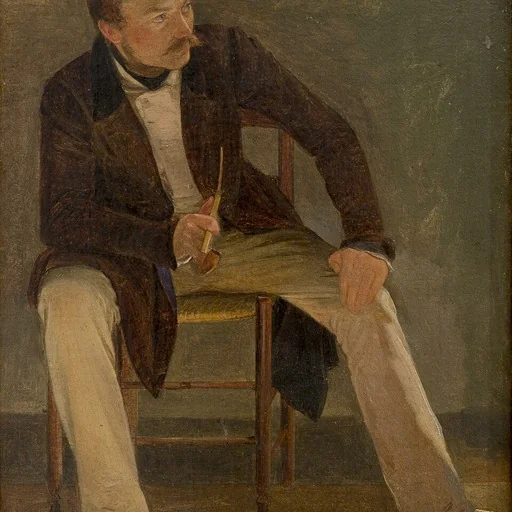
Carl Christian Constantin Hansen (Constantin Hansen) (3 November 1804 – 29 March 1880) was one of the painters associated with the Golden Age of Danish Painting.

- Small Round Temple
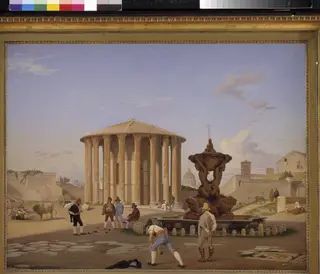 Piazza della Bocca della Verità with the so-called Vesta Temple in Rome
 The Roman Forum in Rome
 Ruins of the Forum, Rome
 View of Rome
 Sant'Agnese fuori le mura, Rome
 The Temple of Hercules in Cori near Velletri
 The Roman Theater at Taormina
 The Temple of Concordia by Girgenti
 The Temple of Concordia by Girgenti
 Landscape with a Stairs and Obelisk
 Temple at Boudroun, Halicarnassus