Artwork
Templum Iunoni, ac Iovi Pavellennio (The Temple of Juno and Jupiter)
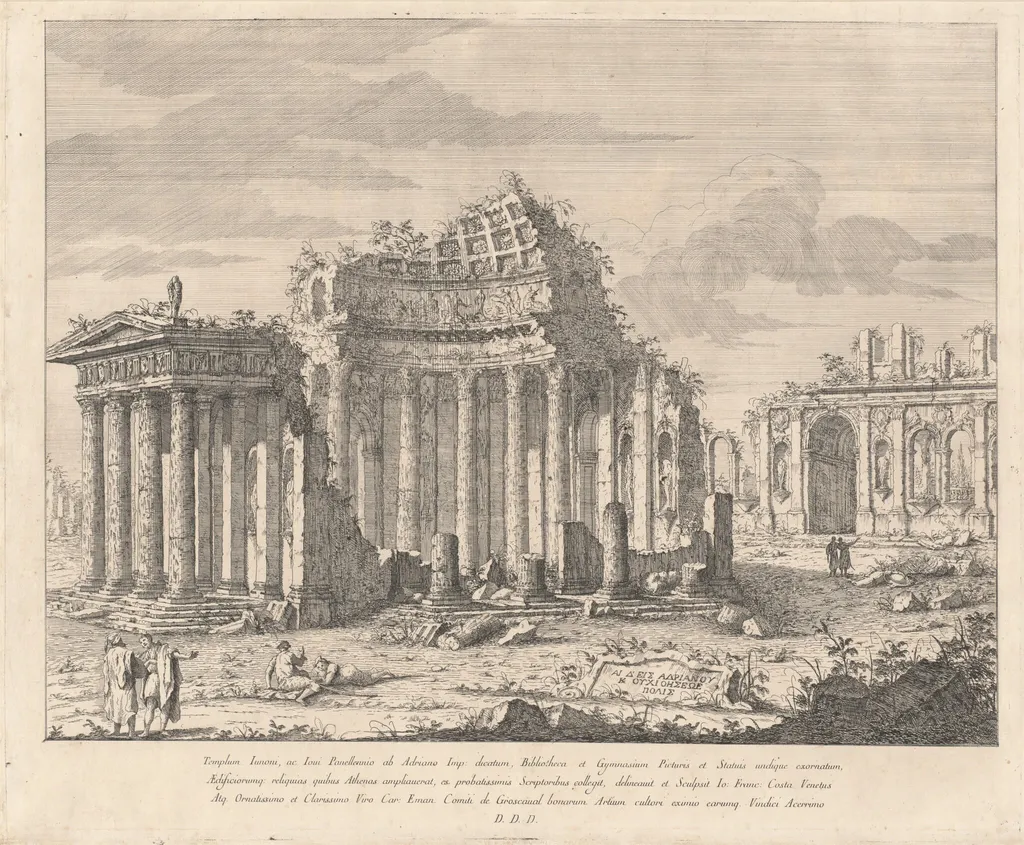
Templum Iunoni, ac Iovi Pavellennio (The Temple of Juno and Jupiter) is an ink print by the Baroque artist Giovanni Francesco Costa. It dates from 1748 and is held in the collection of the National Gallery of Art.
- Inscription
- Inscribed:lower center in image: Templum Iunoni, ac Ioui Panellennio ab Adriano Imp: dicatum, Bibliotheca et Gymnasium Picturis et Statuis undique exornatum, / AEdificiorumq: reliquias quibus Athenas ampliauerat, es. probatissimus Scriptoribus collegit, delineauit et Sculpsit Io: Franc: Costa Venetus / Atq. Ornatissimo et Clarissimo Viro Car: Eman. Comiti de Groscanal bonarum Artium cultori eximio carunq. Vindici Acerrino / D. D. D.
About this work
A building stands in the center, its tall columns glowing in moonlight.
A building stands in the center, its tall columns glowing in moonlight. Rough lines surround it, like the artist scratched them in a hurry. You can see Jupiter’s eagle and Juno’s peacock carved above the arch.
This was a real temple in Rome. Costa etched it in 1748, long after the temple fell to ruins. He used drypoint, a way to scratch lines into metal that hold ink. The paper feels warm and rough under your fingers.
Try printing with ink at the National Gallery of Art, Washington.
Overview
Templum Iunoni, ac Iovi Pavellennio is an etching on laid paper created by Giovanni Francesco Costa in 1748.
Subject & Meaning
The etching depicts a ruined temple, likely in Rome, with the carved symbols of Jupiter and Juno above an arch. The scene is illuminated by moonlight, highlighting the temple's columns.
Technique & Style
Costa employed drypoint technique, scratching lines into the metal plate to create the image. The resulting print features rough, expressive lines surrounding the central temple structure.
History & Provenance
The etching represents a temple that had long since fallen into ruin by the time Costa created his work in 1748.
Own this work as a print
Artist & collection


 AEdis antiquae, AEdificiorumque adiacentium fragmenta
 The Temple of Hercules at Cori
 The Prima Macchina for the Chinea of 1785: The Temple of Jupiter Begun by Tarquinius Priscus with the Marvel of Accius Naevius
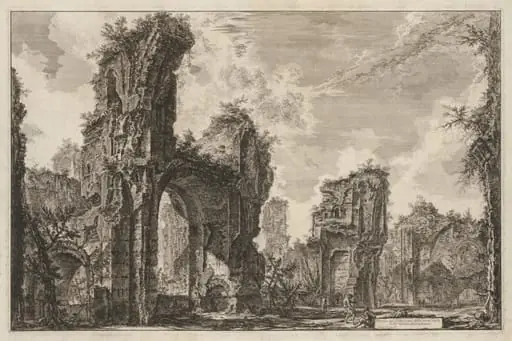 Views of Rome: Rovine del Sisto o sia della gran sala delle Terme Antoniniane
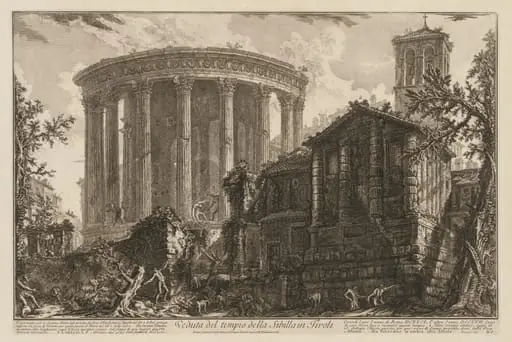 Views of Rome: Temple of the Sibyl at Tivoli
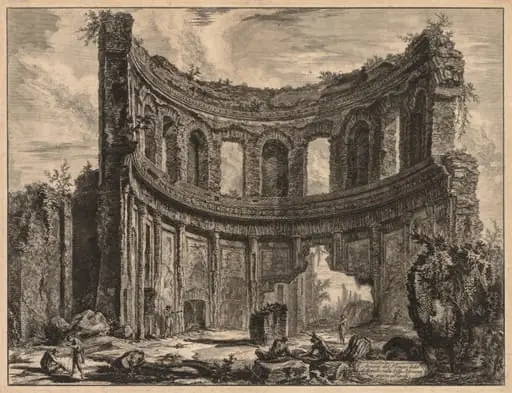 Views of Rome: Remains of the Temple of Apollo near Hadrian's Villa
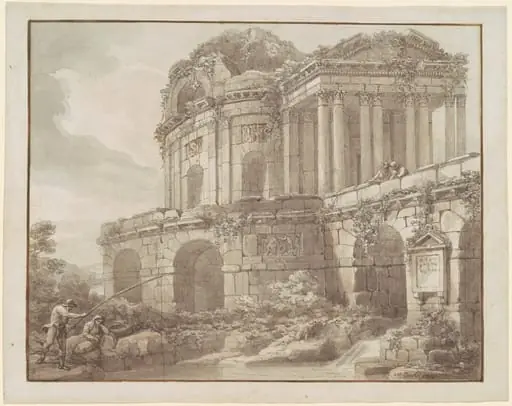 A Roman Ruin
 Temple of Concord and Roman Forum
 Views of Rome: The Arch or Titus
 Landscape with Classical Ruins