Artwork
Portrait of Archduke Leopold Willem of Austria in a flower garland
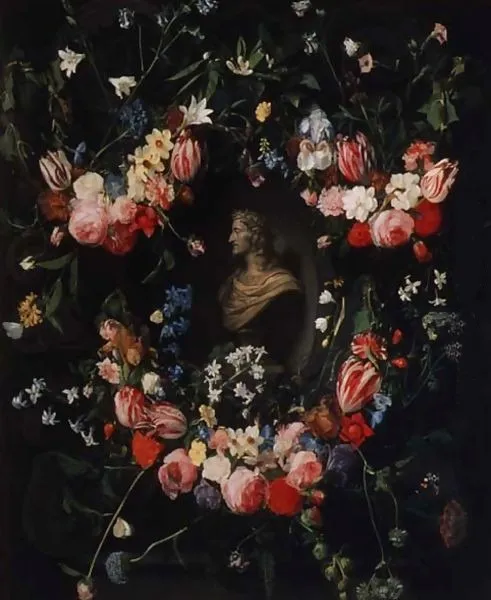
Portrait of Archduke Leopold Willem of Austria in a flower garland is an oil painting by the Flemish Baroque painting artist Daniel Seghers. It dates from 1650 and is held in the collection of the Uffizi Gallery.
About this work
Overview
Painted around 1650, this oil-on-canvas work merges portraiture with floral still life, a specialty of Flemish Jesuit painter Daniel Seghers.
Painted around 1650, this oil-on-canvas work merges portraiture with floral still life, a specialty of Flemish Jesuit painter Daniel Seghers. The composition centers on Archduke Leopold Wilhelm of Austria, whose face emerges subtly from an overflowing wreath of blooms. Seghers, known for his meticulous floral arrangements, crafted this piece to serve both as a likeness and a symbol of aristocratic refinement, blending devotional and courtly aesthetics in the Flemish Baroque tradition.
Subject & Meaning
The archduke, a Habsburg prince and art patron, is depicted not in regalia but framed by nature’s abundance. His face, softly rendered and partially obscured, suggests contemplation rather than grandeur. The dense garland of roses, tulips, and other blossoms symbolizes earthly beauty and transience, while also signaling the patron’s access to rare, exotic flora, evidence of global reach and wealth. The image functions as a quiet assertion of status through cultivated taste.
Technique & Style
Seghers employed a smooth, layered brushwork to render petals with luminous depth, creating a tactile sense of texture and light. The dark background intensifies the vibrancy of the flowers, which appear to spill beyond the frame. His technique avoids overt realism in the portrait, favoring a hazy, atmospheric rendering that integrates the figure into the floral surround.
This fusion of genres, portraiture and still life, was a hallmark of his mature style and appealed to elite collectors seeking symbolic richness.
History & Provenance
Commissioned during Leopold Wilhelm’s tenure as Governor of the Spanish Netherlands, the painting likely originated in Brussels or Antwerp, centers of Flemish artistic production. It entered the Medici collection in Florence by the late 17th century and has remained in the Uffizi Gallery since. Its preservation reflects the enduring value placed on such hybrid works within Habsburg and Medici circles, where art served both personal and political expression.
Context
Flower garland paintings flourished in early 17th-century Flanders as devotional and aristocratic commissions, often involving collaborations between figure and still-life specialists. Seghers, as a Jesuit, brought spiritual undertones to these works, aligning floral cycles with themes of resurrection and divine order. The genre catered to collectors who valued nature’s artistry as a reflection of God’s creation and the patron’s cultivated piety and power.
Legacy
Seghers’ approach influenced later still-life traditions in Northern Europe, particularly in the integration of human presence within natural arrangements. While not widely imitated in form, his method of embedding portraiture within floral symbolism became a reference point for artists exploring the intersection of identity and nature. The Uffizi’s holding preserves one of the clearest examples of this distinctive Flemish genre at its height.
Artist & collection
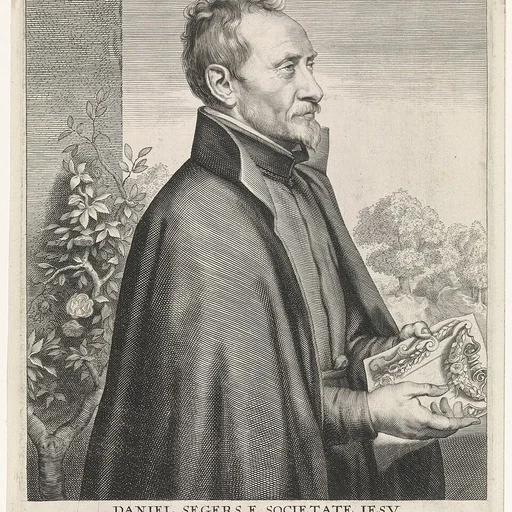
Artist
Daniel Seghers (3 December 1590 – 2 November 1661) was a Flemish Jesuit brother and painter who specialized in flower still lifes.

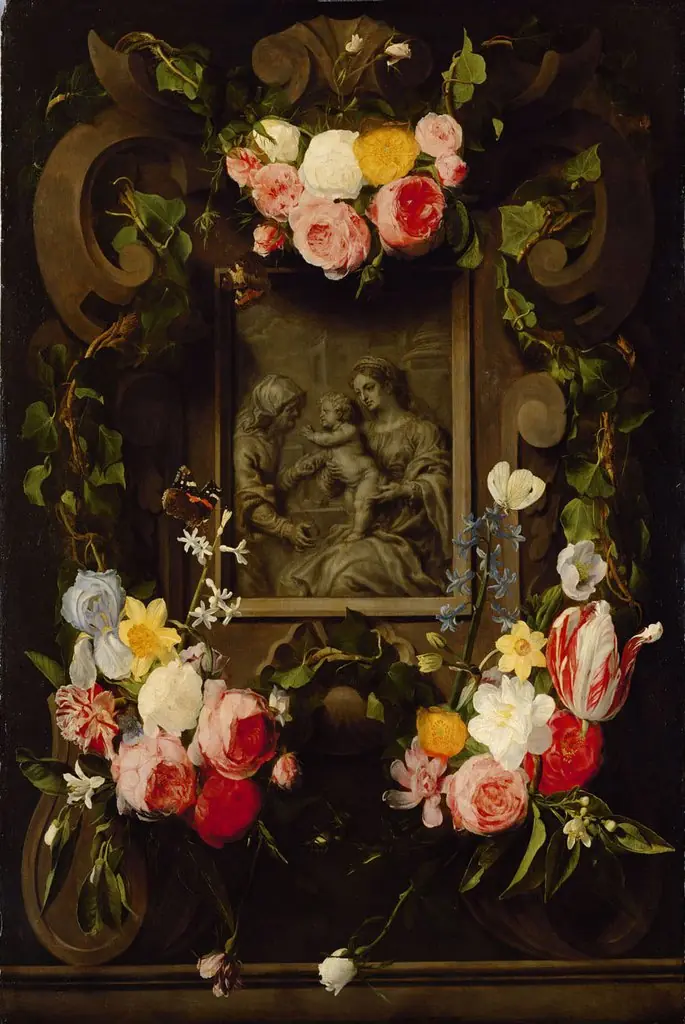 Madonna and Child with St Anna in a Flower Garland
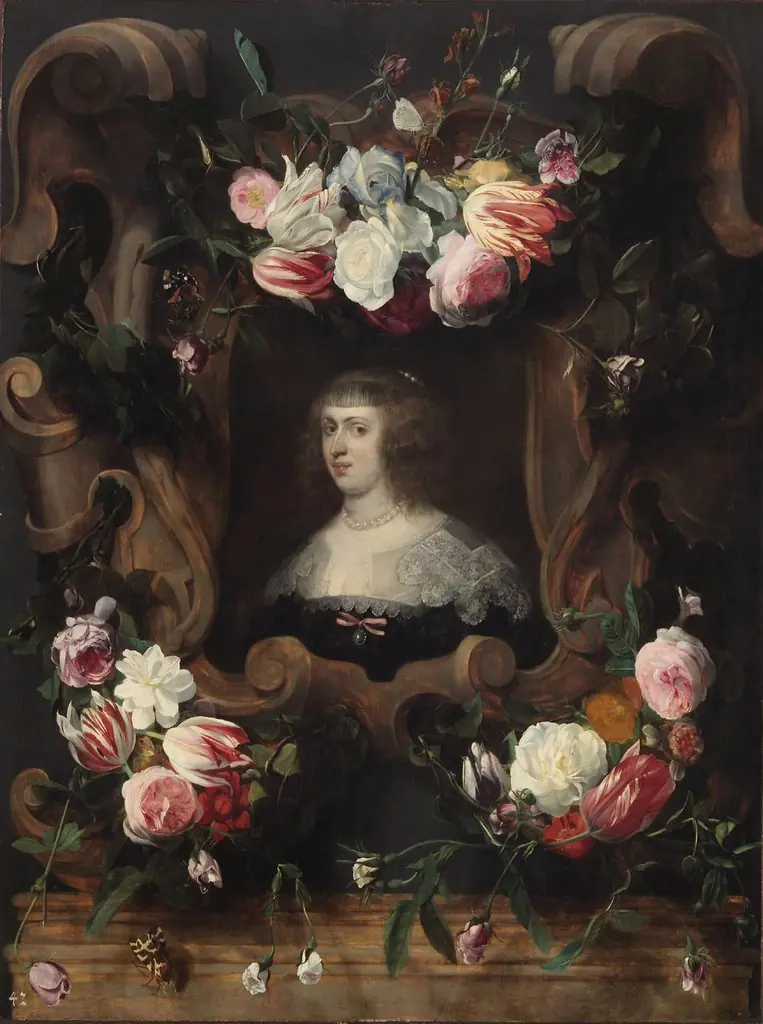 Cartouche decorated with flowergarlands surrounding a portrait of archduchess Maria Anna of Austria (1610-1665)
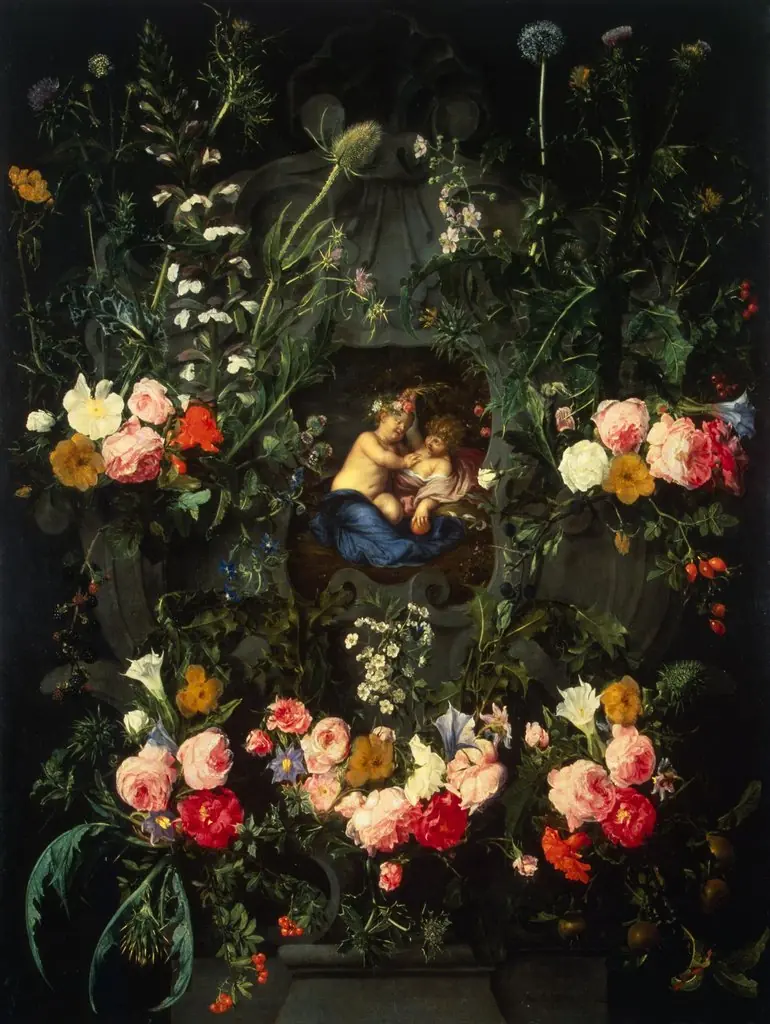 Garland of Flowers Around a Cartouche with Jesus and St John the Baptist as Children
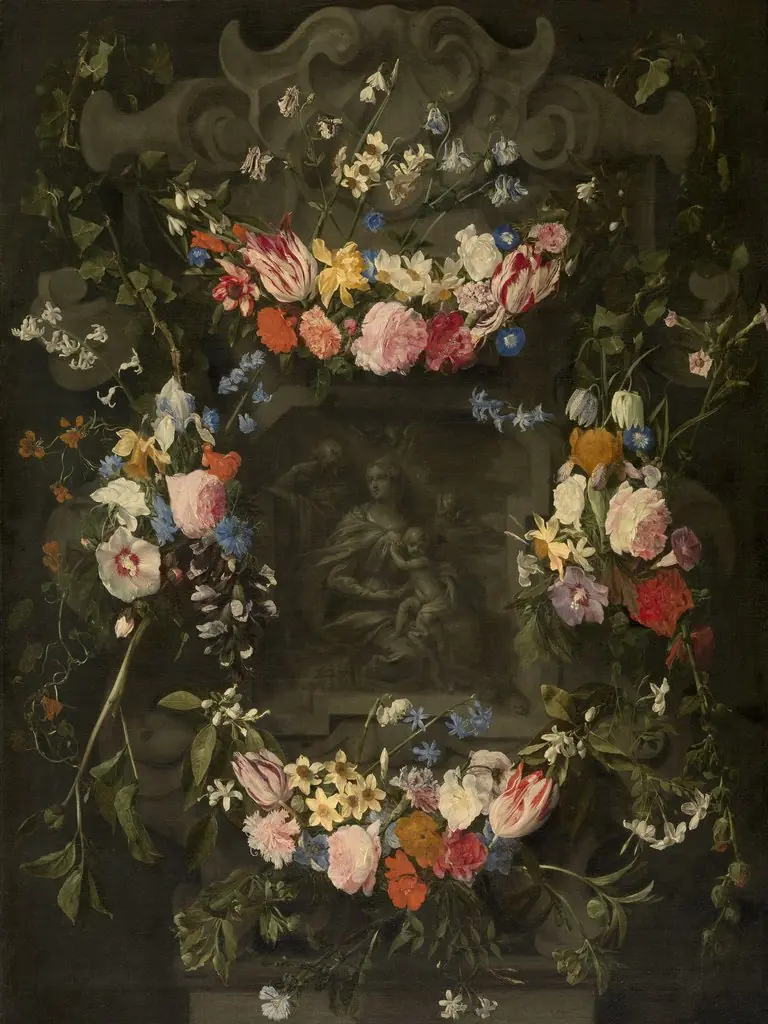 Holy Family in a Flower Garland
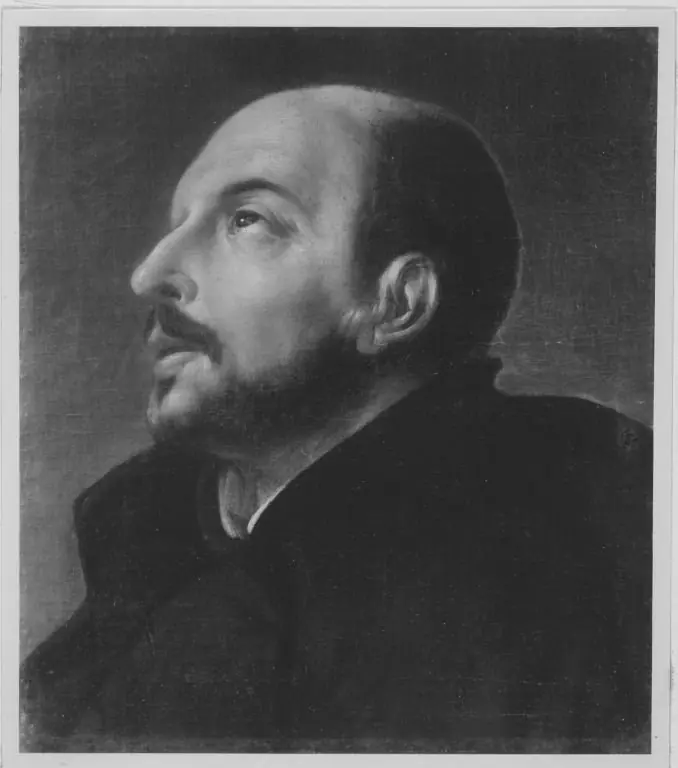 Bust portrait of Ignatius of Loyola
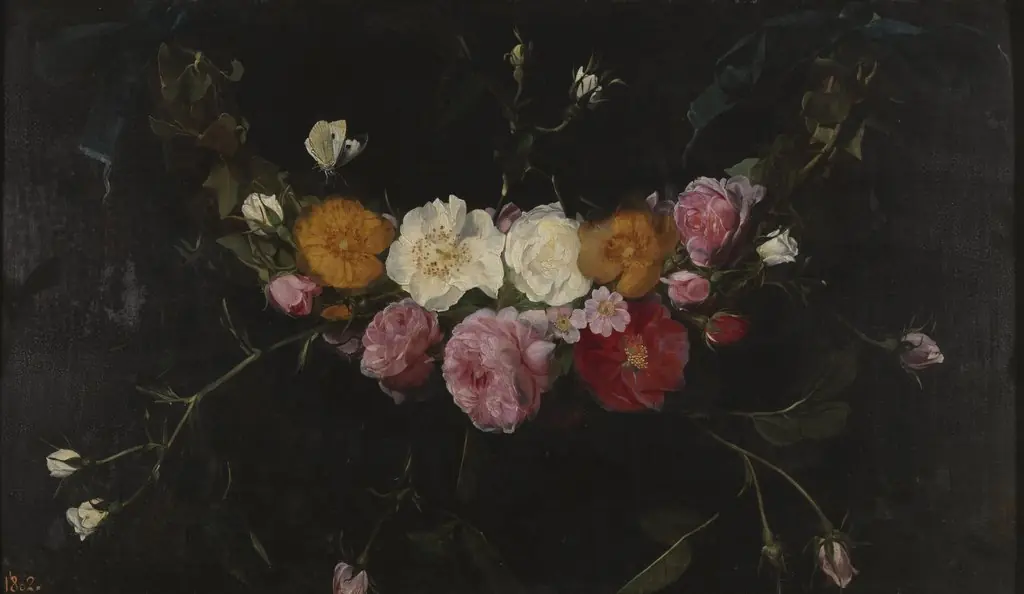 Garland of Roses
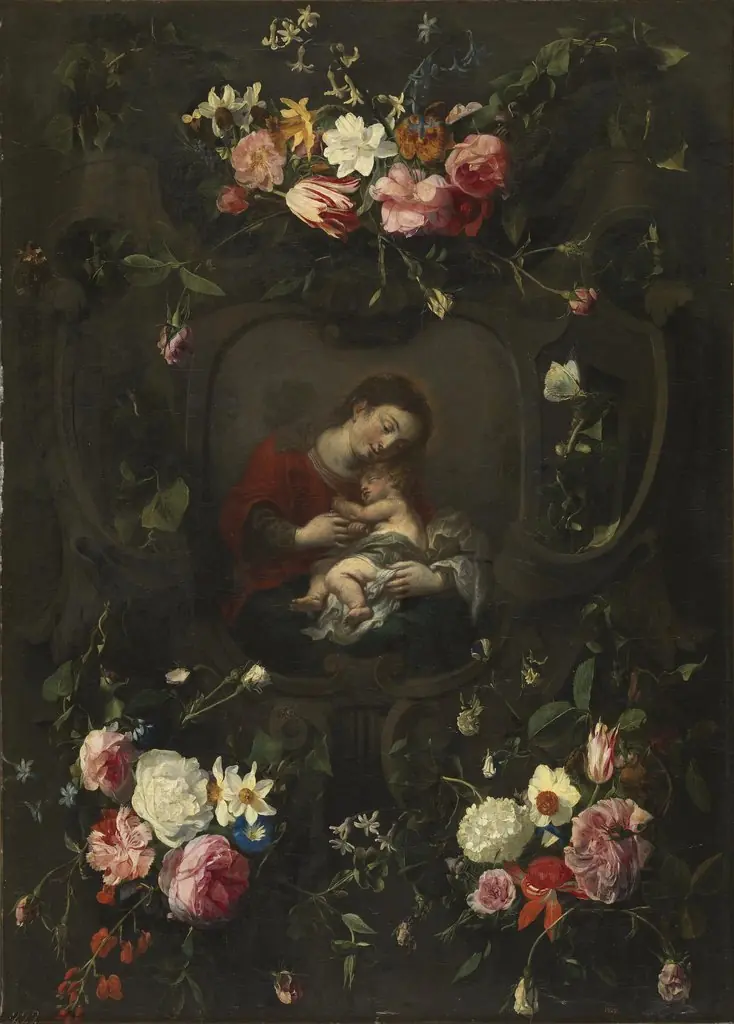 Flower garland around a Madonna and Child
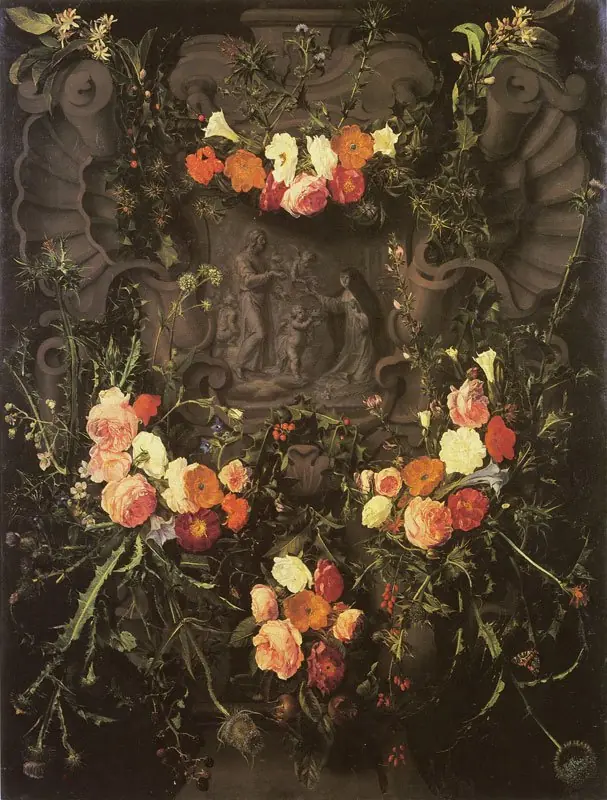 Saint Catherine of Siena Surrounded by a Garland of Flowers
- Flower garland cartouche around the Madonna and Child
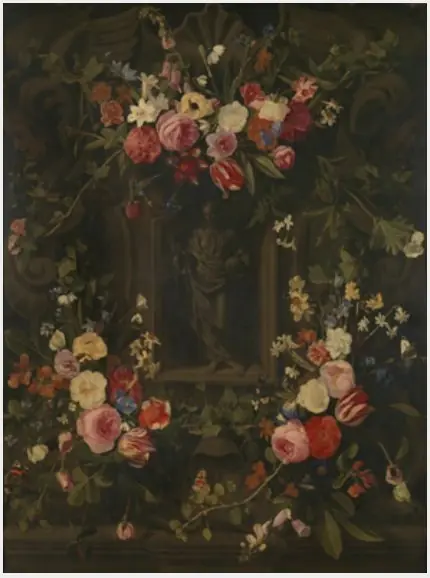 Salvator Mundi in a niche surrounded by flower garlands
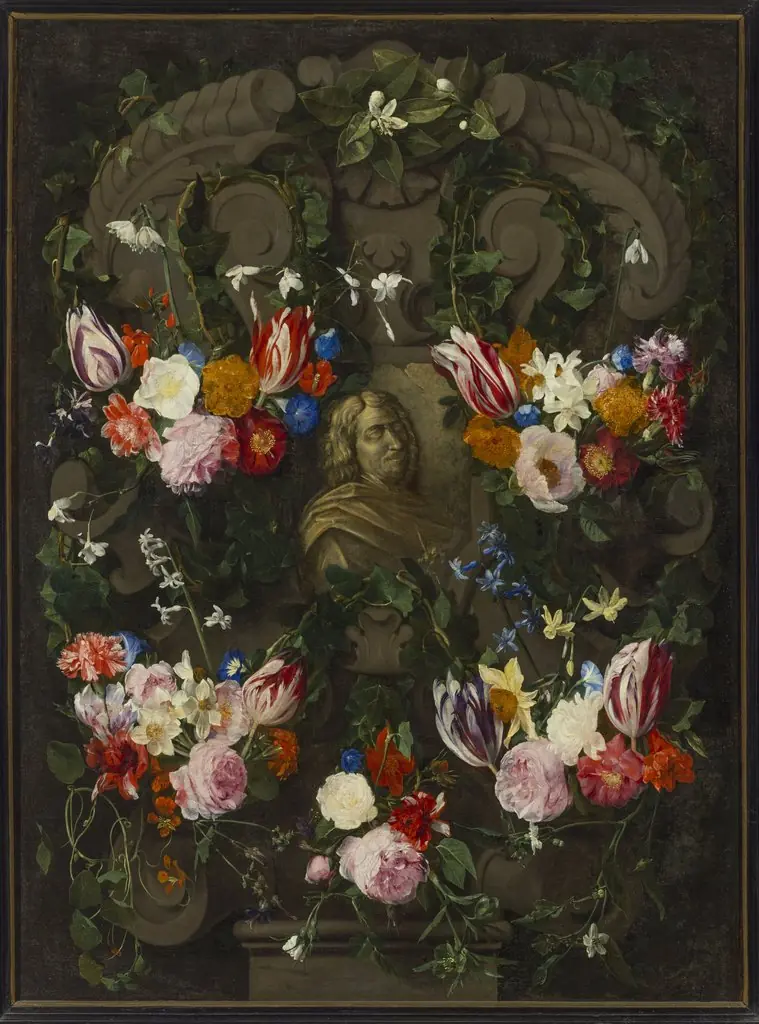 Portrait of Nicolas Poussin
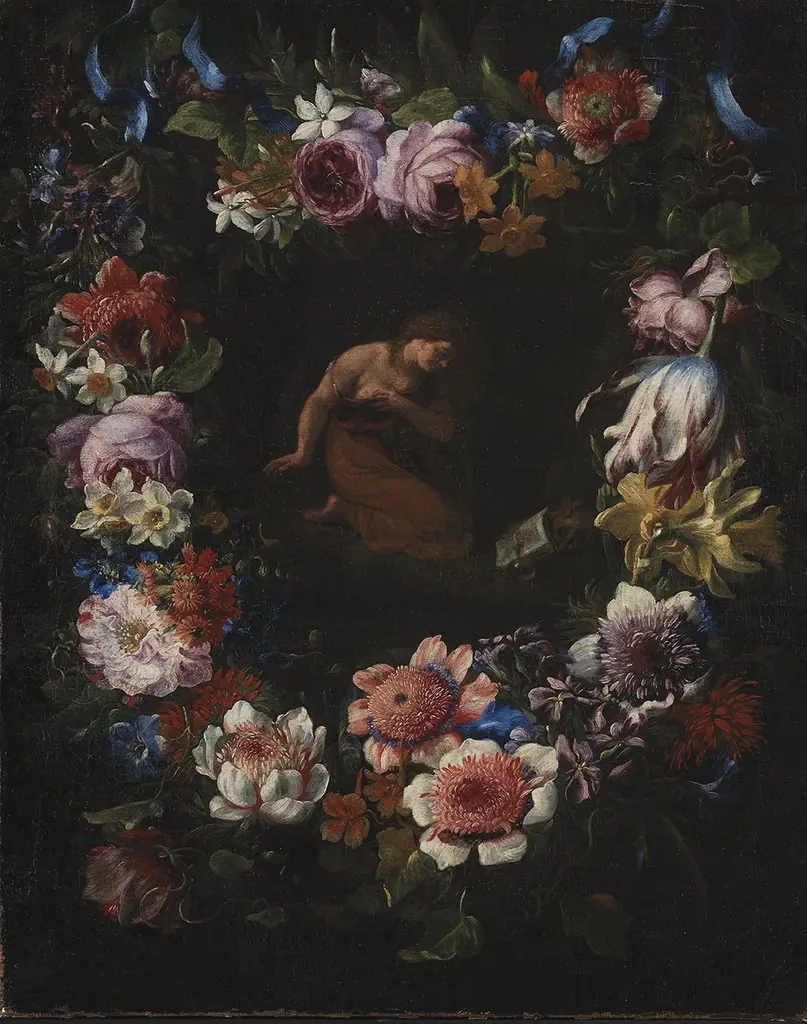 A Wreath of Flowers
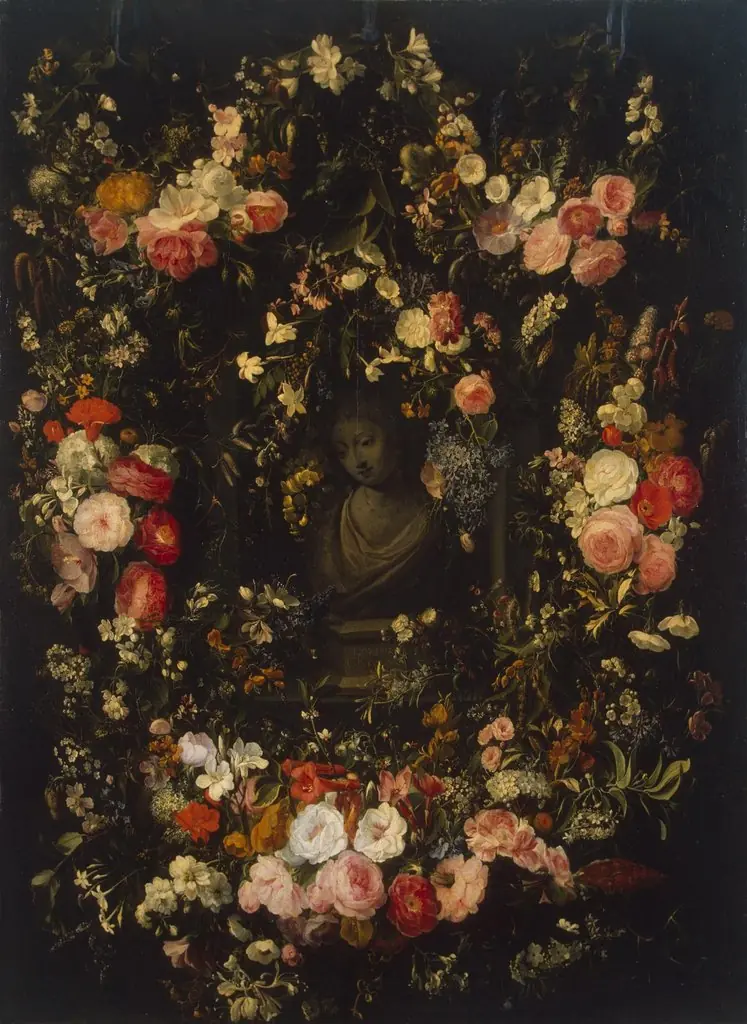 Bust of the Virgin Framed with a Garland of Flowers
 A Wreath of Flowers
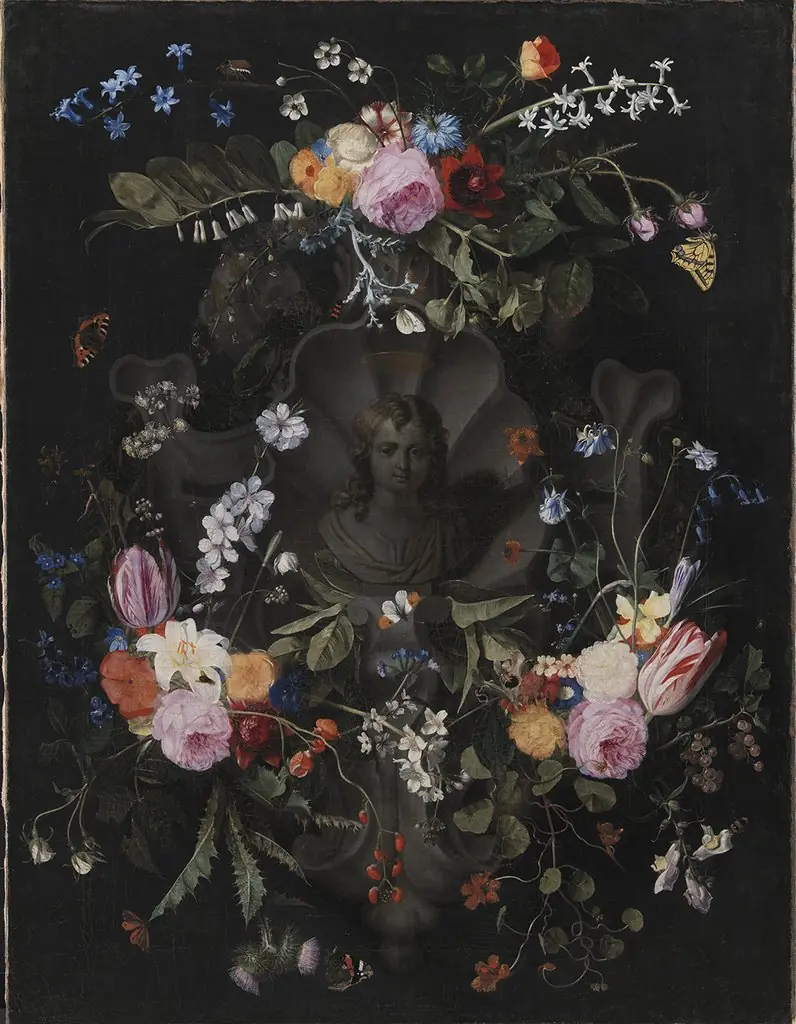 Cartouche with the bust of Jesus surrounded by festoons
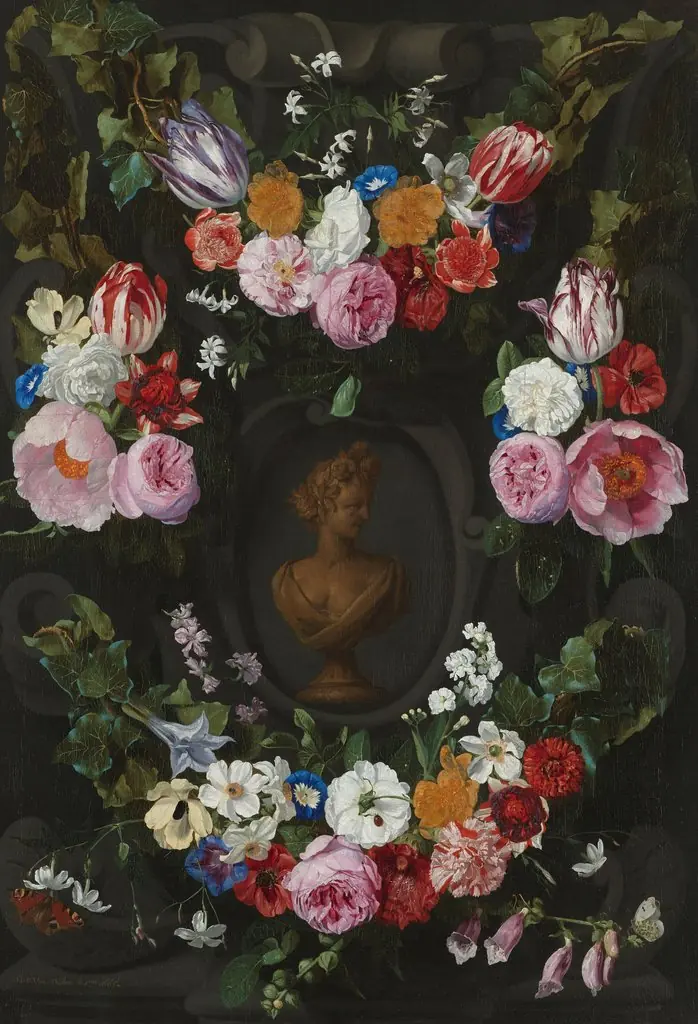 Festoon of flowers encircling a bust of Flora
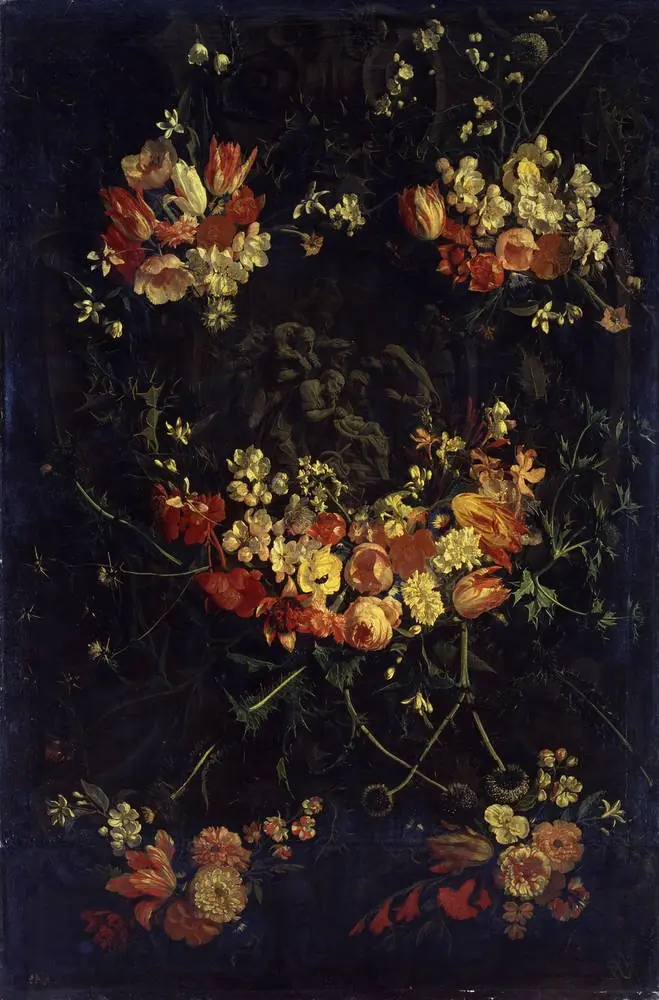 Sculpted cartouche adorned with flowergarlands with the adoration of the Christ-child by the shepherds
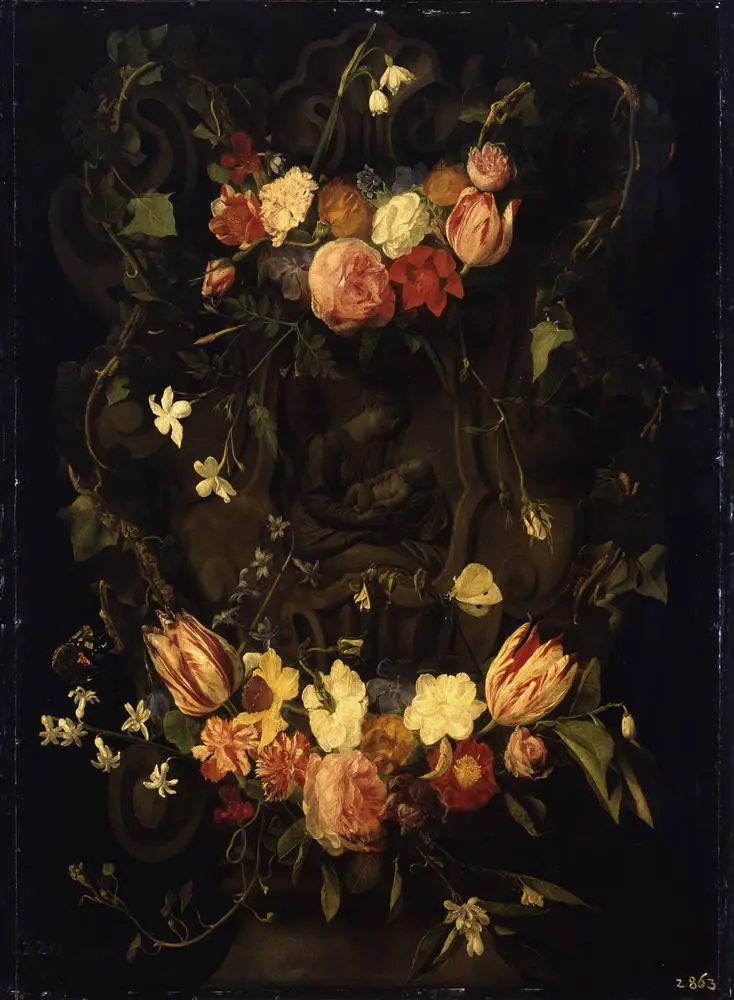 Sculpted cartouche adorned with flowergarlands with a representation of the Virgin and Christ-child
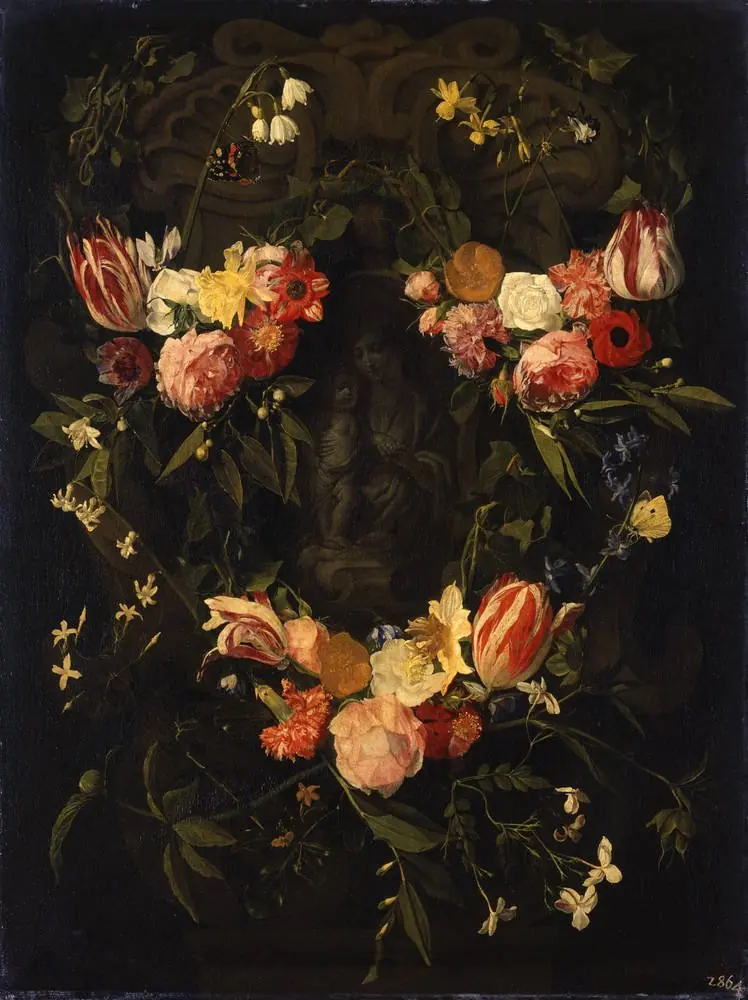 Sculpted cartouche adorned with flowers with a representation of the Virgin and Christ Child
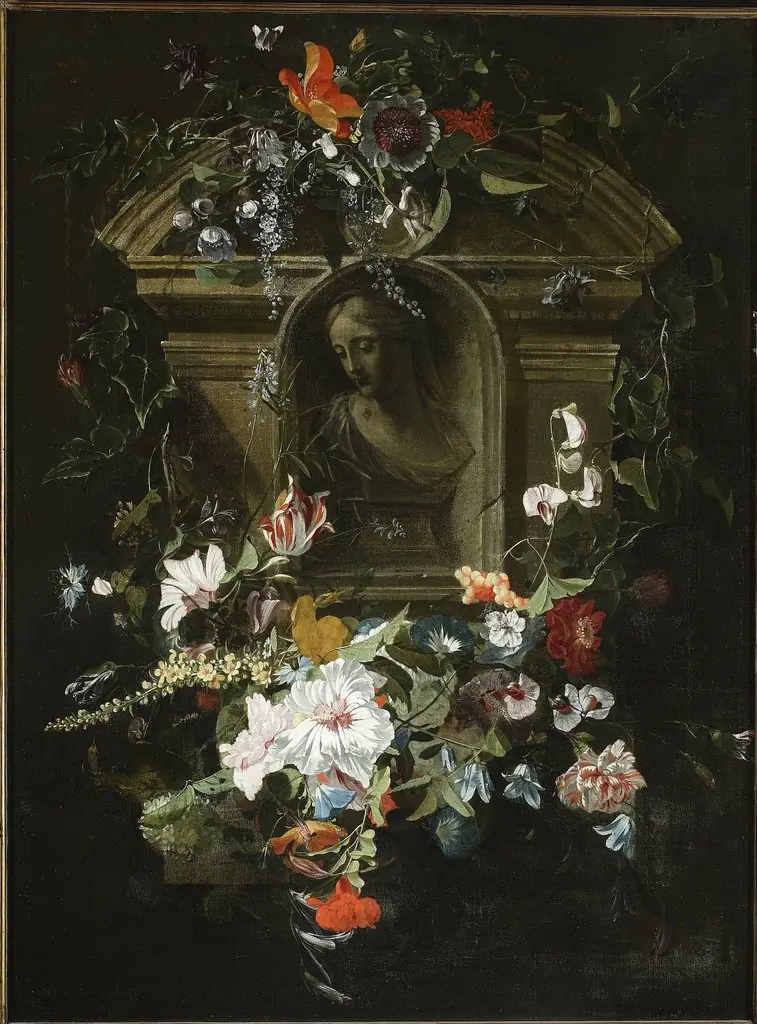 Bust of a woman in a circle of flowers