Artwork
A Donkey by a Water Well
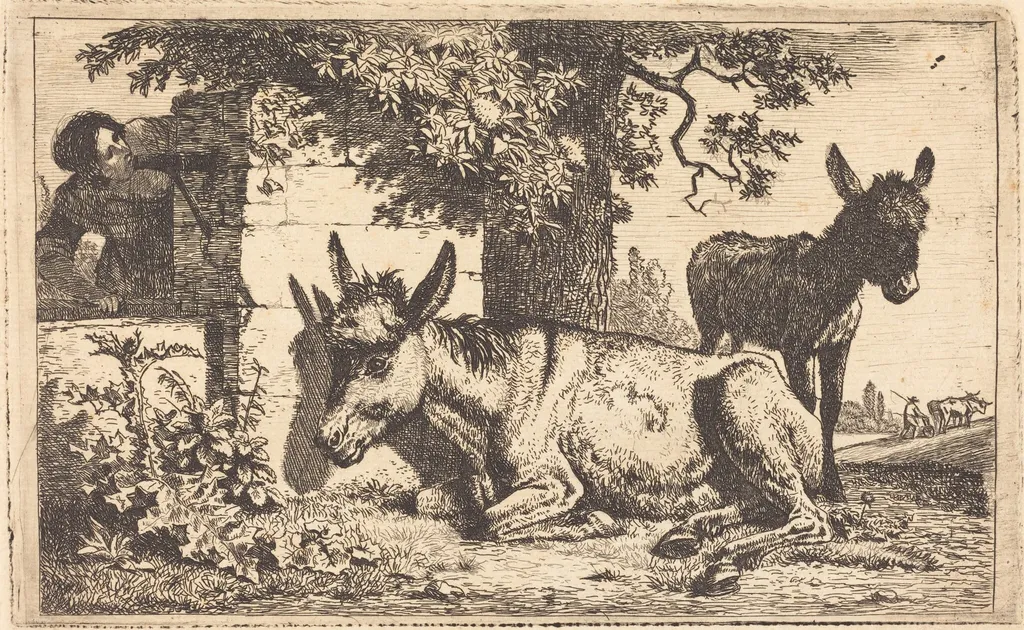
A Donkey by a Water Well is an ink print by the Baroque artist Jean-Louis Demarne. It dates from 1786 and is held in the collection of the National Gallery of Art.
- Inscription
- Inscribed:by later hand, across bottom verso in graphite: van Kessel Nagler 59
About this work
Overview
Created in 1786, this etching by Jean-Louis Demarne depicts a donkey at a stone well, rendered in black ink on laid paper. The composition is sparse, with no decorative elements to distract from the animal and its immediate surroundings. The work belongs to the printmaking tradition of late 18th-century France, where everyday subjects were rendered with quiet attention to form and texture.
Subject & Meaning
The donkey, a common working animal in rural France, is shown in a moment of quiet repose, drinking from a well. The absence of human figures or narrative context emphasizes the animal’s solitary presence. The scene suggests a routine, unremarkable moment in agricultural life, inviting contemplation rather than storytelling.
Technique & Style
Demarne combined etching and drypoint techniques to achieve varied line quality. Etching provided fine, controlled contours, while drypoint added rich, fuzzy strokes that enhanced the texture of the donkey’s coat and the rough stone of the well. The paper’s laid texture contributes to the tactile quality, reinforcing the earthy realism of the subject.
History & Provenance
The print was produced during Demarne’s active period in the 1780s, though little is documented about its early ownership. It survives as a modest example of his graphic work, likely intended for private collectors rather than public display. Its preservation reflects a continued interest in artisanal printmaking during a time of shifting artistic priorities.
Context
In the decades before the French Revolution, there was growing interest in depicting rural labor and animals with dignity, moving away from aristocratic themes. Demarne’s work aligns with this trend, capturing the quiet dignity of common life. His choice of subject reflects broader cultural shifts toward realism and the observation of ordinary existence.
Legacy
Demarne’s etching remains a quiet example of 18th-century French printmaking, valued for its technical restraint and observational honesty. Though not widely known today, it contributes to the understanding of how everyday subjects were rendered in print before the rise of Romanticism and industrial-era imagery.
Own this work as a print
Artist & collection