Artwork
La arat
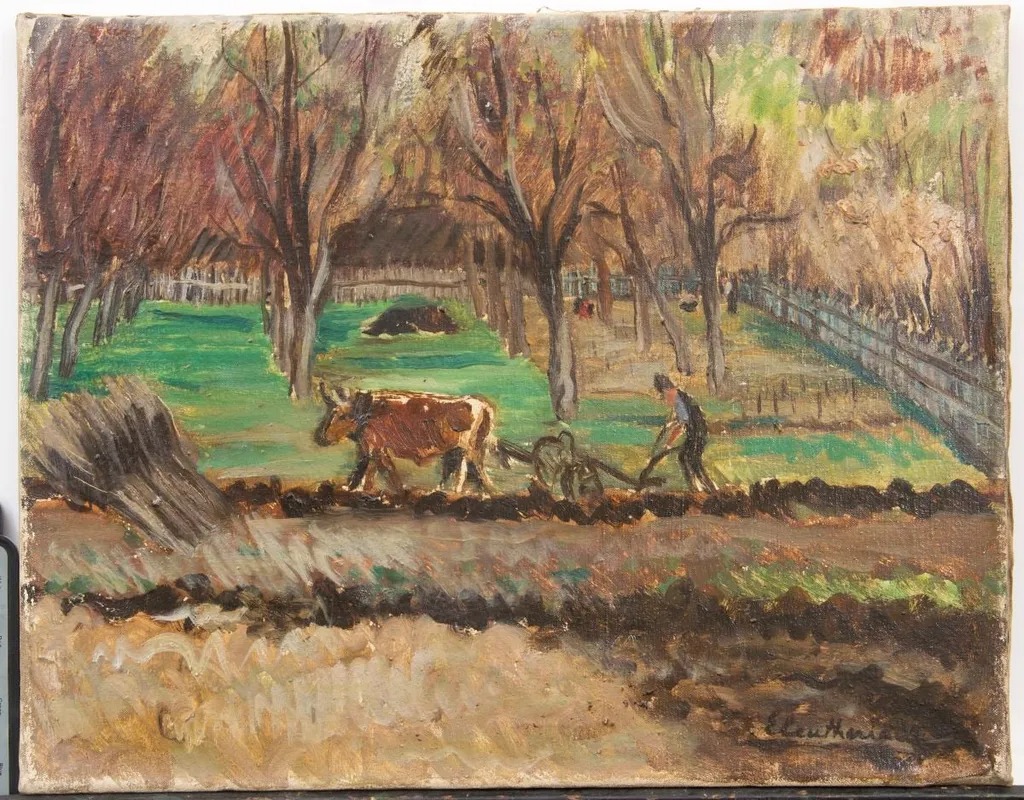
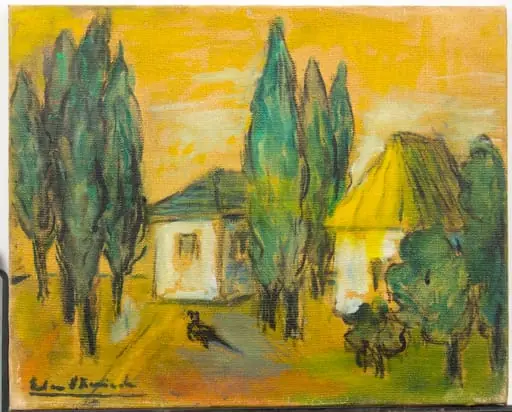
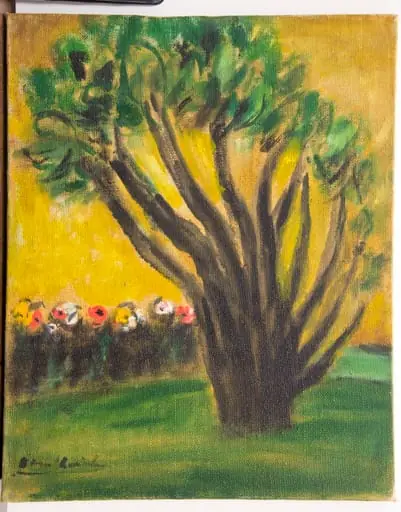
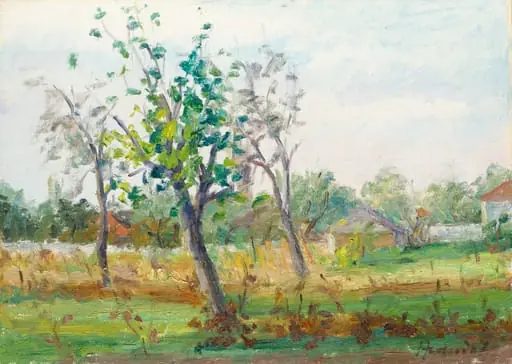
La arat is an unspecified painting by Micaela Eleutheriade. It dates from 1948 and is held in the collection of the National Museum of Art of Romania.
About this work
Overview
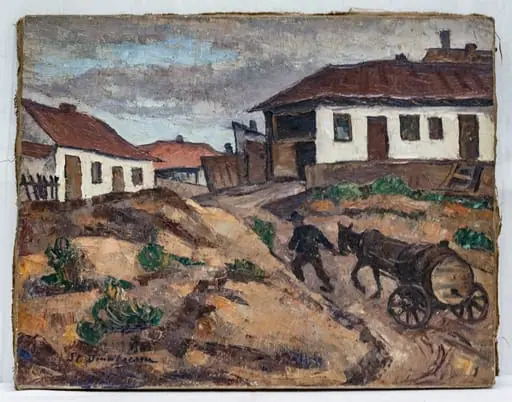
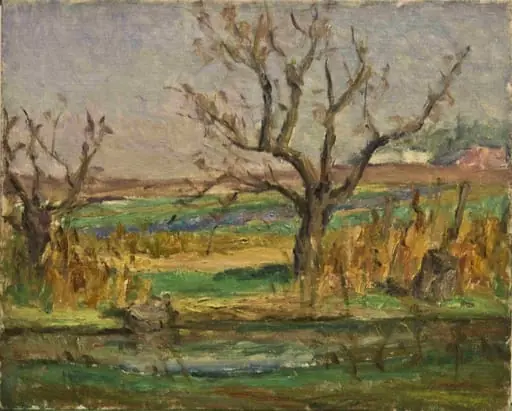
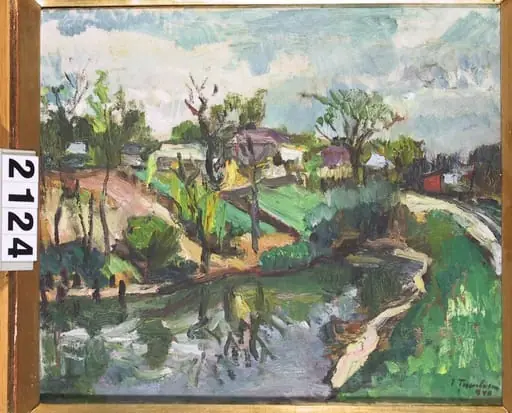
Created in 1948 by Greek painter Micaela Eleutheriade, La arat depicts a rural labor scene. The composition centers on a figure guiding a plow pulled by two oxen across a field, set against a backdrop of sparse, leaf‑stripped trees that suggest the transition from autumn to winter.
Subject & Meaning
The work portrays the physical demands of traditional agriculture, emphasizing the relationship between human, animal, and land. The depiction of strained muscles and the forward motion of the plow convey the toil inherent in cultivating the earth, reflecting a reverence for agrarian labor.
Technique & Style
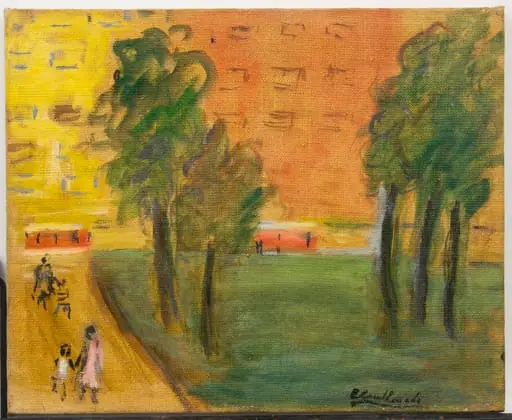
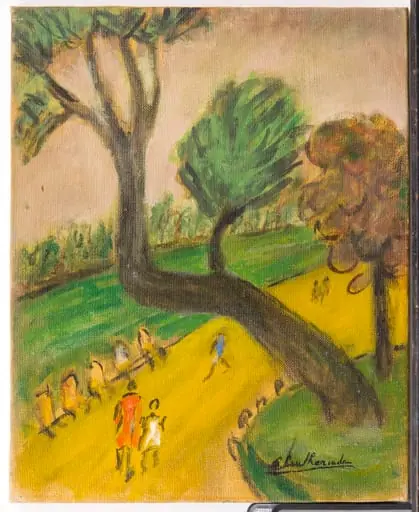
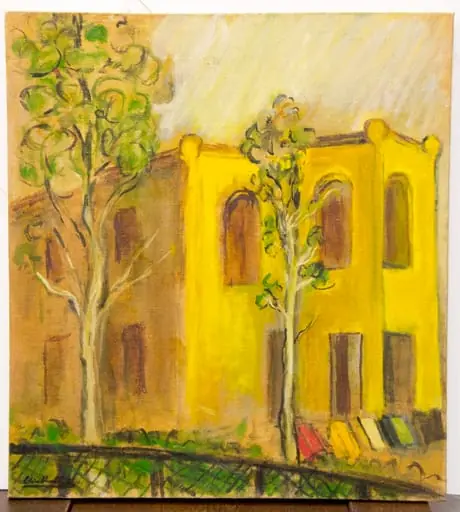
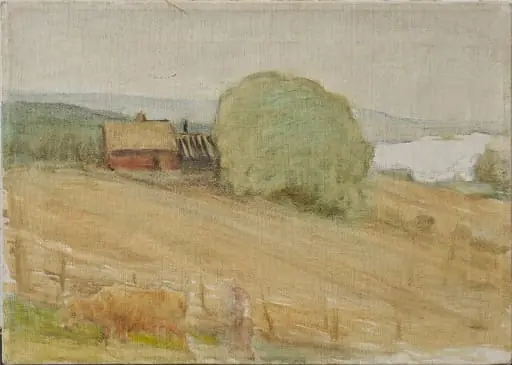
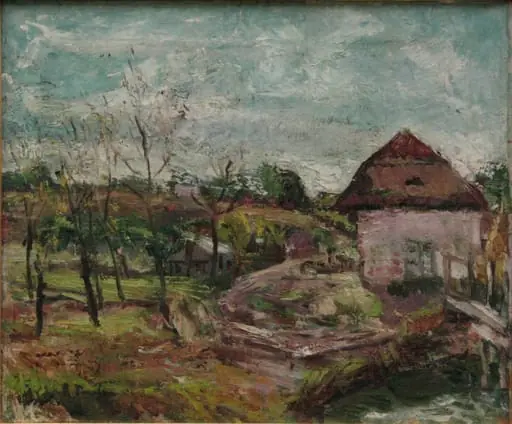
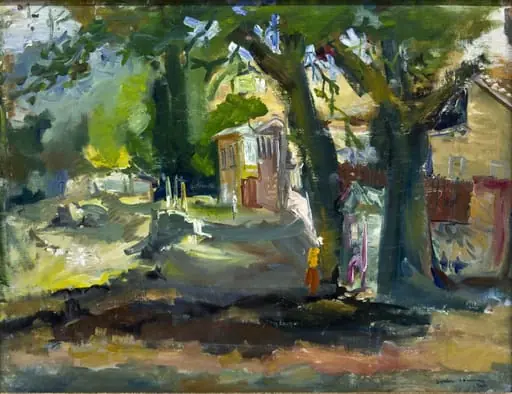
Eleutheriade employs loose, visible brushstrokes that lend the surface a tactile, handcrafted quality. A muted palette of earth tones, greens for the grass, browns for the trees and soil, reinforces the natural setting, while the textured application highlights the muscular forms of the oxen and the dynamism of the plowing action.
History & Provenance
La arat was painted shortly after World War II, a period when many artists turned to rural subjects to explore themes of renewal and resilience. The piece remains attributed to Eleutheriade and is documented in her 1948 catalogue of works, though its exhibition history and subsequent ownership are not extensively recorded.
Artist & collection

Artist
Micaela Eleutheriade (1900–1982) was a noted Romanian painter and engraver. She was a descendant, through her mother, of the painter Gheorghe Tattarescu, the pioneer of neoclassicism in Romania.