Artwork
La visita de la madre al hospital
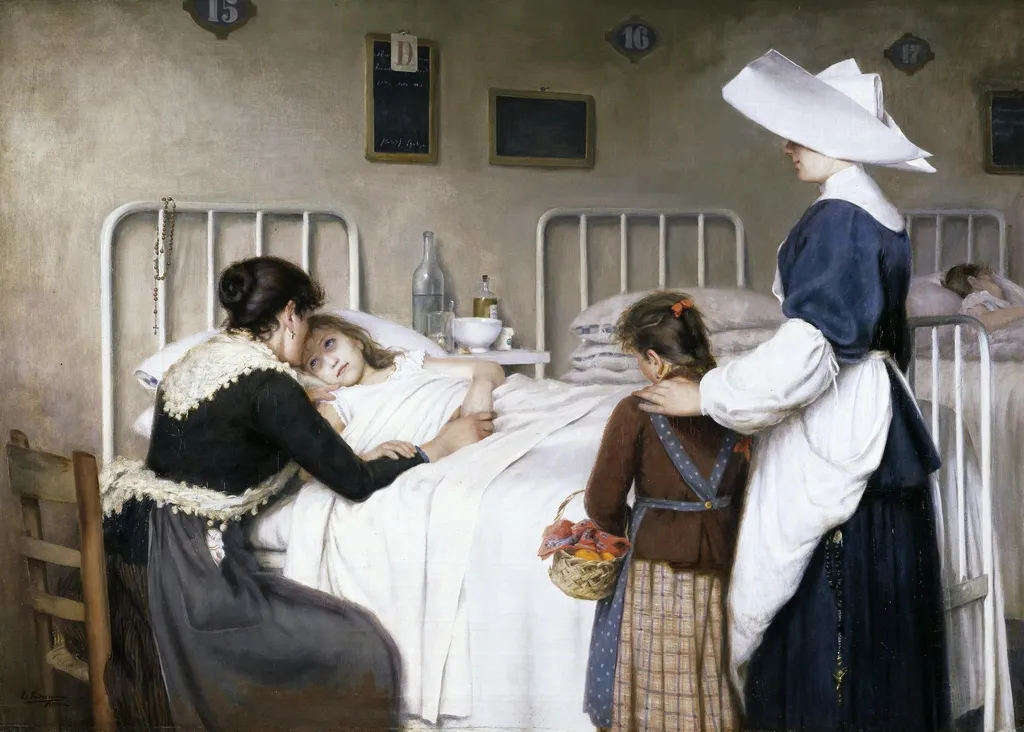
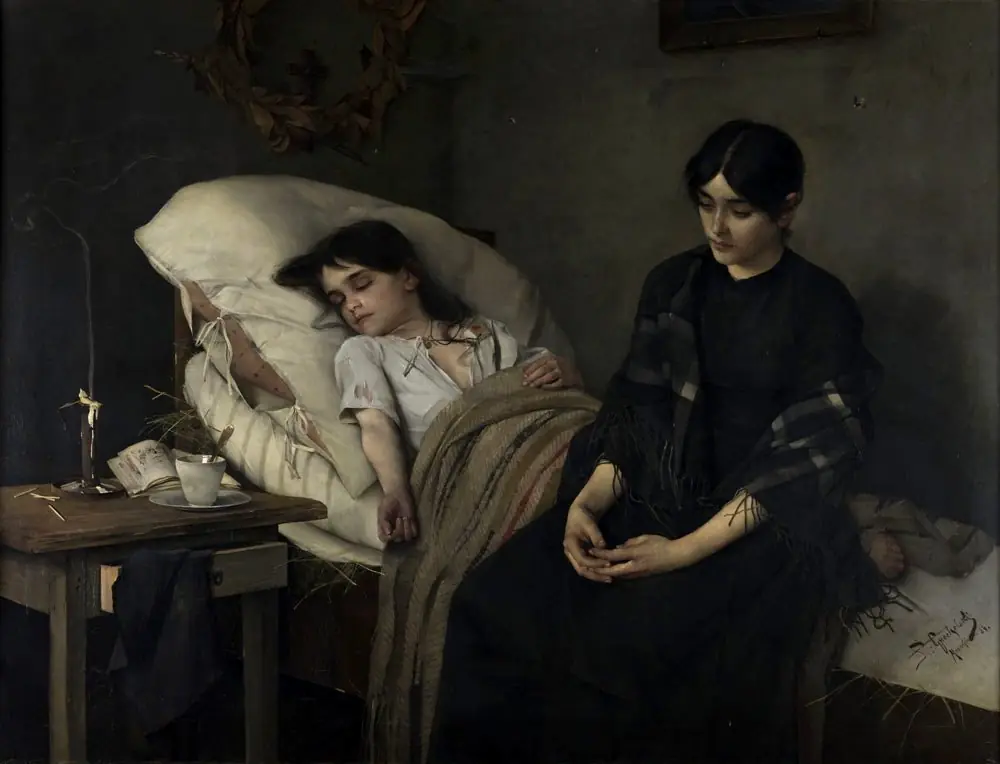
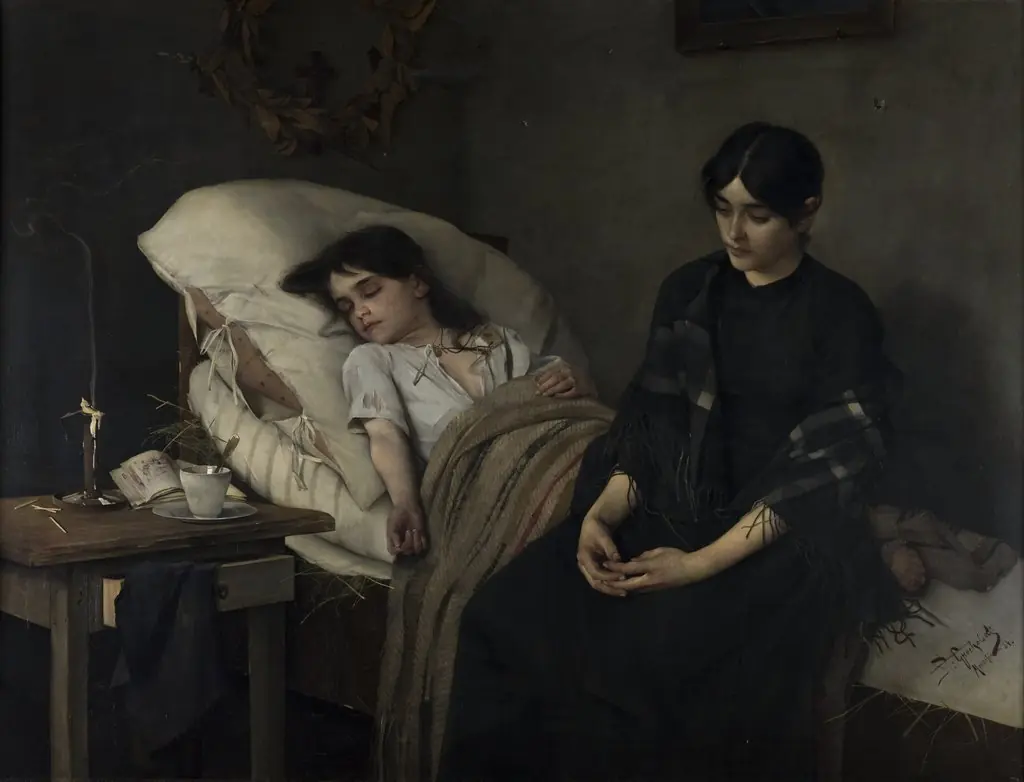
La visita de la madre al hospital is an oil painting by the Post-Impressionist artist Enrique Paternina. It dates from 1896 and is held in the collection of the Museo del Prado.
About this work
Subject & Meaning
These objects likely serve to underscore the themes of illness, caregiving, and spiritual comfort within the context of the mother's visit.
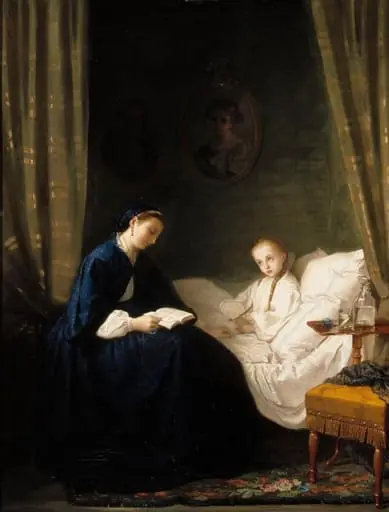
Enrique Paternina's 1892 oil painting portrays a domestic interior scene centered on a hospital visit, as indicated by the title. The composition features specific furnishings and objects that establish the setting, including a bed and a seat. Among the depicted items are a bottle and a rosary, which introduce elements of medical care and religious devotion into the narrative.
These objects likely serve to underscore the themes of illness, caregiving, and spiritual comfort within the context of the mother's visit.
Technique & Style
Executed in 1892, this work is an oil painting on canvas. The composition measures 150 cm in height and 208 cm in width. Visually, the piece depicts an interior scene featuring a bed, a seat, a bottle, and a rosary, elements that ground the narrative within a hospital setting.
The application of oil paint on a woven support aligns with standard late nineteenth-century academic practices for large-scale figurative works.
History & Provenance
La visita de la madre al hospital is an oil painting on canvas created in 1892 by Enrique Paternina. The work measures 150 cm in height and 208 cm in width. It was completed and entered the collection of the Museo del Prado, where it remains on display.
The painting entered the museum's holdings shortly after its creation, becoming part of the institution's permanent collection. It was commissioned as a work for the Museo del Prado and has been housed there since its inception.
Overview
Enrique Paternina’s 1896 oil on canvas, titled La visita de la madre al hospital, is part of the Prado Museum’s collection. The work presents an intimate interior scene illuminated by subdued light, drawing the viewer’s attention to the figures and objects that occupy the modest space.
Context
The painting reflects the social realities of Spain’s lower‑middle class at the turn of the century, where domestic spaces often doubled as sites of informal medical care. By focusing on a private moment rather than a grand historical narrative, Paternina aligns with contemporary genre painters who sought to capture everyday emotional experiences.
Own this work as a print
Artist & collection