Artwork
Untitled
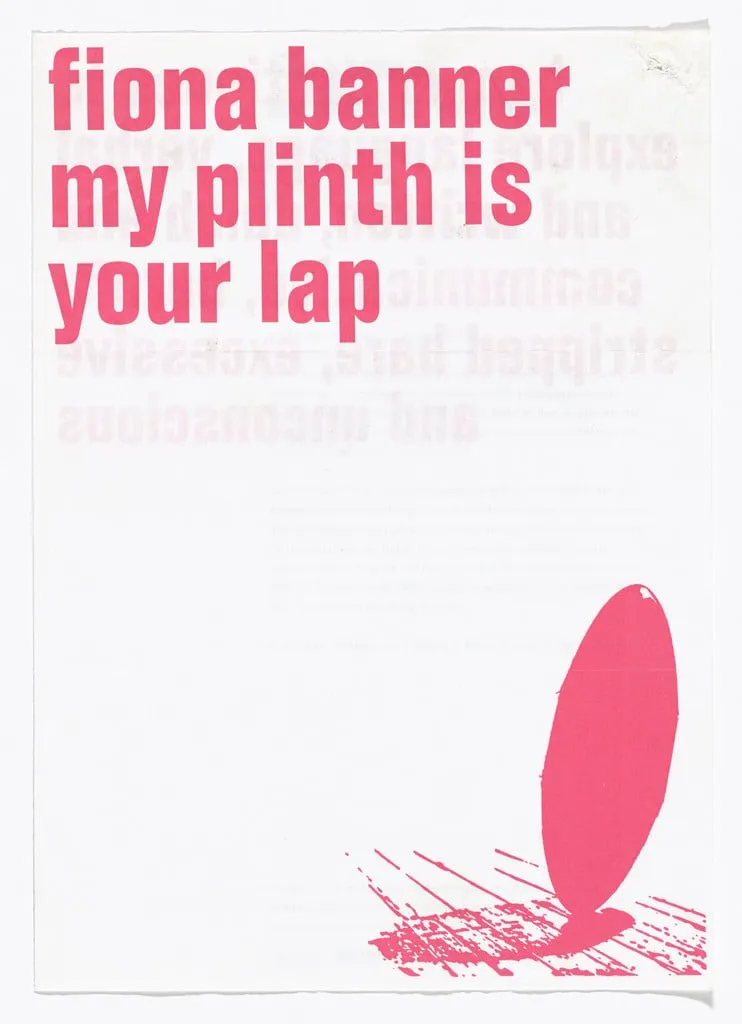
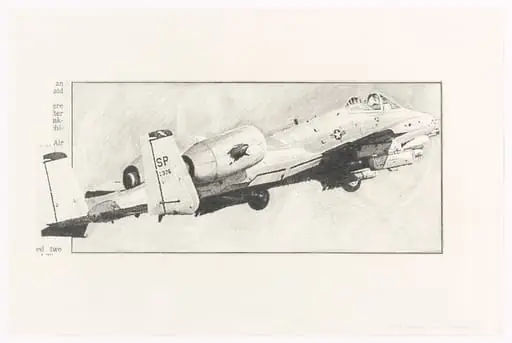
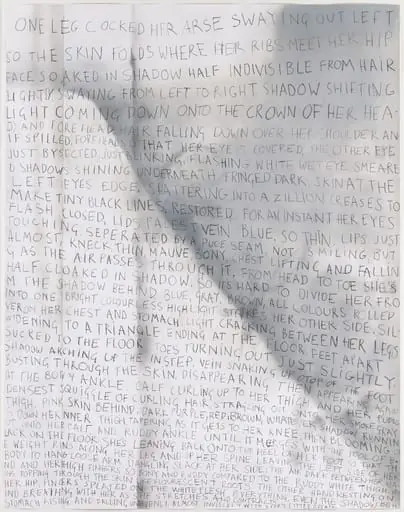
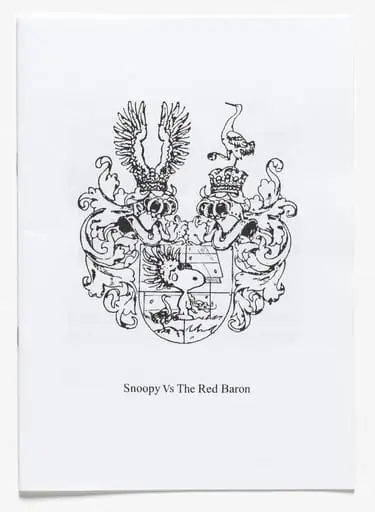
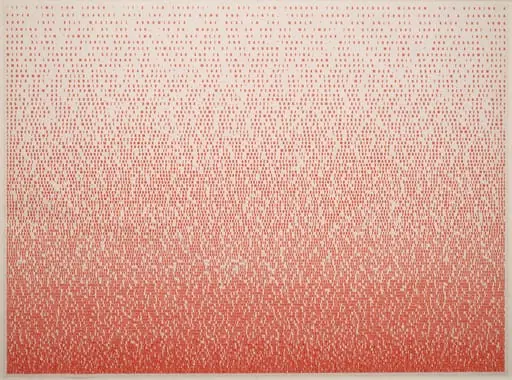
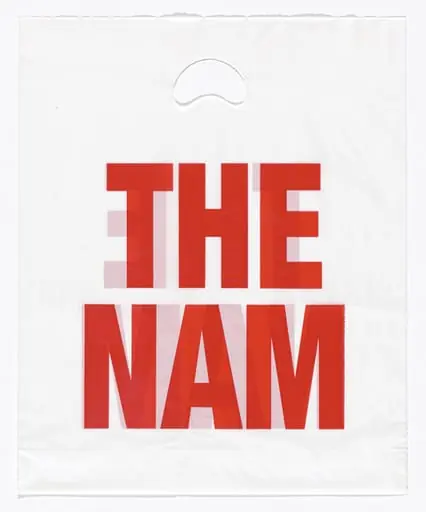
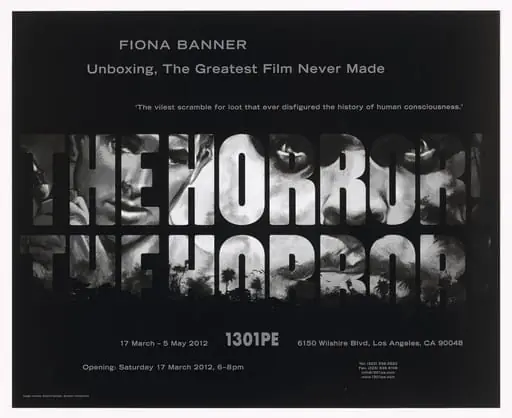
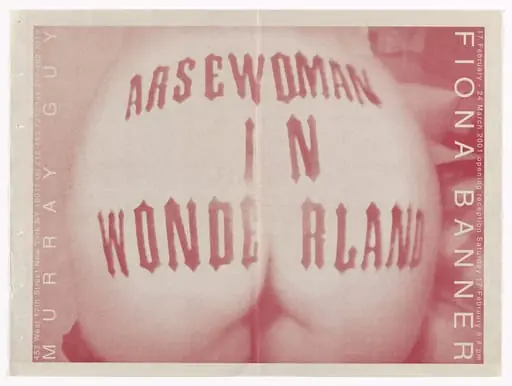
Untitled is an ink print by Fiona Banner. It dates from 2002 and is held in the collection of the Museum of Modern Art.
About this work
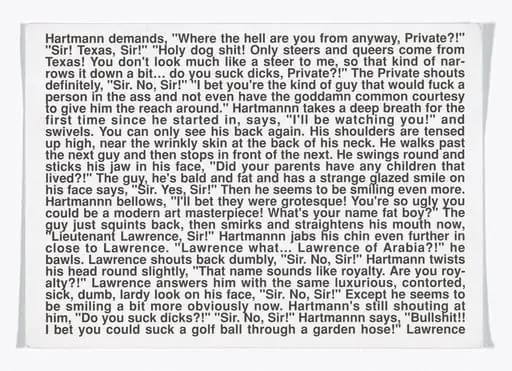
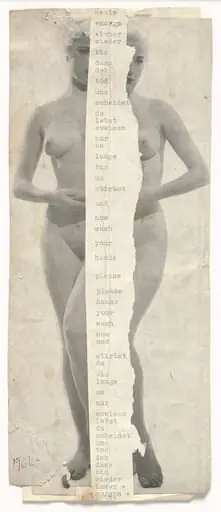
This looks like a folded brochure printed on both sides. It’s black ink on white paper, just words and numbers, no pictures.
It’s a real item from a 2002 art show. The artist printed it on thin paper you can open like a booklet. It’s not meant to hang on a wall.
This is made with a print method called lithography. It uses greasy ink on a flat stone. Check out Fiona Banner next.
Overview
Designed to be held and opened, it resists traditional wall-based display, emphasizing physical interaction over passive viewing.
Fiona Banner created this double-sided lithograph in 2002 as a folded, booklet-like object. Printed in black ink on thin white paper, it contains no imagery, only text and numerical data. Designed to be held and opened, it resists traditional wall-based display, emphasizing physical interaction over passive viewing. The work is part of a broader series using print techniques to interrogate military representation.
Subject & Meaning
The piece presents textual fragments likely drawn from aviation manuals, flight logs, or cinematic scripts involving fighter jets. By stripping away visual context, Banner redirects attention to the language that constructs military narratives. The absence of images forces engagement with the dry, technical vocabulary that normalizes violence, exposing how media shapes perception of warfare.
Technique & Style
Produced via lithography, the work relies on the chemical repulsion of grease and water on a flat stone surface, yielding crisp, uniform text. The use of thin paper and folding transforms the print into a portable, intimate object. Minimalist in form, it rejects decorative elements, prioritizing clarity and material simplicity to mirror the austerity of its subject matter.
History & Provenance
Created for exhibition in 2002, this lithograph emerged during a period when Banner was intensively researching military aviation in popular culture. It was shown alongside other works in group exhibitions focused on war, media, and representation. Its compact, non-hanging format was intentional, distinguishing it from conventional gallery prints and inviting direct, personal engagement.
Context
Banner’s practice in the early 2000s engaged with the saturation of fighter aircraft imagery in film and news media. This work responds to the gap between the glamorous portrayal of combat and the clinical language used to describe it. By isolating textual remnants, she critiques how language sanitizes violence, aligning with broader conceptual art traditions that question representation.
Legacy
The work contributes to a sustained body of research into the aesthetics of militarized language. Its format, folded, textual, non-decorative, has influenced later artists exploring the materiality of information. It remains a quiet but persistent example of how print can function as both archive and critique, resisting spectacle in favor of contemplative engagement.
Artist & collection
Artist
Fiona Banner (born 1966), also known as The Vanity Press, is a British artist. Her work encompasses sculpture, drawing, installation and text, and demonstrates a long-standing fascination with the emblem of fighter…