Artwork
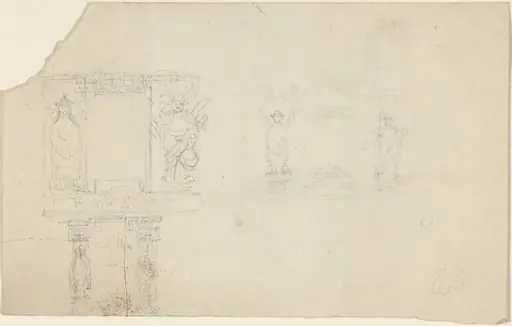
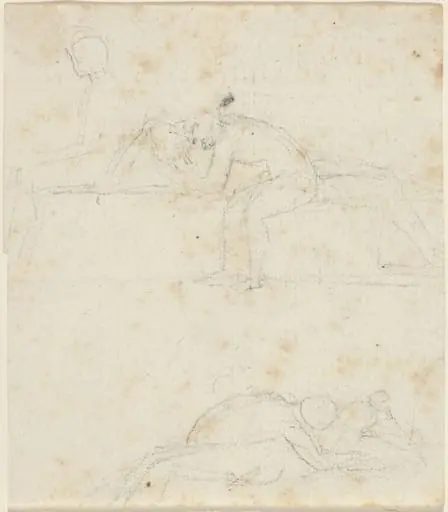
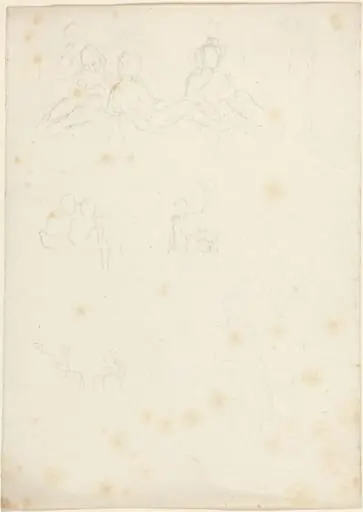
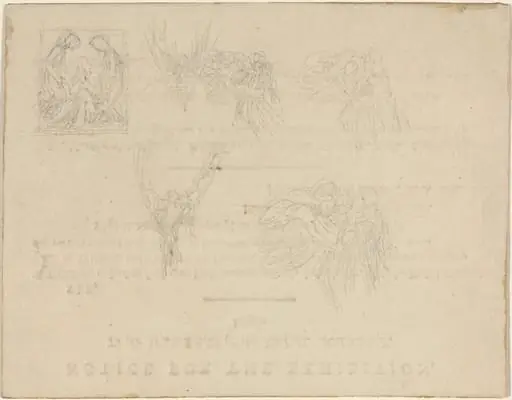
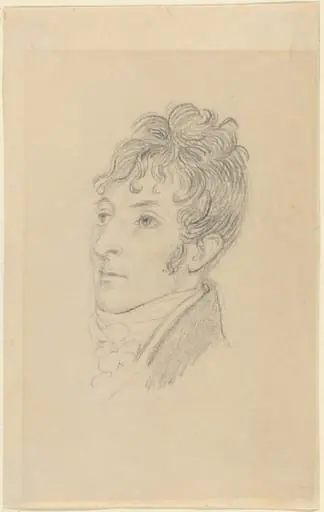
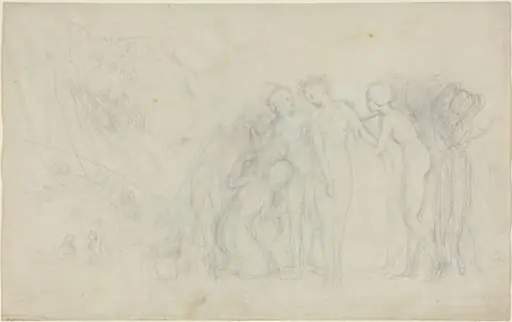
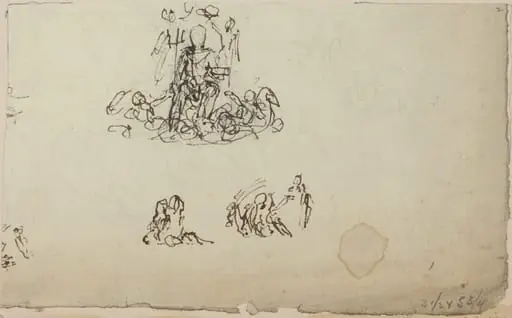
Studies for a Triumphal Arch Surmounted by Britannia [recto and verso]
![Studies for a Triumphal Arch Surmounted by Britannia [recto and verso], by John Flaxman, graphite, 1799](https://artifactworldgallery.com/img/john-flaxman--studies-for-a-triumphal-arch-surmounted-by-britannia-recto-a--b7bd463380eafe4d-w1024.webp)
Studies for a Triumphal Arch Surmounted by Britannia [recto and verso] is a graphite drawing by the Romanticist artist John Flaxman. It dates from 1799 and is held in the collection of the National Gallery of Art.
About this work
Overview
The drawing exemplifies Flaxman's characteristic clarity of line and his interest in architectural and allegorical subjects.
John Flaxman's graphite drawing, titled Studies for a Triumphal Arch Surmounted by Britannia and dated around 1799, presents a detailed preparatory design for a monumental arch. Executed in precise, linear pencil work, the composition features a large, classically proportioned archway crowned by a figure of Britannia, rendered as a warrior-like woman. The drawing exemplifies Flaxman's characteristic clarity of line and his interest in architectural and allegorical subjects.
Subject & Meaning
The central motif of the arch is the personification of Britannia, depicted in a martial pose that underscores themes of national strength and triumph. By placing this figure atop the arch, Flaxman links the architectural form to a symbolic celebration of Britain’s power, a common neoclassical device that merges civic architecture with mythic representation.
Technique & Style
Rendered entirely in graphite, the study relies on crisp, controlled strokes to define volume and spatial relationships. Flaxman's approach emphasizes linear precision over tonal modeling, a method he refined during his years in Rome and while working for Josiah Wedgwood. The drawing’s clean contours and careful hatching convey the solidity of stone and the intended three‑dimensionality of the final structure.
History & Provenance
Created during the late eighteenth‑century surge of British neoclassicism, the drawing reflects Flaxman's transition from decorative pottery modelling to large‑scale public commissions. While the design was never realized as a built monument, it remains a testament to his role in shaping the visual language of public architecture and commemorative sculpture in Britain.
Artist & collection
Artist
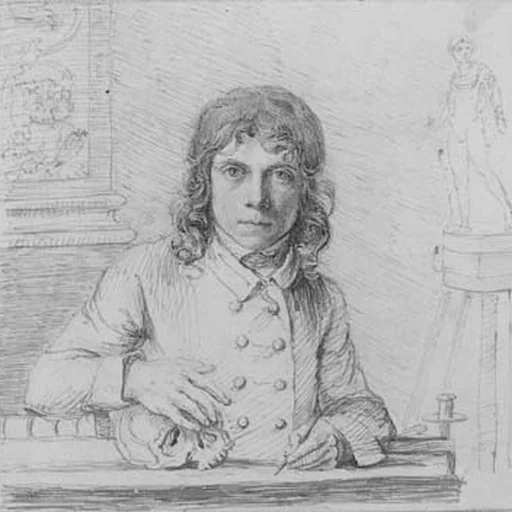
John Flaxman (6 July 1755 – 7 December 1826) was an English sculptor and draughtsman who was a leading figure in British and European Neoclassicism.

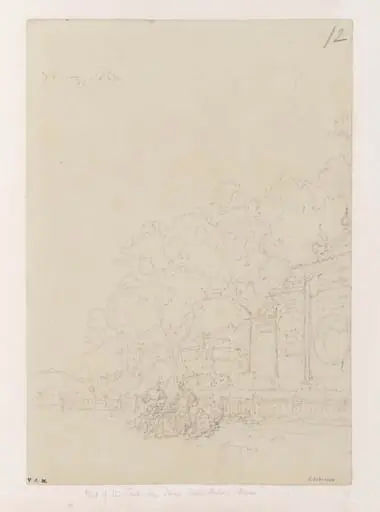 Part of the A-Ma temple, Macau
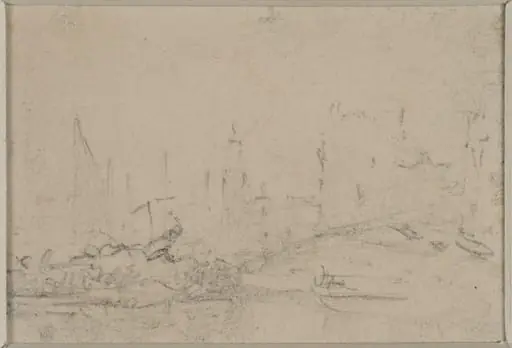 Dutch barge unloading
 Classical Buildings above a Wall
![Sheet of Studies [recto and verso], by John Flaxman](https://artifactworldgallery.com/img/john-flaxman--sheet-of-studies-recto-and-verso--c82bf77b351cdf13-w320.webp) Sheet of Studies [recto and verso]
Sheet of Studies [recto and verso] Buildings flanking the Inner Harbour, Macau
 Architectural Fantasy on a Round Temple Enclosed with an Ambulatory (verso)
 Arch of Drusus near the Appian Way
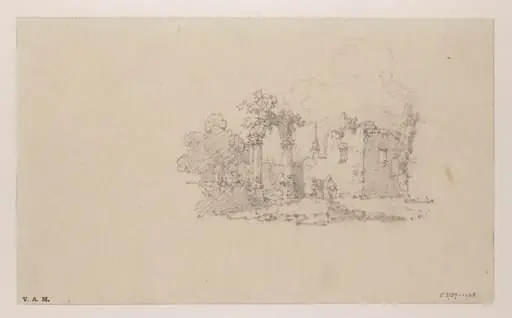 Overgrown ruins
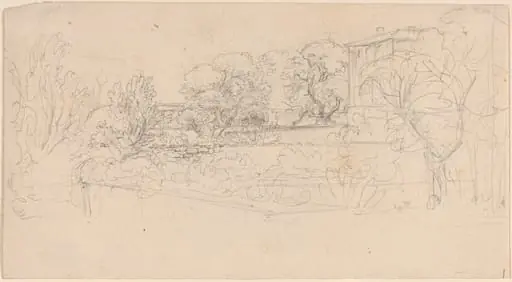 A Terraced Garden by a Villa
 View of Diemen
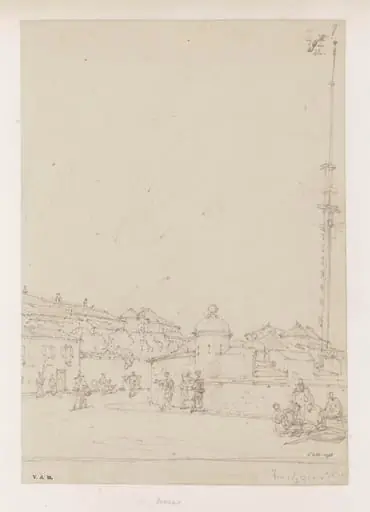 The fort of S. Pedro, Macau
- Structure with Figures in Asian Dress (Illustration for “The Casket”?)