Artwork
Lourdes, 1914, 25th International Eucharistic Congress
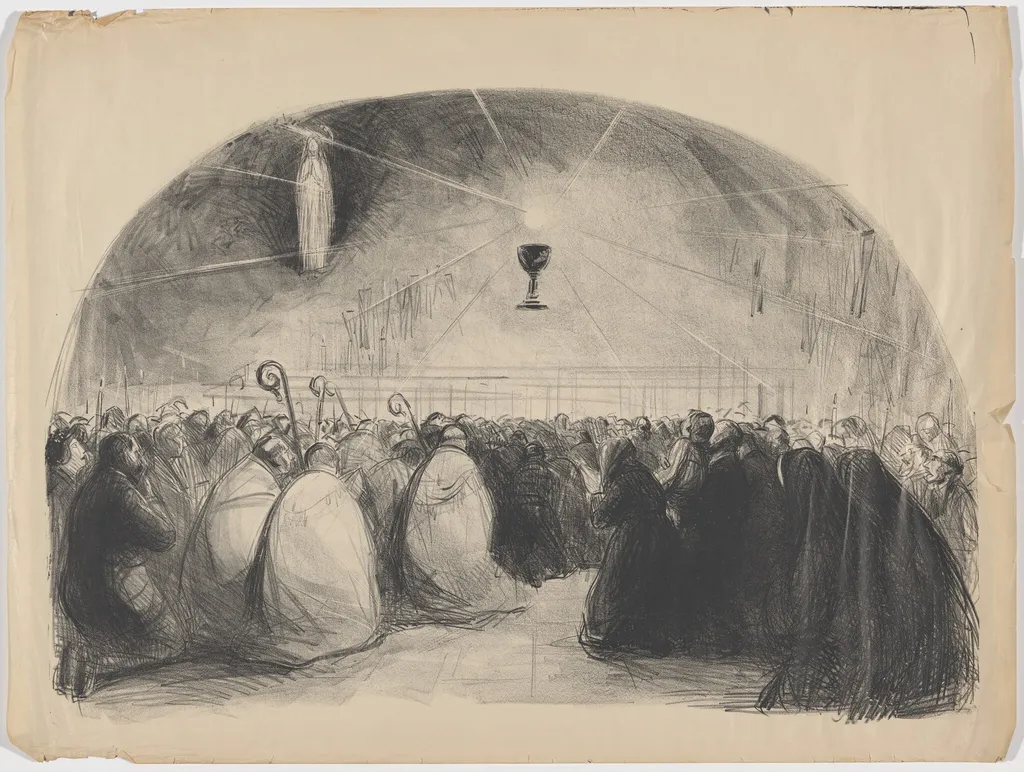
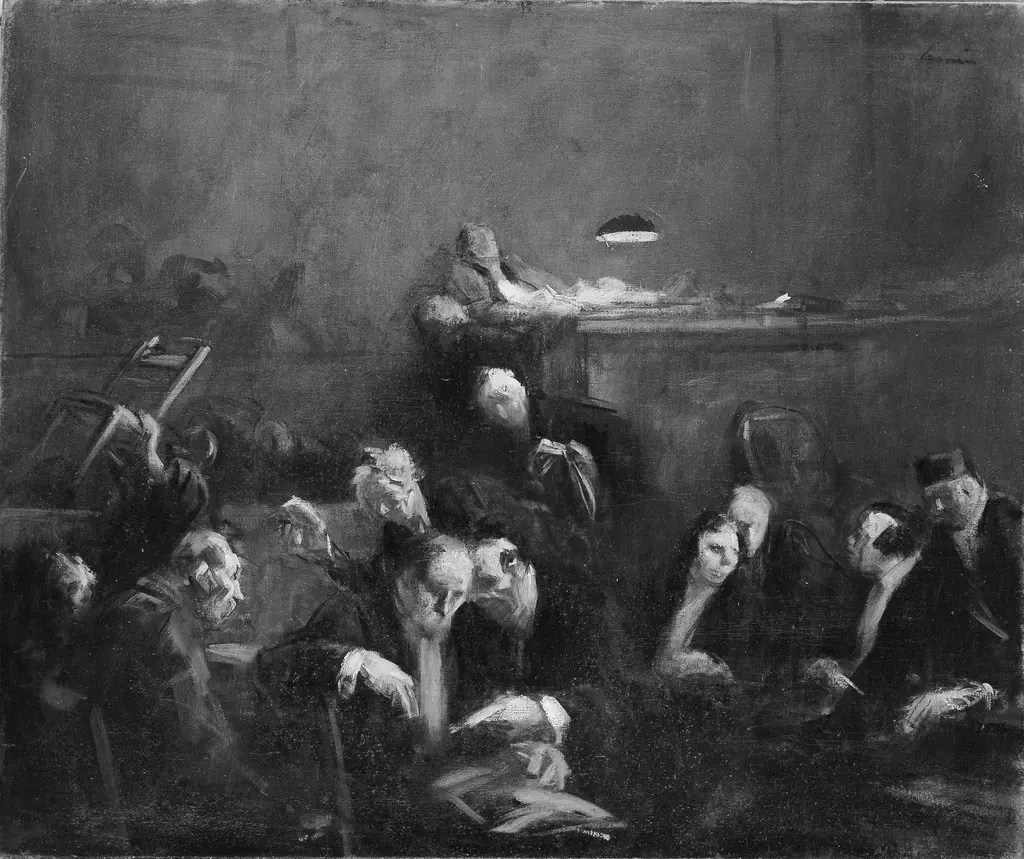
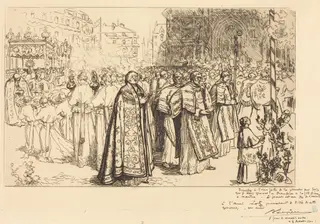
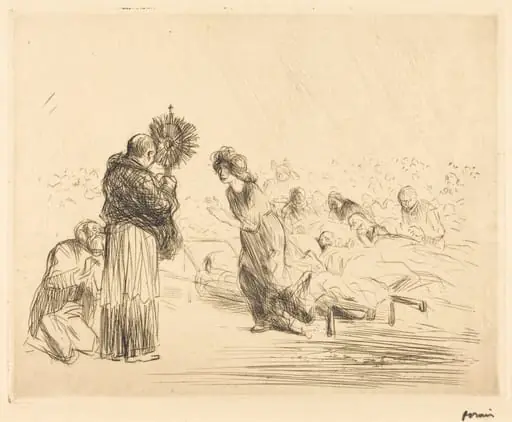
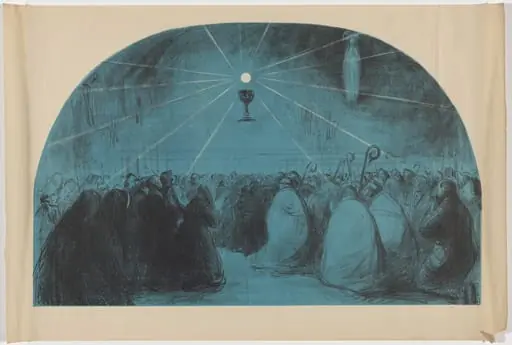
Lourdes, 1914, 25th International Eucharistic Congress is an ink print by Jean-Louis Forain. It dates from 1914 and is held in the collection of the National Gallery of Art.
- Inscription
- Inscribed:Not signed. Not dated. "30" lower right margin, graphite, unknown hand. Verso: none.
- Markings
- Marked:"National Gallery of Art" verso, black stamped ink, (Lugt 1932d). "73" [encircled] verso, black stamped ink.
About this work
Overview
Executed in black ink on wove paper, the work exemplifies his mastery of printmaking during a period when he balanced painting with commercial graphic design.
Jean-Louis Forain created this 1914 lithographic poster to promote the 25th International Eucharistic Congress held in Lourdes. Executed in black ink on wove paper, the work exemplifies his mastery of printmaking during a period when he balanced painting with commercial graphic design. Though known for his Impressionist canvases, Forain produced numerous posters that engaged with public and religious events of his time.
Subject & Meaning
The poster commemorates a major Catholic pilgrimage event in Lourdes, a site of Marian devotion. While the image is minimal, its purpose was to signal solemnity and mass participation. The absence of color and detailed figures directs attention to the event’s spiritual gravity, aligning with the Congress’s aim to reinforce faith through collective ritual and public visibility.
Technique & Style
Forain employed lithography, a process allowing direct drawing on stone with greasy crayons, then transferring the image to paper. The poster’s stark black-on-white composition reflects the medium’s capacity for bold, economical expression. His line work is precise yet fluid, characteristic of his graphic style, which favored clarity over ornamentation to suit mass reproduction.
History & Provenance
Commissioned for the 1914 Congress, the poster was distributed widely across France and beyond to attract pilgrims and dignitaries. Its production coincided with rising tensions in Europe, adding an unspoken weight to its message of unity. Few original prints survive, and those held in institutional collections reflect its role as both religious artifact and early 20th-century graphic design.
Context
In early 20th-century France, religious gatherings like the Eucharistic Congress were significant cultural events, often supported by state and Church authorities. Posters like Forain’s served as visual propaganda, blending sacred symbolism with modern advertising techniques. His involvement signaled a broader trend of artists contributing to public ceremonies through accessible, reproducible imagery.
Legacy
Though overshadowed by his paintings, Forain’s posters remain important examples of how fine artists engaged with public life through print. This work illustrates the intersection of religious devotion and modern graphic design in pre-war Europe. It stands as a quiet but deliberate artifact of a moment when art served both spiritual and civic functions.
Own this work as a print
Artist & collection

Artist
Jean-Louis Forain (French pronunciation:; 23 October 1852 – 11 July 1931) was a French Impressionist painter and printmaker, working in media including oils, watercolour, pastel, etching and lithograph.