Artwork
Evidence 1
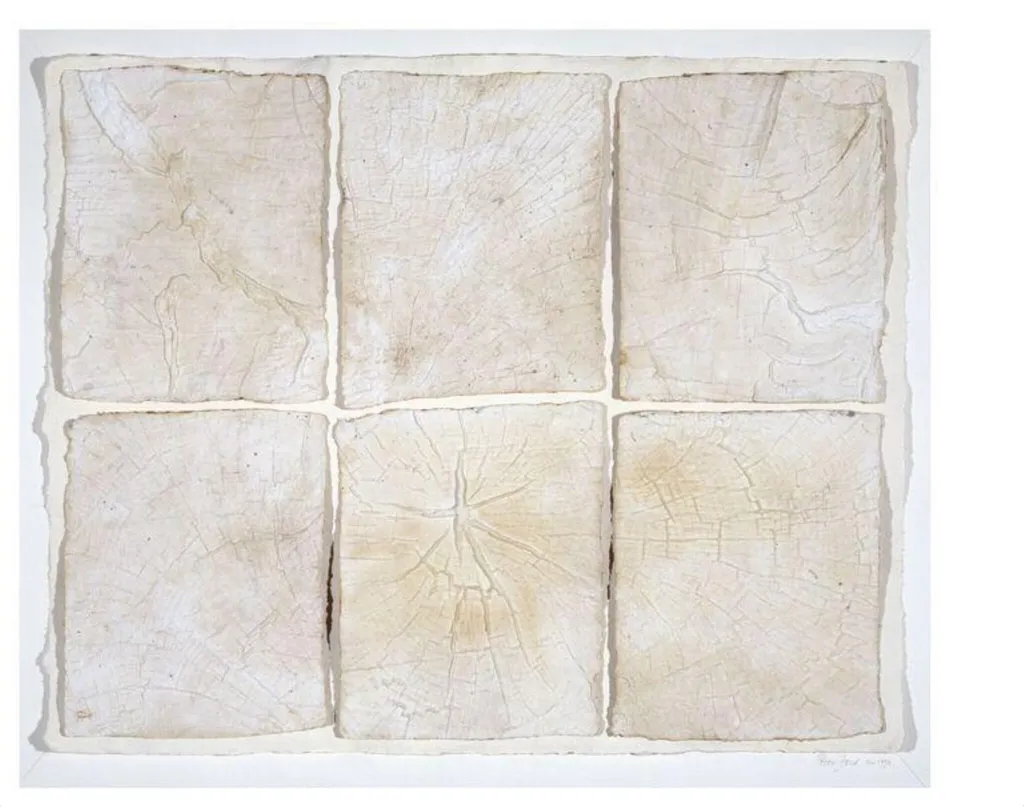
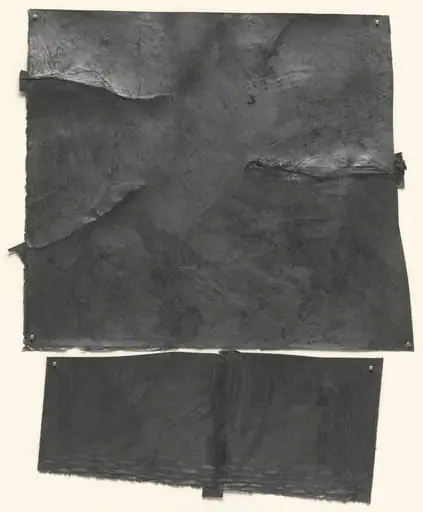
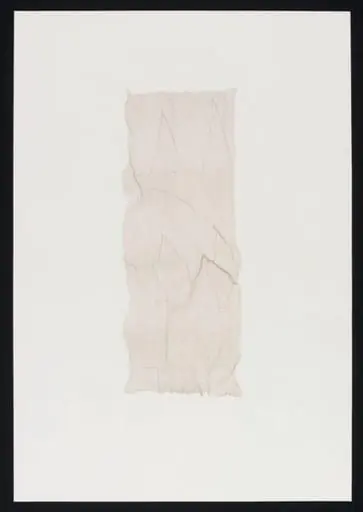
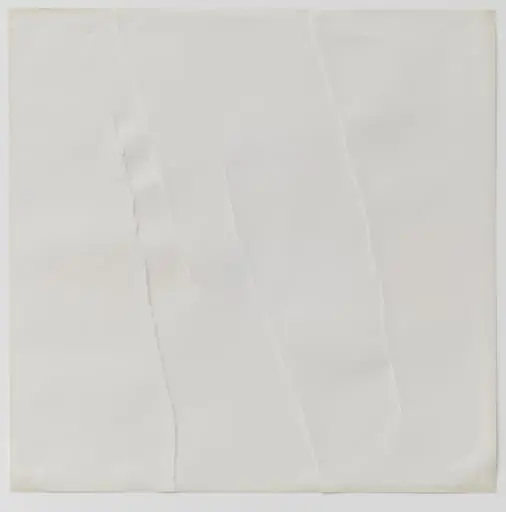
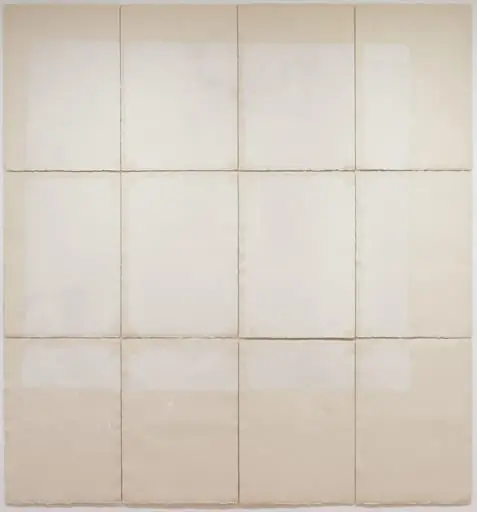
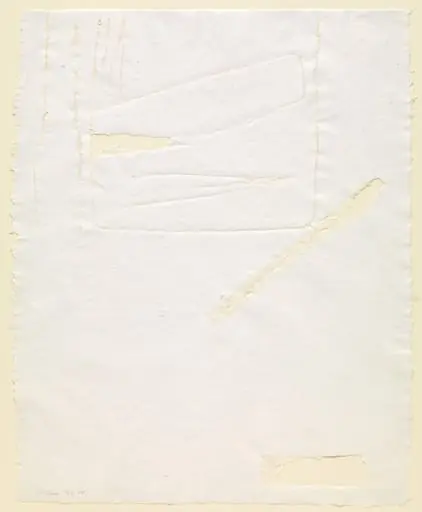
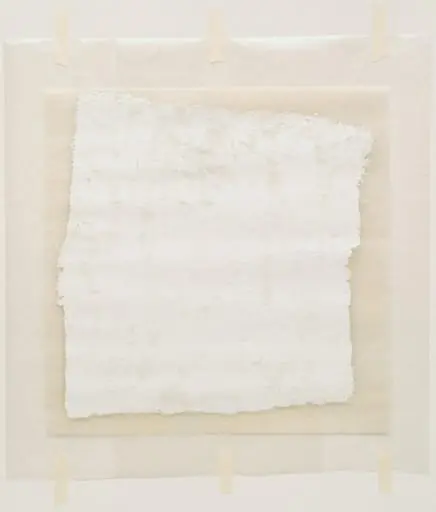
Evidence 1 is a print by Peter Ford. It dates from 1996 and is held in the collection of the Victoria and Albert Museum.
About this work
Ford recycled paper into pulp, turned it into sheets, then shaped them with the stumps.
Peter Ford made this print in 1996 using a technique called blind-embossing. No ink was used, just wet paper pulp pressed into tree stumps. The dried casts show the wood’s rings, cuts, and grain like a fossil made of paper.
The work ties paper and wood together in a series called Evidence. Ford recycled paper into pulp, turned it into sheets, then shaped them with the stumps.
Look up Ford, Peter next.
Overview
Evidence 1 is a blind-embossed paper work created by Peter Ford in 1996 as part of his Evidence series. Made without ink or pigment, the piece captures the physical imprint of tree stumps through the direct pressing of recycled paper pulp. The resulting forms are delicate, textural relics that preserve the natural contours of wood, linking the material histories of paper and timber in a quiet, non-representational way.
Subject & Meaning
The work functions as a physical record of specific trees, preserving their growth rings, cuts, and grain as transient impressions in paper. It reflects on the cultural and ecological presence of woodlands, treating each cast as an archaeological fragment. Rather than depicting trees, it embodies their absence, offering a tactile memory of their form, suggesting both erosion and endurance.
Technique & Style
Ford crafted the piece by pulping recycled paper, spreading it over cross-cut stumps, and allowing it to dry in contact with the wood’s surface. Once removed, the paper retained the exact topography of the stump, no ink was used, only natural staining from absorbed residues. The result is a low-relief, monochromatic surface that emphasizes texture over image, aligning with minimalist and craft-based aesthetics.
History & Provenance
Created in 1996, Evidence 1 predates the 2002 exhibition In Praise of Trees, for which the broader Evidence series was later contextualized. Though produced earlier, it aligns with the show’s theme of material continuity between paper and wood. The work was developed independently, rooted in Ford’s long-standing exploration of papermaking as a medium for recording natural forms.
Context
Ford’s practice engages with Japanese paper traditions that honor the material’s inherent qualities and impermanence. Evidence 1 resonates with wabi-sabi sensibilities, valuing asymmetry, age, and the beauty of decay. It also connects to broader ecological art movements of the 1990s that sought to materialize environmental processes without symbolic embellishment.
Legacy
The work remains a quiet example of material-based art that blurs the line between print, sculpture, and natural archive. Its influence lies in its method: using paper not as a surface for representation, but as a medium to capture and preserve organic traces. It continues to inform contemporary artists exploring ecological memory through direct material engagement.
Artist & collection