Artwork
Vaulted Interior
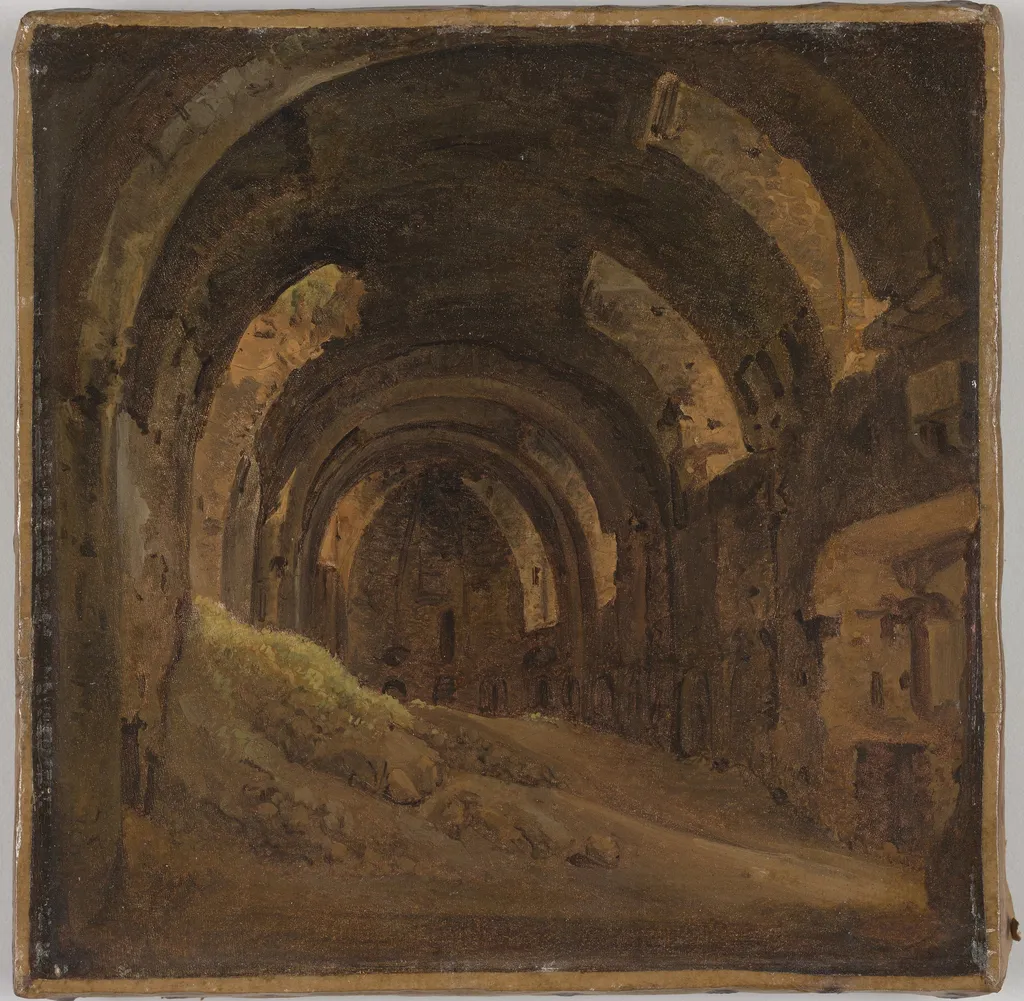
Vaulted Interior is an oil painting by François Marius Granet. It dates from 1822 and is held in the collection of the Metropolitan Museum of Art.
About this work
Subject & Meaning
This setting frames the contemplative scene and contributes to a sense of reverence, reflecting the work's religious or spiritual undertones.
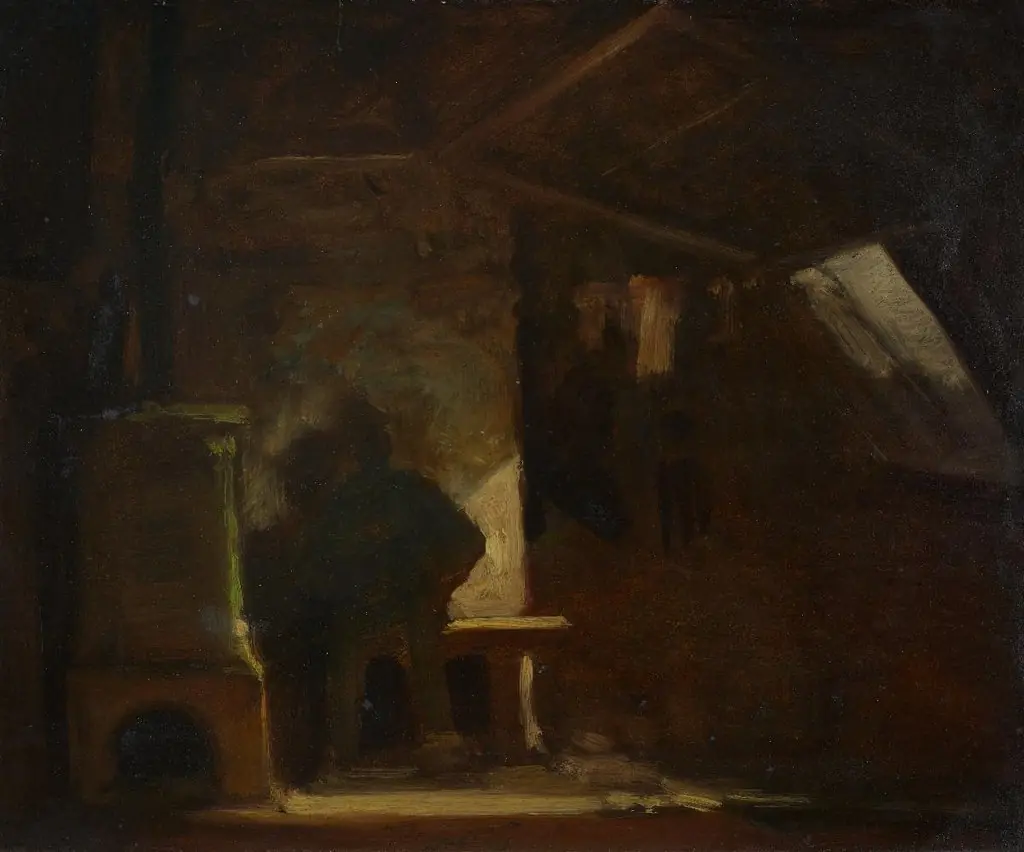
The painting shows an interior space framed by a prominent arch, suggesting a vaulted architectural setting. This setting frames the contemplative scene and contributes to a sense of reverence, reflecting the work's religious or spiritual undertones.
The arch functions symbolically, guiding the viewer's eye toward the central space and emphasizing depth and sanctity.
Granet's use of oil on canvas to render this interior scene captures the quiet stillness of the vaulted environment, reinforcing the painting's contemplative mood.
Technique & Style
Vaulted Interior is executed in oil paint on canvas, a standard support for François Marius Granet's easel paintings. The work is a modest-scale painting, with both height and width measuring 21 cm, giving it a near-square format suited to an intimate interior study. Its subject matter, an arch and interior space, points to Granet's characteristic focus on architectural interiors rendered through careful observation of perspective and light within vaulted structures.
The painting is held in the collection of the Metropolitan Museum of Art, consistent with its classification as a painting on canvas.
History & Provenance
Vaulted Interior (1822) by François Marius Granet is held in the collection of the Metropolitan Museum of Art, where it is catalogued as an oil-on-canvas painting measuring approximately 21 by 21 units in height and width. The work is documented as part of the museum's holdings in association records for the artist.
No specific exhibition history beyond its presence in the Metropolitan Museum of Art's collection is documented in the available sources.
Overview
Painted in 1822, François Marius Granet's Vaulted Interior exemplifies the artist's mature focus on monastic and architectural subjects, a specialization that defined his career following his long residence in Rome. The composition centers on a deep perspective view of a vaulted space, likely a cloister or crypt, characterized by a rhythmic succession of rounded arches that recede into a shadowy background. Granet employs a restricted palette dominated by earth tones and ochres to render the rough-hewn texture of the stone walls and the uneven floor, which is strewn with scattered rocks and debris.
The work is distinguished by its dramatic chiaroscuro; a subtle, diffused light source illuminates the foreground arches while allowing the rear of the space to dissolve into darkness, creating a profound sense of atmospheric depth and solitude. This approach reflects Granet's reputation as a master of light effects within architectural settings, bridging the Neoclassical interest in structure with a Romantic sensibility for mood and ruin. The painting stands as a testament to his ability to transform simple architectural forms into evocative scenes of quiet contemplation, securing his status as a leading figure in early 19th-century French genre painting.
Own this work as a print
Artist & collection

Artist
François Marius Granet (1775–1849) was an artist, born in Aix-en-Provence.

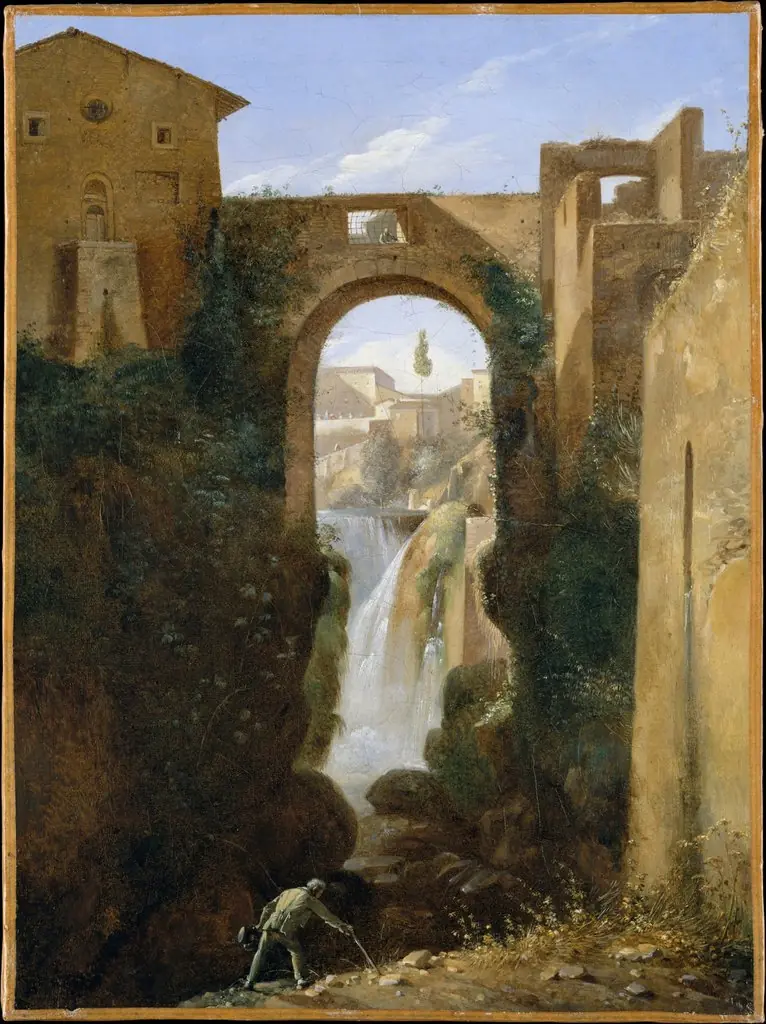
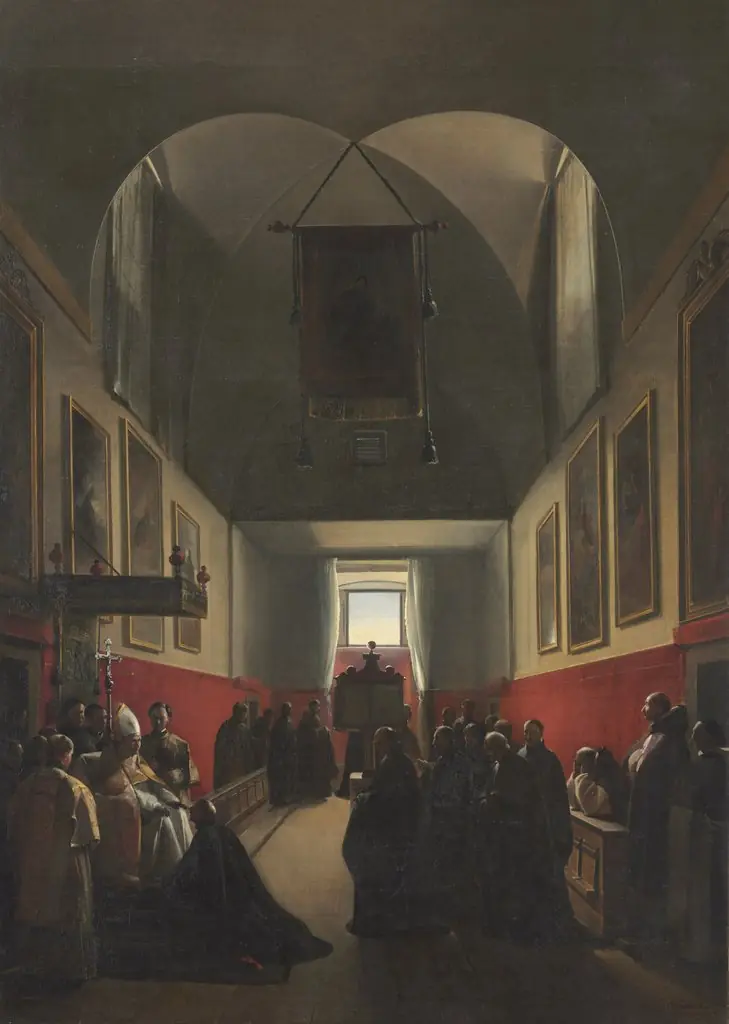
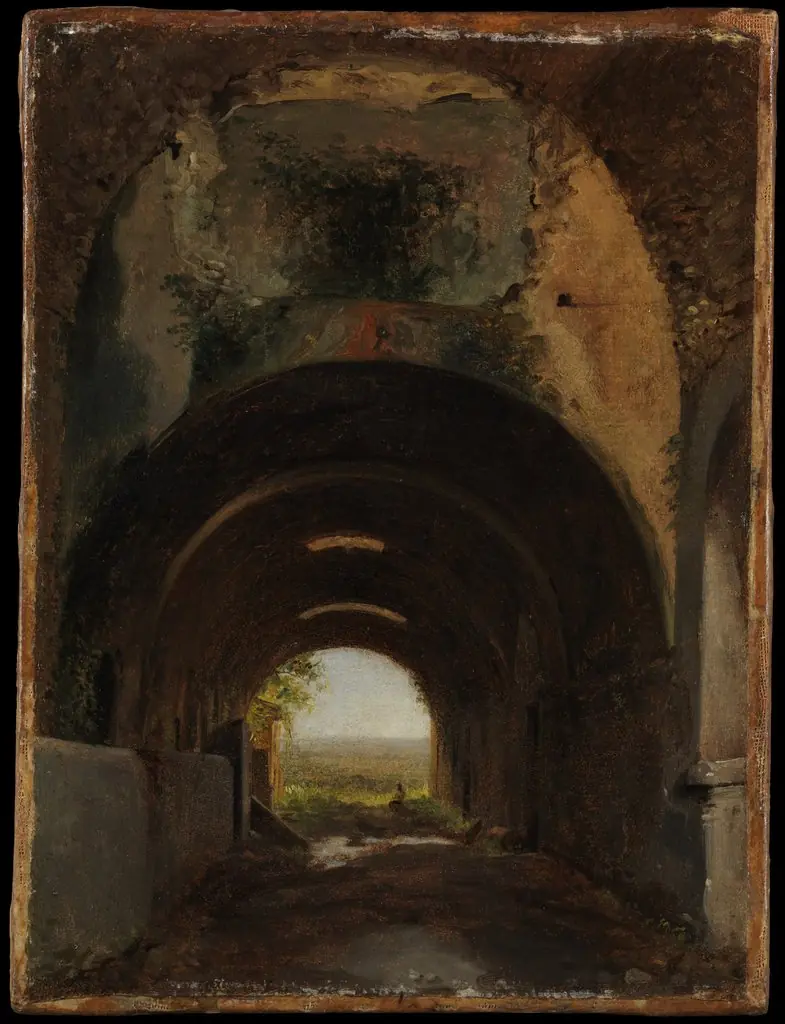
- Design for a Vaulted Hall
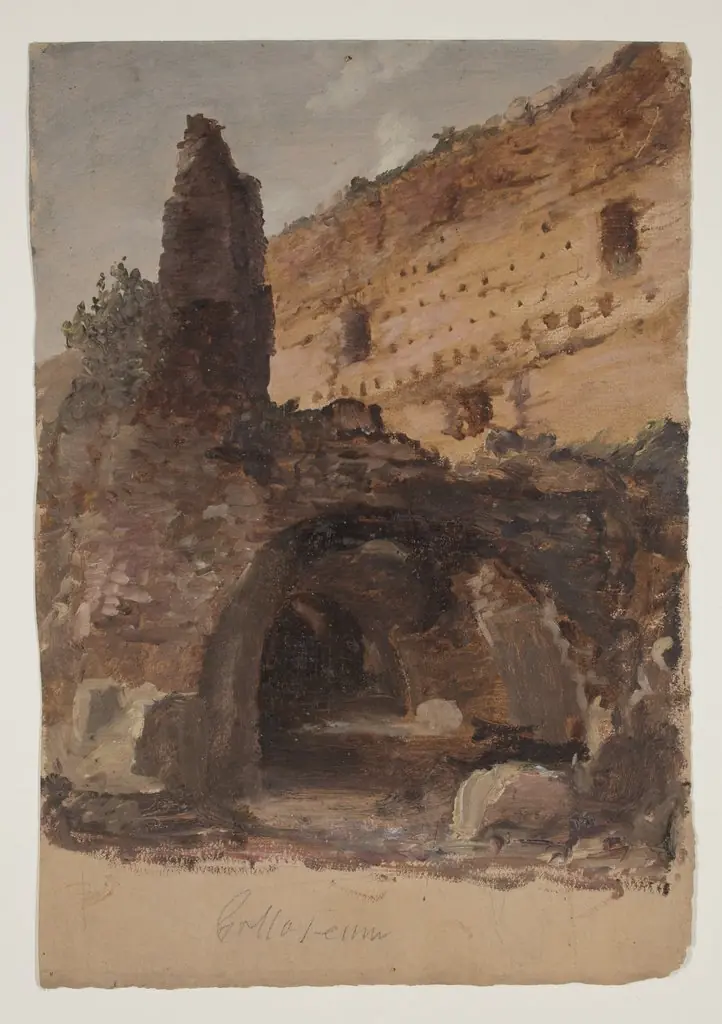 The Colosseum
 Roomalaisia raunioita, harjoitelma
 View of the Basilica of Constantine from the Palatine, Rome
 Interior with staircase
 Ruiner. Caracallas termer i Rom?
 Arched Passageways of a Ruined Building
 A Vaulted Staircase. Architectural Piece
 Church interior
 The Ruins of Saint Nicolai Church in Hamburg
 Dachstube. Studie