Artwork
Natură moartă cu homar
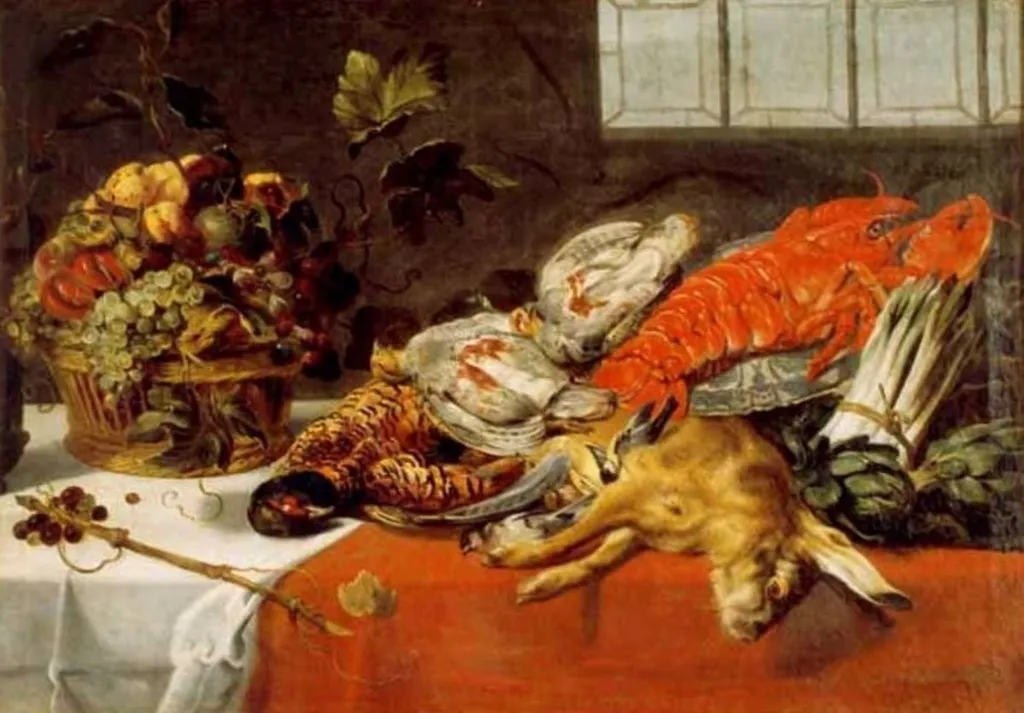
Natură moartă cu homar is an unspecified painting by Frans Snyders. It dates from 1650 and is held in the collection of the Brukenthal National Museum.
About this work
Overview
Painted around 1650 by Frans Snyders, this still life depicts a single red lobster resting on a pale tabletop against a dark, unbroken background.
Painted around 1650 by Frans Snyders, this still life depicts a single red lobster resting on a pale tabletop against a dark, unbroken background. The surface bears fine cracks that developed over centuries as the oil paint aged and contracted. These fissures are not part of the artist’s original execution but serve as a record of time’s passage, subtly signaling the work’s age beyond its visual composition.
Subject & Meaning
The lobster, rendered with precise detail, functions as the sole focus of the composition. Its vibrant red hue contrasts sharply with the muted table, emphasizing its material presence. In 17th-century Flemish still life, such marine creatures often symbolized abundance or the exotic, though here the absence of other elements suggests a quiet contemplation of form and texture rather than symbolic excess.
Technique & Style
Snyders employed thick, layered oil paint to capture the lobster’s glossy exoskeleton and the smoothness of the table. The dark background isolates the subject, enhancing its three-dimensionality. The brushwork is controlled yet tactile, with attention to surface reflections and subtle shadows.
The painting’s current cracked surface, while not intentional, reflects the material behavior of oil on panel over time.
History & Provenance
The painting has remained in institutional care since at least the early 20th century. It is held by the Museum of Ethnography in Budapest, where it is cataloged as part of a broader collection of European decorative and fine arts. Its documented history within the museum’s holdings confirms its continuous preservation, though earlier ownership prior to institutional acquisition remains unrecorded in public sources.
Context
Snyders was a leading Flemish still life painter of the 17th century, known for his depictions of game, seafood, and market scenes. This work aligns with the period’s interest in naturalistic detail and the aesthetic value of everyday objects. Unlike grander banquet still lifes, this composition’s minimalism reflects a shift toward intimate, focused observation, possibly influenced by emerging tastes in private collections.
Legacy
The painting contributes to the understanding of Flemish still life evolution, particularly in its restrained approach. Its preservation allows study of material aging in oil painting, offering insight into historical techniques and conservation challenges. While not widely reproduced, it remains a representative example of Snyders’ later, more subdued style within institutional collections.
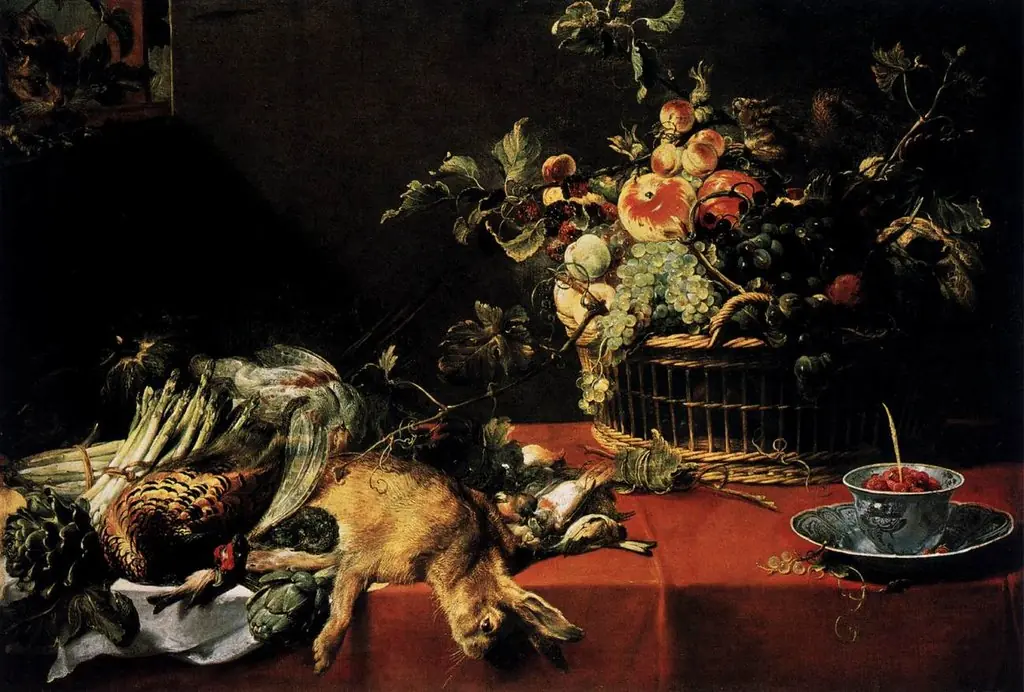
Artist & collection
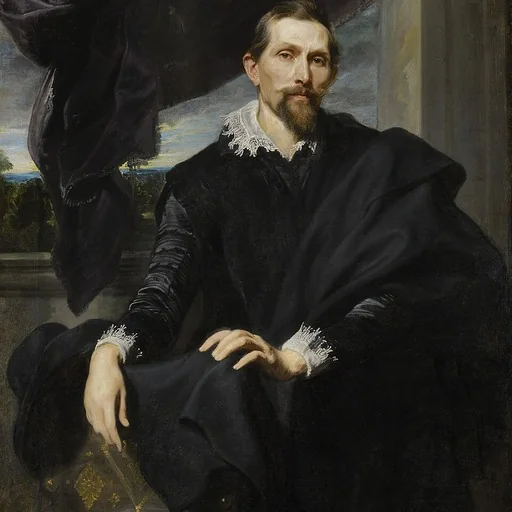
Artist
Frans Snyders or Frans Snijders was a Flemish painter of animals, hunting scenes, market scenes, and still lifes.

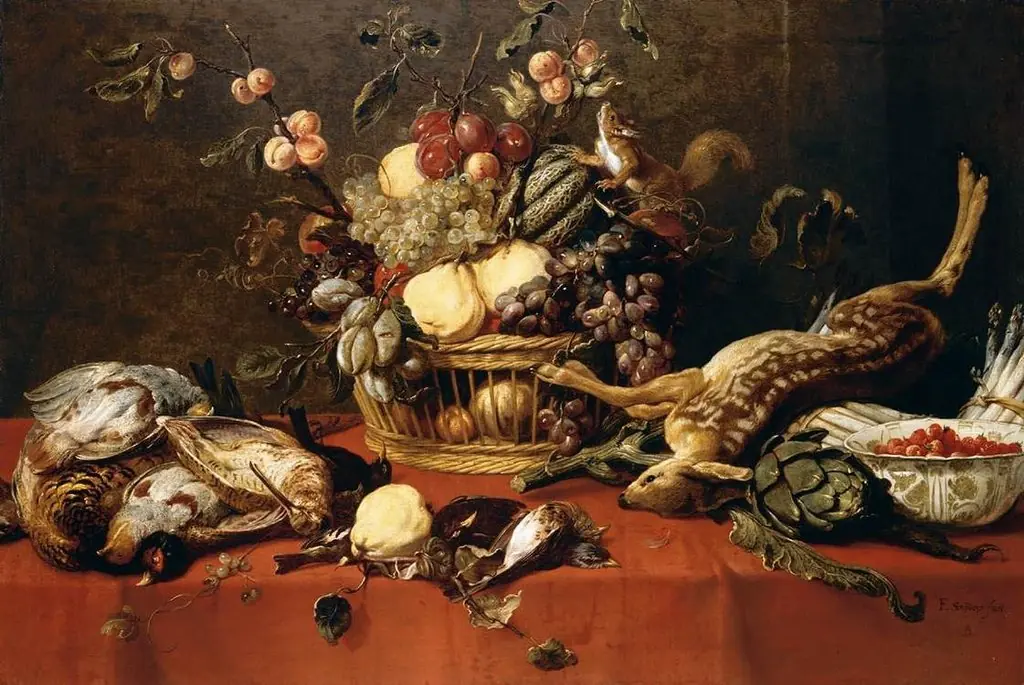 Still life of fruit in a basket together with game, a bowl of fraises-de-bois, artichokes, asparagus and a squirrel upon a table draped with a red cloth
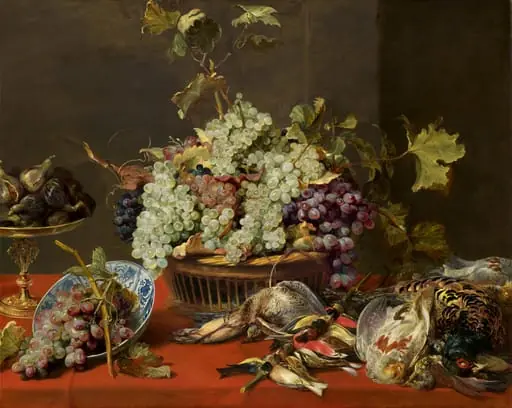 Still Life with Grapes and Game
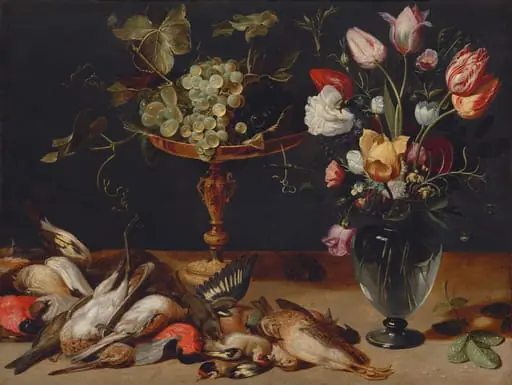 Still Life with Flowers, Grapes, and Small Game Birds
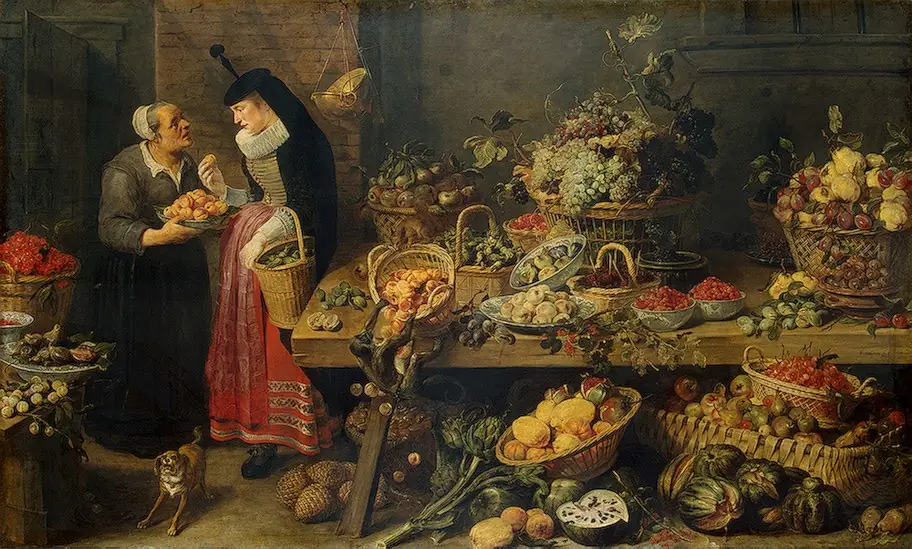 The Fruit Shop
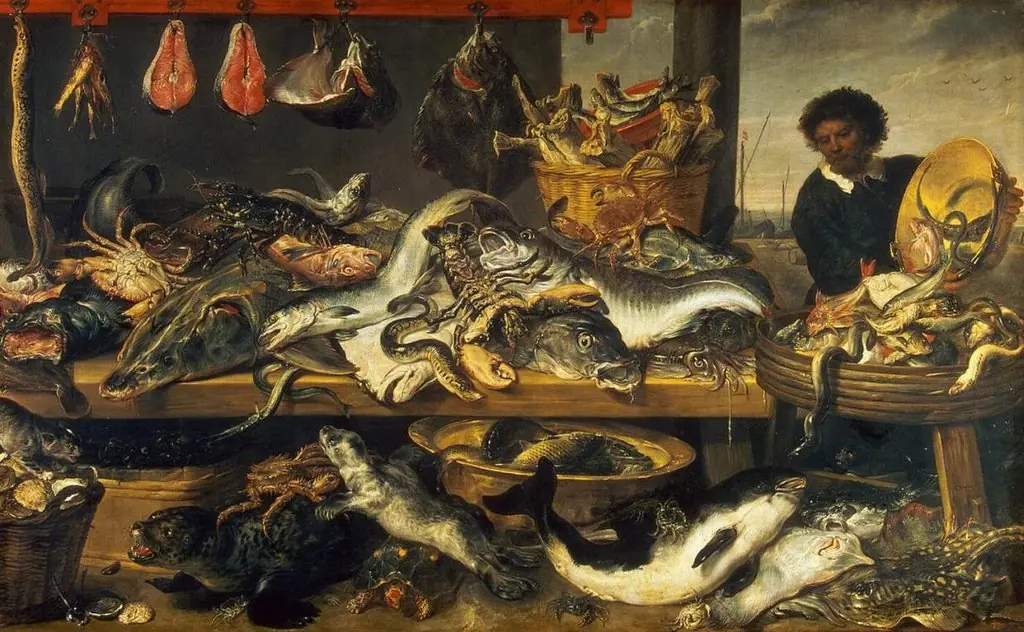 Fish Market
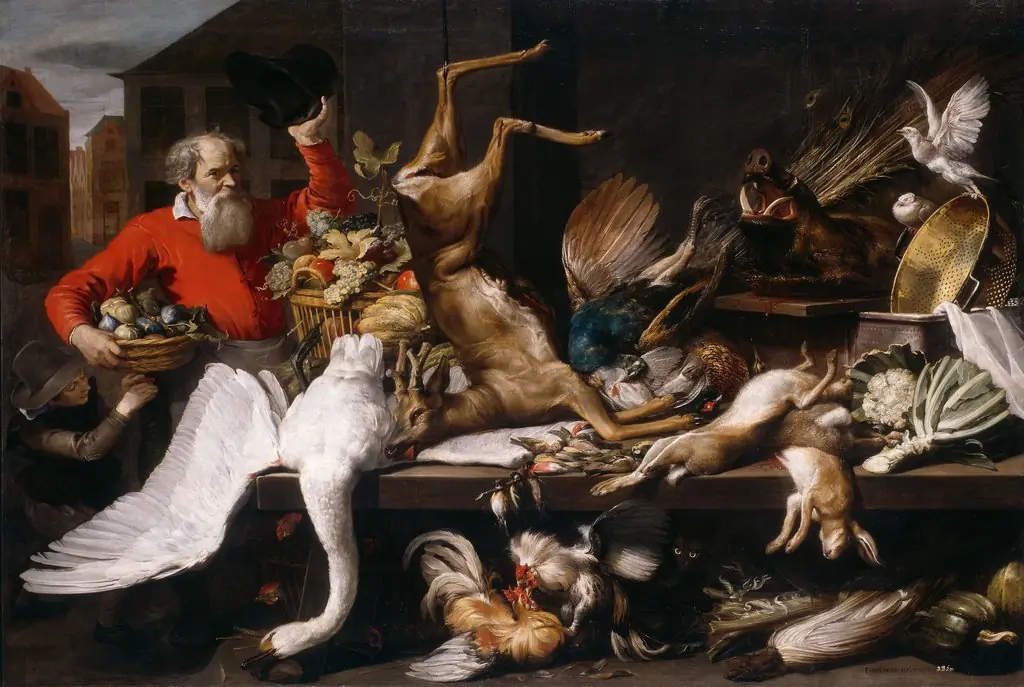 Still Life with Dead Game, Fruits, and Vegetables in a Market
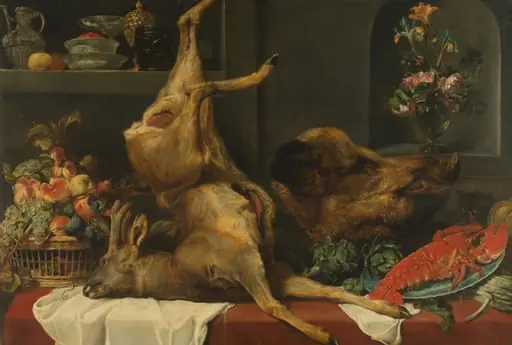 Larder Still life
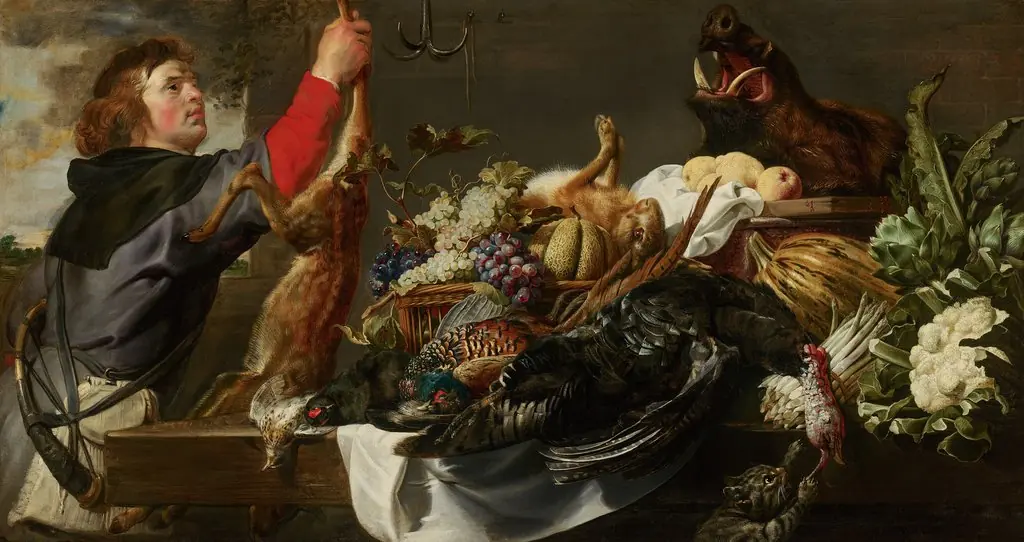 Still Life with Huntsman
- A still life with game, vegetables, fruit and a squirrel on a table. with a cat in a window upper left
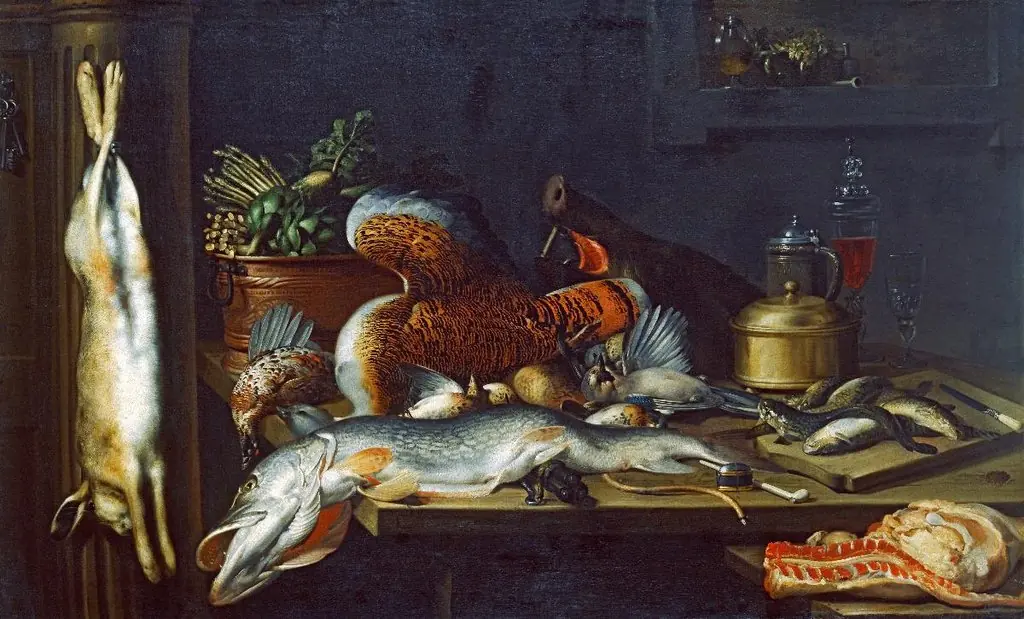 Grosses Küchenstück
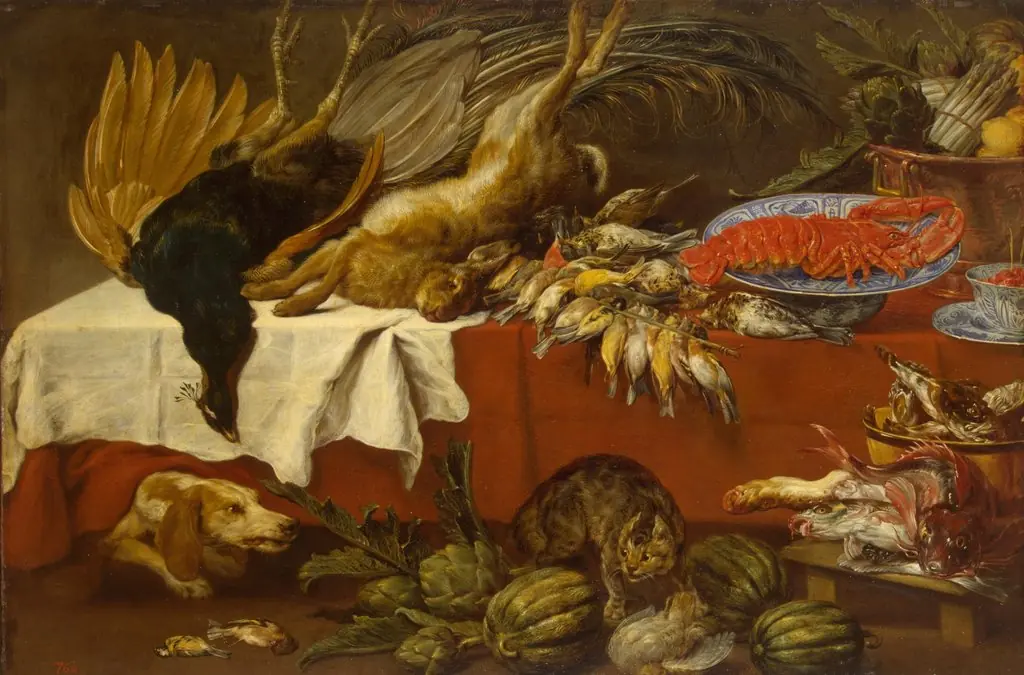 Still Life with Dead Game and Lobster
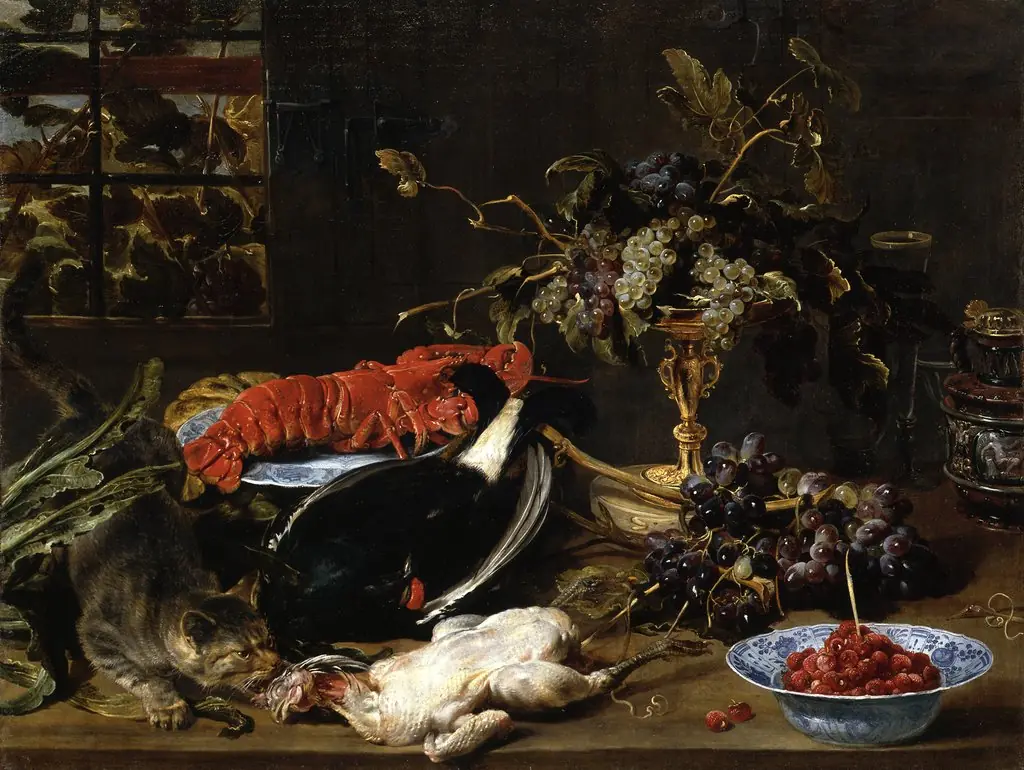 Still Life with Lobster and Fruits
 Still Life with Small Game, Fruit, Lobster and a Squirrel
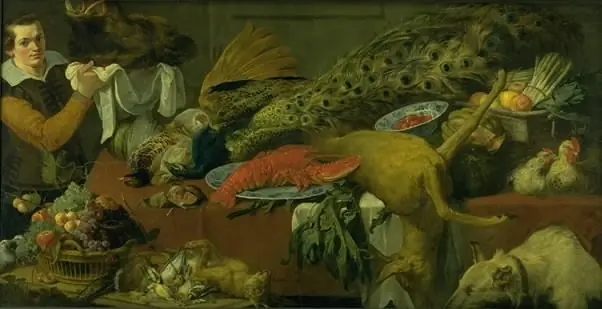 Køkkenstykke med en køkkenkarl
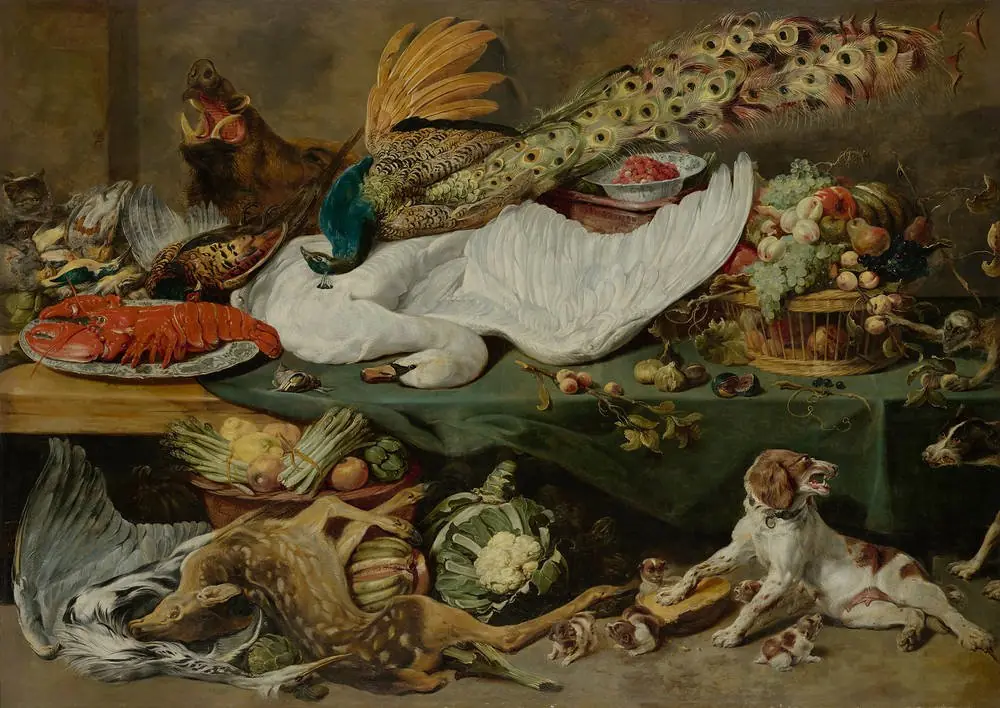 Still-life with a Spaniel and her Pups
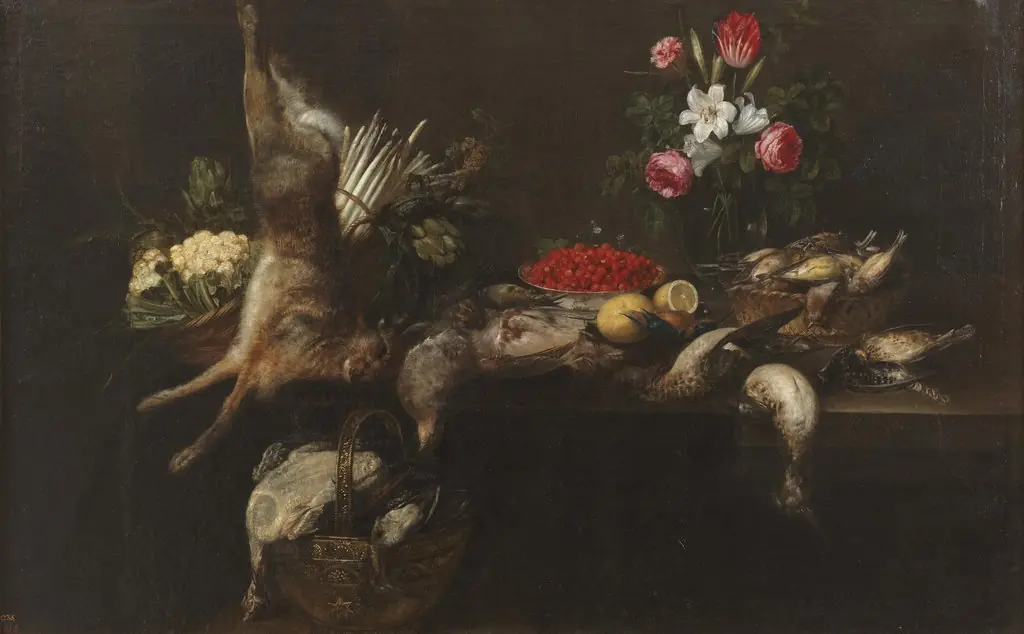 Pantry
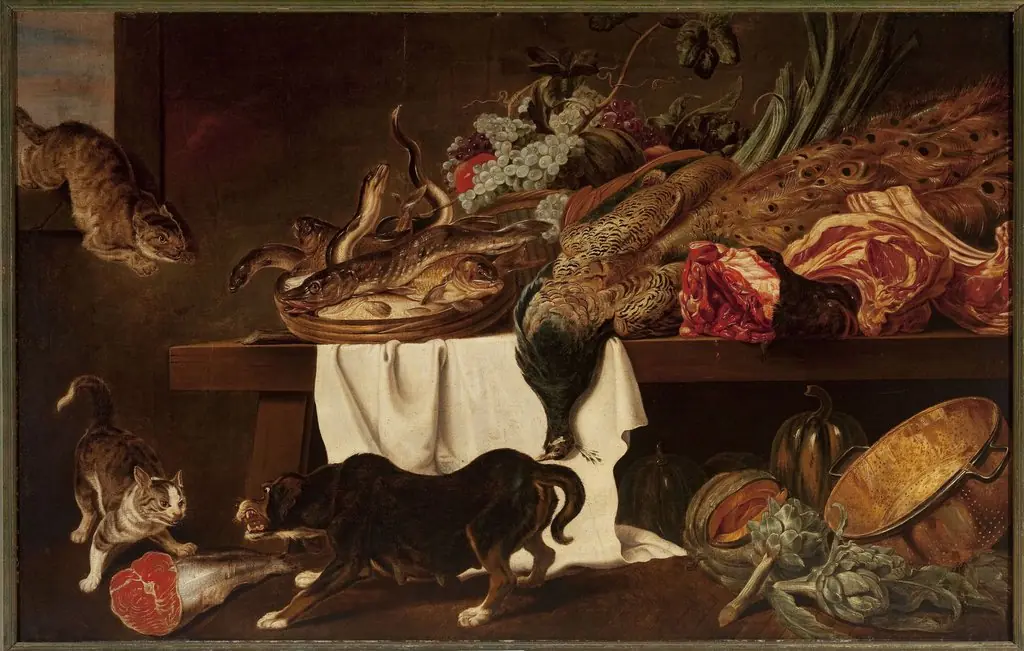 Pantry
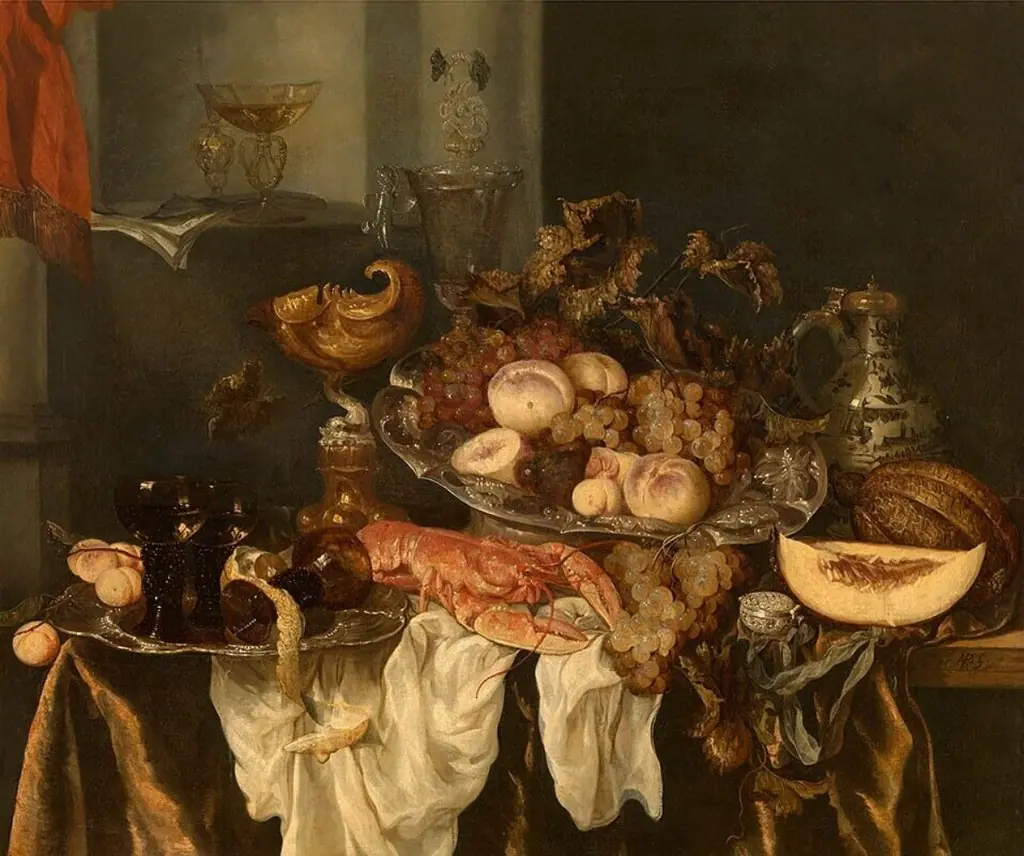 Still Life.