Artwork
Larder Still life
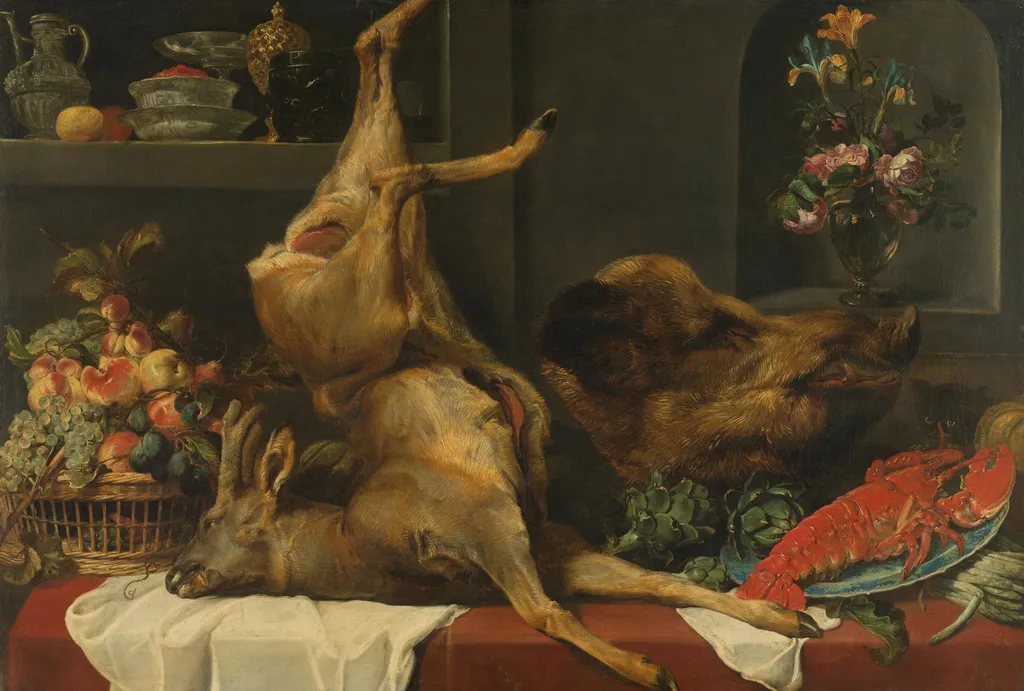
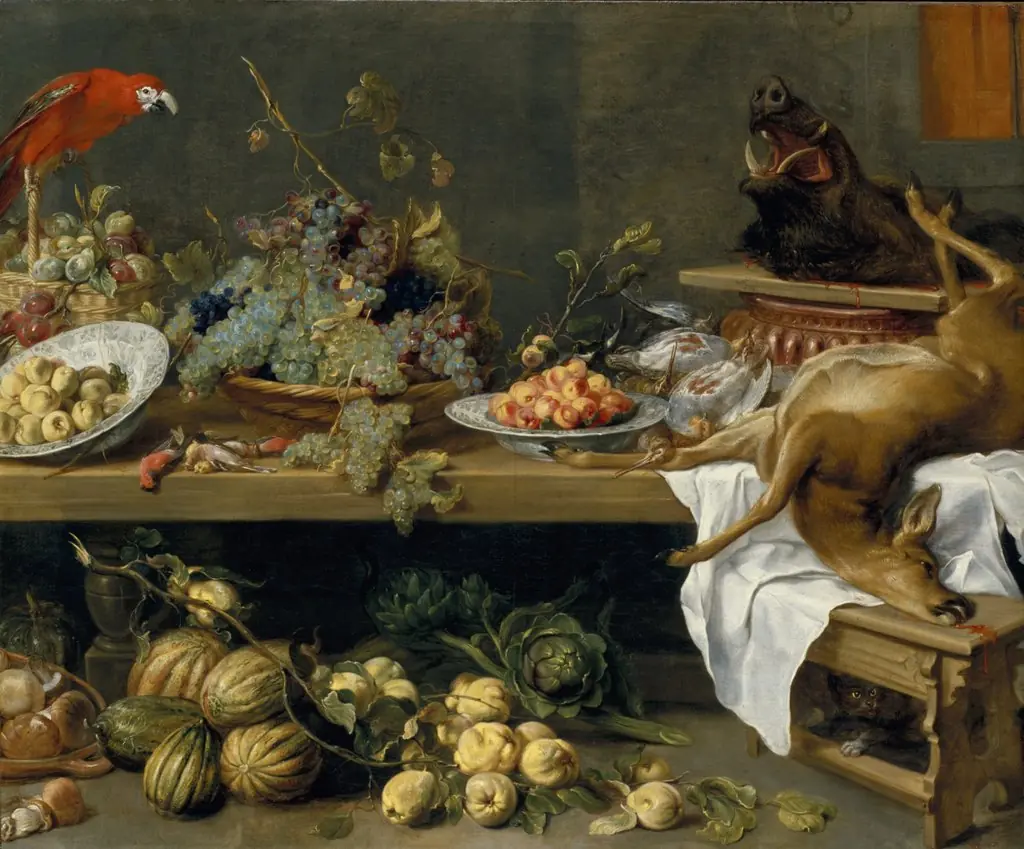
Larder Still life is an unspecified painting by the Flemish Baroque painting artist Frans Snyders. It dates from 1616 and is held in the collection of the Rijksmuseum. The canvas presents a densely arranged still life on a table before a wall, combining game, fruit, and floral elements.
About this work
Subject & Meaning
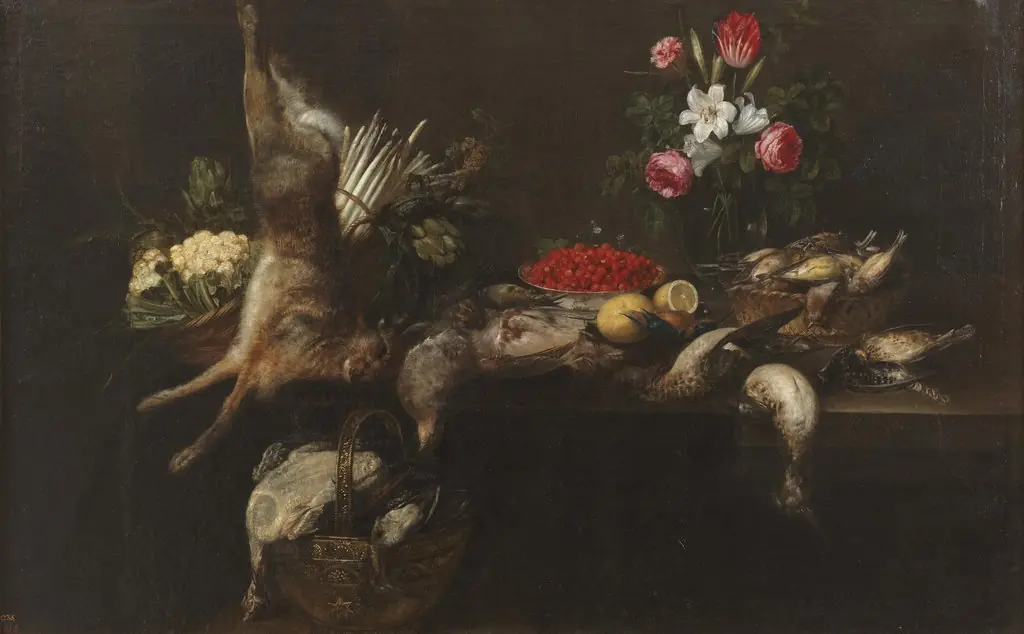
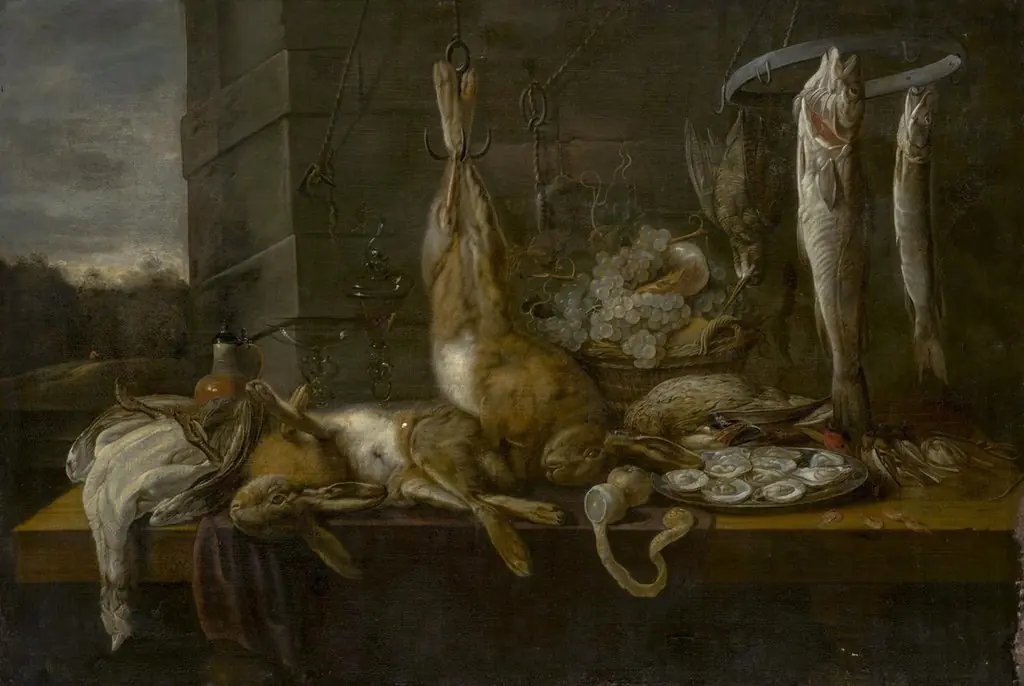
Frans Snyders' larder still lifes depict a profusion of foodstuffs, including dead game such as deer and hares, various birds, fruits, vegetables, and tableware like silver tazze and Chinese porcelain. These works focus exclusively on the abundance of the pantry or market stall, deliberately omitting the religious background scenes that characterized earlier Flemish market pieces by Pieter Aertsen and Joachim Beuckelaer.
The iconography emphasizes the richness of nature and the bounty of the harvest, often arranged in dynamic, geometrically structured compositions that showcase the artist's skill as a colorist. While some of Snyders' larger market series have been interpreted as allegories of the four elements, his larder scenes primarily celebrate the vitality of the natural world and the material wealth of the era through dramatic displays of dead animals and fresh produce.
History & Provenance
It was commissioned by the Ghent bishop Antonius Triest for a series of market-scene paintings around 1615, indicating a documented patronage.
Larder Still life, attributed to Frans Snyders, was created circa 1616–1625. The work was produced in Antwerp during Snyders's mature period, when he was active in market and pantry scenes and collaborated with Rubens on decorative programs. It was commissioned by the Ghent bishop Antonius Triest for a series of market-scene paintings around 1615, indicating a documented patronage.
After Snyders's death in 1657, his collection passed to the art dealer Matthijs Musson, who acquired the remaining works.
Context
Frans Snyders (1579–1657) was a leading Flemish Baroque painter credited with initiating a wide variety of new still-life and animal subjects in Antwerp. Trained under Pieter Brueghel the Younger and Hendrick van Balen, he became a master of the Antwerp Guild of Saint Luke in 1602 and its dean in 1628. His pantry and market scenes descend from the pioneering tradition of Pieter Aertsen and Joachim Beuckelaer, though Snyders dispensed with the religious backgrounds typical of those sixteenth-century models.
Exposure to Italian art during his 1608–1609 trip and subsequent collaboration with Peter Paul Rubens transformed his style: after 1614 the dark grounds of his early still lifes gave way to a more luminous palette and a strong compositional structure capable of organizing profuse, disparate objects.
Larder Still life, dated c. 1616–c. 1625, falls squarely within the period when Snyders was establishing this mature Baroque mode and working in close partnership with Rubens and other leading Antwerp painters. His animal and still-life practice proved highly influential on contemporaries and on eighteenth-century French animal painters such as Jean-Baptiste Oudry and Alexandre-François Desportes, while Jean-Siméon Chardin's The Ray has been linked to Snyders' pictorial force.
Legacy
Frans Snyders is recognized as one of the earliest specialist animaliers, credited with initiating a wide variety of new still-life and animal subjects in Antwerp. His dynamic approach to depicting wild animals and hunting scenes exerted significant influence on his contemporaries and later generations. Specifically, his work impacted eighteenth-century French animal painters, including Jean-Baptiste Oudry and François Desportes.
Furthermore, the pictorial strength found in Snyders' compositions is evident in later masterpieces such as Jean-Baptiste-Siméon Chardin's The Ray. Through his large workshop, he trained numerous successors like Jan Fyt and Paul de Vos, ensuring the continuation of his specialized style.
Overview
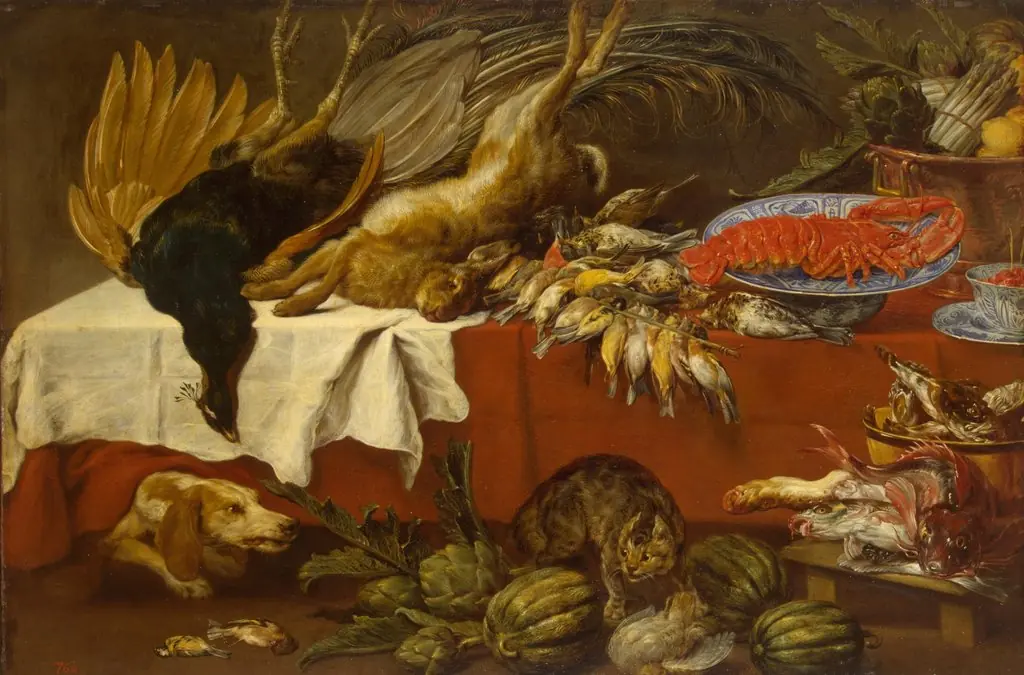
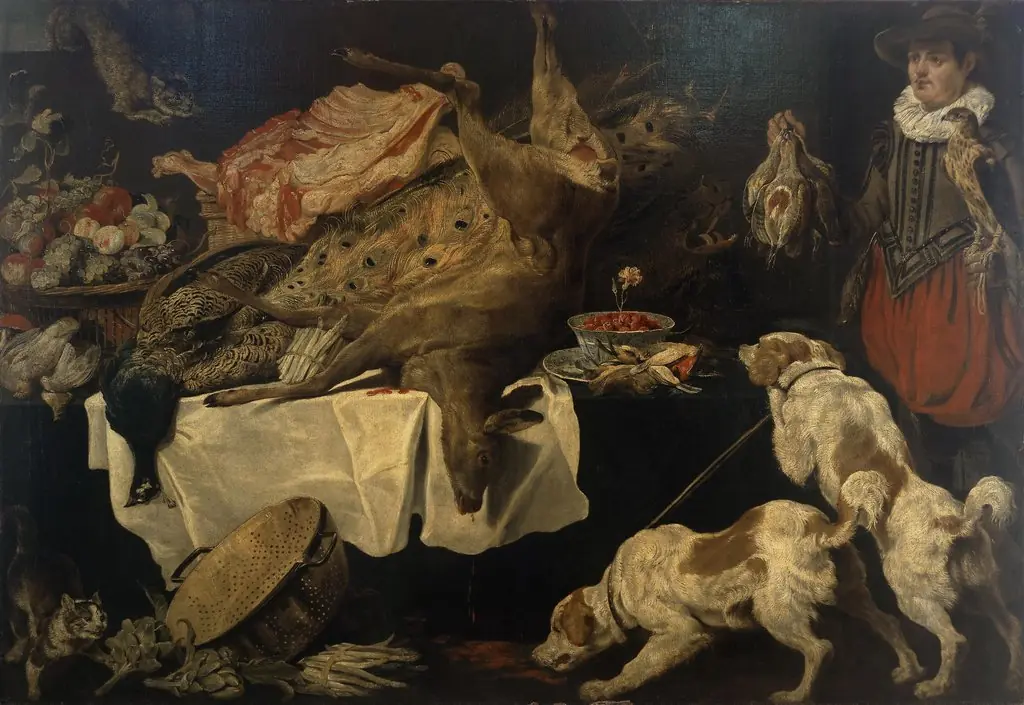
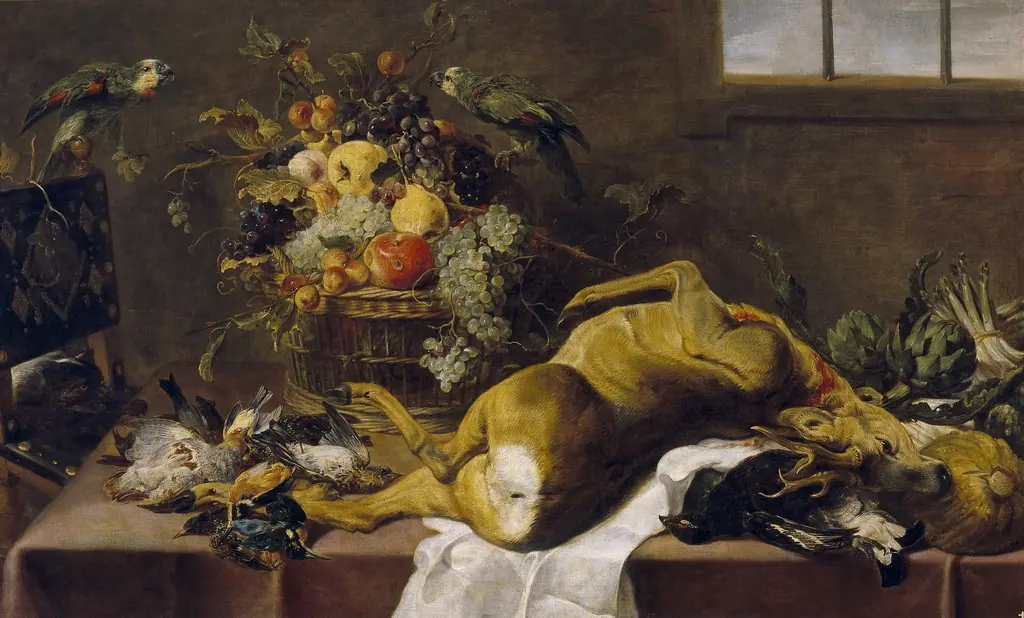
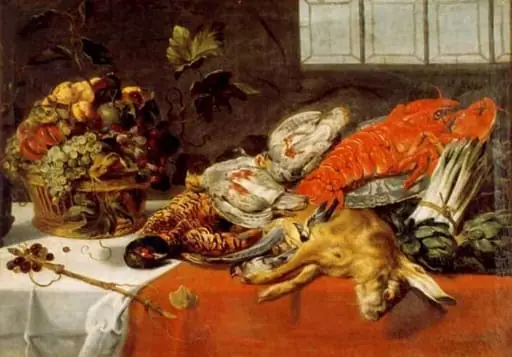
The canvas presents a densely arranged still life on a table before a wall, combining game, fruit, and floral elements. A split deer carcass hangs from a leg, a wild boar’s head rests nearby, while a basket overflows with grapes, peaches and plums. A lobster lies on a platter, a cluster of asparagus, artichokes and a vase of flowers complete the composition, with a curious cat watching the seafood.
Technique & Style
Rendered with meticulous attention to texture, the painter captures the sheen of fur, the delicate veining of leaves, and the reflective surface of the lobster’s shell. Fine brushwork delineates each feather and petal, achieving a near‑tactile realism that highlights the artist’s virtuoso handling of light and material.
Own this work as a print
Artist & collection
Artist
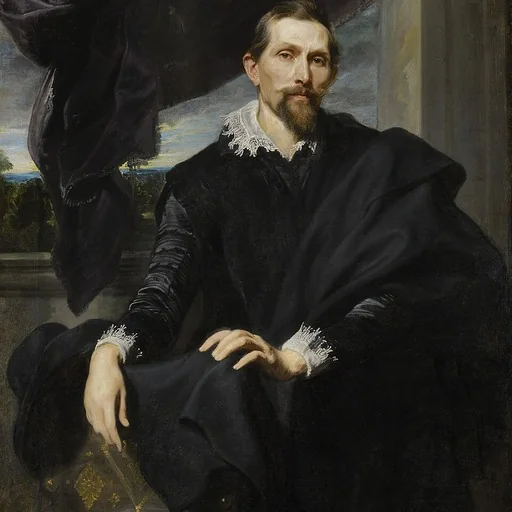
Frans Snyders or Frans Snijders was a Flemish painter of animals, hunting scenes, market scenes, and still lifes.

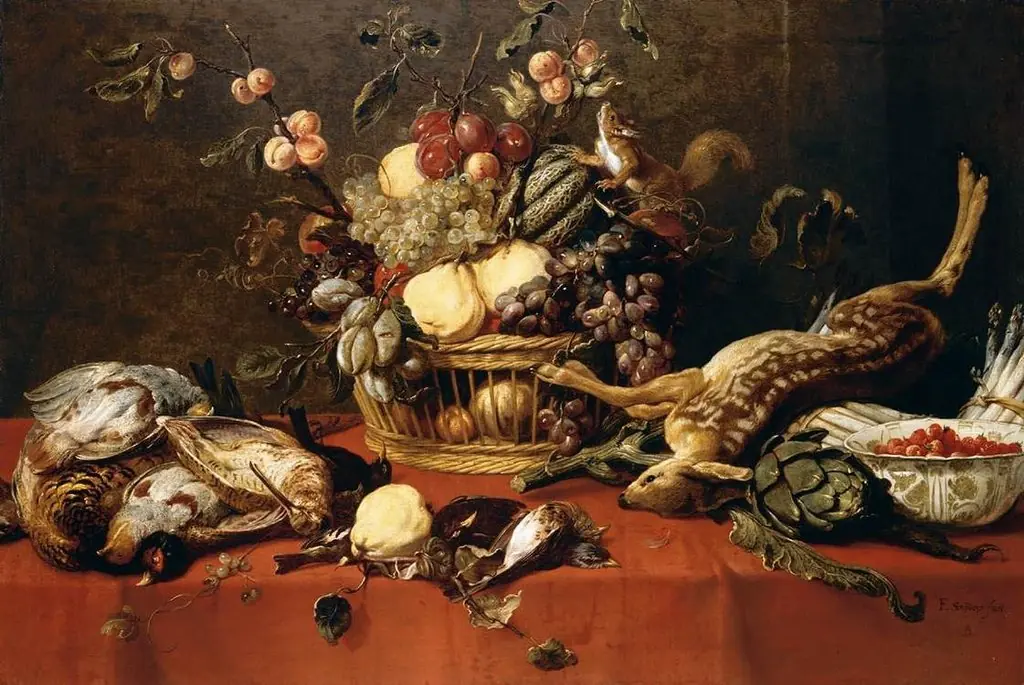 Still life of fruit in a basket together with game, a bowl of fraises-de-bois, artichokes, asparagus and a squirrel upon a table draped with a red cloth
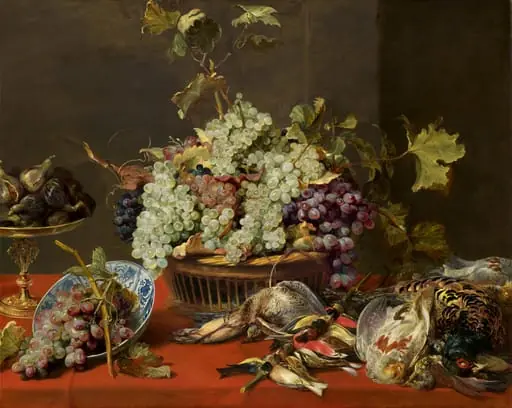 Still Life with Grapes and Game
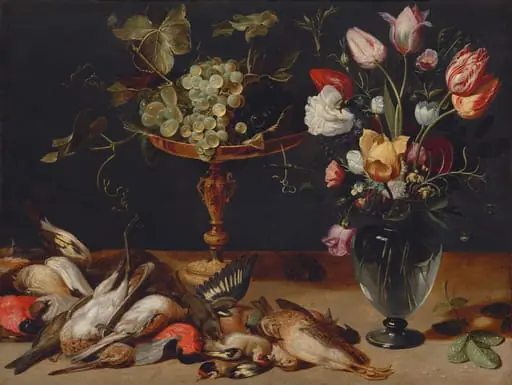 Still Life with Flowers, Grapes, and Small Game Birds
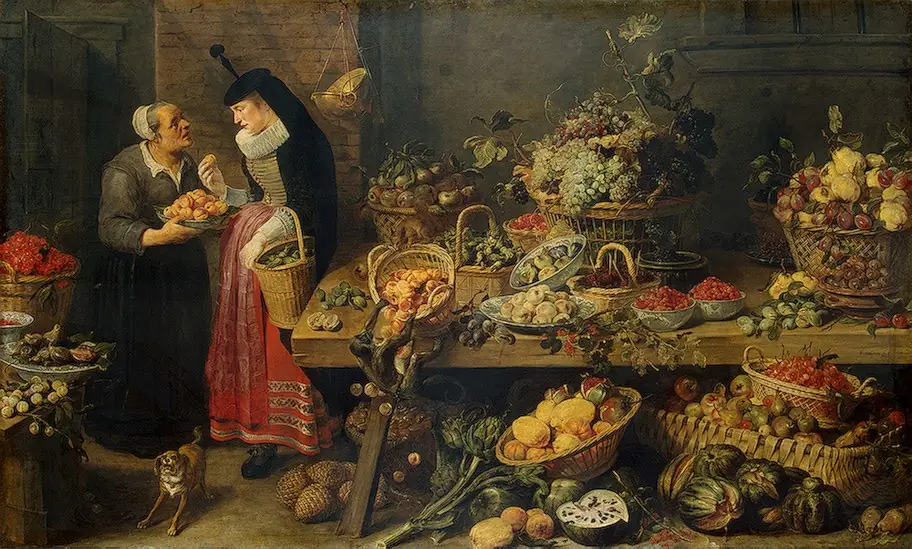 The Fruit Shop
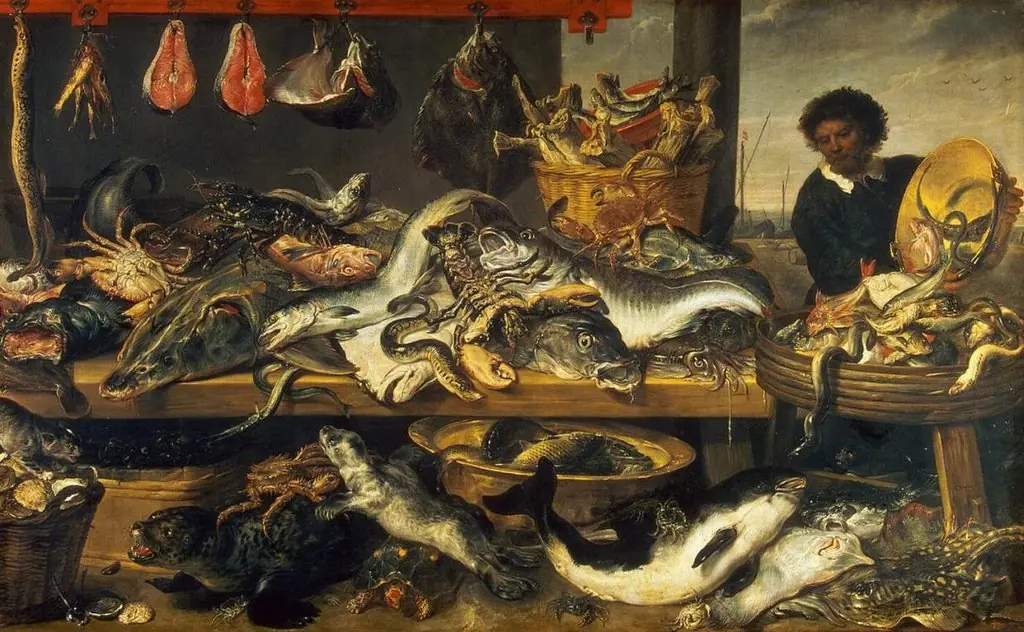 Fish Market
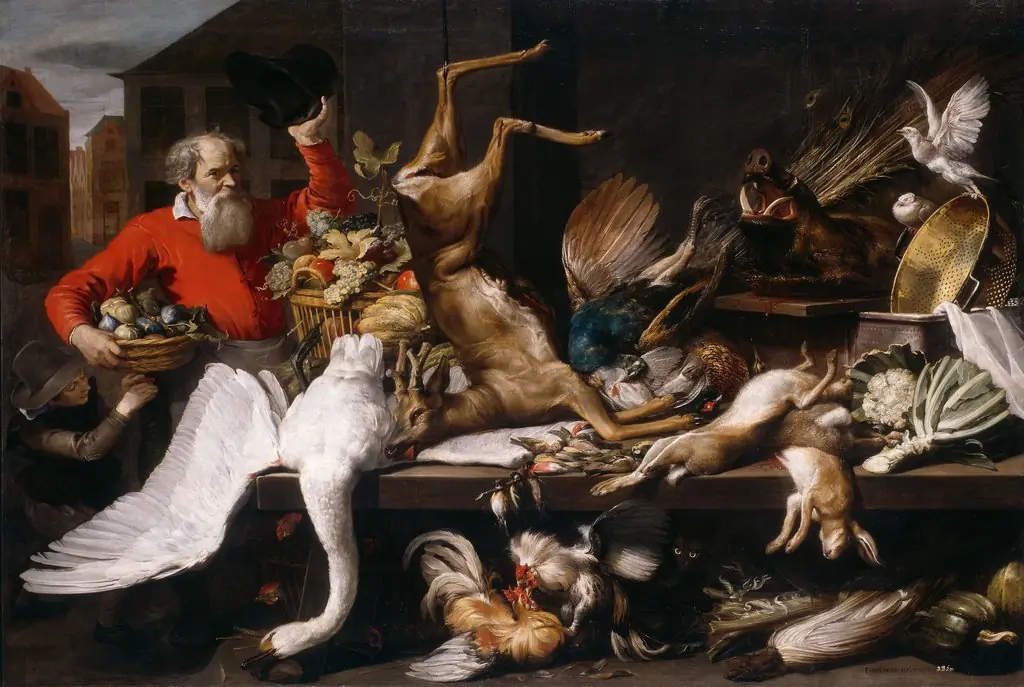 Still Life with Dead Game, Fruits, and Vegetables in a Market
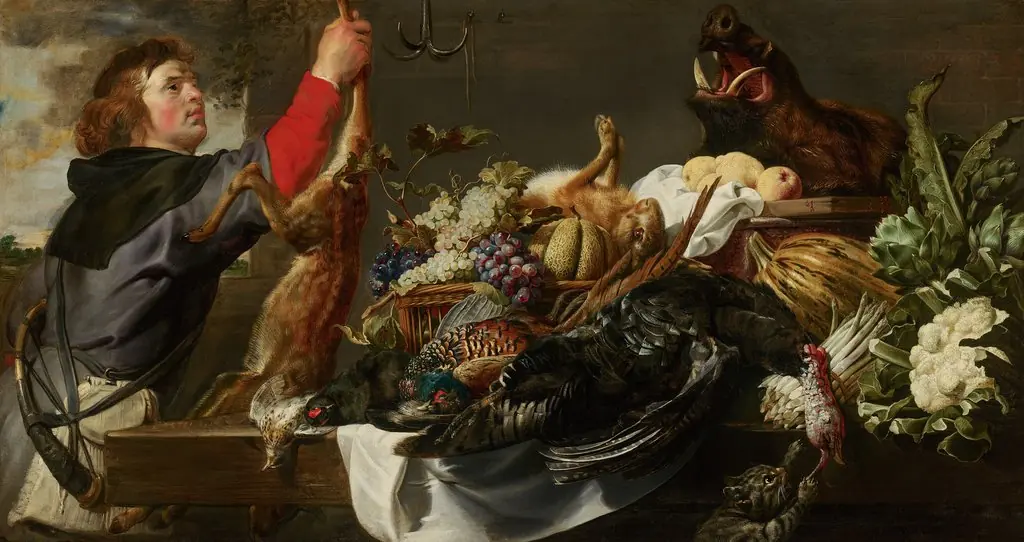 Still Life with Huntsman
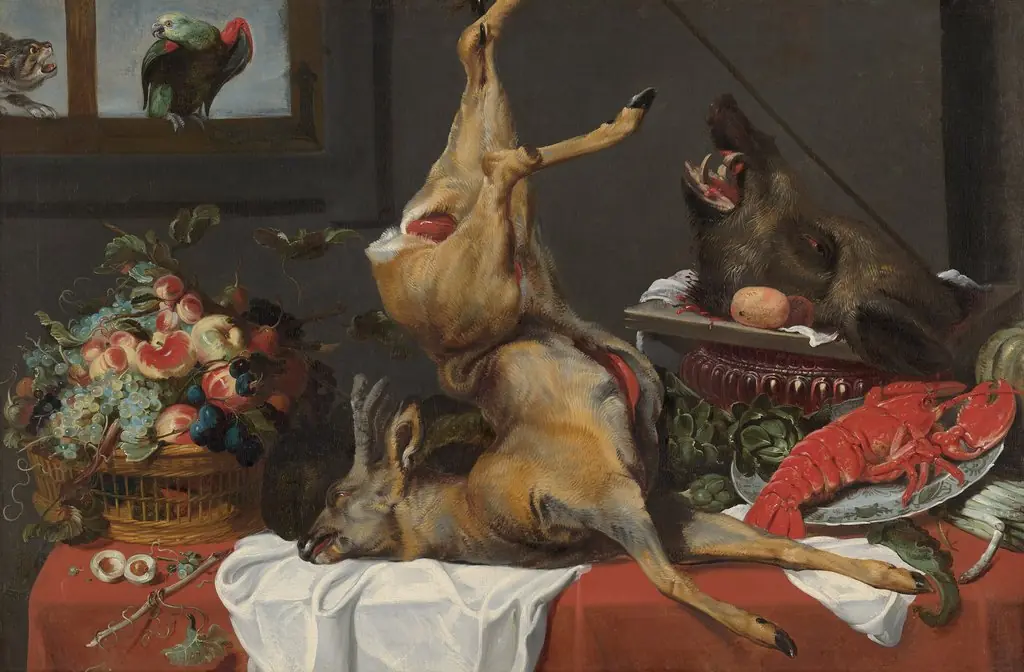 Still Life with a Dead Stag