Artwork
Untitled
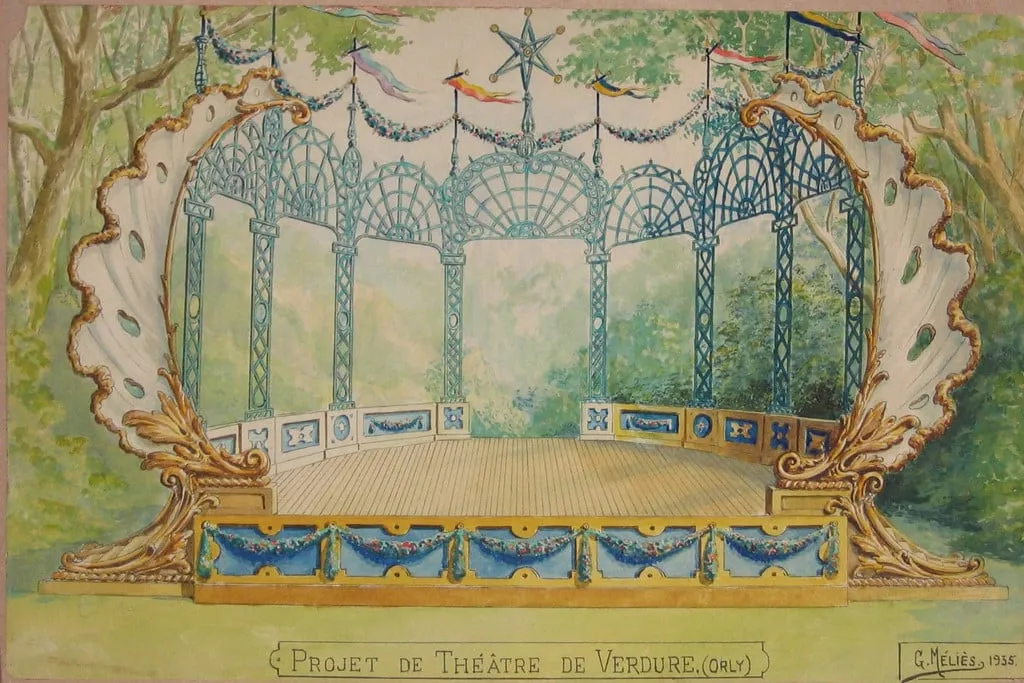
Untitled is a watercolor drawing by Georges Méliès. It dates from 1935 and is held in the collection of the Museum of Modern Art. This drawing, dated 1935, is executed in watercolor, ink, and pencil on paper.
About this work
This painting shows a small outdoor theater with a curved stage framed by three blue metal arches.
This painting shows a small outdoor theater with a curved stage framed by three blue metal arches. The stage has a wooden floor and a gold railing with blue panels. Colorful flags and garlands hang above the arches, and trees fill the background.
The artist signed it in 1935, long after he became famous for something else. This sketch feels like a quiet, detailed plan rather than a grand scene.
Check out Georges Méliès to see how his early drawings connect to his later magic tricks.
Overview
This drawing, dated 1935, is executed in watercolor, ink, and pencil on paper. It depicts a modest outdoor theater with a curved stage, supported by three blue metal arches. The work is part of the collection at The Museum of Modern Art.
Though signed by Georges Méliès, it was made decades after his prominence in early cinema, suggesting a reflective return to visual design rather than active filmmaking.
Subject & Meaning
The scene portrays a small, intimate performance space, likely inspired by the theatrical environments Méliès once directed. The stage, with its wooden floor and ornamental gold railing, evokes a sense of staged illusion. Decorative flags and garlands suggest festive occasions, while the surrounding trees imply an open-air setting. The drawing reads as a personal recollection, not a public spectacle.
Technique & Style
Méliès employed delicate watercolor washes to suggest light and atmosphere, layered with precise ink lines to define architectural elements. Pencil underdrawing reveals careful planning. The palette is restrained, blues, golds, and muted greens, emphasizing structure over drama. The composition is orderly and contained, reflecting a designer’s eye rather than a cinematic gesture.
History & Provenance
Created in 1935, the drawing emerged during Méliès’s later years, after his film career had declined and his studio had been dismantled. It was likely made in private, possibly as a memory exercise or preparatory sketch. The work entered The Museum of Modern Art’s collection in the mid-20th century, recognized for its connection to his earlier theatrical innovations.
Context
By 1935, Méliès was no longer active in film, having lost his studio and much of his work to neglect. This drawing reflects a quiet engagement with the visual language he once dominated: stage design, illusion, and framed performance. It stands as a quiet counterpoint to his earlier, more flamboyant cinematic experiments, revealing a sustained interest in spatial storytelling.
Legacy
Though not a finished painting or film, this drawing offers insight into Méliès’s enduring fascination with constructed worlds. It bridges his theatrical roots and cinematic output, illustrating how his understanding of stage space informed his visual effects. As a personal artifact, it preserves the mindset of an artist who saw the world as a stage, even in retirement.
Artist & collection

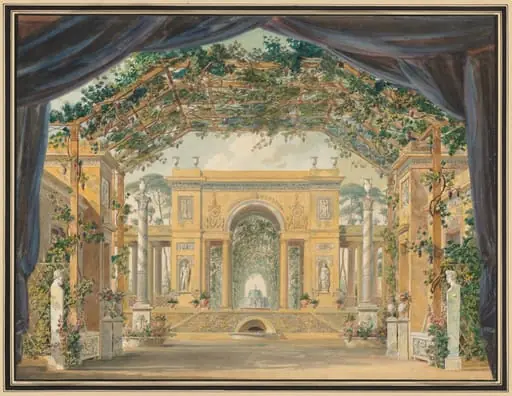
- Decoration Executed for the Birthday of His Majesty the King of Westphalia
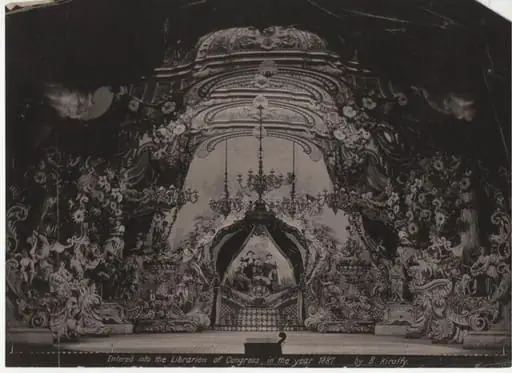 Dolores
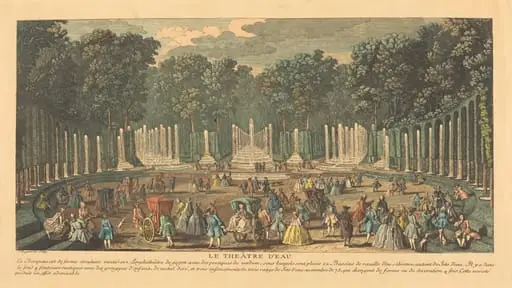 The Theatre of Water (Le Théâtre d'Eau)
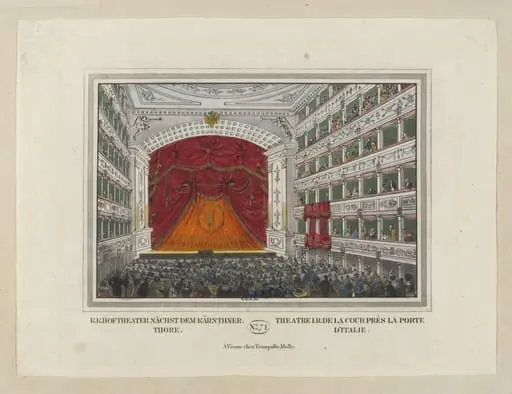 H Beard Print Collection
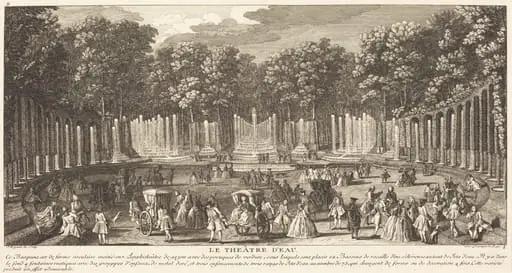 Le Théâtre d'Eau
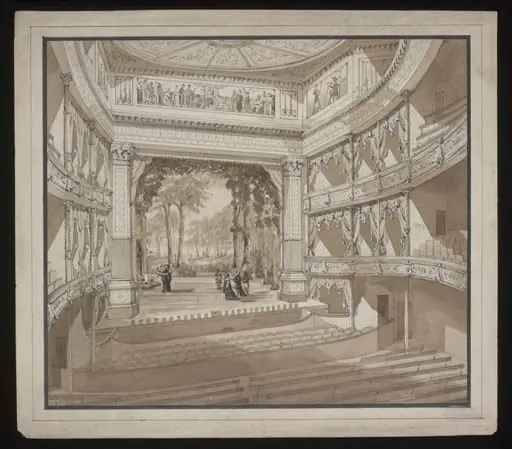 Illustration of Princes Theatre Manchester
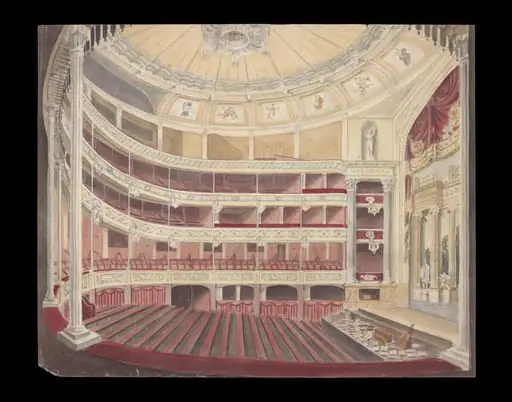 Winston Collection
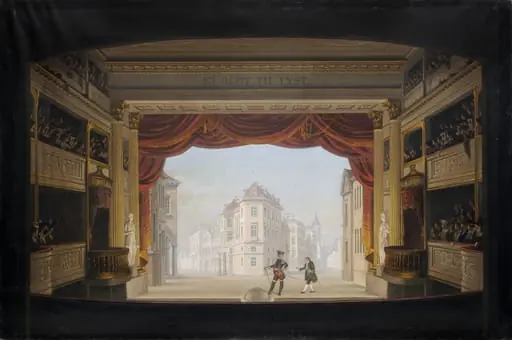 Det indvendige af Det kgl. teater under fremstillingen af Jacob v. Thyboe
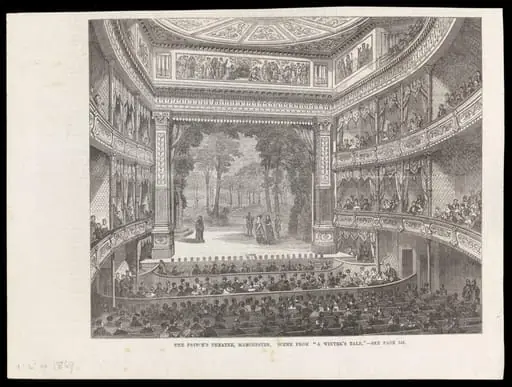 H Beard Print Collection
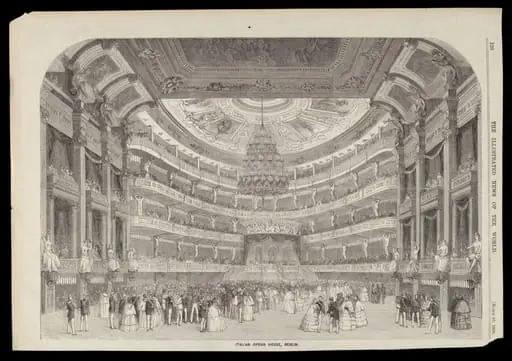 H Beard Print Collection
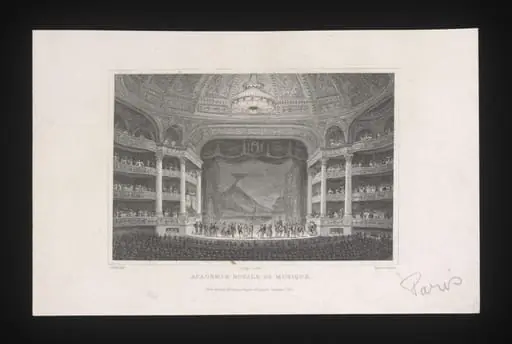 Academie Royale de Musique
 H Beard Print Collection