Artwork
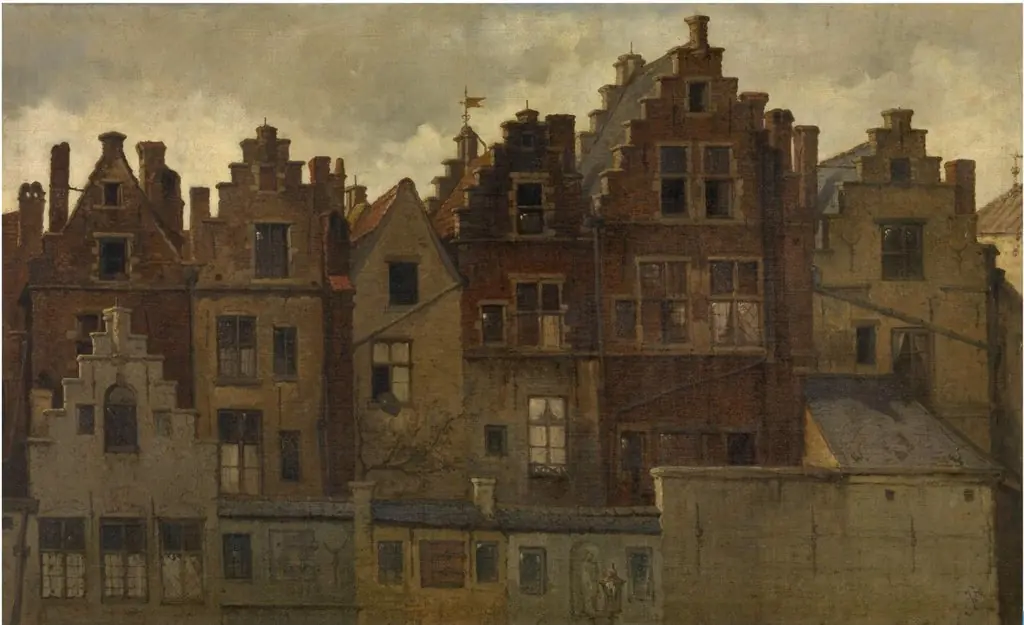
The Vleeshuis and old houses
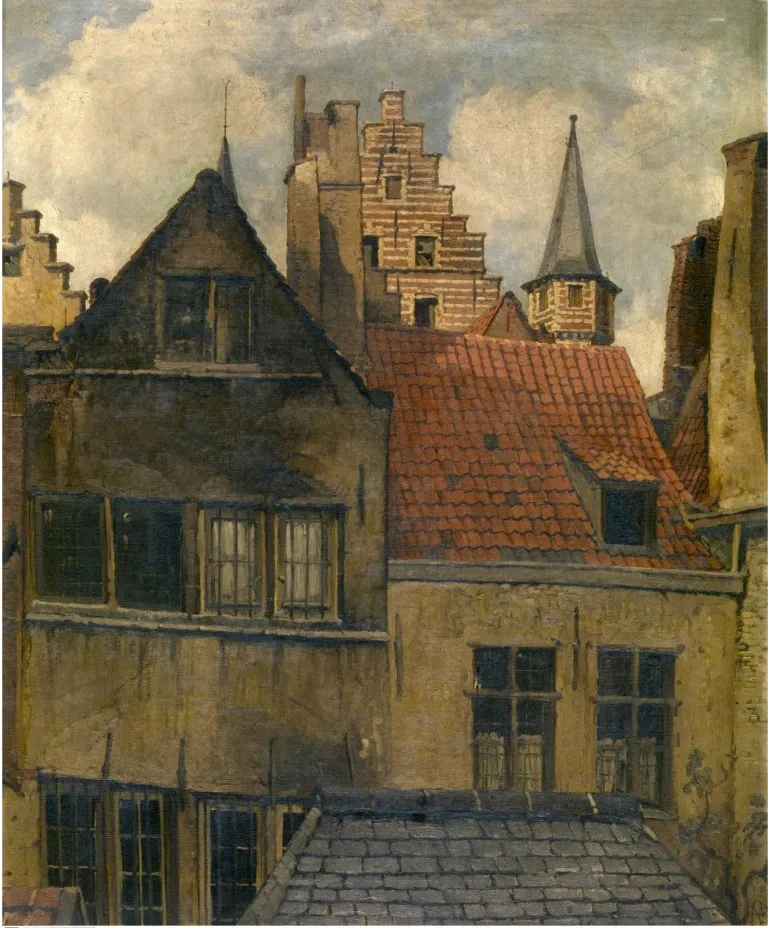
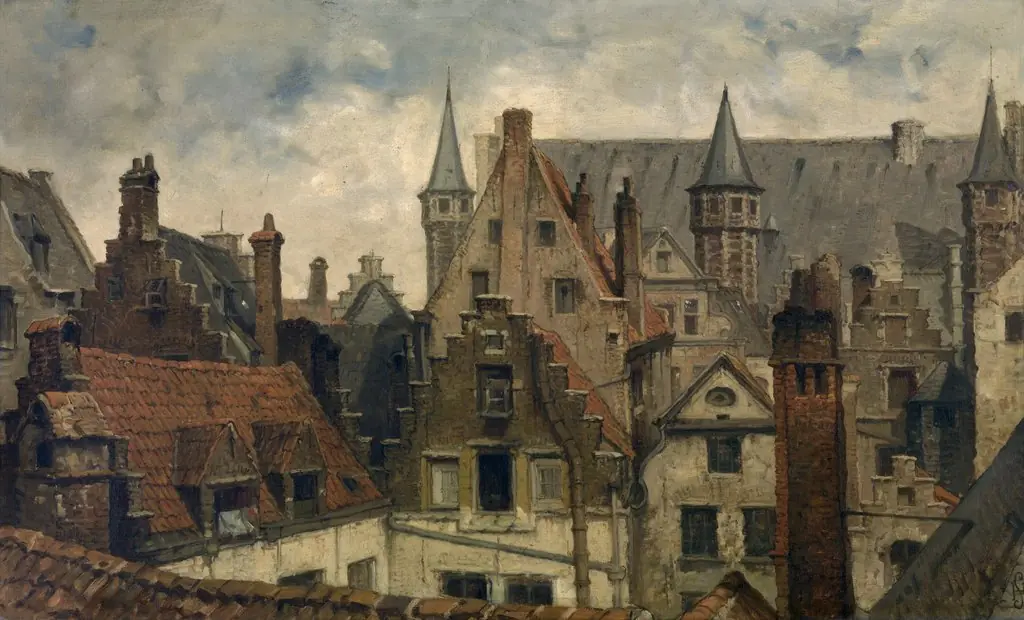
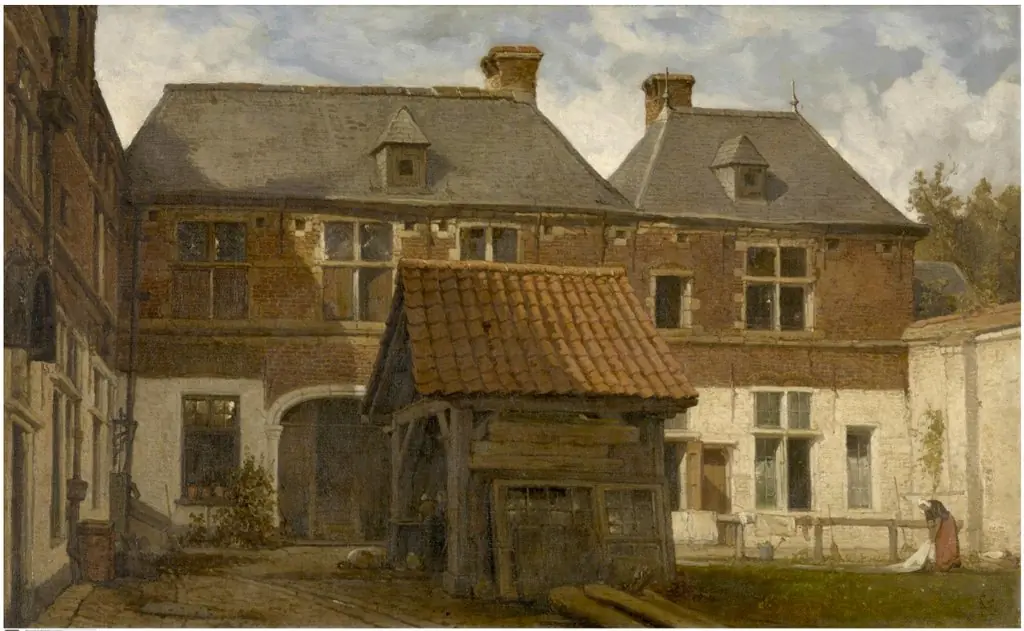
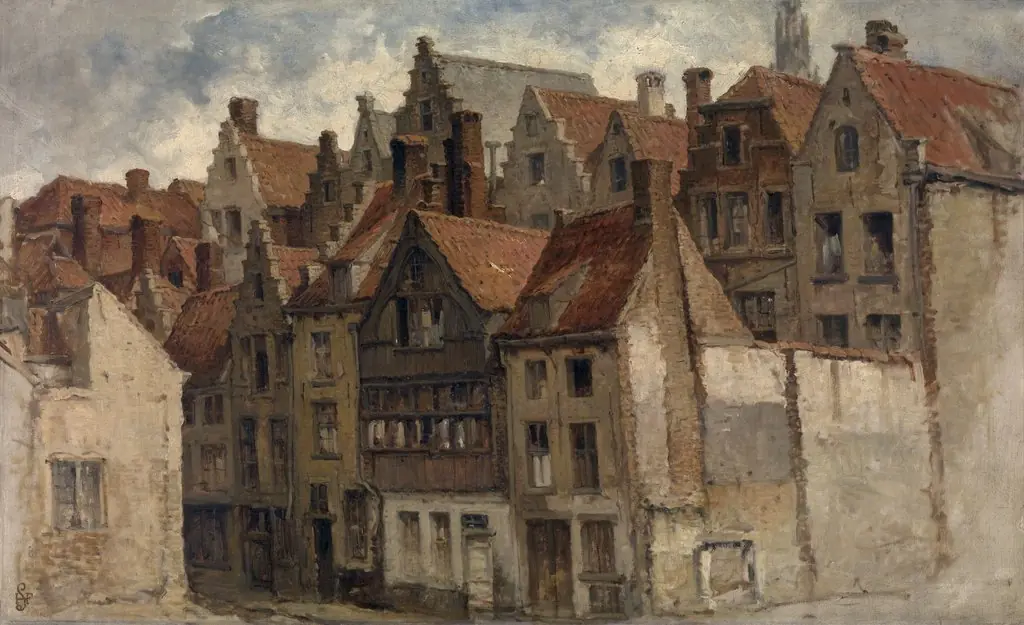
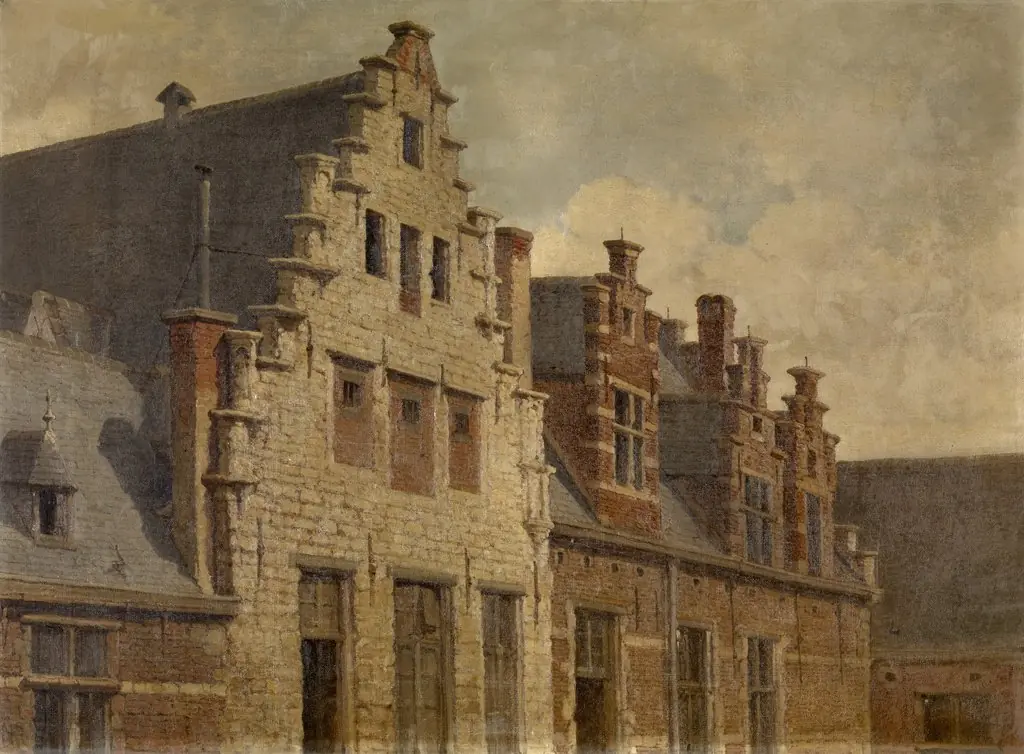
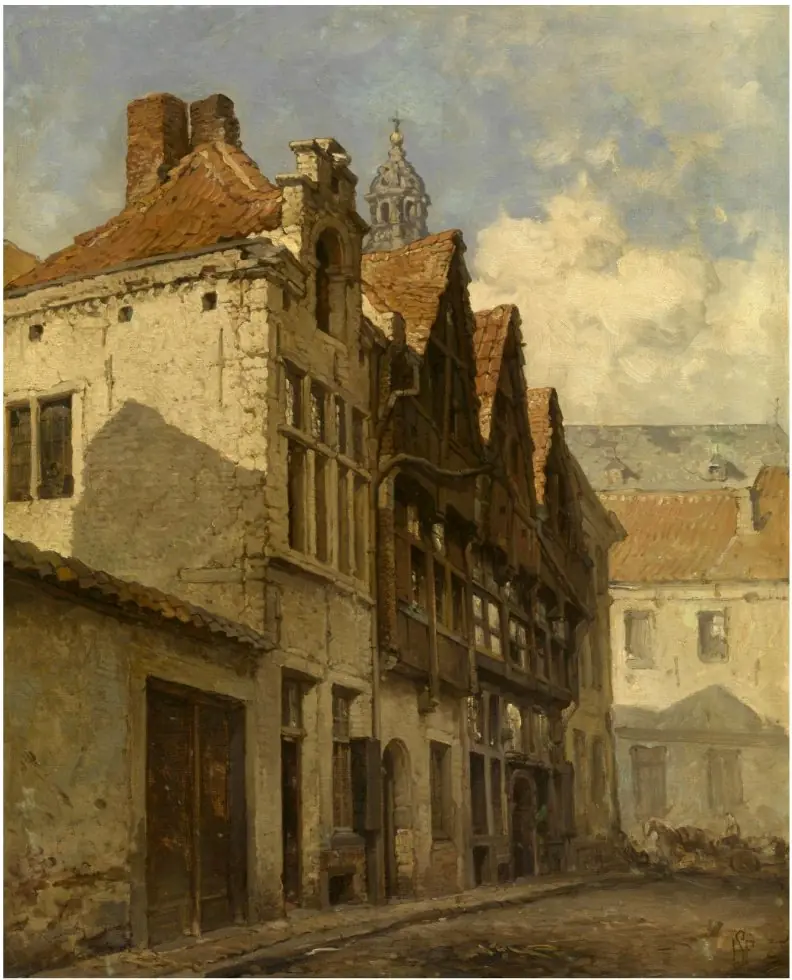
The Vleeshuis and old houses is an oil painting by the Impressionist artist Hendrik Frans Schaefels. It dates from 1873 and is held in the collection of the Royal Museum of Fine Arts Antwerp.
About this work
Technique & Style
The Vleeshuis and old houses is an oil painting executed on canvas, a medium consistent with Schaefels's broader practice as a cityscape painter.
The Vleeshuis and old houses is an oil painting executed on canvas, a medium consistent with Schaefels's broader practice as a cityscape painter. The work measures 64 cm in height by 52 cm in width, giving it a modest vertical format suited to an architectural study.
Stylistically, the painting belongs to the cityscape genre, focusing on the Vleeshuis and surrounding historic houses as its subject. The handling reflects the descriptive, topographically attentive approach typical of Schaefels's depictions of Antwerp's old architecture, prioritizing recognizable built form over dramatic effect.
No condition report or detailed treatment history is documented in the available sources.
History & Provenance
Hendrik Frans Schaefels created the oil painting The Vleeshuis and old houses in 1873. Executed on canvas, the work depicts the Vleeshuis building alongside adjacent residential structures. The piece entered the collection of the Royal Museum of Fine Arts Antwerp, where it remains housed under the inventory number 1441.
The painting is held in the collection of the Royal Museum of Fine Arts Antwerp, with the accession number KMSKA 1441. It was created in 1873 and measures 64 cm in height by 52 cm in width. The work has been part of the museum's exhibition history, including its display in the exhibition "19th Century Art" in 2018.
Context
Hendrik Frans Schaefels painted The Vleeshuis and old houses in 1873, a cityscape depicting the historic Vleeshuis building in Antwerp, now housed in the Royal Museum of Fine Arts Antwerp. The work reflects Schaefels' focus on architectural preservation amid 19th-century urban transformation, situating it within his broader practice of documenting Flemish heritage sites. Its detailed rendering of period structures contributed to contemporary discussions on historic conservation, though critical reception at the time emphasized technical skill over thematic depth.
Modern scholarship recognizes the painting as part of Schaefels' effort to elevate everyday urban landscapes to the status of cultural monuments.
Overview
Painted in 1873 by Belgian artist Hendrik Frans Schaefels, this oil on canvas depicts a quiet urban scene in Antwerp. The Vleeshuis, a historic meat market building, stands at the left edge of the composition, flanked by neighboring residential structures. The work belongs to the cityscape tradition, capturing a modest stretch of the city with attention to architectural detail and atmospheric tone rather than dramatic narrative.
Subject & Meaning
The painting presents an unidealized view of everyday urban life in late 19th-century Antwerp. The Vleeshuis, a functional civic building, and the modest homes beside it reflect the ordinary fabric of the city. There is no grandeur or idealization; instead, the scene conveys a sense of quiet continuity, where architecture endures as part of daily routine, subtly honoring the rhythm of civic existence without sentimentality.
Legacy
Though not widely exhibited outside Belgium, the painting contributes to a broader understanding of how 19th-century Belgian artists documented their cities with quiet realism. It stands as a modest but significant example of regional urban painting, preserving the visual character of Antwerp’s historic core at a time when such architecture was increasingly vulnerable to change.
Artist & collection
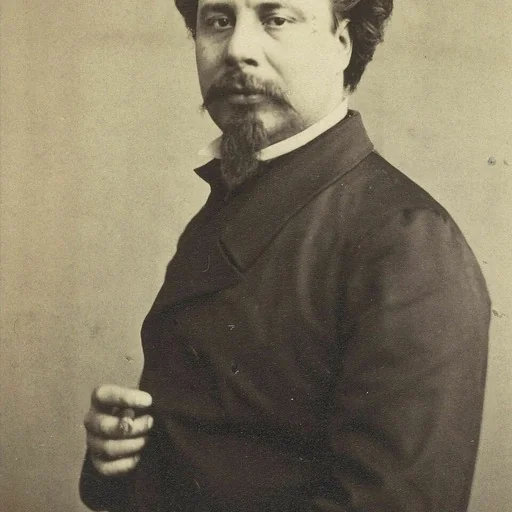
Artist
Hendrik Frans Schaefels or Henri François Schaefels, also known as Rik Schaefels (Antwerp, 2 December 1827 – Antwerp, 9 June 1904), was a Belgian Romantic painter, draughtsman and engraver known for his seascapes,…