Artwork
Scythe Smithy, Weybridge
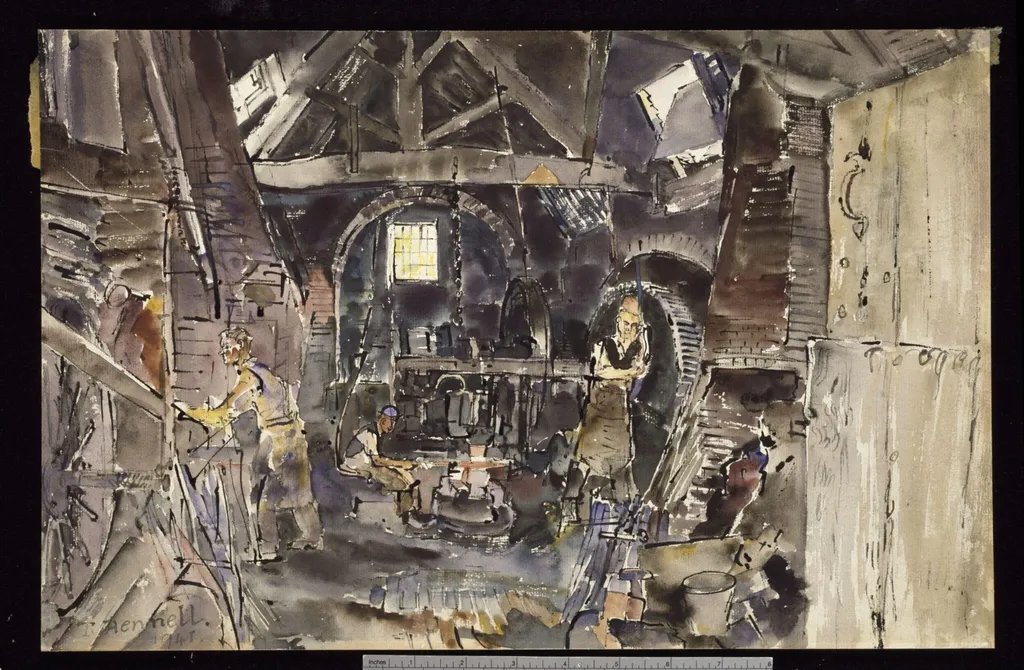
Scythe Smithy, Weybridge is a watercolor work on paper by the Social Realist artist Thomas Hennell. It dates from 1941 and is held in the collection of the Victoria and Albert Museum.
About this work
Overview
Scythe Smithy, Weybridge is a watercolour painting by Thomas Hennell, created in 1941 as part of the Recording Britain project.
Subject & Meaning
The painting depicts a rural blacksmith's forge, capturing a moment of traditional craftsmanship in a changing agricultural landscape. The scene shows a cluttered workshop with figures engaged in scythe production, conveying the character of a local industry.
Technique & Style
Hennell's loose, textured brushstrokes give the scene a rough, hurried feel, emphasizing the gritty details of the forge, such as scattered tools and soot-covered walls.
History & Provenance
The work was commissioned by the Pilgrim Trust as part of the Recording Britain project, overseen by Sir Kenneth Clark, aiming to preserve a visual record of England's cultural landscape during World War II.
Artist & collection
Artist
Thomas Hennell was a British artist and writer who specialised in illustrations and essays on the subject of the British countryside.

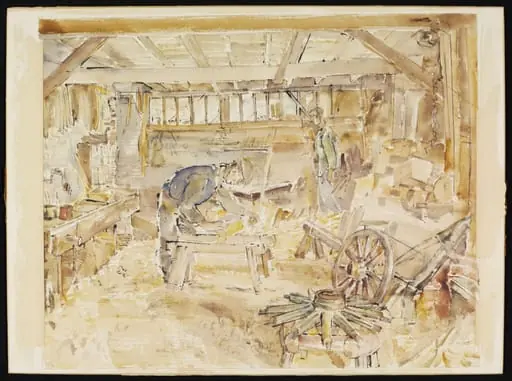 Wheelwrights at work in Mr. J. W. Brunt's Shop, Newington
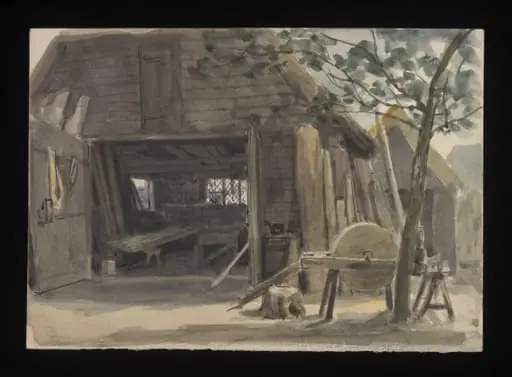 Watercolour drawing by the Grieve family, showing a workman's hut at Garlinge, Kent
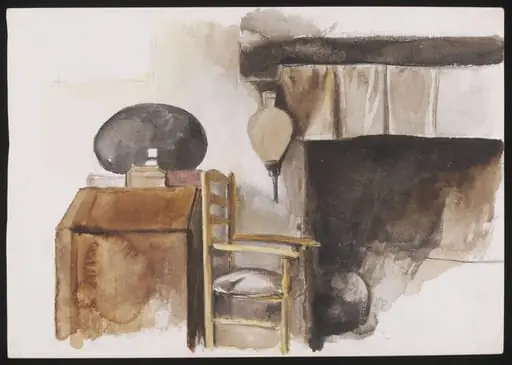 Study of a fireplace, a writing desk and a rush-seated ladderback chair
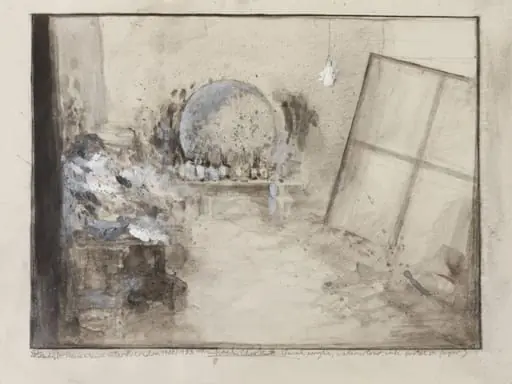 Study for Reece Mews Interior (Francis Bacon's Studio)
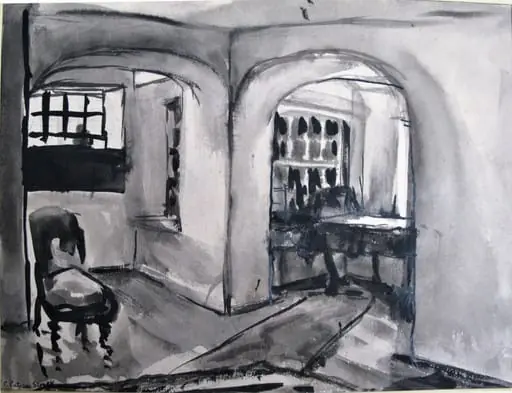 Interior în casa Satmary
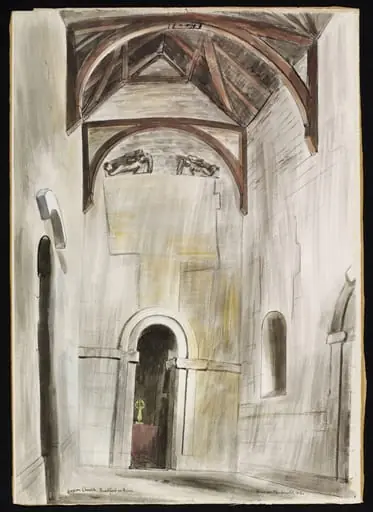 Saxon Church, Bradford-on-Avon
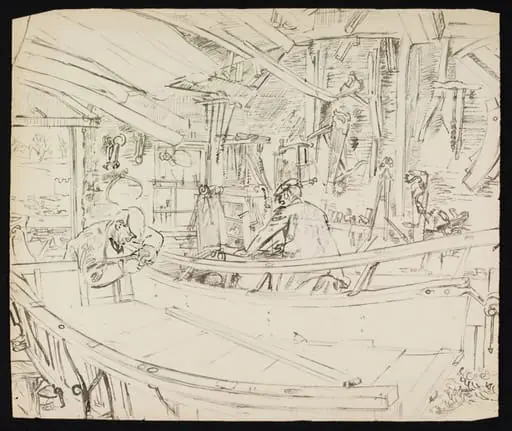 Building a Wiltshire Waggon near Longleat (April 1941)
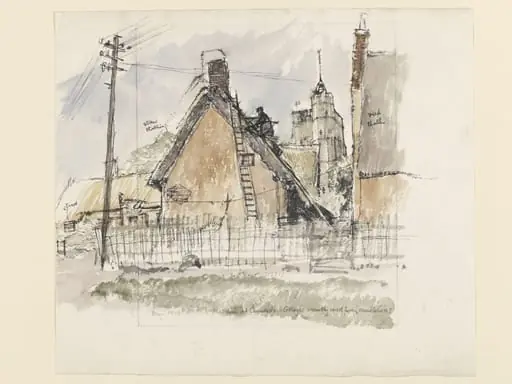 Thatching at Cavendish
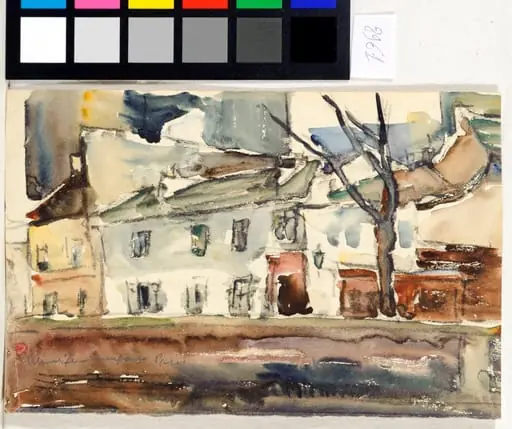 Vedere din Paris
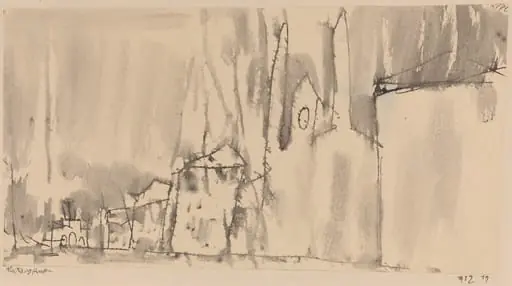 Ludwigstrasse
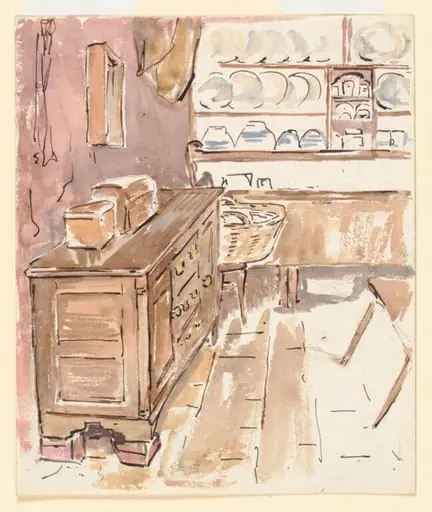 Study for Mrs Tiggy-winkle's kitchen
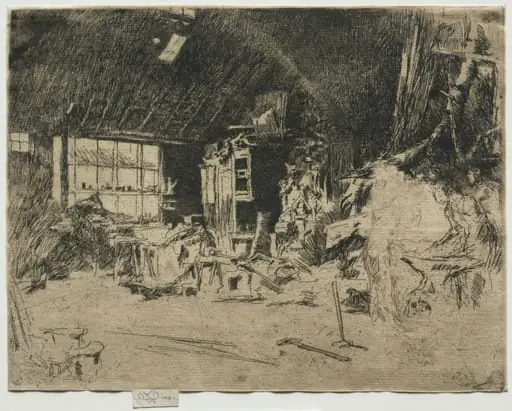
- The Smithy