Artwork
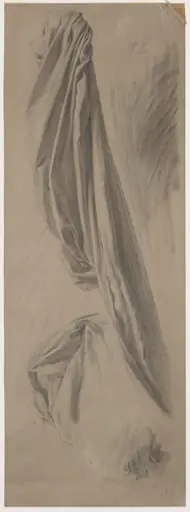
Costume Study
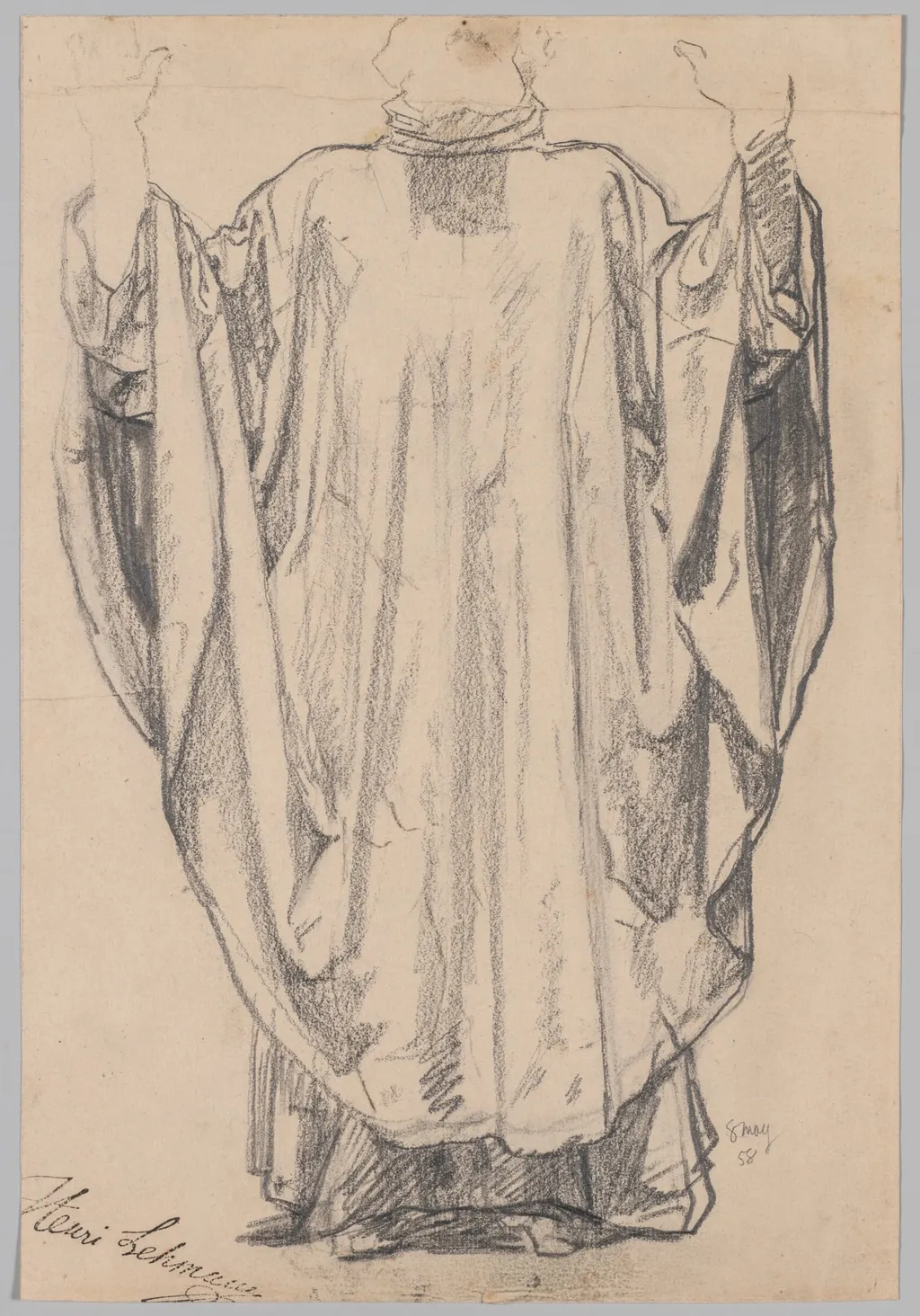
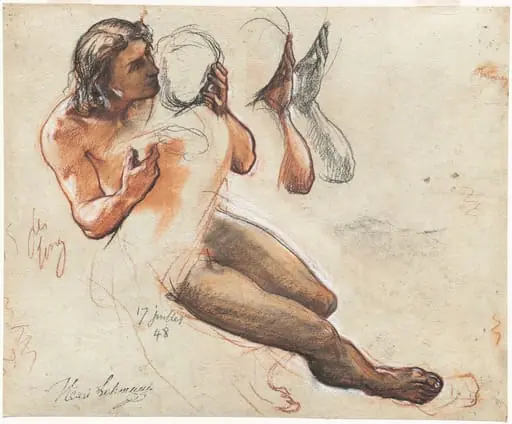
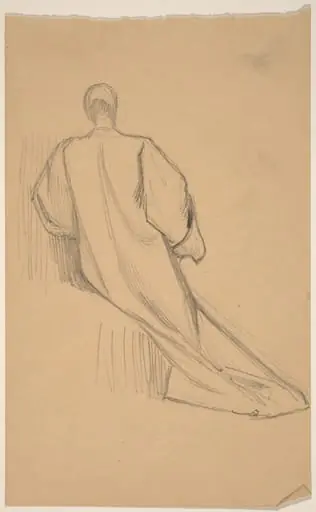
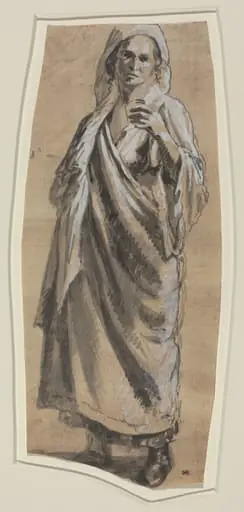
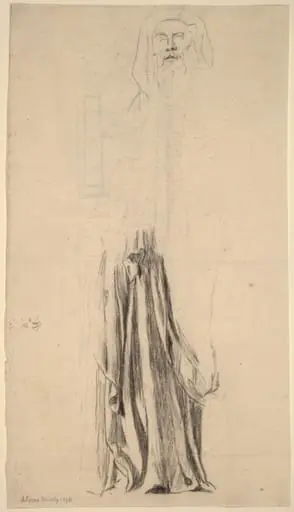
Costume Study is a drawing by the Romanticist artist Henri Lehmann. It dates from 1852 and is held in the collection of the Cleveland Museum of Art.
- Accession no.
- 2018.43
- Credit line
- Bequest of Muriel Butkin
About this work
Overview
Costume Study is a drawing by Lehmann that focuses on the interaction between a male figure's body and the drapery of a long, flowing robe. The work showcases the artist's meticulous attention to the nuances of fabric and shadow.
Subject & Meaning
The subject is a male figure in a robe, but the primary focus is on the artistic study of drapery's behavior and its shadows, a key aspect of an artist's training in the 19th century.
Technique & Style
Rendered in careful pencil or chalk, the drawing emphasizes the undulating texture of the robe and the soft shadows formed by its folds, demonstrating Lehmann's exploration of chiaroscuro effects.
History & Provenance
Part of a pair related to Lehmann's Hôtel de Ville murals, this study reflects the artist's preparatory work for larger projects, specifically honing skills in depicting fabric dynamics.
Own this work as a print
Artist & collection

![Man Wearing a Cloak [recto], by Édouard Manet](https://artifactworldgallery.com/img/edouard-manet--man-wearing-a-cloak-recto--6f165c0376318d82-w320.webp)
![A Venetian Procurator of San Marco [recto], by Pietro Longhi](https://artifactworldgallery.com/img/pietro-longhi--a-venetian-procurator-of-san-marco-recto--2c48af9001688196-w320.webp)