Artwork
The Battle of the Moneybags and the Strongboxes
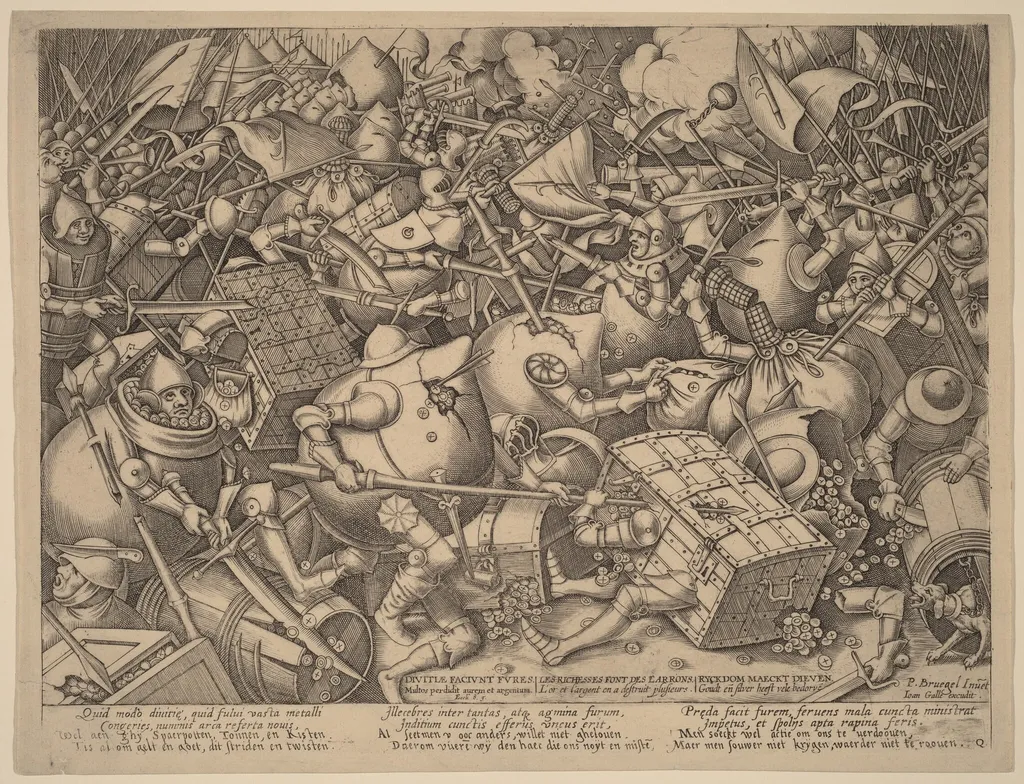
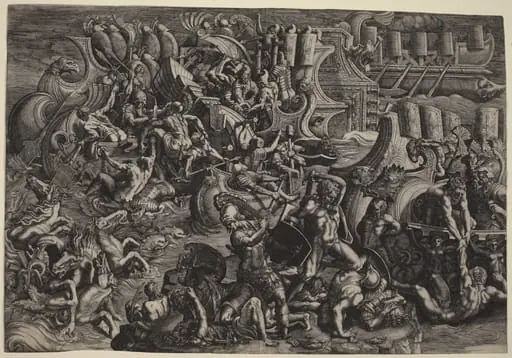
The Battle of the Moneybags and the Strongboxes is an ink print by the Renaissance artist Pieter van der Heyden. It dates from 1552 and is held in the collection of the National Gallery of Art.
- Inscription
- Inscribed:lower center, in image, in plate: DIVITIAE FACIVNT FVRES. / Multos perdidit aurem et argenium / Eccli 8.5. // LES RICHESSES FONT DES LARRONS. / L'or et l'argent en a destruit plusieurs. // RYCKDOM MAECKT DIEVEN. / Goudt en silver heeft vek bedorve; lower right, in image in plate: P. Bruegel Inuet. / Ioan Galle excudit.; in lower margin, in plate: Quid modo diuiti[a]e, quid fului vasta metalli / Congeries, nummis arca referta nouis, // Illecebres inter tantas, atq[ue] agmina furum / Inditium cunctis efferus vncus erit, // Pr[a]eda facit furem, feruens mala cuncta ministrat / Impetus, et spolijs apta rapina feris. (The savage grappling hook will reveal to all the riches, the vast pile of yellow metal, the strongbox stuffed with new coins among these great enticements and the ranks of thieves. Booty makes the thief, the assault that serves all evil helps him, and so does the pillage good for fierce spoils.) // Wel aen ghij Spaerpotten, Tonnen, en Kisten. / Tis al om gelt en goet, dit striden en twisten. // Al seet men u ooc anders, willet niet ghelouen. / Daerom vueren[n] wij den haec die ons noijt en miste[n] // Men soeckt wel actie om ons te uerdoouen, / Maer men souwer niet krijgen, waerder niet te rooven. (Forward you piggy banks, barrels, and chests. It's all for money and goods, this fighting and quarreling. Even if they tell you something different, don't believe it. That is why we carry that hook, which has never forsaken us, on our banners. They are taking action to quiet us down, but there would be no battle if there were nothing to steal.) [translations from Nadine Orenstein, ed., Pieter Bruegel the Elder: Drawings and Prints. Exhibition catalogue. New York: Metropolitan Museum of Art, 2001, p. 253.]
About this work
Overview
Created in 1552 by Flemish engraver Pieter van der Heyden, this print is a satirical allegory rendered in fine-line engraving.
Created in 1552 by Flemish engraver Pieter van der Heyden, this print is a satirical allegory rendered in fine-line engraving. Unlike his usual reproductive works after major painters, this piece appears to be an original composition. It depicts an absurd confrontation between two inanimate objects, labeled 'Money' and 'Strongbox', engaged in a muddy struggle, suggesting a critique of financial power dynamics through visual humor.
Subject & Meaning
The scene personifies financial entities as combatants: the Moneybag, representing liquid wealth, and the Strongbox, symbolizing institutional hoarding. A hand wielding a key reaches toward the Moneybag, implying control or theft. The absurdity of the battle, objects locked in futile combat, undermines the seriousness of economic conflict, possibly mocking the greed or instability of contemporary financial systems.
Technique & Style
Van der Heyden employed meticulous engraving techniques, using fine, intersecting lines to render texture and motion in the mud and the struggling forms. The dark, unmodeled background isolates the figures, heightening their theatricality. The exaggerated scale and clumsy postures of the bags, rendered with deliberate awkwardness, contrast with the precision of the engraving, reinforcing the satirical tone.
History & Provenance
The print was produced during a period of rising commercial activity in the Low Countries, when financial instruments and banking practices were becoming more visible in daily life. While no early ownership records are documented, its survival in multiple institutional collections suggests it circulated among educated urban audiences familiar with allegorical satire.
Context
In mid-16th-century Antwerp, printmakers often used visual wit to comment on social and economic trends. Van der Heyden’s work aligns with a broader tradition of moralizing satire, akin to Bruegel’s depictions of human folly. The personification of abstract concepts like wealth as physical combatants reflects a cultural tendency to visualize economic forces as tangible, often irrational, actors.
Legacy
Though not widely reproduced or cited in later art history, the print remains a rare example of a Flemish engraver turning away from reproductive work to create original social commentary. Its blend of technical precision and absurdist subject matter offers insight into how early modern audiences engaged critically with emerging financial culture through visual metaphor.
Own this work as a print
Artist & collection

Artist
Pieter van der Heyden (c. 1530 - after March 1572) was a Flemish printmaker who is known for his reproductive engravings after works by leading Flemish painters and designers of the 16th century.

- Untitled
 Battle of Cividale
 The Battle with the Cutlass
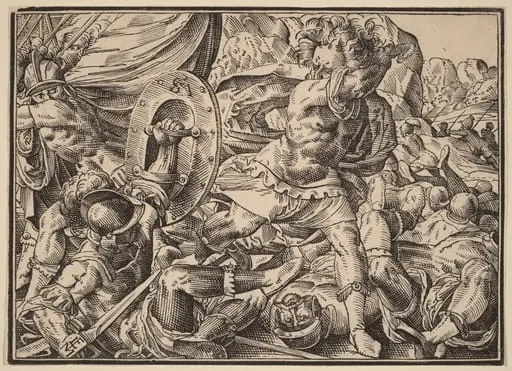 Christ Tells His Disciples of the Last Judgment
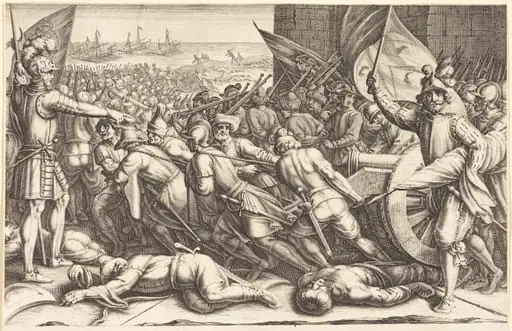 The Re-embarkation of the Troops
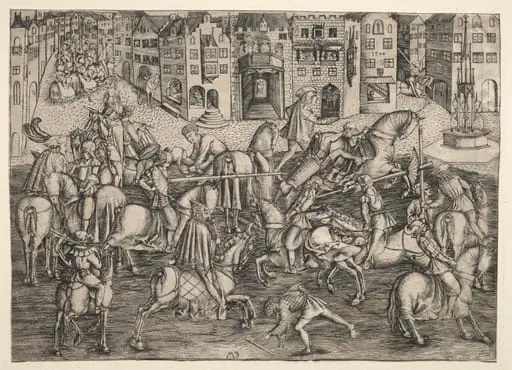 The Great Tournament: Munich
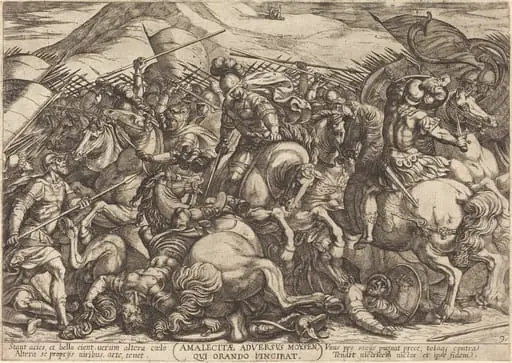 The Defeat of the Amalikits by the Hebrews
 The Battle of Fornovo
 The War at Hainault
 Fortitude
 Christ Tells His Disciples of the Last Judgment
 The Trojans Repulsing the Greeks