Artwork
Peisaj - Mangalia veche
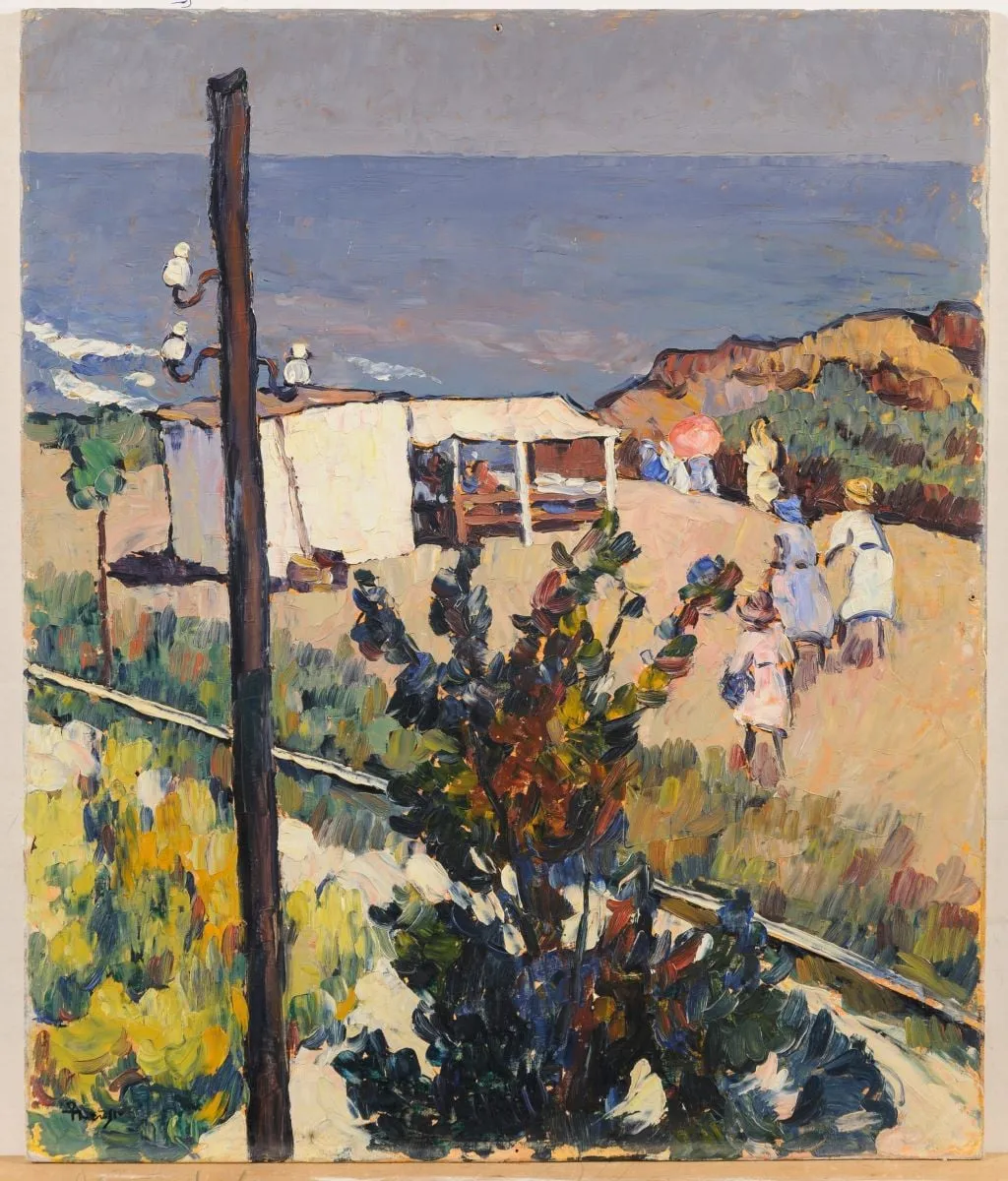
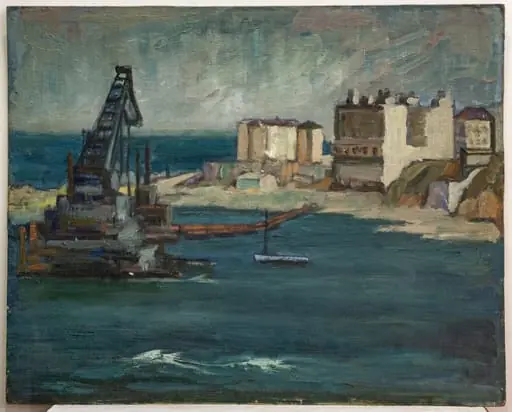
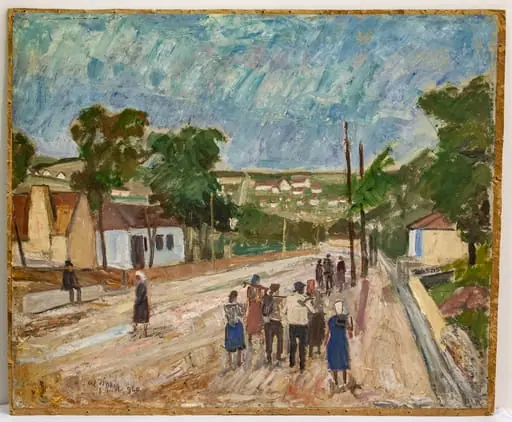
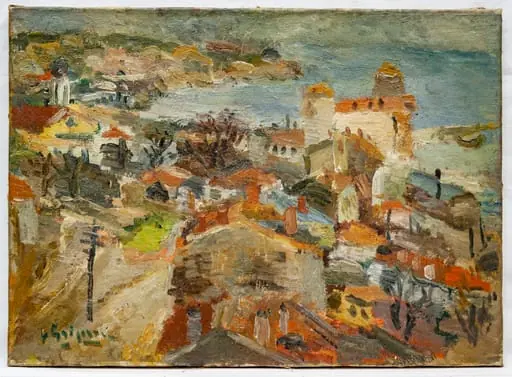
Peisaj - Mangalia veche is an unspecified painting by Ion Theodorescu-Sion. It dates from 1937 and is held in the collection of the National Museum of Art of Romania.
About this work
Overview
The composition emphasizes atmosphere over precise detail, using energetic brushwork and layered pigment to convey the feel of sunlight on sand and sea.
Painted in 1937 by Ion Theodorescu-Sion, this work captures the coastal landscape of Mangalia, a town on Romania’s Black Sea shore. The composition emphasizes atmosphere over precise detail, using energetic brushwork and layered pigment to convey the feel of sunlight on sand and sea. It belongs to a series of Romanian coastal scenes the artist developed during the interwar period, reflecting a personal response to place rather than documentary realism.
Subject & Meaning
The scene depicts a quiet stretch of beach near a modest, flat-roofed structure, with two figures walking and birds perched on a pole. These elements are not focal points but fragments within a larger environmental mood. The absence of narrative or dramatic action suggests contemplation—perhaps an everyday moment rendered with emotional resonance. The painting invites attention to the quiet rhythm of coastal life, stripped of idealization.
Technique & Style
Theodorescu-Sion applied paint with visible, textured strokes, building up areas in thick impasto to suggest light and surface. Colors—emerald greens, ochre yellows, and deep blues—are applied boldly but not blended smoothly, preserving the physicality of the pigment. Forms are simplified; architecture and figures are suggested rather than rendered with precision. This approach prioritizes sensory impression over anatomical or architectural accuracy.
History & Provenance
Created during a period when Theodorescu-Sion was deeply engaged with Romanian rural and coastal subjects, this work emerged from his travels along the Black Sea coast. It was likely painted during one of his extended stays in Mangalia, where he sought to document local life through direct observation. The painting remained in Romanian collections after its completion, with no record of international exhibition until later scholarly attention.
Context
In late 1930s Romania, artists were increasingly turning from academic traditions toward expressive, modernist approaches rooted in national landscapes. Theodorescu-Sion’s work aligned with this shift, rejecting ornate detail in favor of emotional immediacy. His coastal scenes, including this one, contributed to a broader movement that redefined Romanian identity through regional environments rather than urban or historical themes.
Legacy
This painting is now recognized as part of Theodorescu-Sion’s significant contribution to interwar Romanian modernism. Its emphasis on materiality and mood influenced later generations of artists exploring landscape as a vehicle for personal expression. Though not widely exhibited abroad, it remains a key example in Romanian art history of how local scenes could be transformed through bold, tactile painting.
Artist & collection
Artist