Artwork
Formă avimorfă, cu trei picioare, unul în față și două în spate, prevăzut cu o mânușă pe spate și alături gura ulciorului. În cioc, este țurțurele. Pe corp, întâlnim ornamente florale și scene, este inscripționat anul 1924 și personalizat: Marin. Cromatica: Fondul brun, motive florale de culoare galbenă.
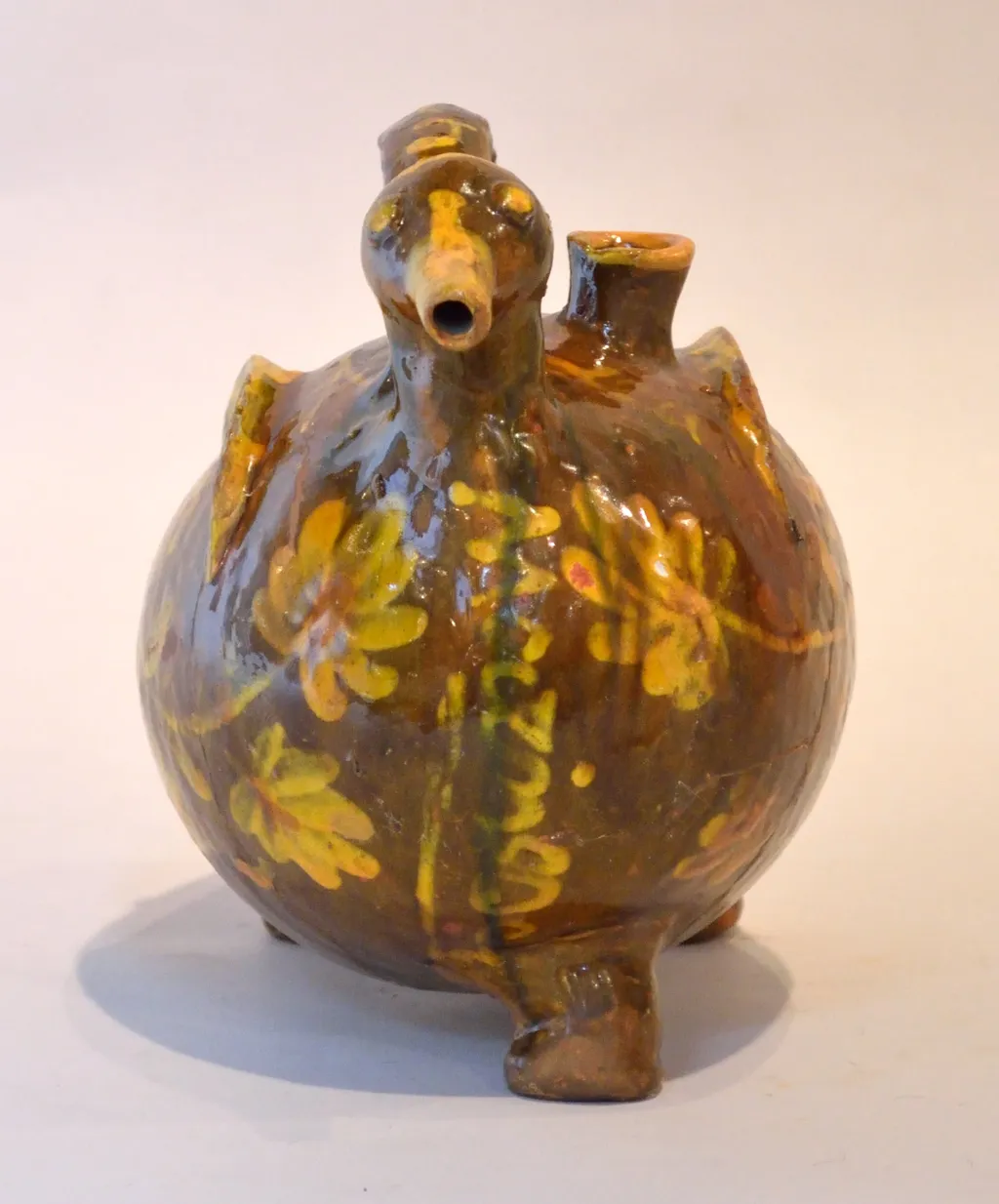
Formă avimorfă, cu trei picioare, unul în față și două în spate, prevăzut cu o mânușă pe spate și alături gura ulciorului. În cioc, este țurțurele. Pe corp, întâlnim ornamente florale și scene, este inscripționat anul 1924 și personalizat: Marin. Cromatica: Fondul brun, motive florale de culoare galbenă. is a photography by Hugo Kołłątaj. It is held in the collection of the Museum of Oltenia.
About this work
The bird’s head has two spouts for a beak and a small hole on top, maybe for pouring.
This looks like a small ceramic jug shaped like a bird. Its body is round and brown, with yellow and green painted flowers and leaves. The bird’s head has two spouts for a beak and a small hole on top, maybe for pouring. The feet are stubby, and there’s a handle on its back.
The jug has the name "Marin" written on it, along with the year 1924. The brown color and painted details give it a warm, earthy look.
Check out Hugo Kołłątaj to learn more about the artist who made this.
Overview
This small ceramic vessel, dated 1924, takes the form of a stylized bird with three legs—one forward, two rearward—and a handle extending from its back. Its body is adorned with floral motifs in yellow and green against a brown glaze. The head features dual spouts resembling a beak, with a small opening on top, likely for pouring. The inscription 'Marin' and the year suggest personal ownership or maker’s mark.
Subject & Meaning
The avian shape may reflect folk symbolism linking birds to domestic life, migration, or spiritual messages. The dual spouts and pouring function imply utility as a jug, while the ornamental detail elevates it beyond mere utility. The name 'Marin' personalizes the object, possibly indicating its maker or owner, grounding it in individual rather than communal tradition.
Technique & Style
Crafted from earthenware, the vessel is hand-modeled and painted with mineral-based pigments. The floral patterns are simplified, executed in flat planes of yellow and green against a matte brown ground. The form balances whimsy and function: the stubby legs provide stability, the back handle aids grip, and the beak’s dual openings suggest controlled pouring, typical of regional ceramic traditions.
History & Provenance
Marked with the year 1924 and the name Marin, the piece likely originated in a small workshop or home studio in Romania, where such personalized ceramics were common. No documented provenance exists beyond the inscription, but its style aligns with interwar folk art movements in the Carpathian region. The absence of institutional records suggests it remained in private hands.
Context
In early 20th-century Romania, ceramic art often blended utilitarian needs with decorative folk motifs. This piece reflects a broader trend of artisans personalizing household objects during a period of cultural revival. While influenced by older peasant traditions, its specific design and inscription point to individual expression amid rising national identity movements.
Legacy
Though not widely exhibited or studied, the vessel stands as an example of modest, handcrafted domestic art from interwar Romania. Its survival offers insight into how ordinary objects carried personal and regional identity. It contributes to the understudied corpus of non-elite ceramic production, preserving the hand of an individual maker named Marin.
Artist & collection
Artist
This Polish folk painter worked in the late eighteenth and early nineteenth centuries, creating religious scenes with bold colors and simple shapes.

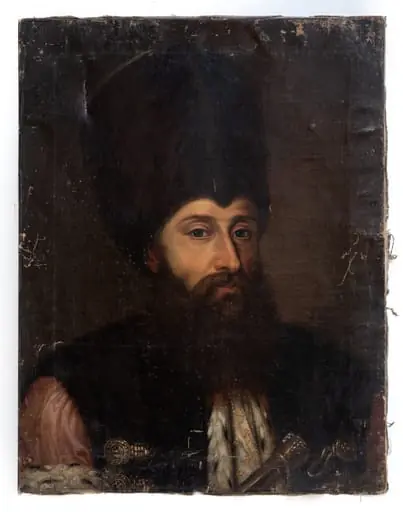 Alexandru Ipsilanti
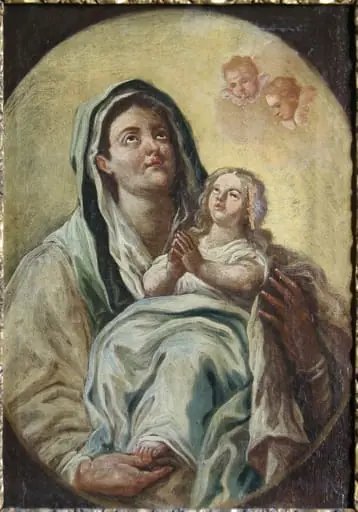 Fecioara Maria cu Pruncul Isus (în Reg. Inv.: Maria cu copilul Isus)
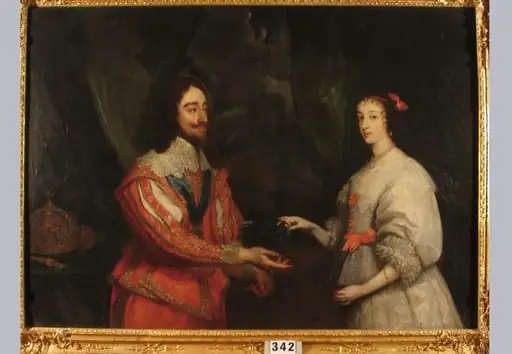 Regele Charles I Stuart al Angliei și soția sa Henrietta Maria de Franța (în Reg. Inv.: Carol I al Angliei și soția sa Henriette din Franța)
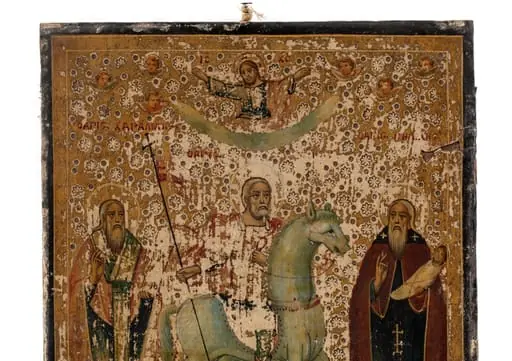 Sfântul Haralambie cu alți doi sfinți
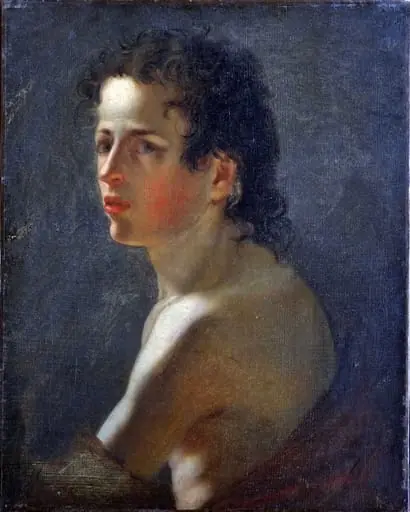 Portret de bărbat
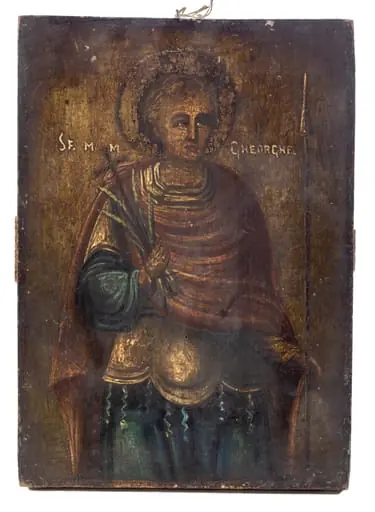 Sfântul Gheorghe
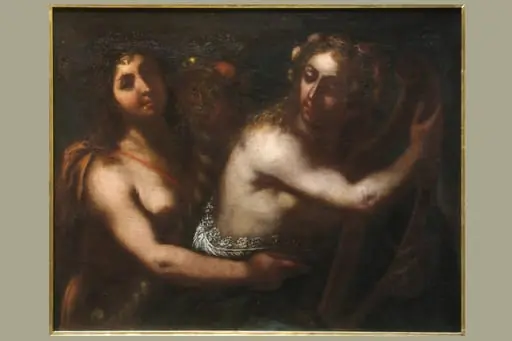 Vertumnus și Pomona (în Reg. Inv.: Vertumnus și Flora)
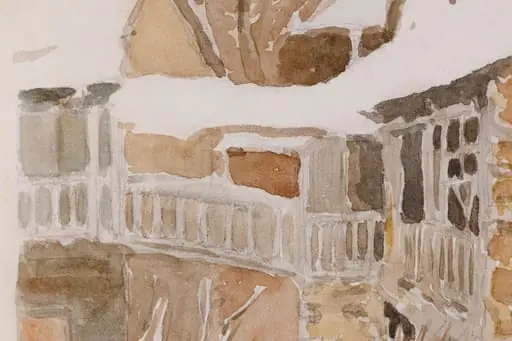 Iarnă
Iarnă
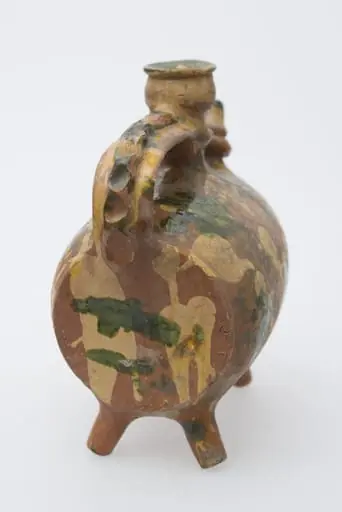 Recipient ceramic sub formă de butoiaș cilindric, dispus pe orizontală, asemănător corpului de rață. Sprijinit pe patru picioare tubulare dispuse oblic câte două la capete. Prezintă toartă. Scurgere printr-un cioc cu vârful conic care este legat prins printr-un inel de mijlocul gâtului cilindric și strâmt dispus la mijlocul vasului, având la capăt reliefată o față umană în relief terminată cu gura cu buză dreaptă pentru introducerea lichidelor. Opus ciocului, prezintă o toartă lată, puternic arcuită, de-a lungul căreia se suprapune, o bandă reliefață decorată prin presare cu degetul. Pe corpul vasului, dispuse aleatoriu, pete albe și de smalț verde și galben. Cromatică: fond: cărămiziu; motive: alb; galben; verde.
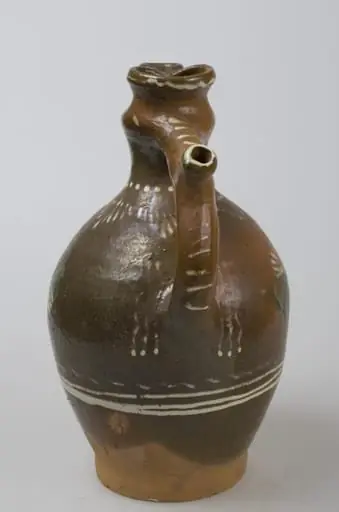 Recipient bitronconic cu gura bilobată. Prezintă mâner cu ”țâță”. Smălțuit până aproape de bază. Decorul este amplasat pe toată suprafața și este format din motive geometrice (linie); motive florale (pansea); motive fitomorfe (brad). Cromatică: fond: cărămiziu; motive: verde; maron; alb.
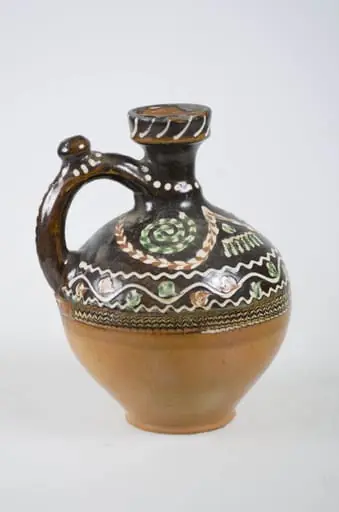 Vas ceramic sferic, ce prezintă baza plată din care pornesc pereții puternic arcuiți spre exterior, înalți, care în partea superioară se îngustează și se termină printr-un gât înalt cu marginea dreaptă ușor rotunjită. Ornamentul realizat cu cornul este dispus numai în partea superioară pe fond de angobă, realizat cu cornul. La diametrul maxim o porțiune jirăvită cu șarpe de o parte și de alta cu "altiță" și "boboci". Pe gât trei linii ondulate urmat de un șir de puncte. Pe marginea buzei linii. Mânerul prevăzut cu "țâță" are puncte. Jumătatea inferioară maro deschis. Smălțuit. Pe fundul vasului apare numele meșterului și localitatea "Ogrezeanu Stelian - Horezu". Cromatică: fond: maro închis partea superioară. Cărămiziu partea inferioară; motive: verde; alb; maro închis.
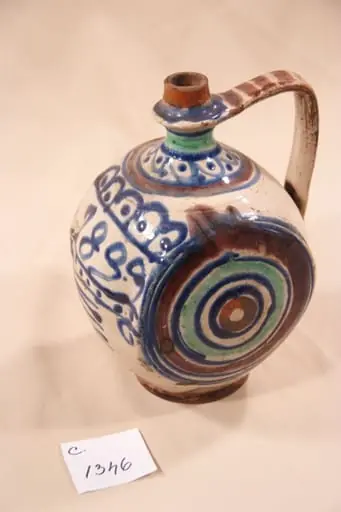 ulcior
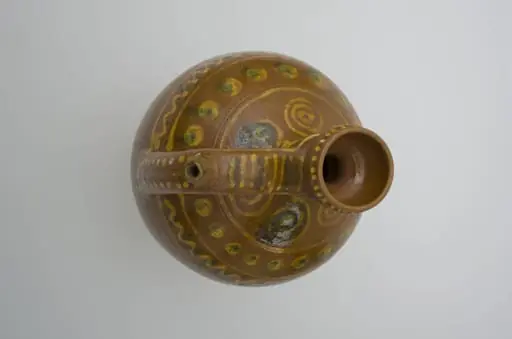 Ulcior de formă sferică cu gât înalt cu guler la mijloc; gura înaltă și largă, în formă de pâlnie tronconică. Buză rotundă și îngustă retrasă spre interior. Prezintă toartă goală aplatizată cu țâța ușor înălțată oblic ce pornește din gulerul gâtului și intră în pântece la diametrul maxim, într-un arc oval. Decorul este format din motive geometrice: brâu median de linii pararele și zig-zag; liniuțe orizontale și două șiruri de punctmotive florale; sub gât avem spirale. Smălțuit cu smalț incolor. Cromatică: fond: maro cărămiziu; motive: galben; verde.
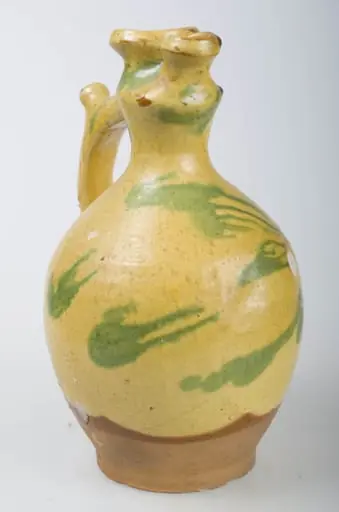 Recipient sferic cu gât îngust, gura bilobată, toartă cu țâță, piatră sunătoare și ciur. Ornamentat prin stropire cu smalț. Cromatică: fond: galben; decor: dungi verzi stropite.
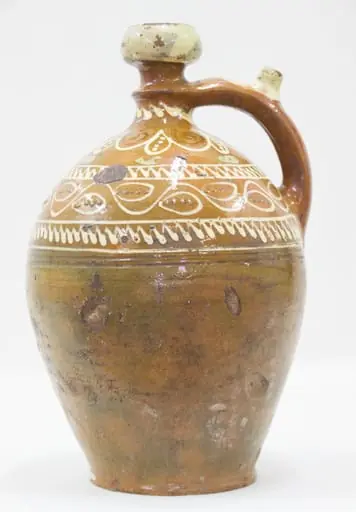 Ulcior de formă bitronconică cu gura îngustă și rotundă, cu o toartă și un orificiu pentru scurgerea lichidului, smălțuit și decorat pe jumătatea superioară cu motive vegetale (ghirlande) și geometrice (spirale; patru cercuri concentrice cu o linie șerpuită între ele).Cromatică: maro (fond), decor - galben, bej, alb, verde. Jumătatea inferioară a obiectului este nesmălțuită.
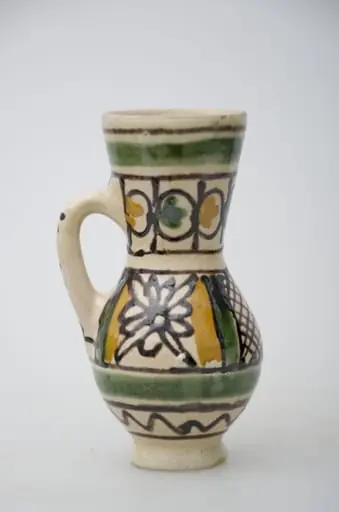 Vas ceramic de formă bitronconică, smălțuit de mici dimensiuni, cu baza plată și bombat în zona „pântecelui”. Prezintă o toartă ce pornește din zona gâtului redus ca dimensiuni și se termină în zona diametrul maxim al vasului. Decorul vasului este compus din două registre picturale. În primul registru, mărginit de două linii drepte subțiri, de culaore maro închis, au fost pictate două flori conturate cu negru și încadrate de câte două linii groase de culoare verde și galben. Cel de-al doilea registru este compus din boboci de culoare verde și galben, fiind dispuși concentric pe gâtul vasului. Ambele registre picturale sunt încadrate între două linii groase circulare, verzi. Pe toartă a fost redactat textul: „KORUND”. Prezintă uzură funcțională. Cromatică: fond: alb; motive: galben, verde, maro închis.
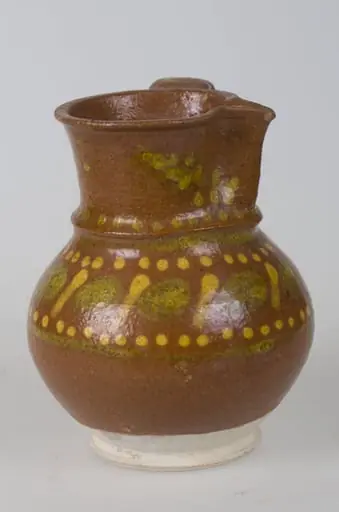 Vas cu corpul de formă cilindrică, cu fundul plat, corpul pântecos, gâtul înalt și gura largă, este prevăzută cu un cioc de scurgere așezat la nouăzeci grade față de toartă. Decorul pictat a fost realizat cu pensula în zona pântecului și a gâtului, format din motive geometrice. Pe pântecul vasului a fost pictat un registru încadrat între două linii de culoare verzuie, între care se află alte două linii realizate din puncte de culoare galbenă. În interiorul liniilor menționate anterior se află registre circulare format din pete de culoare verzuie, separate de linii galbene orizontale înclinate. Pe marginea vasului și pe toartă au fost pictate trei flori de culoare verde, de tipul „spicului de grâu”. Cromatică: alb (fund), maro-roșcat restul suprafeței; motive: galben; verde.
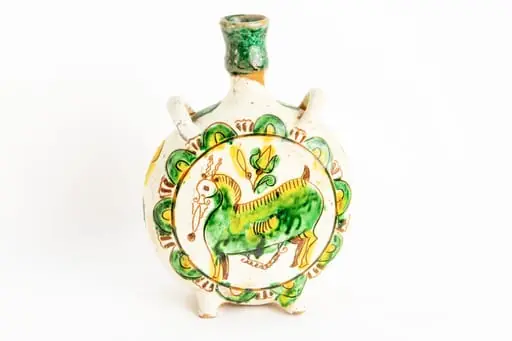 Ploscă circulară prevăzută cu două toarte în laterale pentru atașarea curelei. Fond alb. Pe fețele obiectului decorul este similar: un animal fantastic cu corp de culoare verde, cu contururi ușor zgrafitate, cu două coarne subțiri ușor ondulate de culoare maro deschis, cu un bot alungit, deasupra animalului este amplasată o lalea galbenă cu frunze galbene și verzi. Întreaga compoziție este înscrisă într-un cerc bordat de semicercuri de culoare verde cu interiorul galben. Pe muchia ploști sînt dispuse forme geometrice neregulate zgrafitate colorate în verde și respectiv galben. Gîtul ploștii este colorat cu verde.