Artwork
Familie de tătari
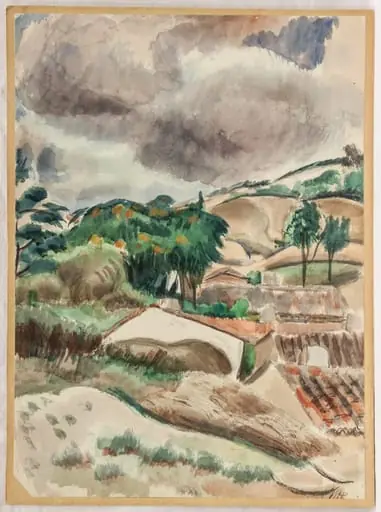
Familie de tătari is an unspecified painting by Iosif Iser. It dates from 1922 and is held in the collection of the National Museum of Art of Romania.
About this work
Overview
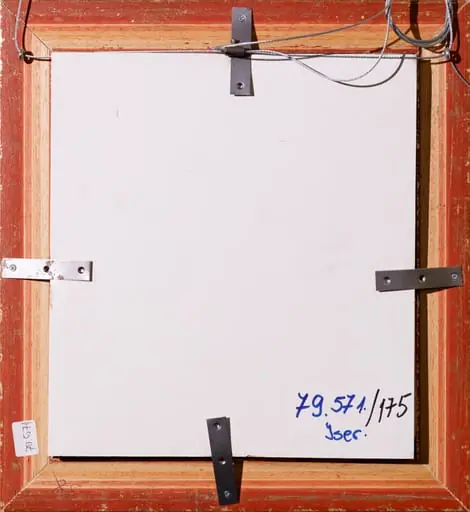
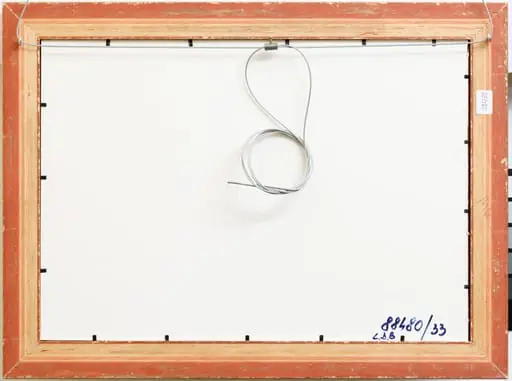
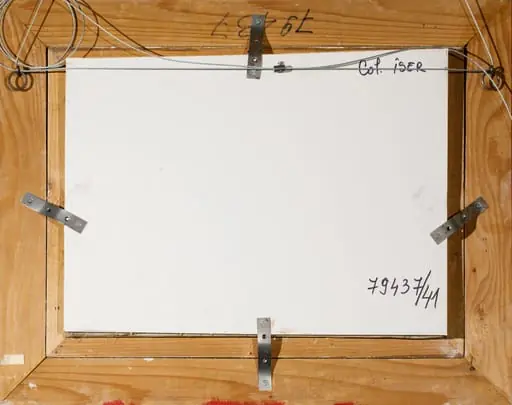
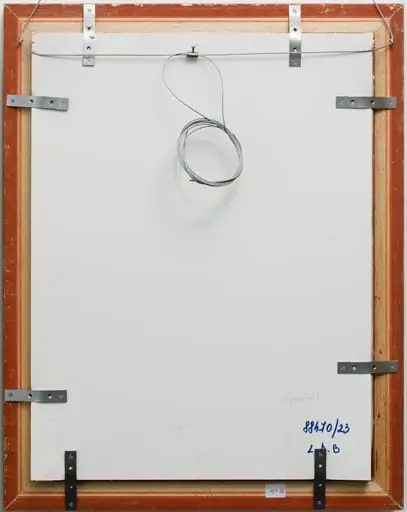
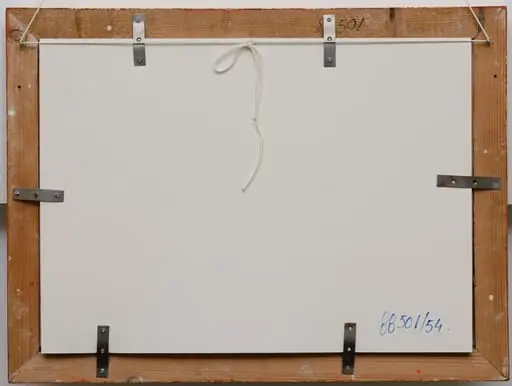
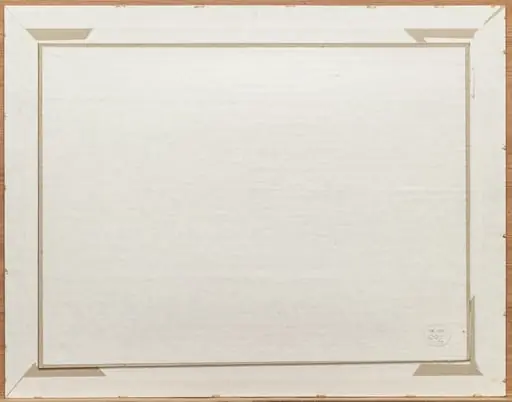
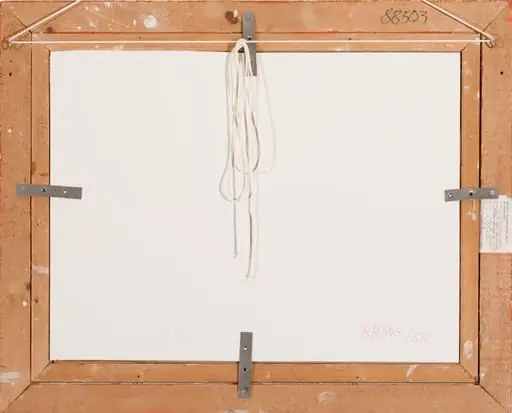
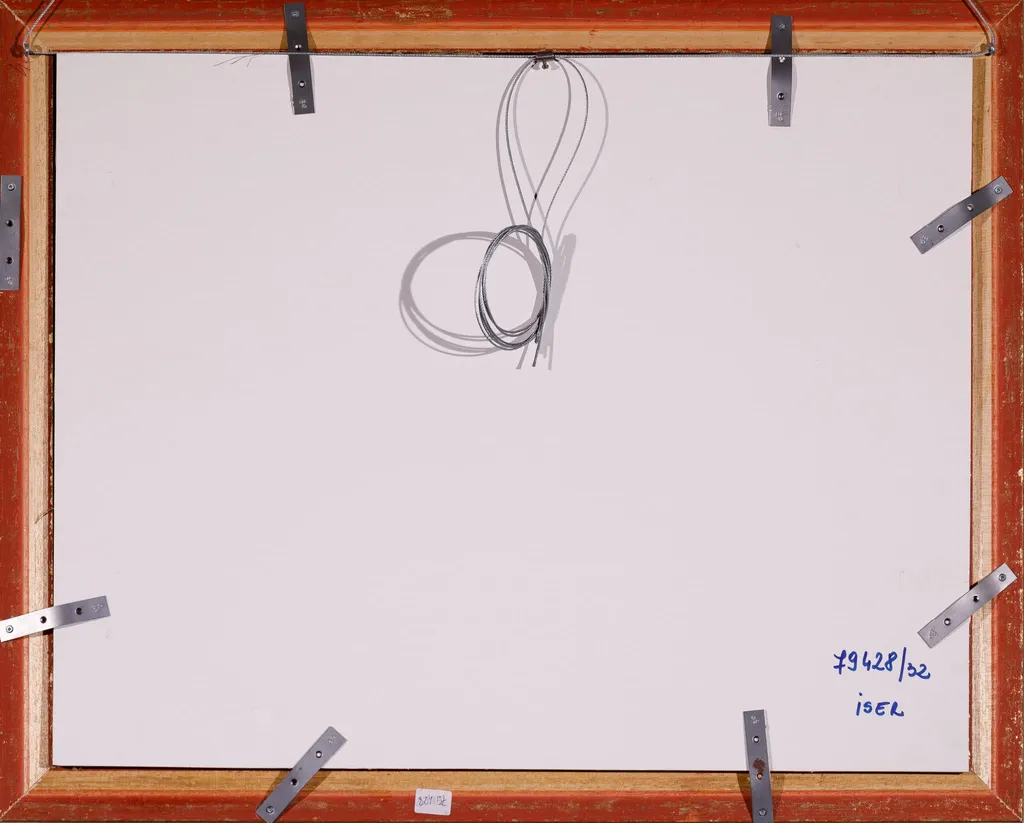
Familie de tătari, attributed to Romanian artist Iosif Iser and dated around 1922, consists of an unpainted canvas mounted within a wooden frame. The frame is painted red on its exterior, accented by a light‑colored wood strip at its centre. The canvas is covered by a plain white cloth, secured with two metal clips and a loop of string, and bears the inscription "79428/92 Iser" in blue ink.
Technique & Style
The work presents no visual imagery beyond its structural components. The white cloth conceals the canvas entirely, leaving the surface devoid of pigment, line, or form. The framing elements—red outer band, light wood centre, metal fasteners—are the only visible details, emphasizing the object's materiality rather than any representational content.
History & Provenance
The piece is recorded as created circa 1922, a period when Iser was active in Romania’s interwar art scene. The inscription "79428/92 Iser" likely serves as an inventory or archival reference, indicating the work’s inclusion in a personal or institutional collection, though specific ownership history remains undocumented.
Context
Emerging in the early 1920s, the work aligns with broader European trends toward abstraction and the questioning of painting’s boundaries. Iser, known for his figurative and decorative works, here engages with the avant‑garde’s exploration of the artwork as an object, anticipating later minimalist and conceptual practices.
Artist & collection
Artist
Iosif Iser painted everyday life with a focus on people and places. His 1933 work *Paris. Strada Mouffetard* shows a lively street scene in Paris, while *Nud pe fotoliu* depicts a seated nude figure. His brushwork…