Artwork
Bunica artistului pe catafalc
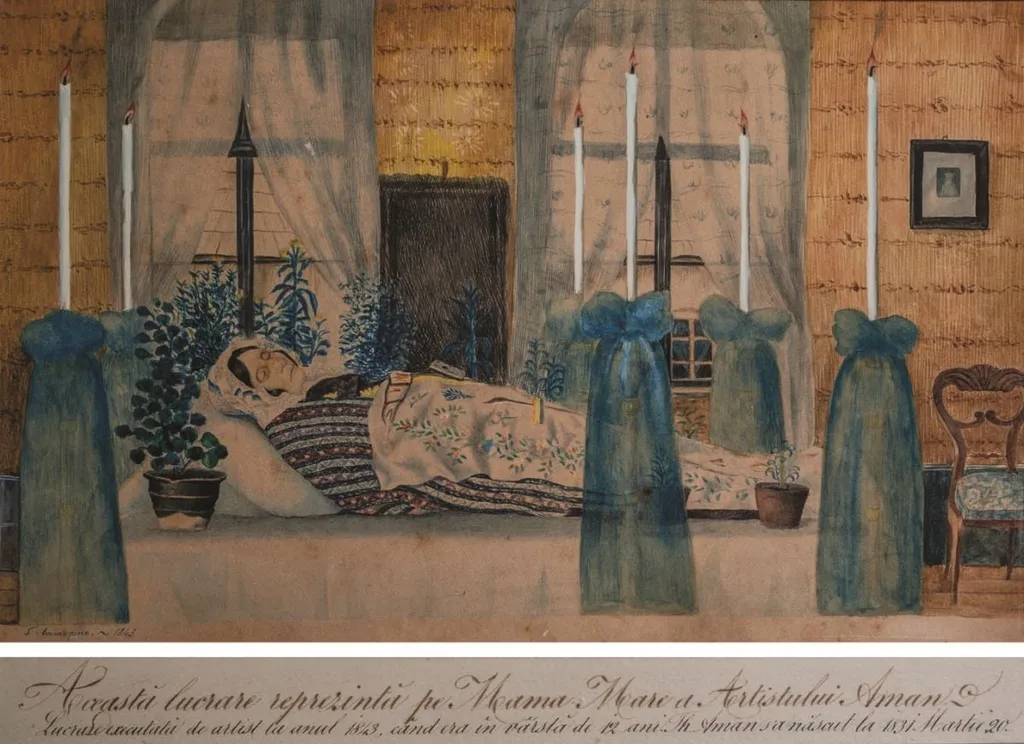
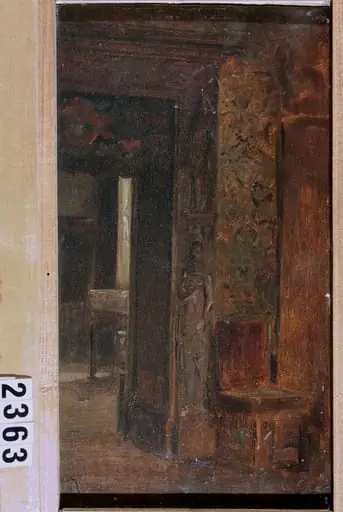
Bunica artistului pe catafalc is an unspecified painting by the Romanticist artist Theodor Aman. It dates from 1843 and is held in the collection of the Bucharest Municipality Museum.
About this work
Overview
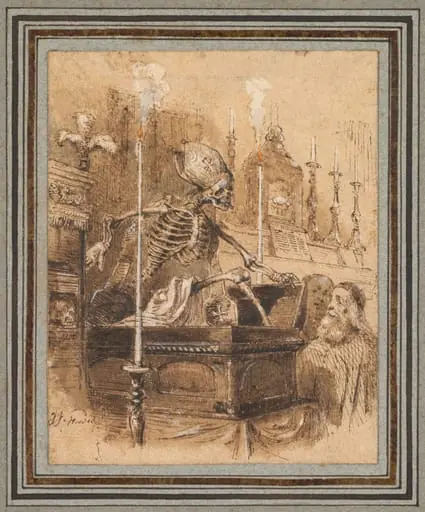
Painted in 1843 by Theodor Aman, this work depicts a quiet interior scene centered on a figure lying beneath blankets. The setting is modest, with wooden walls and minimal furnishings, suggesting a domestic space in rural Romania. The painting is part of the Museum of Ethnography’s collection, where it is preserved as an early example of Aman’s focus on intimate, everyday moments.
Subject & Meaning
The central figure, wrapped in cloth and surrounded by candles, is interpreted as the artist’s grandmother, possibly in her final hours. The stillness of the room, the presence of plants, and the dim illumination evoke a private vigil. The scene conveys reverence and sorrow without overt drama, emphasizing quiet dignity in the face of mortality.
Technique & Style
Aman employs subtle chiaroscuro to model forms and deepen the atmosphere. Light from the candles casts soft gradients across the bed linens and wooden surfaces, while shadows pool in corners and under furniture. The brushwork is restrained, avoiding detail in favor of mood, with muted tones reinforcing the somber tone of the moment.
History & Provenance
Created early in Aman’s career, the painting remained in family hands before entering the Museum of Ethnography’s collection. Its preservation there reflects its significance as a personal and cultural document, offering insight into 19th-century Romanian domestic rituals and the artist’s early engagement with intimate subject matter.
Context
In the 1840s, Romanian art was shifting from formal portraiture toward scenes of daily life. Aman’s focus on a private family moment aligns with broader European trends in genre painting, yet retains a distinctly local character. The inclusion of traditional furnishings and the absence of religious iconography ground the scene in secular, familial experience.
Legacy
This work stands as an early indicator of Aman’s sensitivity to emotional nuance and domestic space. Though not widely exhibited, it influenced later Romanian artists interested in portraying intimate, unidealized moments. Its quiet power lies in its restraint, offering a glimpse into the private rituals of a generation.
Artist & collection
Artist
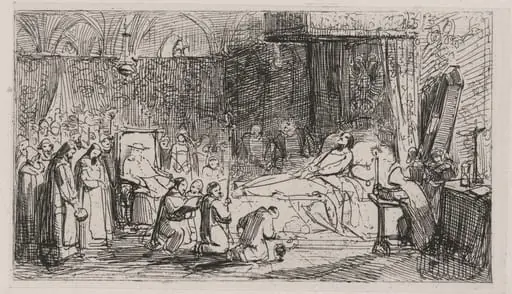 Death of Karl V in the Cloister of Saint Just
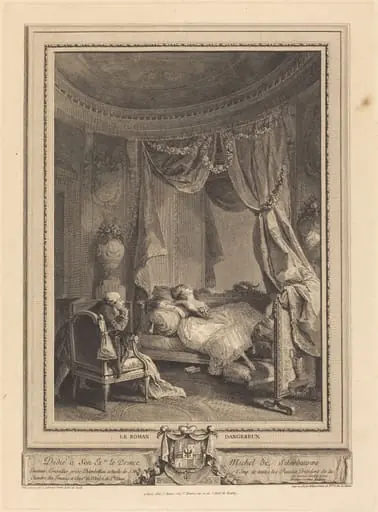 Le roman dangereux
 Le roman dangereux
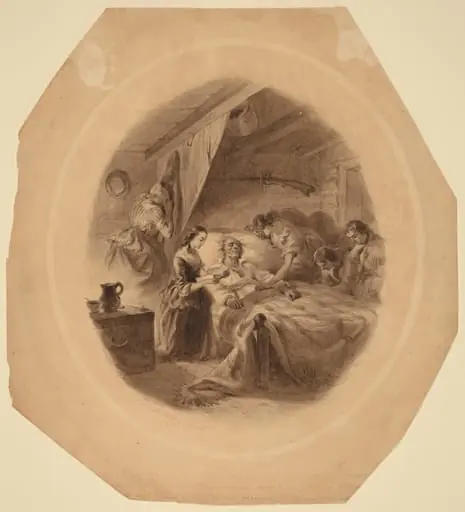 The Squatter's Death
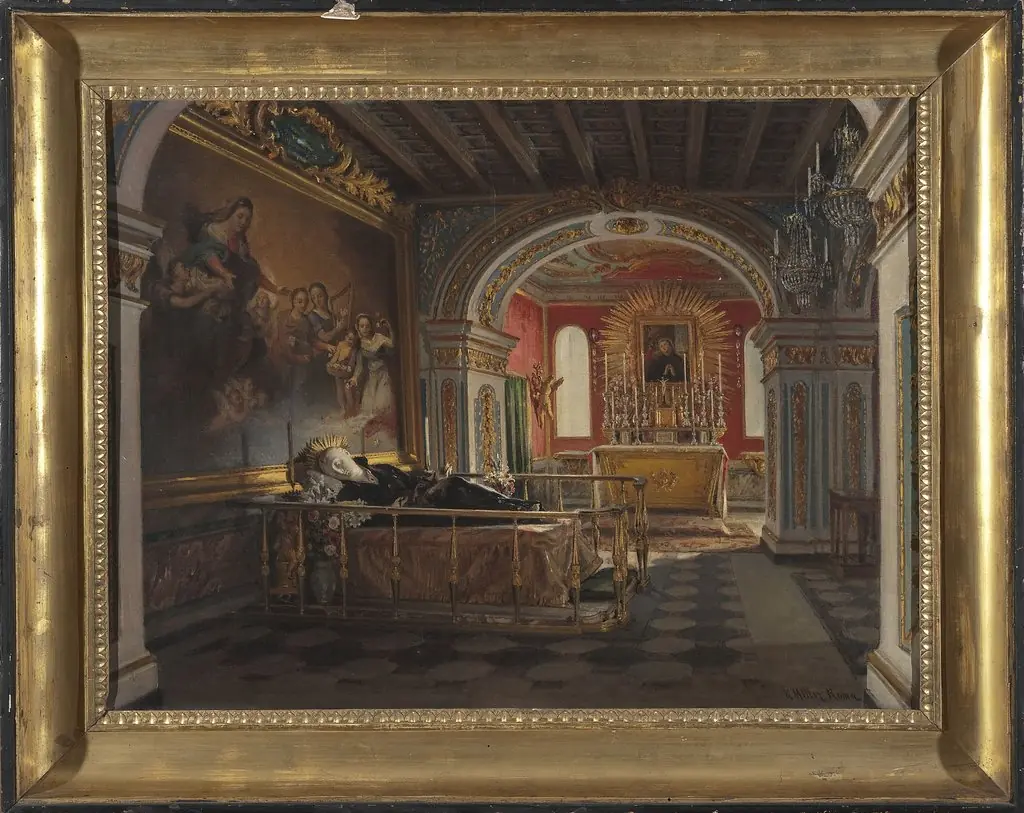 Interior of the chapel of Saint Stanislaus Kostka in Rome
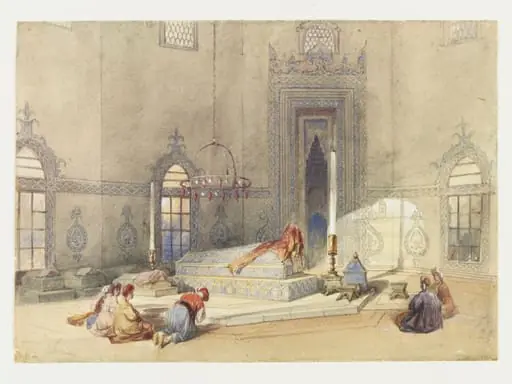 The Mausoleum of Sultan Mahomed, Brusa
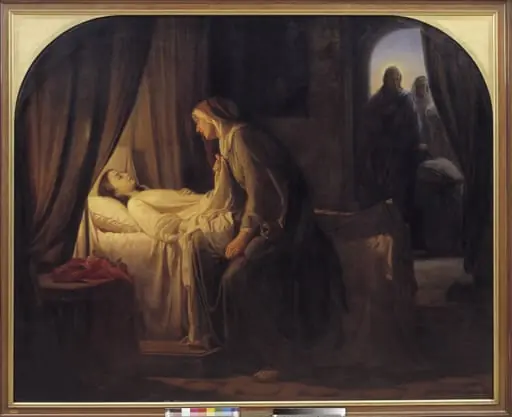 The Daughter of Jairius
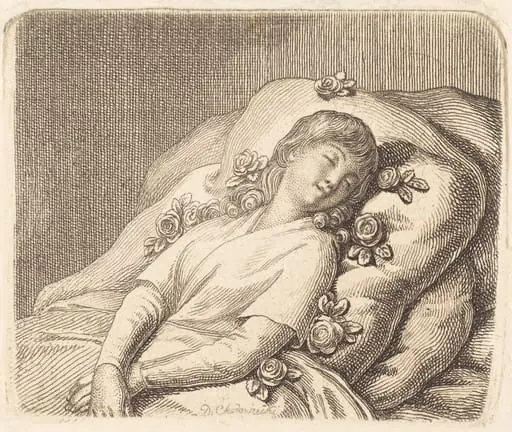 Dreaming on Roses
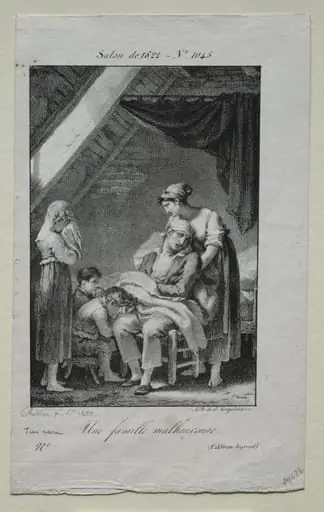 An Unfortunate Family
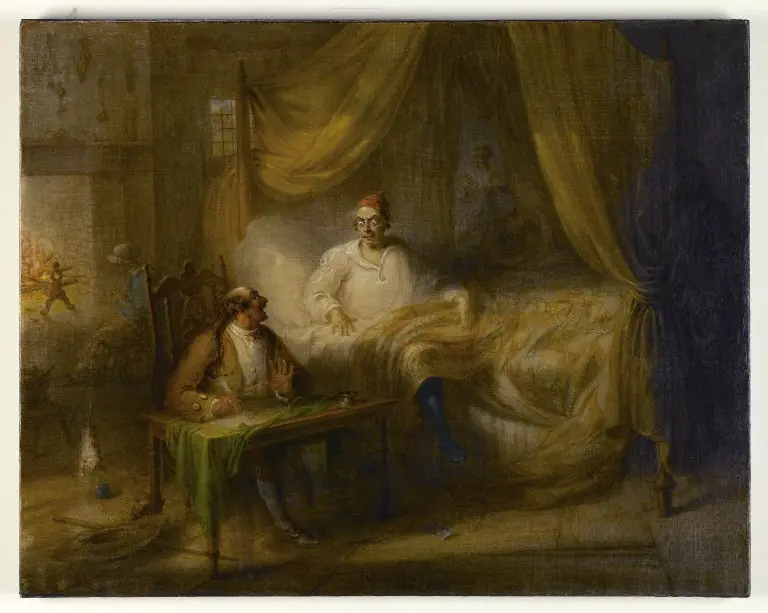 Wolfert's Will
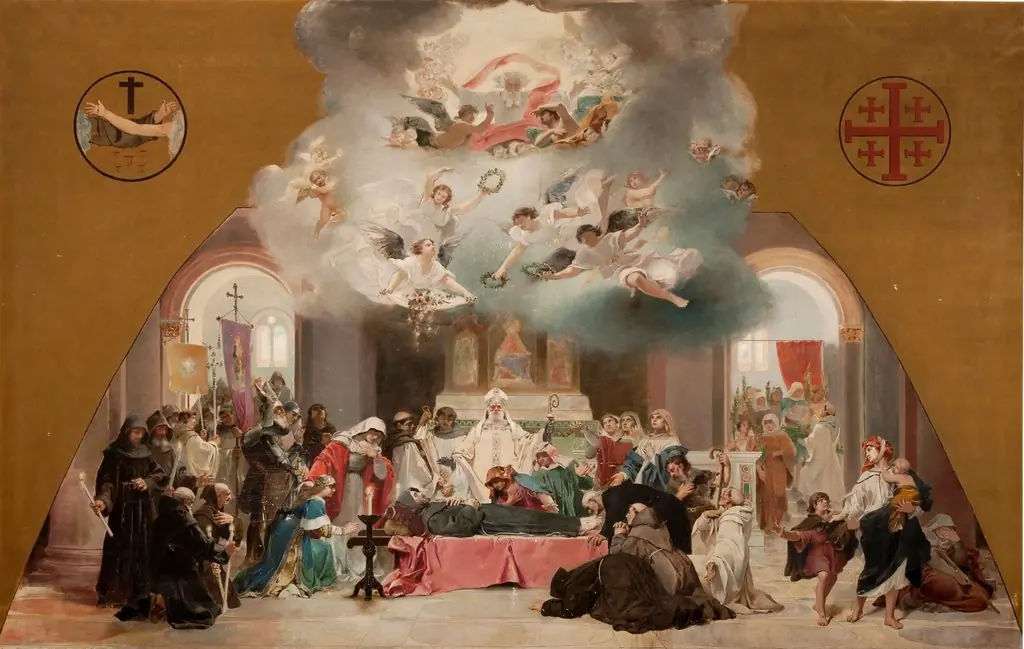 La muerte de San Francisco
 The Relics