Artwork
'Etincelle'
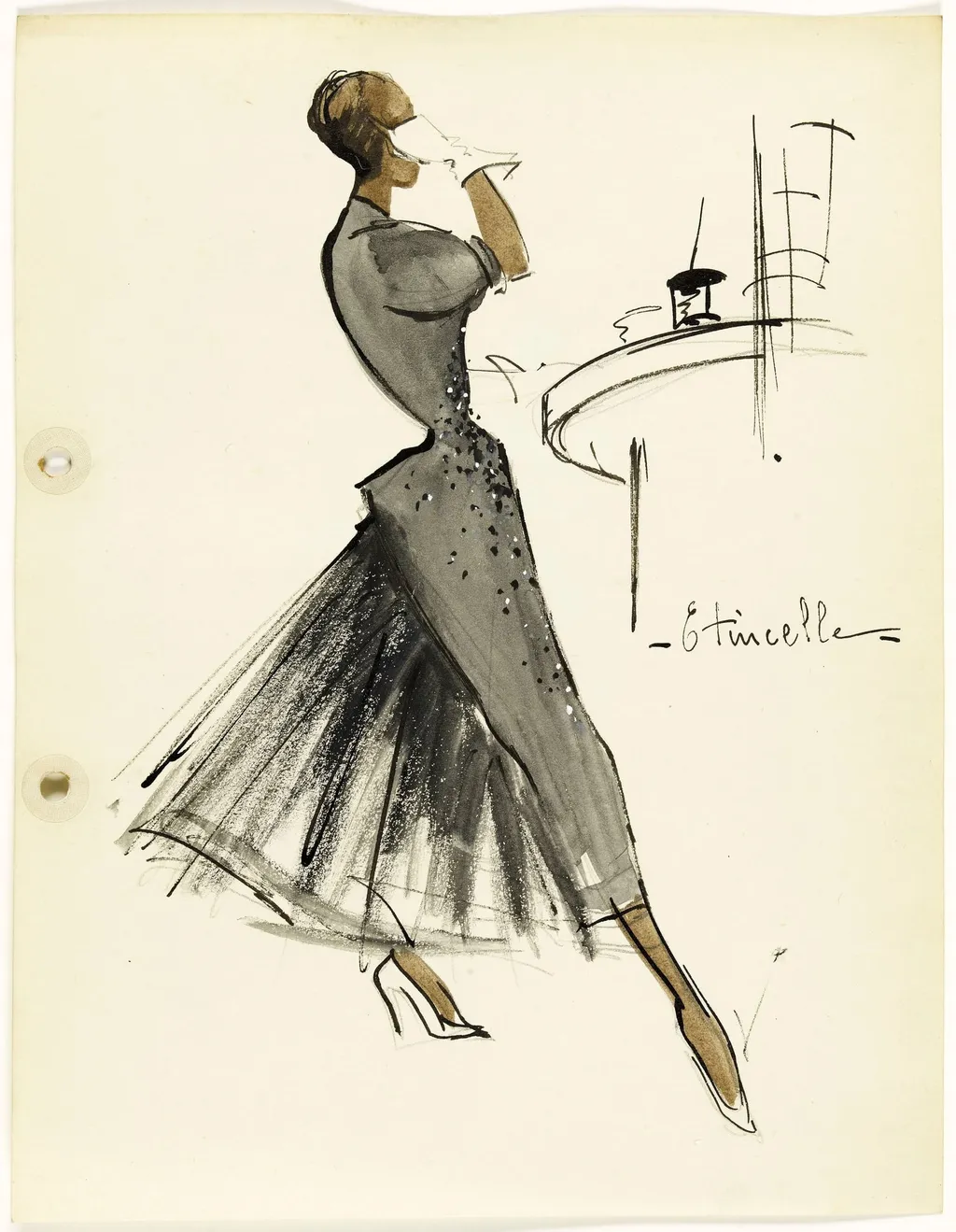
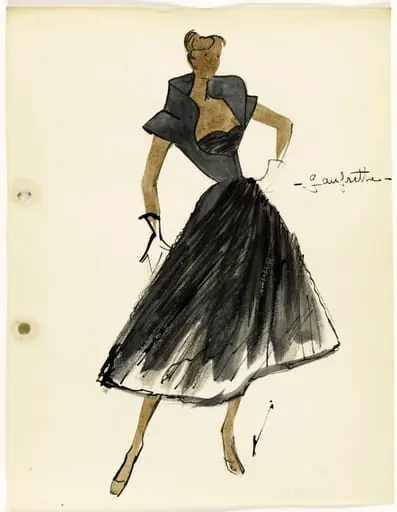
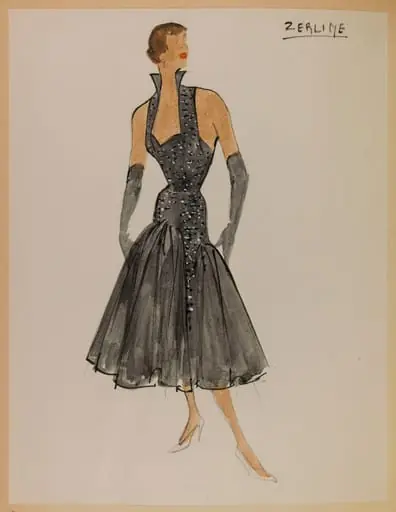
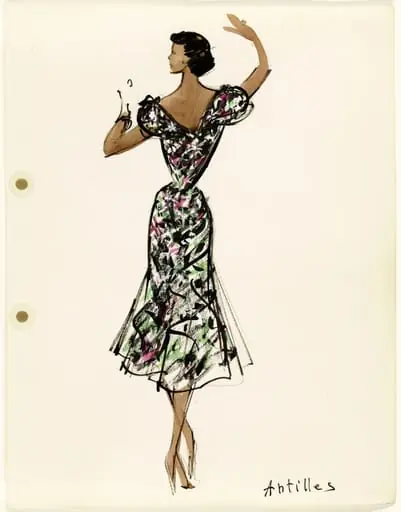
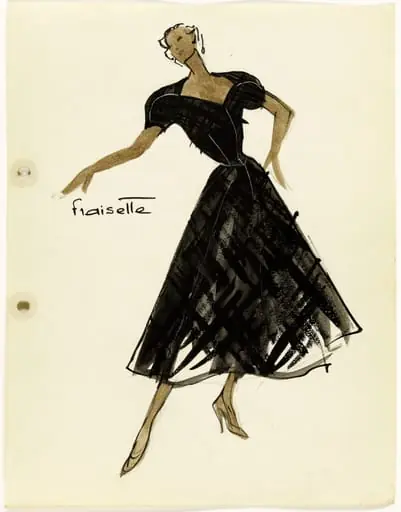
'Etincelle' is a drawing by Marie-Louise Carven. It dates from 1951 and is held in the collection of the Palais Galliera - Musée de la Mode de la Ville de Paris.
About this work
Overview
The work reflects her approach to fashion as both art and function, rendered with swift, expressive lines that prioritize energy over detail.
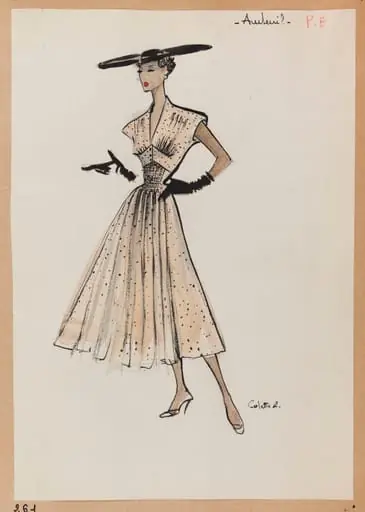
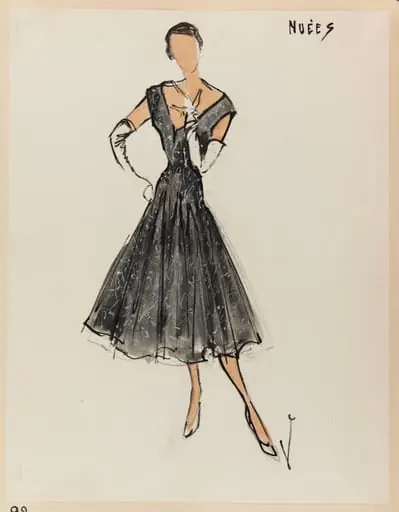
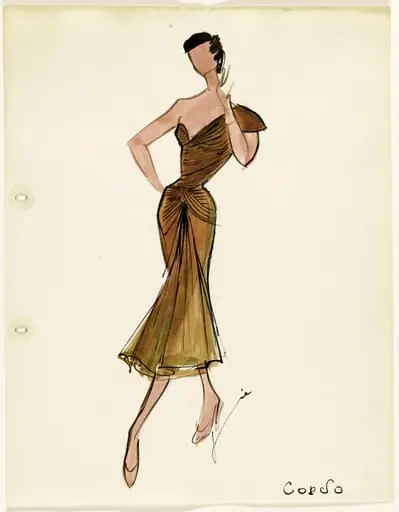
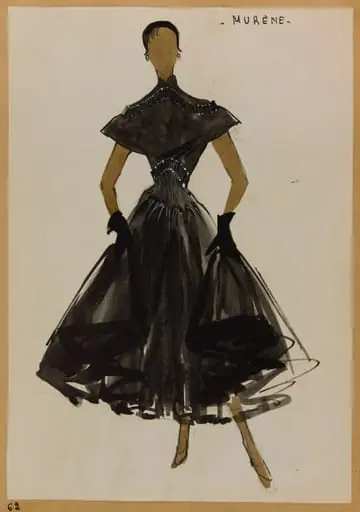
Created around 1951, 'Etincelle' is a pencil sketch by French designer Marie-Louise Carven, capturing a moment of motion in a single figure. The work reflects her approach to fashion as both art and function, rendered with swift, expressive lines that prioritize energy over detail. Signed with the French word for 'spark,' the piece embodies her design philosophy—light, lively, and subtly theatrical. It resides in the Museum of Ethnography as part of a collection documenting 20th-century fashion as cultural expression.
Subject & Meaning
The figure depicts a woman mid-dance, her body tilted and skirt flaring outward as if caught in a whirl. The pose suggests spontaneity and grace, aligning with Carven’s vision of clothing that moves with the wearer. The title, 'Etincelle,' evokes a fleeting burst of life—echoing the transient joy of movement and the quiet rebellion of feminine freedom in postwar fashion. The absence of facial features universalizes the subject, making her an emblem rather than an individual.
Technique & Style
Carven employed loose, rapid pencil strokes to convey motion, avoiding rigid outlines in favor of suggestive contours. Cross-hatching builds subtle volume in the dress’s folds, while the dotted pattern suggests texture without detailed rendering. The background is minimal—just a few lines implying a chair and stage—keeping focus on the figure’s dynamism. The sketch’s unfinished quality enhances its immediacy, resembling a candid observation rather than a polished illustration.
History & Provenance
Carven, who founded her fashion house in 1945, often sketched designs as part of her creative process. 'Etincelle' likely originated as a study for a garment in her early prêt-à-porter line, which targeted petite women with playful, wearable designs. The sketch entered the Museum of Ethnography’s collection as part of a broader effort to preserve fashion as a cultural artifact, reflecting postwar shifts in how clothing was conceived and consumed.
Context
In early 1950s Paris, haute couture dominated, but Carven’s focus on accessible, movement-friendly garments challenged norms. Her use of lightweight fabrics and smaller silhouettes catered to a new generation of women seeking practical elegance. 'Etincelle' emerges from this context—a visual manifesto of democratized fashion, where design responded to real-life motion rather than static display.
Legacy
Though primarily known for clothing, Carven’s sketches like 'Etincelle' reveal the conceptual depth behind her designs. The work stands as a rare surviving example of a designer’s personal study, bridging fashion and fine art. Its preservation in an ethnographic museum underscores its value as a document of social change—capturing how women’s movement and self-expression were redefined through dress in mid-century Europe.
Artist & collection
Artist
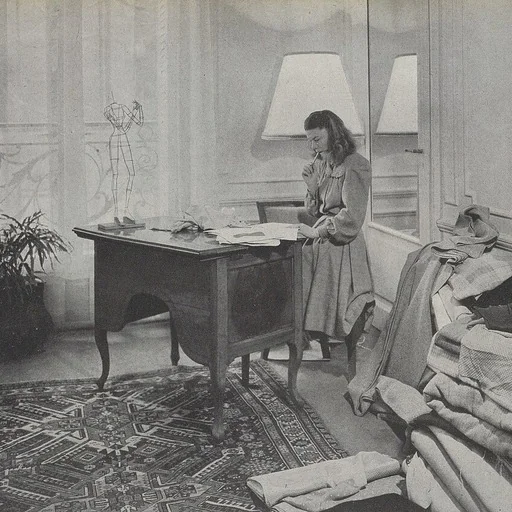
Marie-Louise Carven (31 August 1909 – 8 June 2015), born Carmen de Tommaso, was a French fashion designer who founded the house of Carven in 1945.
Museum
Palais Galliera - Musée de la Mode de la Ville de Paris
Continue through works from the same source collection.
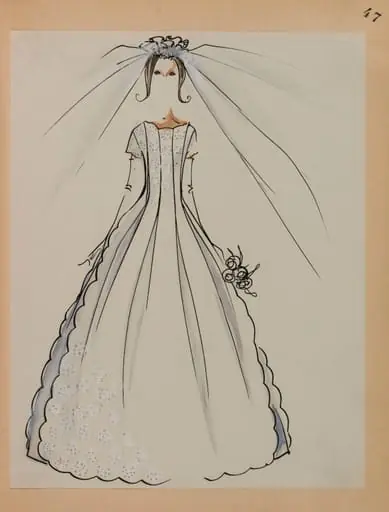 Robe de mariée festonnée et son voile
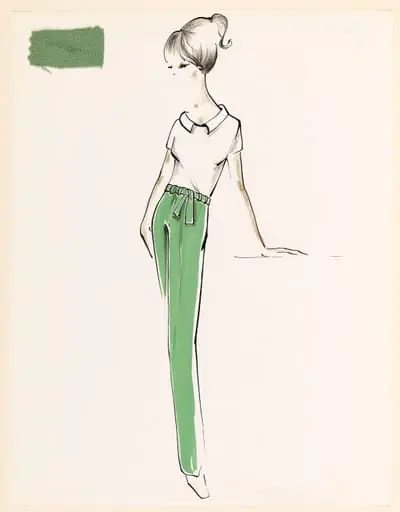 Haut blanc à manches courtes et pantalon vert à ceinture nouée
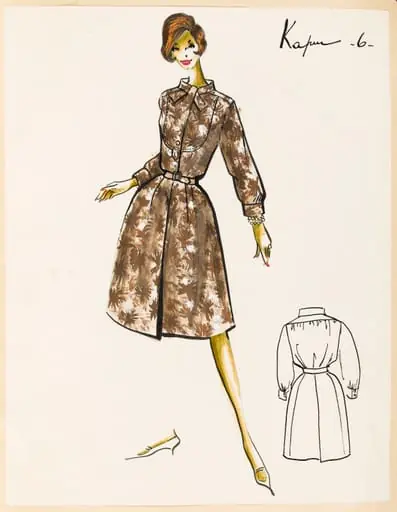 Kapur
Kapur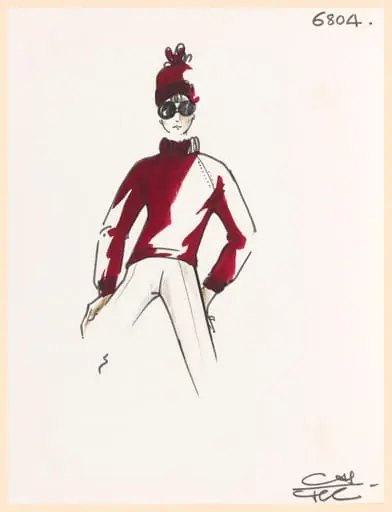 Pull-over à manches longues pourpre, bonnet assorti, pantalon et lunettes de soleil
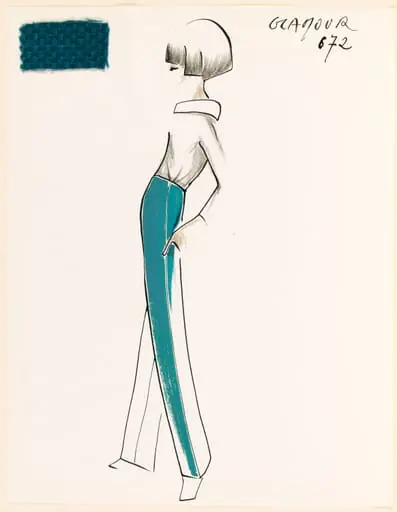 GLAMOUR
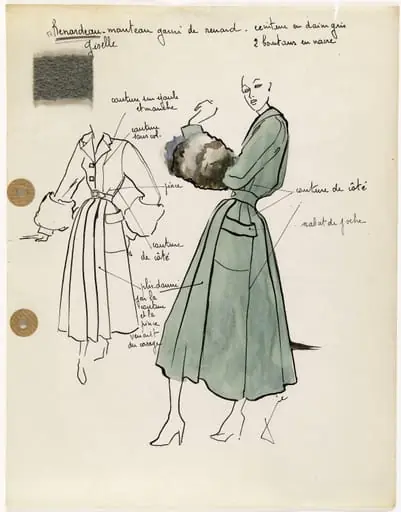 'Renardeau'
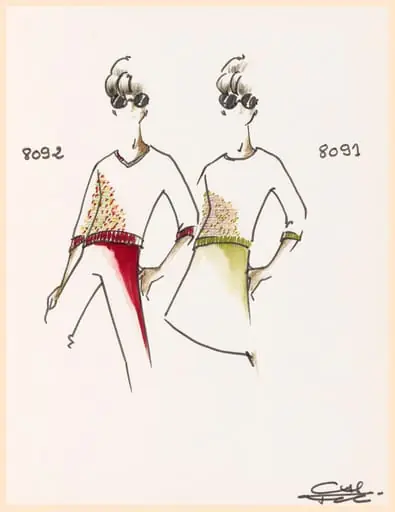 Pull-over à manches trois quarts et à encolure V à motifs multicolores, pantalon cerise et lunettes de soleil
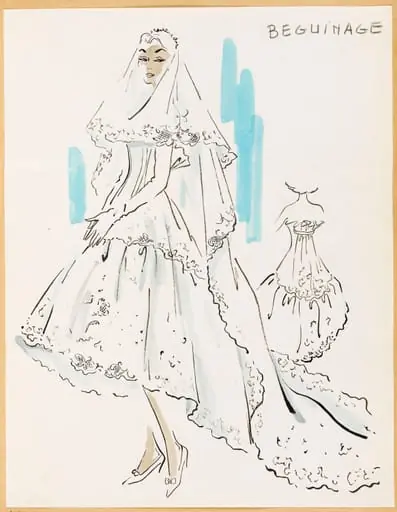 Béguinage