Artwork
Ficelle
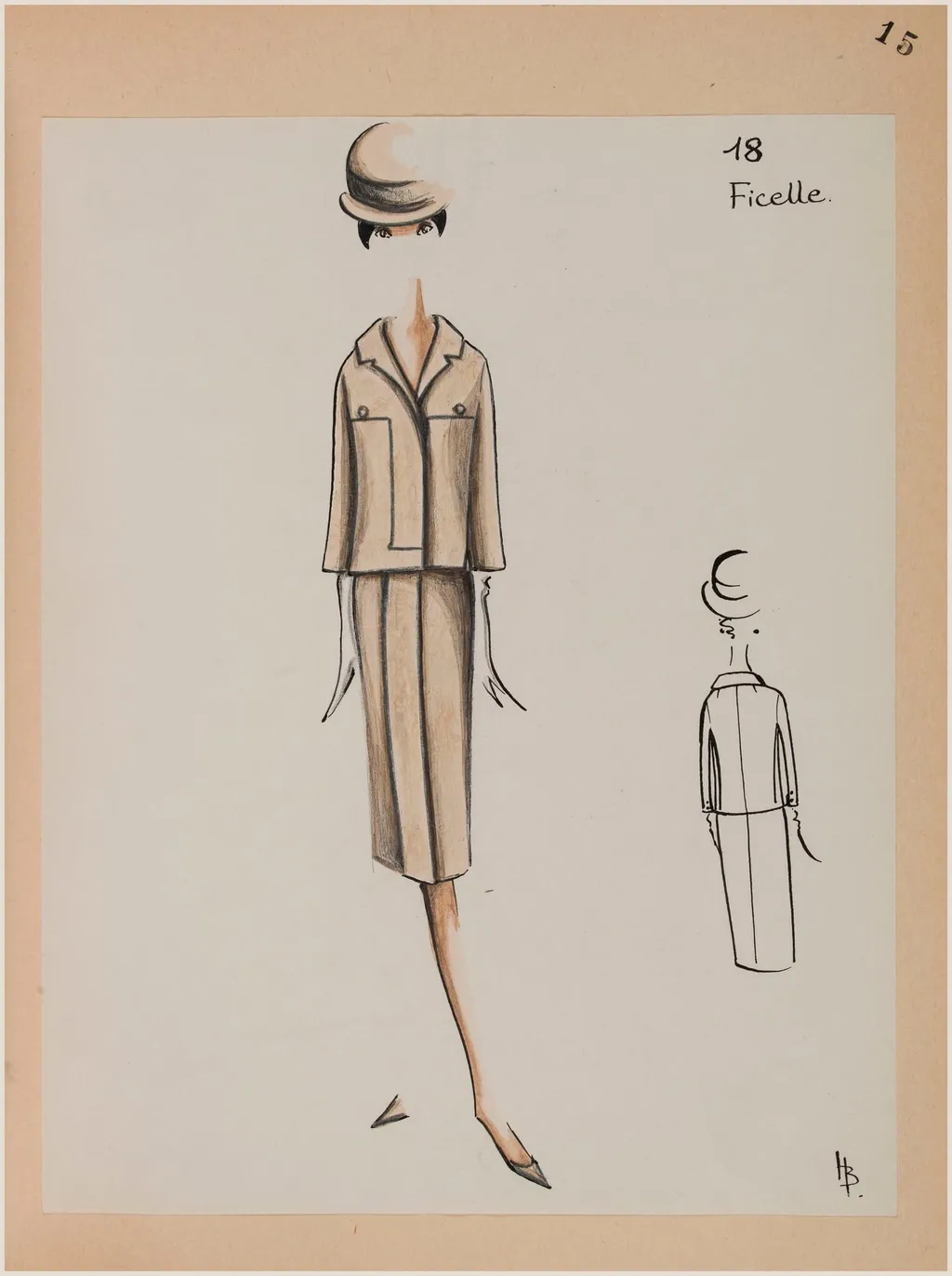
Ficelle is a drawing by Marie-Louise Carven. It dates from 1963 and is held in the collection of the Palais Galliera - Musée de la Mode de la Ville de Paris.
About this work
Overview
The sketch, signed with an initial, bears the title *Ficelle*—likely the garment’s designation—and is preserved in the Museum of Ethnography’s collection.
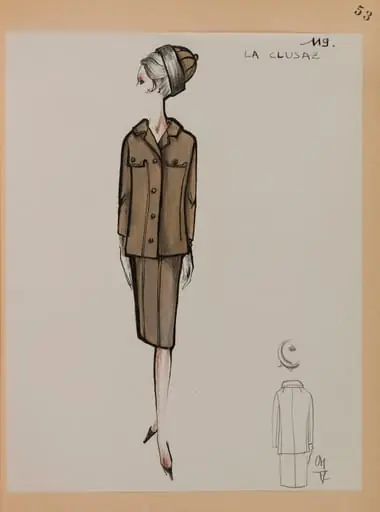
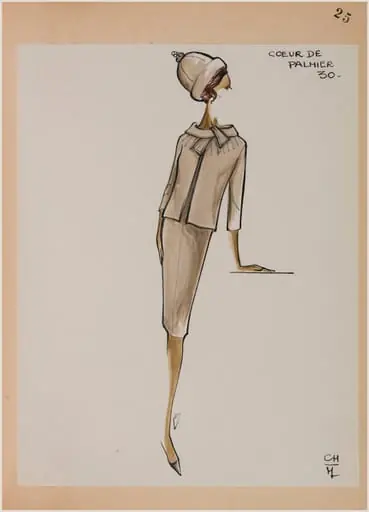
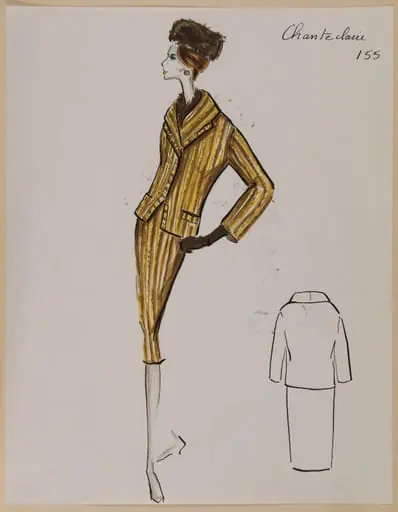
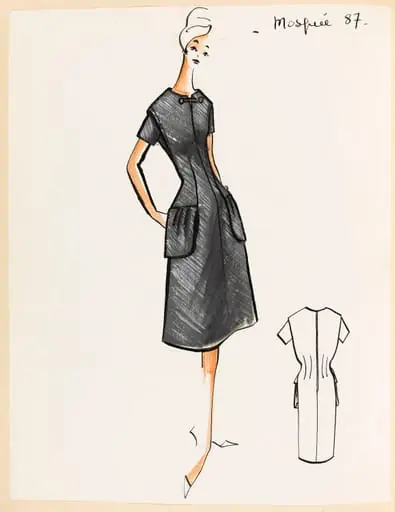
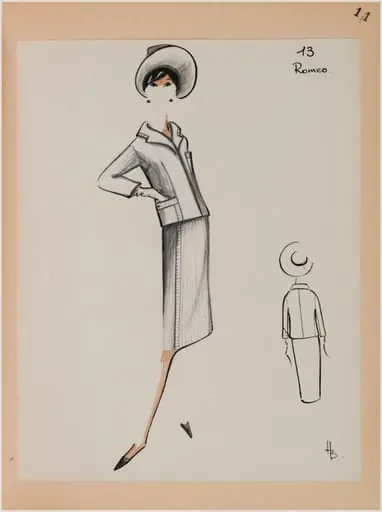
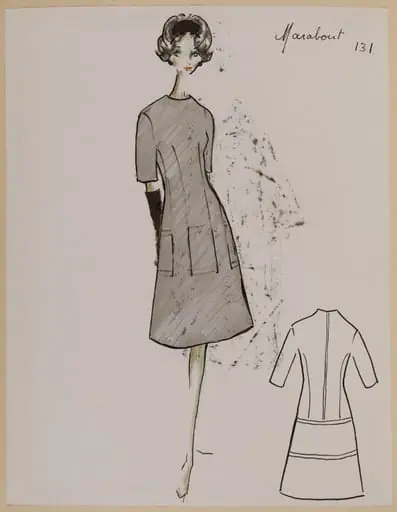
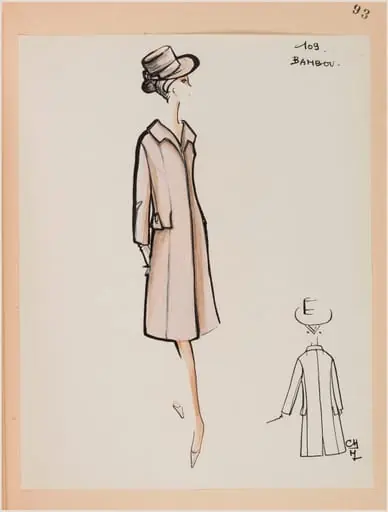
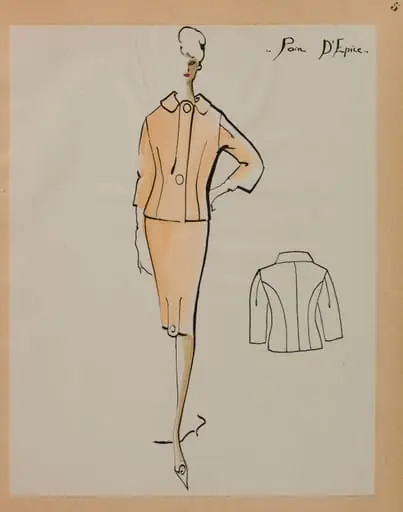
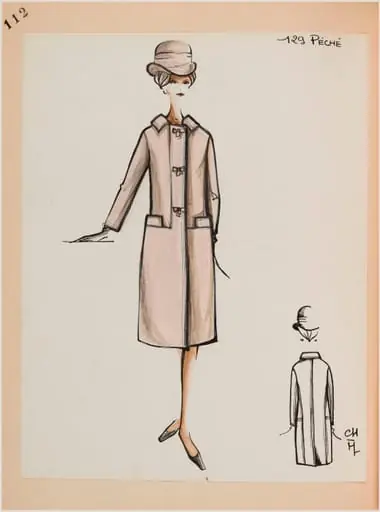
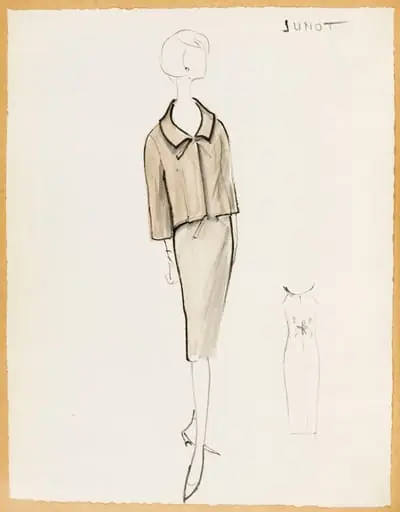
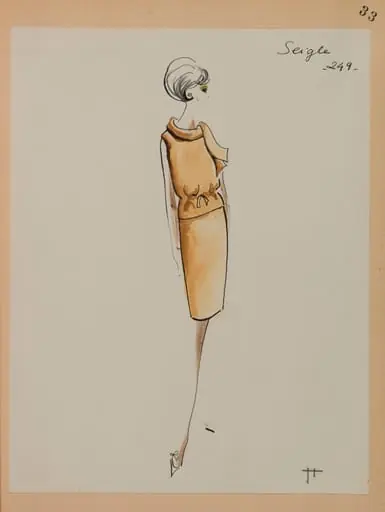
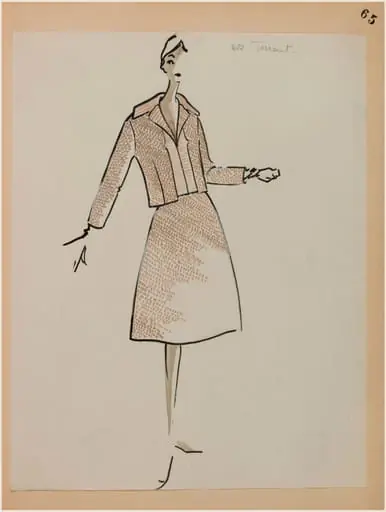
Created in 1963 by French designer Marie-Louise Carven, *Ficelle* is a pencil sketch of a tailored ensemble designed for everyday wear. Executed in loose, fluid lines, the drawing captures a woman in a long jacket with pockets, a belt, and a matching hat. A secondary view of the outfit from behind accompanies the front, suggesting careful consideration of form. The sketch, signed with an initial, bears the title *Ficelle*—likely the garment’s designation—and is preserved in the Museum of Ethnography’s collection.
Subject & Meaning
The outfit depicted in *Ficelle* reflects Carven’s focus on practical, refined clothing for petite figures. The simplicity of the jacket, belt, and hat suggests an emphasis on structure without ornamentation, aligning with postwar ideals of understated elegance. The title, meaning 'string' in French, may allude to the garment’s slender silhouette or lightweight fabric, reinforcing Carven’s signature use of airy materials suited to modern, active women.
Technique & Style
Carven rendered *Ficelle* with rapid, unpolished pencil strokes that convey movement and spontaneity. The sketch’s minimal shading and open contours prioritize clarity over finish, typical of design drafts intended for patternmakers or clients. The inclusion of both front and back views demonstrates a functional approach to design, where silhouette and proportion were prioritized over decorative detail.
History & Provenance
Marie-Louise Carven founded her fashion house in 1945 and was among the first Parisian couturiers to develop a prêt-à-porter line, bridging haute couture and accessible fashion. *Ficelle*, produced during the height of her career, exemplifies this shift toward wearable, commercially viable designs. The sketch entered the Museum of Ethnography’s collection as part of a broader effort to document fashion as a cultural artifact, not merely an art form.
Context
In the early 1960s, Parisian fashion was transitioning from rigid couture traditions toward more democratic, ready-to-wear models. Carven’s work responded to changing social norms, where women sought functional yet stylish clothing for urban life. *Ficelle* embodies this shift—its clean lines and modest proportions reflect a growing preference for practicality without sacrificing sophistication.
Legacy
*Ficelle* stands as a quiet testament to Carven’s influence in democratizing fashion. Her integration of tailored simplicity into ready-to-wear design paved the way for later designers who prioritized accessibility and proportion. The sketch’s preservation in an ethnographic museum underscores its significance as a cultural document, capturing how fashion responded to the rhythms of everyday life in mid-century Europe.
Artist & collection
Artist
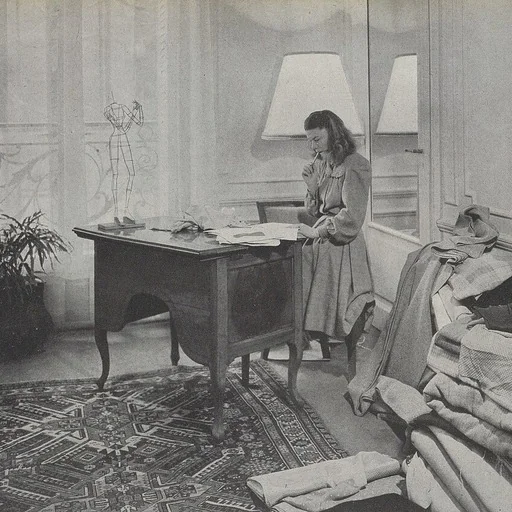
Marie-Louise Carven (31 August 1909 – 8 June 2015), born Carmen de Tommaso, was a French fashion designer who founded the house of Carven in 1945.
Museum
Palais Galliera - Musée de la Mode de la Ville de Paris
Continue through works from the same source collection.
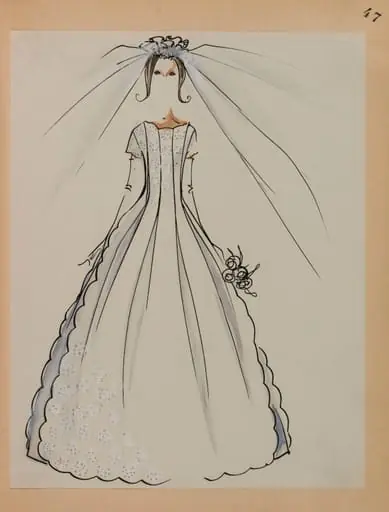 Robe de mariée festonnée et son voile
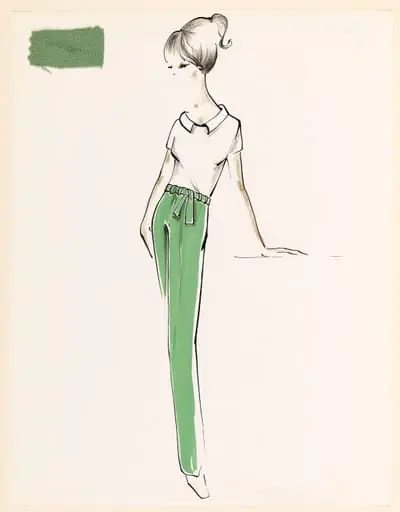 Haut blanc à manches courtes et pantalon vert à ceinture nouée
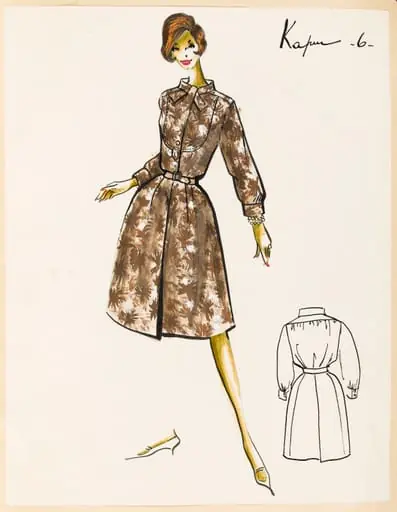 Kapur
Kapur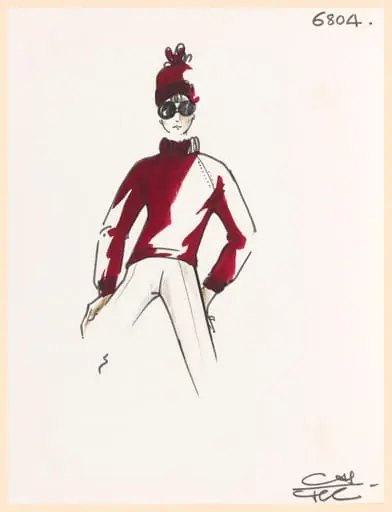 Pull-over à manches longues pourpre, bonnet assorti, pantalon et lunettes de soleil
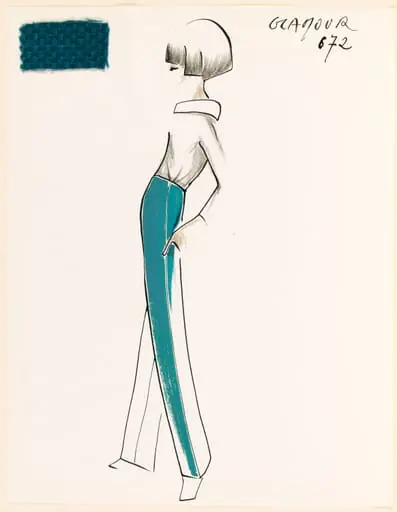 GLAMOUR
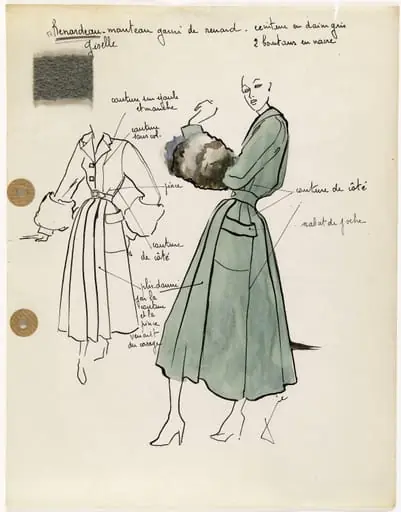 'Renardeau'
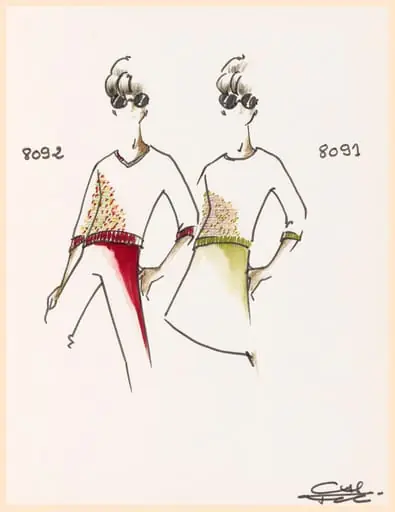 Pull-over à manches trois quarts et à encolure V à motifs multicolores, pantalon cerise et lunettes de soleil
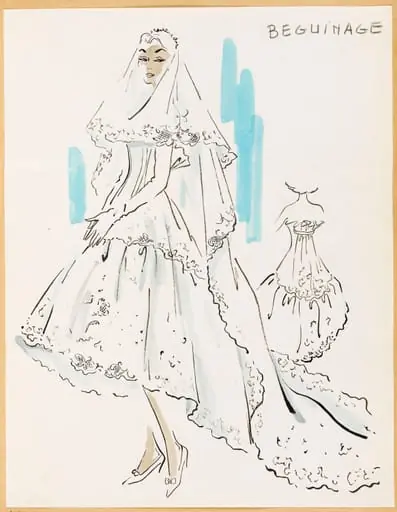 Béguinage