Artwork
Springtime
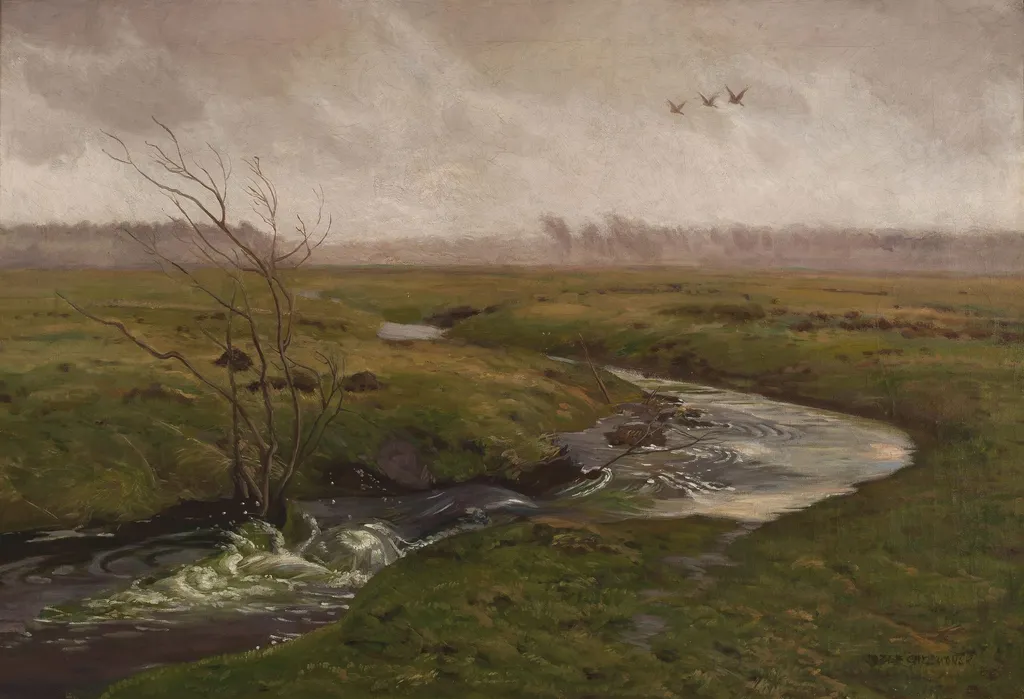
Springtime is an oil painting by the Impressionist artist Józef Chełmoński. It dates from 1896 and is held in the collection of the National Museum in Warsaw.
About this work
Subject & Meaning
The dense, leafy undergrowth and the presence of water suggest renewal and the seasonal awakening of nature, aligning with the title Springtime.
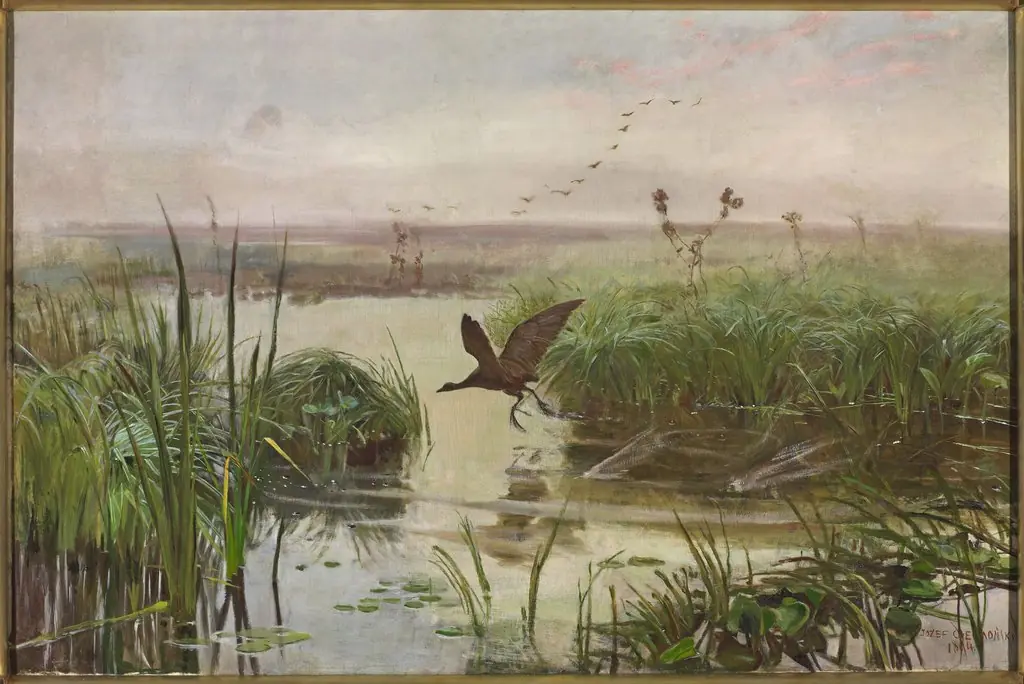
The painting depicts a quiet, sunlit riverbank alive with spring foliage and birdlife. A low, sinuous stream winds through dense shrubs and young greenery, while birds, likely waders or waterfowl, are scattered along the water’s edge and among the branches. The dense, leafy undergrowth and the presence of water suggest renewal and the seasonal awakening of nature, aligning with the title Springtime.
The composition emphasizes the harmony between land and water, capturing the vitality of early growth and the transient character of spring.
Technique & Style
Springtime is an oil painting executed on canvas, depicting a landscape with a watercourse, stream, bird, and shrub. The work measures 78 cm in height and 114 cm in width and was created in 1892 by Józef Chełmoński. It is part of the collection at the National Museum in Warsaw.
The painting employs traditional oil paint applied to a canvas support, reflecting the material practices typical of late 19th-century European landscape art. Its formal qualities include a naturalistic rendering of light and atmosphere, with a composition that balances open sky and detailed flora to convey a sense of seasonal renewal. These stylistic elements align with the impressionistic tendencies seen in Chełmoński’s broader oeuvre, emphasizing texture and brushwork to suggest movement and vitality.
History & Provenance
Springtime is an oil painting on canvas created by Józef Chełmoński in 1892. The work measures 78 cm in height by 114 cm in width and depicts a watercourse, landscape, stream, bird, and shrub. It belongs to the landscape genre and was painted as a genre landscape. The painting entered the collection of the National Museum in Warsaw, where it remains on display.
The artwork was commissioned as part of Chełmoński’s exploration of rural scenes and was executed in his studio that year. Its creation is documented by the National Museum in Warsaw’s catalog, which records the piece as completed in 1892.
Springtime has been part of the museum’s permanent holdings since its acquisition, reflecting the artist’s focus on naturalistic detail and atmospheric effects.
The provenance chain shows that the work was produced in 1892 and subsequently donated to the National Museum in Warsaw, where it has been housed continuously.
Overview
Created in 1896, Springtime is an oil painting by Polish artist Józef Chełmoński. Executed in an Impressionist manner, the work measures a modest scale and depicts a tranquil wetland scene. It is part of the National Museum in Warsaw’s collection, where several other large‑scale pieces by the same painter are also displayed.
Context
Chełmoński was known for realistic portrayals of Poland’s countryside during the late Romantic period, often infusing his scenes with social and historical resonance. Springtime reflects this approach, focusing on an unpopulated natural setting that nonetheless conveys the broader cultural connection between people and the land in 19th‑century Poland.
Own this work as a print
Artist & collection
Artist
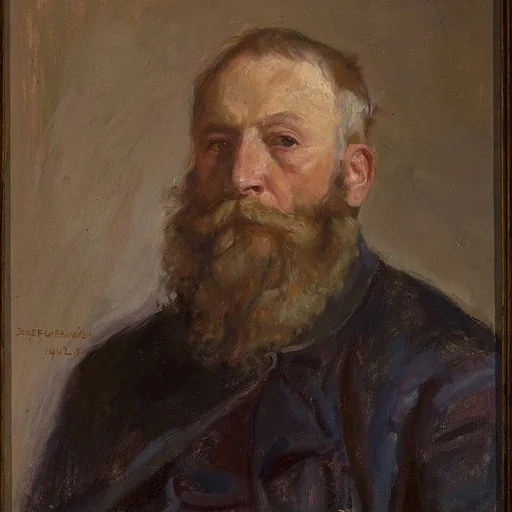
Józef Marian Chełmoński (7 November 1849 – 6 April 1914) was a Polish painter, known for his realistic paintings of landscapes, rural scenes and genre scenes presenting historical and social contexts of the late Romantic period in…

- Landskab med træer på en skrænt
 Opklarende vejr efter en regnbyge ved Gurre Sø
 Landskab med træer på en skrænt
 Meadow with cowslips, sketch
 Clearing weather after a rain shower at Gurre Lake
 Landscape near the Forest Nordskoven, Jægerspris, Zealand
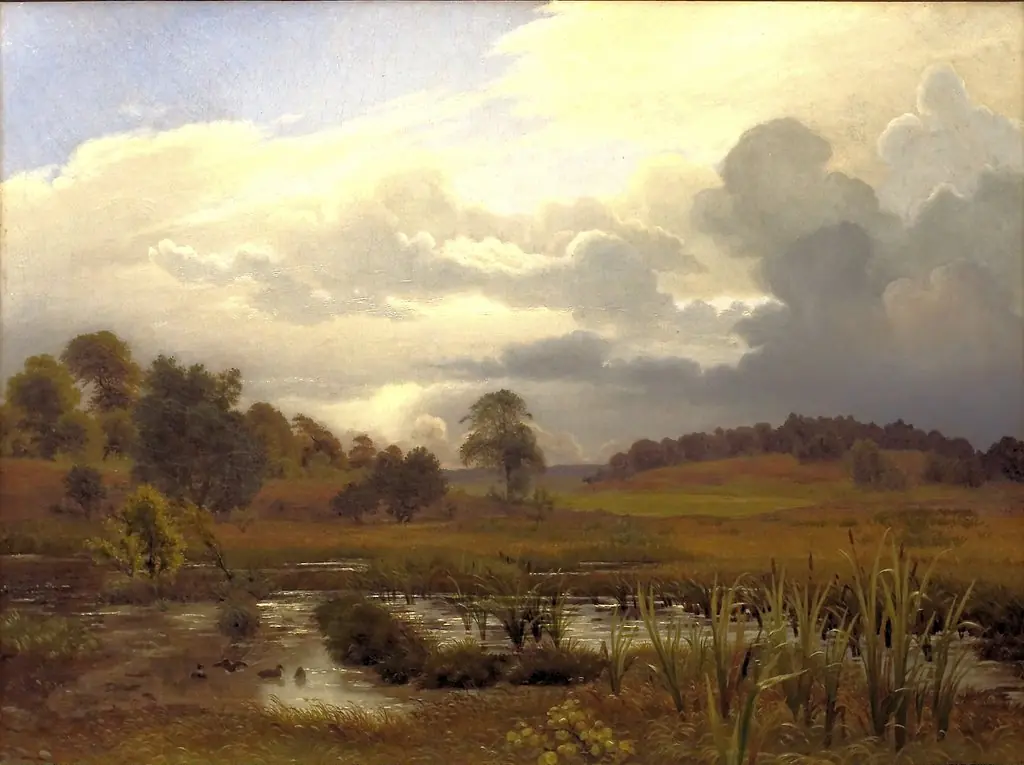 Landscape near the Forest Nordskoven, Jægerspris, Zealand
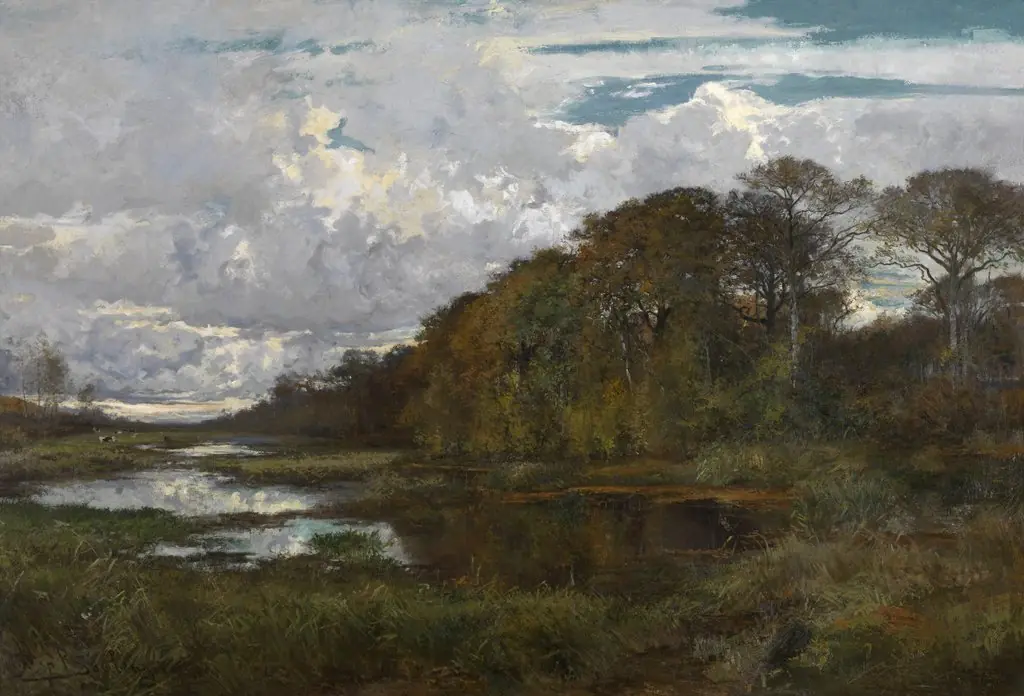 The Ponds of the "Grijze Molen" in Terhulpen
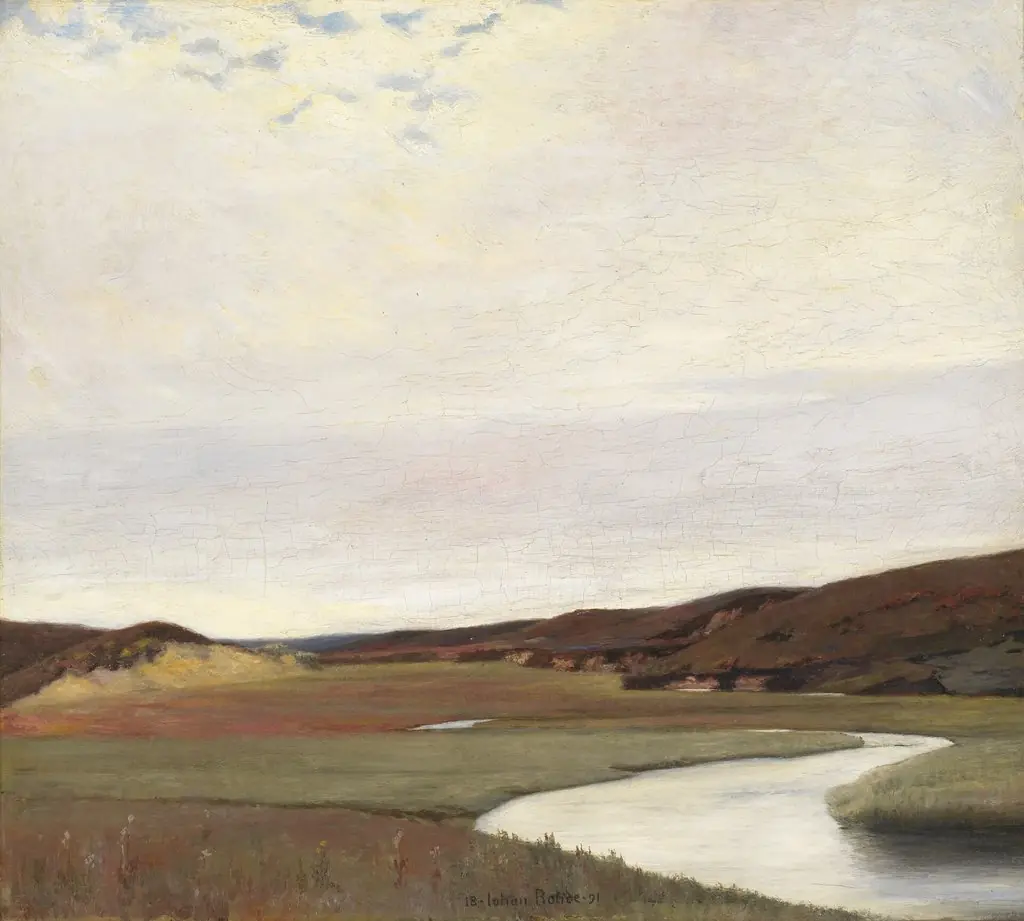 A Summer's Day by the River Karup, Jutland
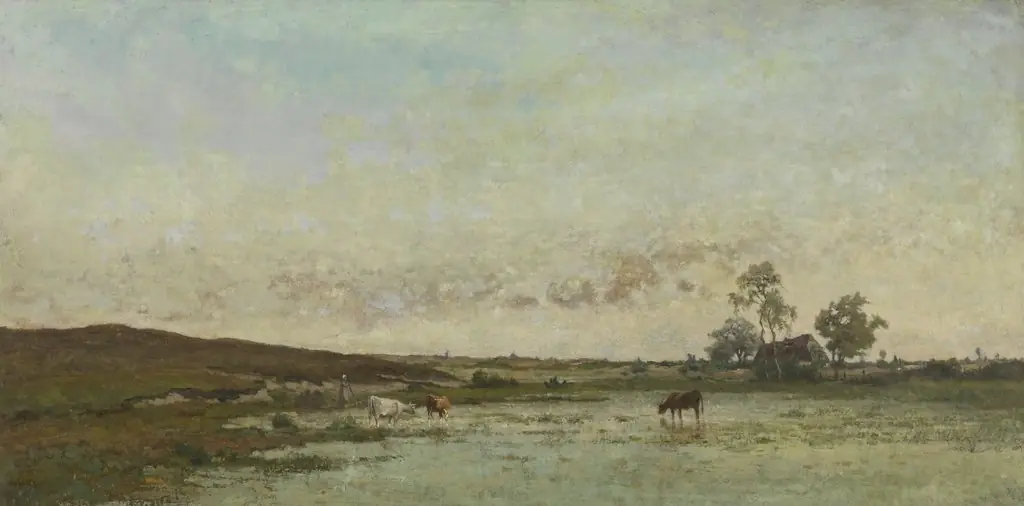 Fen in the Kempen
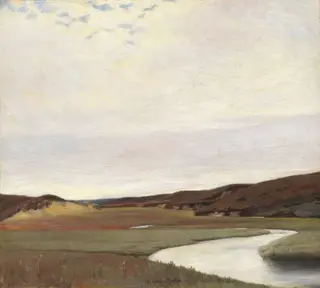 A Summer's Day by the River Karup, Jutland
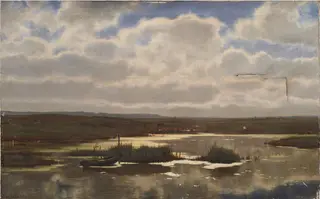 Hede med en mose