Artwork
A vase of flowers
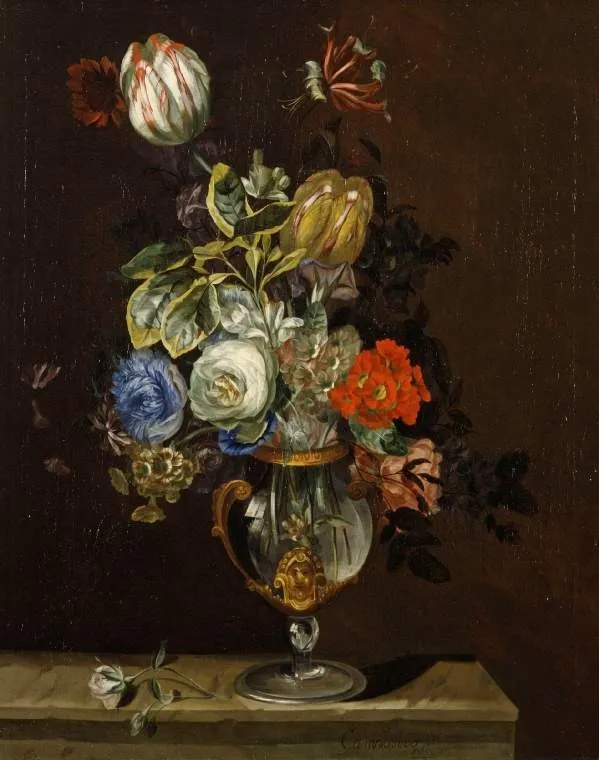
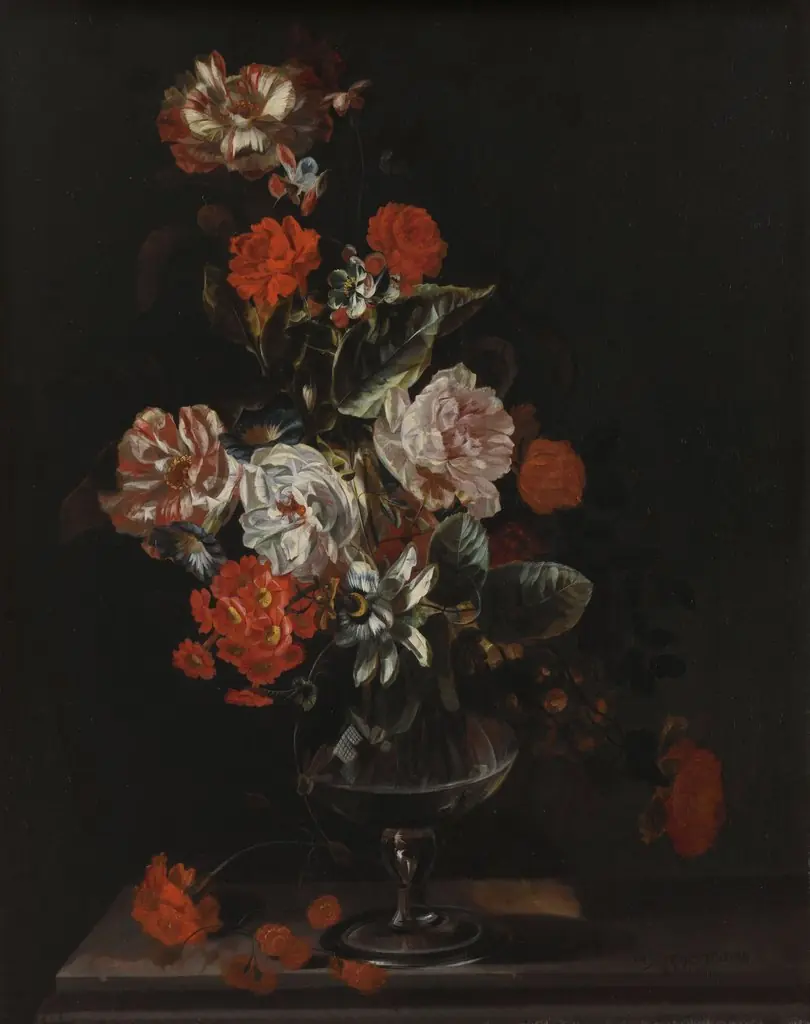
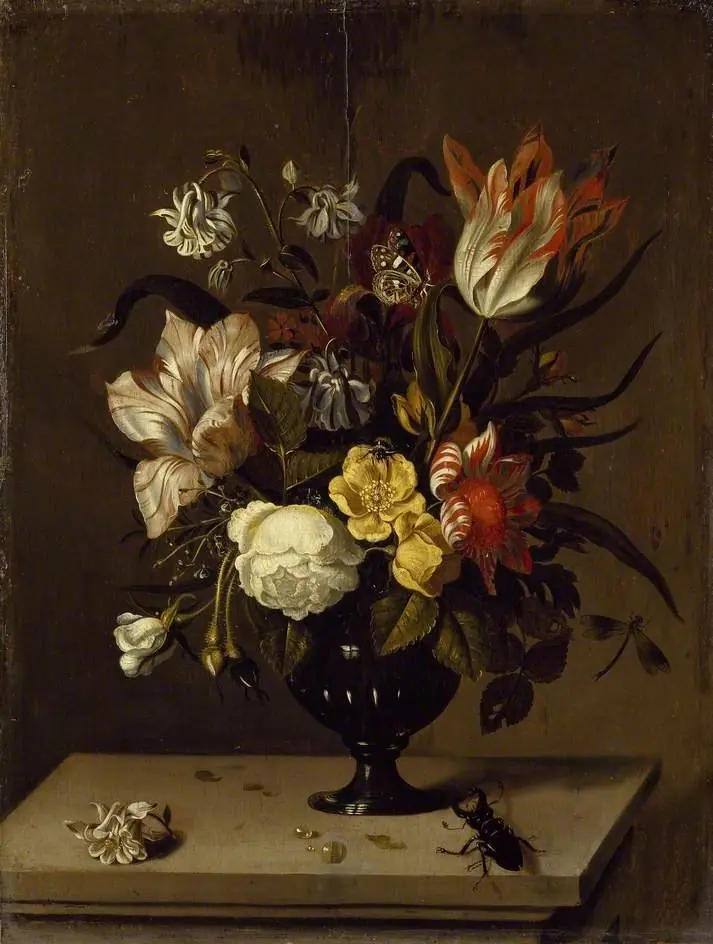
A vase of flowers is an oil painting by the Rococo painting artist Jacob Campo Weyerman. It dates from 1730 and is held in the collection of the Fitzwilliam Museum. Created in 1730, this oil painting presents a vase brimming with a lively bouquet.
About this work
Overview
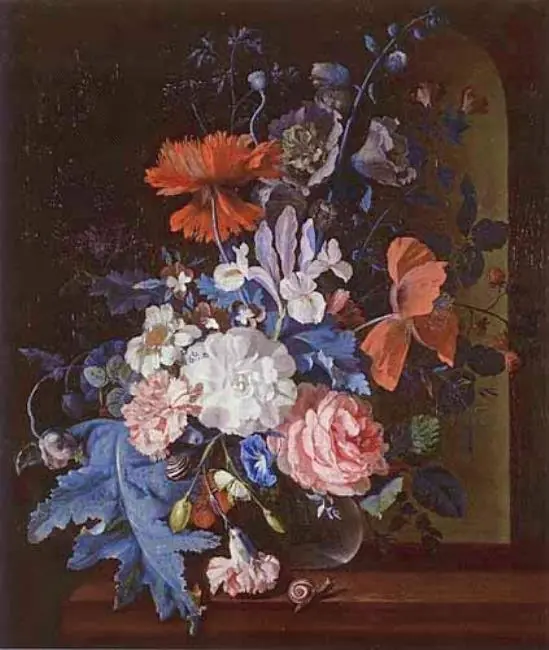
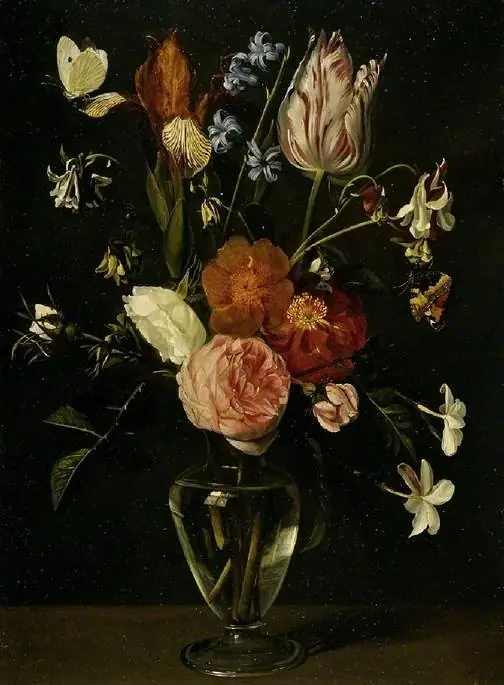
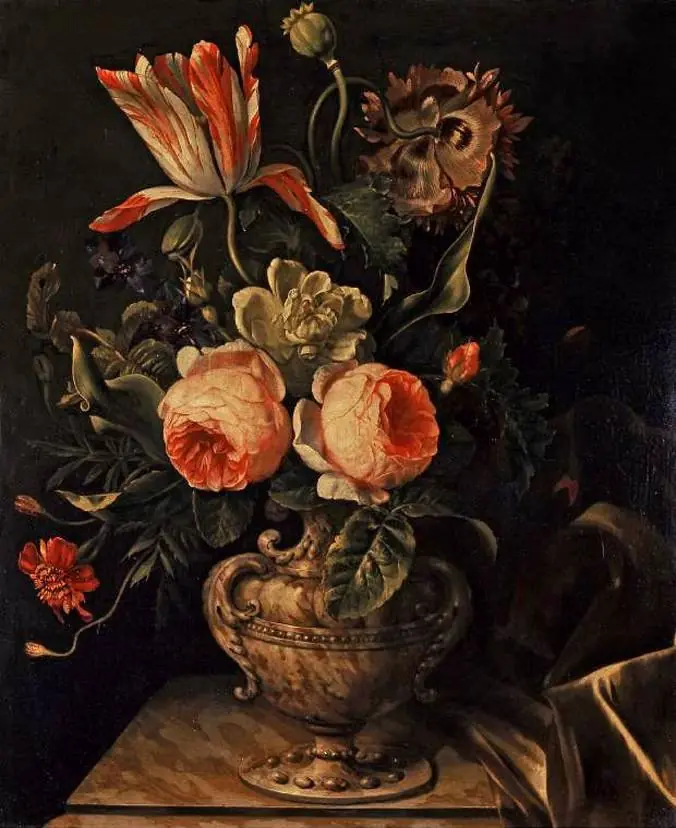
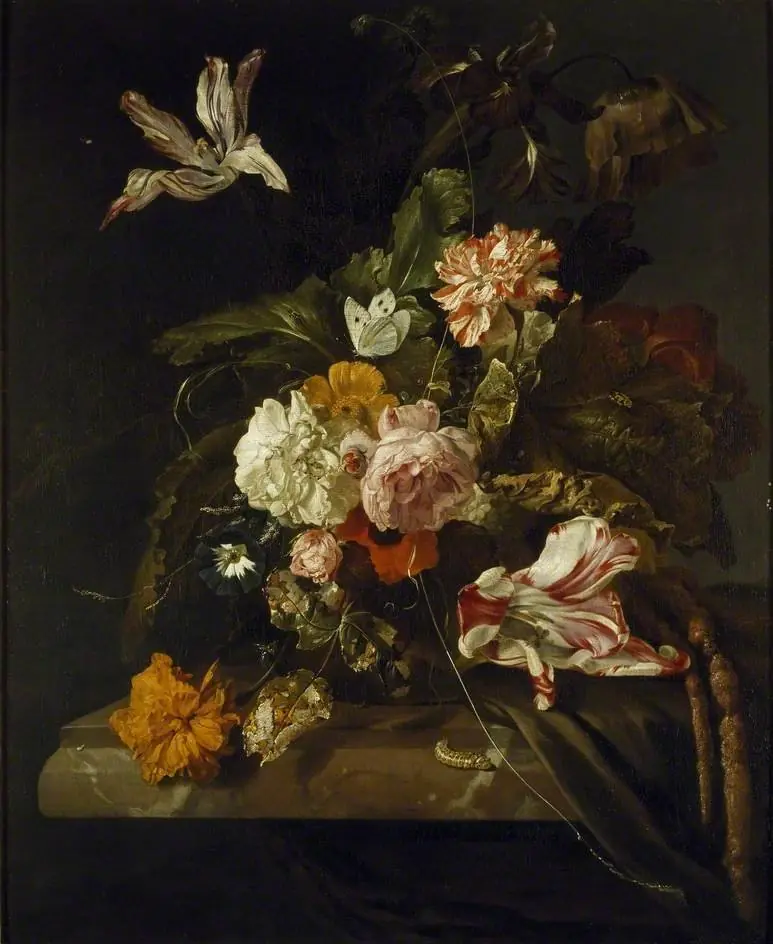
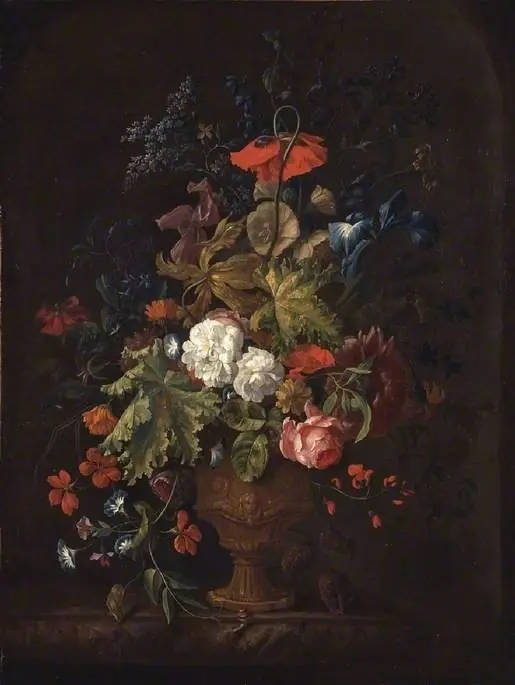
Created in 1730, this oil painting presents a vase brimming with a lively bouquet. Set against a deep, almost black backdrop, the composition draws attention to the vivid hues of the flowers, white, yellow, blue, and orange, intertwined with green foliage. The clear glass vessel, accented with a gold handle and base, adds a refined counterpoint to the dramatic lighting.
Subject & Meaning
The work depicts a traditional still‑life arrangement, with several blossoms spilling onto the tabletop, suggesting a fleeting moment of natural abundance. The contrast between the orderly vase and the scattered petals may allude to the transience of beauty, a common theme in 18th‑century decorative art.
Technique & Style
Executed in the Rococo idiom, the painting employs chiaroscuro to model form and create depth, allowing the luminous petals to emerge from the dark field. Fine brushwork renders delicate textures, petal translucency, leaf veining, and the reflective surface of the glass, while the gold‑trimmed vase showcases a subtle interplay of light and material.
History & Provenance
The artist, Jacob Campo Weyerman, a Dutch painter and writer linked to the Enlightenment, often signed his works as Campovivo. Known for his flower and fruit compositions, he produced this piece during his mature period. The painting entered the Fitzwilliam Museum’s collection, where it remains accessible to the public.
Artist & collection
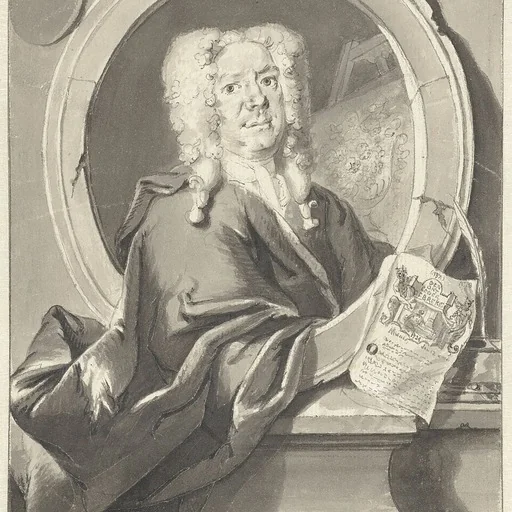
Artist
Jacob Campo Weyerman (9 August 1677 – 9 March 1747) was a painter and writer during the period known as the Dutch Enlightenment.