Artwork
Twelve Months of Flowers: March
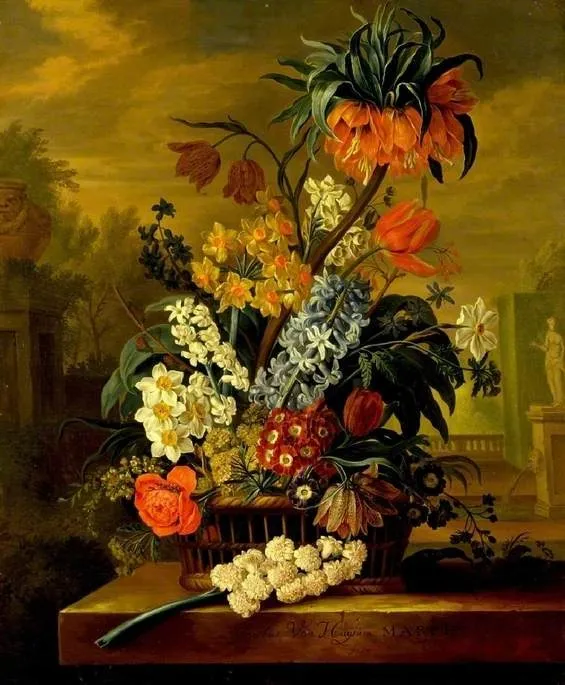
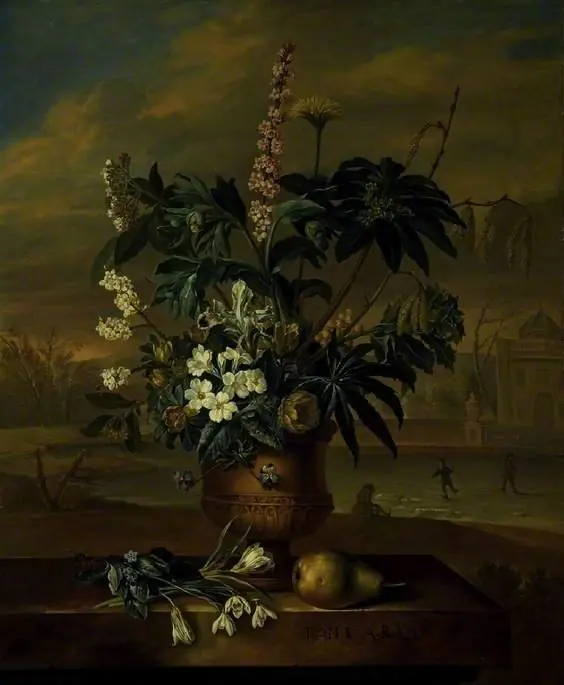
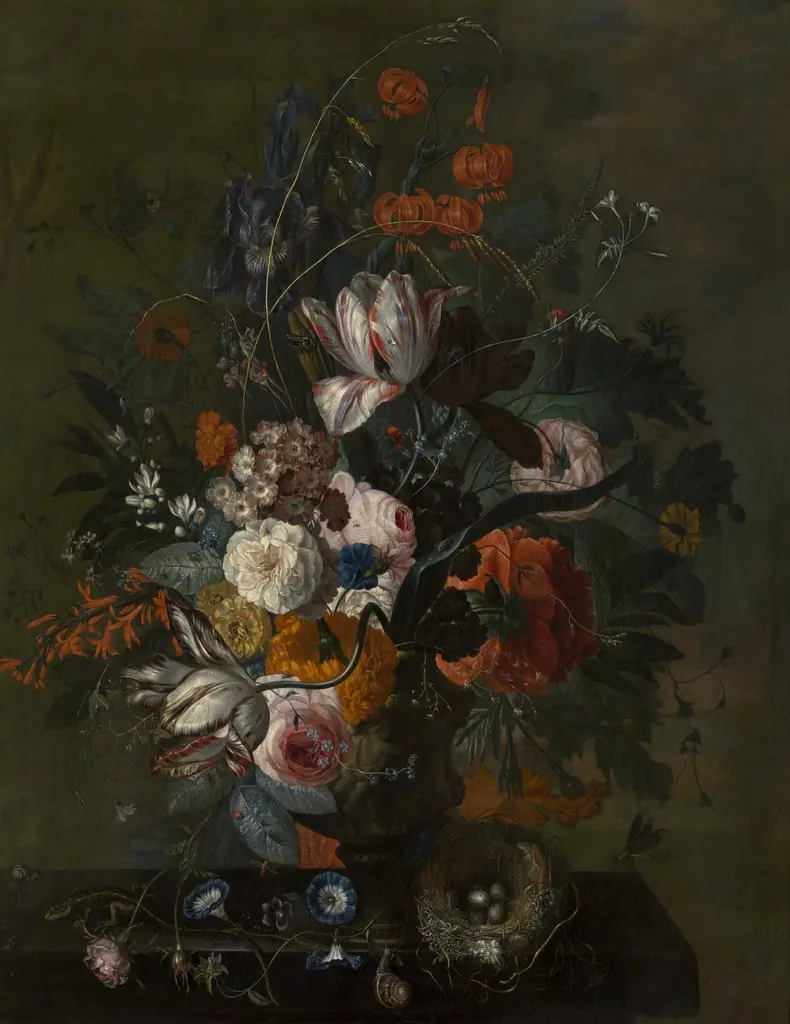
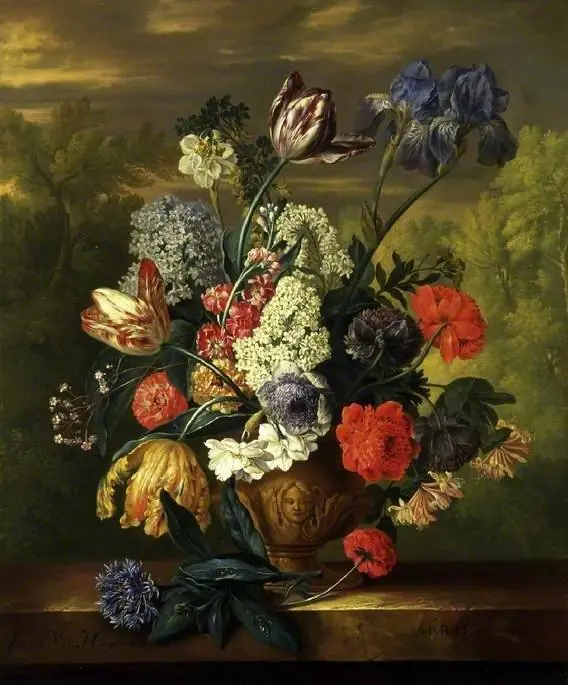
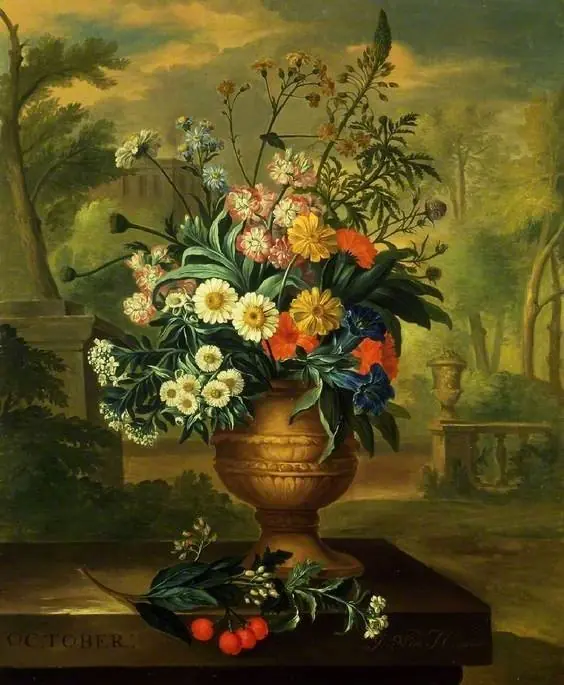
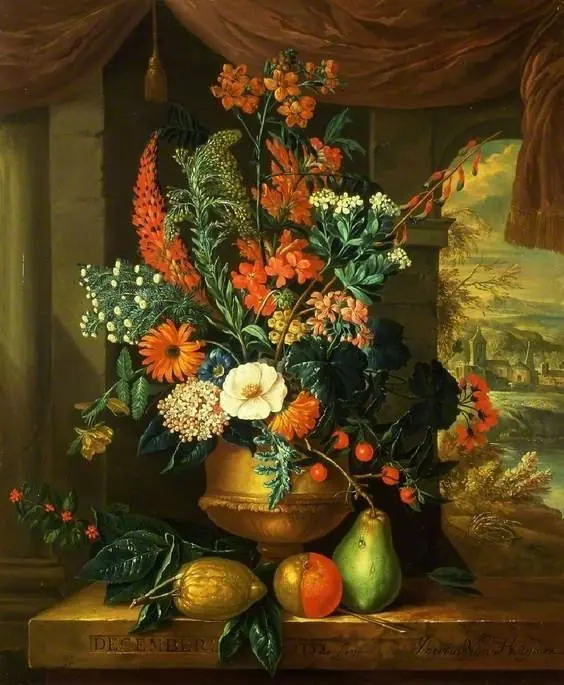
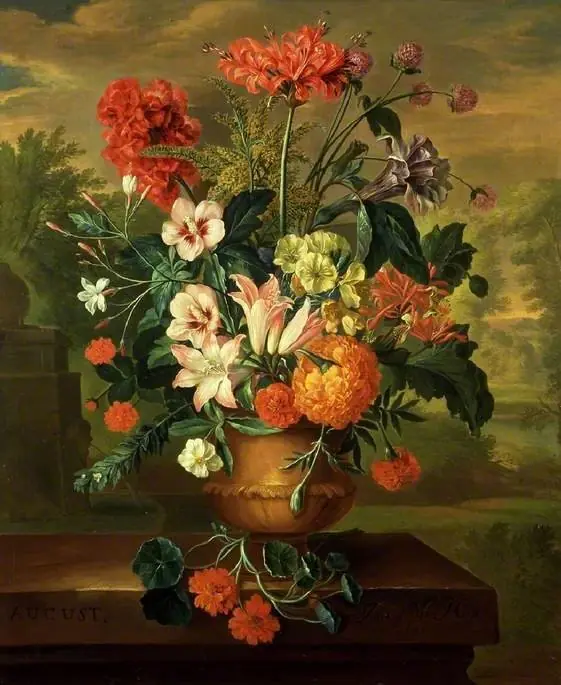
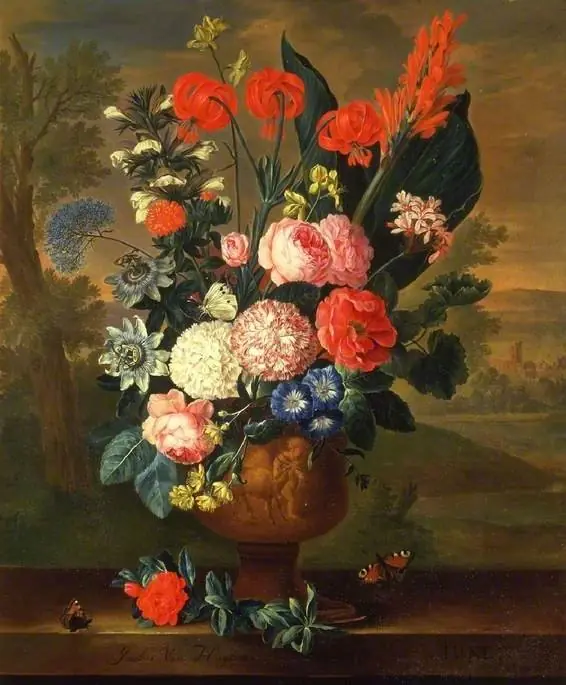
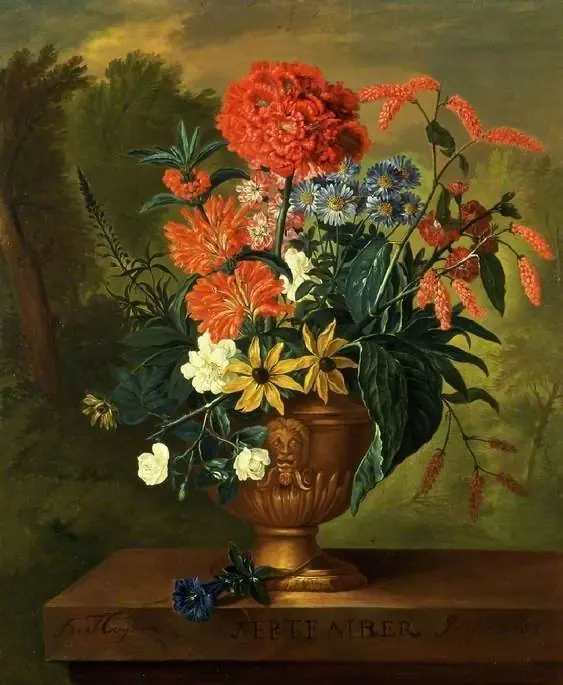
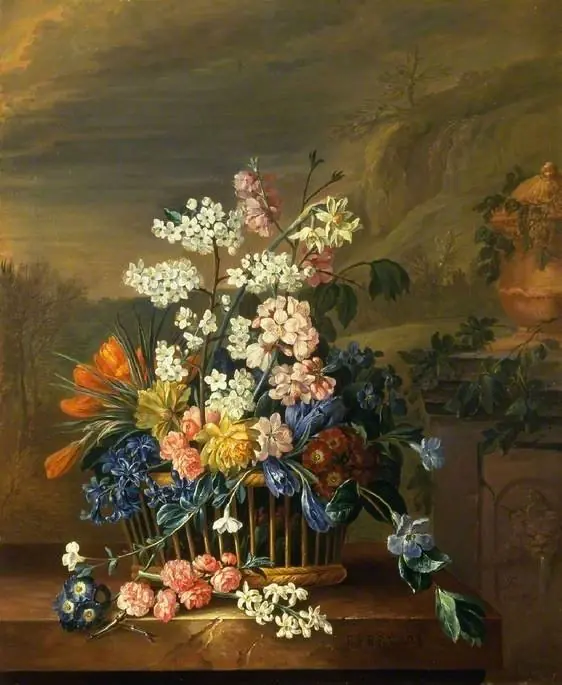
Twelve Months of Flowers: March is an oil painting by the Rococo painting artist Jacob van Huysum. It dates from 1732 and is held in the collection of the Fitzwilliam Museum.
About this work
Overview
Jacob van Huysum’s 1732 oil painting Twelve Months of Flowers: March presents a carefully arranged bouquet within a wicker basket. The composition includes tulips, daffodils, hyacinths and other spring blossoms, some spilling onto a ledge. A muted landscape with trees and a cloudy sky recedes behind the still‑life, giving the work a gentle, atmospheric depth.
Subject & Meaning
The central motif is a celebration of early spring, personified by Flora, the Roman goddess associated with the season. By gathering characteristic March blooms, the painting underscores the renewal of nature and the cyclical passage of the months, a theme common to botanical series of the period.
Technique & Style
Executed in the Rococo idiom, van Huysum employs delicate glazing to achieve subtle tonal variations across petals and foliage. Fine brushwork renders the texture of each flower, while the soft, hazy background contrasts with the crisp detail of the bouquet, creating a balanced interplay of light and colour.
History & Provenance
Born in the Netherlands, van Huysum relocated to Britain in 1721, where he produced a series of month‑by‑month floral studies. March entered the collection of the Fitzwilliam Museum, where it remains part of the institution’s holdings of 18th‑century botanical art.
Context
The work belongs to a broader European tradition of scientific yet decorative flower painting, reflecting both the Enlightenment interest in plant classification and the decorative tastes of aristocratic interiors. Its inclusion of a mythological figure aligns the piece with contemporary allegorical practices.
Artist & collection
Artist
Jacob van Huysum (1688–1740) was an 18th-century botanical painter from the Dutch Republic who moved to the Kingdom of Great Britain in 1721.