Artwork
Untitled
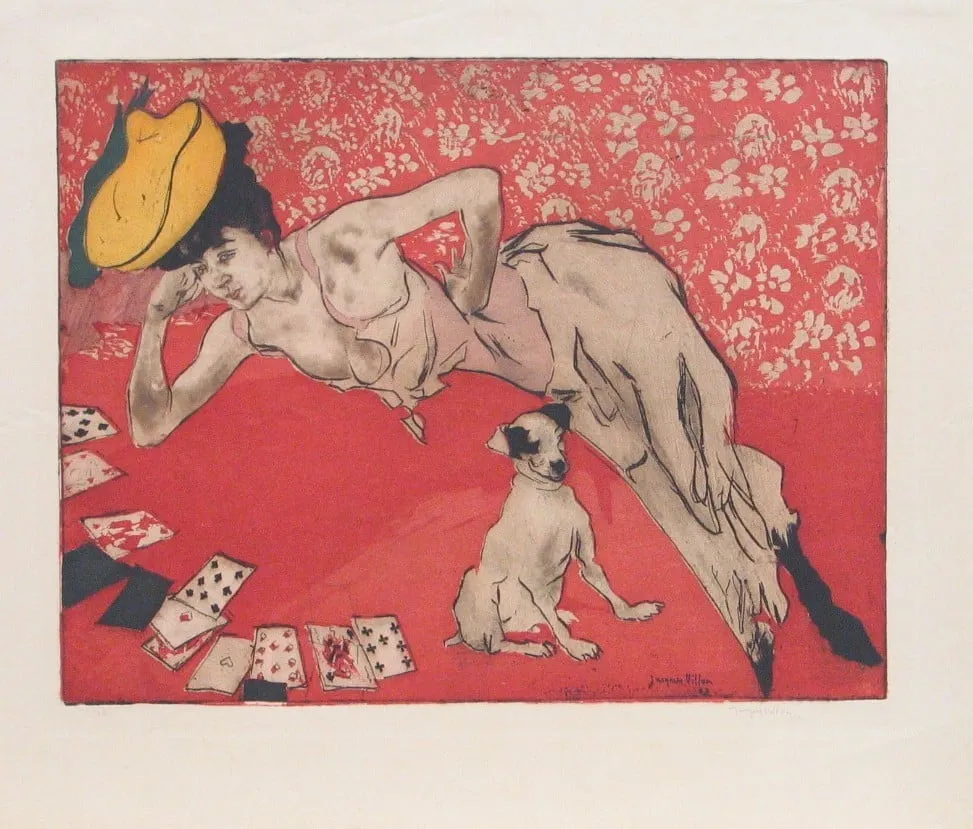
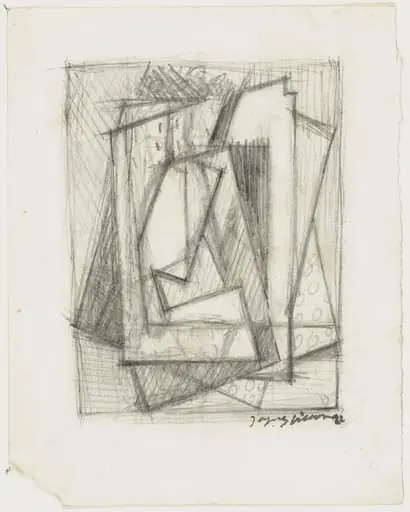
Untitled is an ink print by Jacques Villon. It dates from 1903 and is held in the collection of the Museum of Modern Art.
About this work
Overview
Created in 1903, this print by Jacques Villon is among his earliest works following his move to Paris. Executed in aquatint and etching, it belongs to a series of experimental prints that explore abstraction through everyday subjects. The piece is held in the collection of The Museum of Modern Art, reflecting its significance in early modern printmaking.
Subject & Meaning
The composition presents a loose arrangement of rectangular forms resembling playing cards, arranged in a grid-like pattern across the surface.
The composition presents a loose arrangement of rectangular forms resembling playing cards, arranged in a grid-like pattern across the surface. There is no narrative or symbolic intent beyond the formal arrangement; the cards appear detached from context, hovering in space. This ambiguity invites attention to structure rather than content, aligning with emerging modernist interests in visual rhythm.
Technique & Style
Villon employed three printmaking methods, etching for fine lines, drypoint for textured detail, and aquatint for gradations of gray. The subtle tonal transitions create an effect of lightness, as if the cards float above the surface. The technique avoids sharp definition, favoring atmospheric depth and a quiet, meditative quality that distinguishes the work from more illustrative prints of the period.
History & Provenance
Made shortly after Villon relocated to Paris, this print marks a turning point in his artistic development. It was produced during a period of intense experimentation with print media, influenced by his association with the Puteaux Group. The work entered The Museum of Modern Art’s collection in the mid-20th century, where it has remained as part of its foundational holdings in modern graphic art.
Context
In early 20th-century Paris, artists increasingly turned to ordinary objects as subjects for formal investigation. Villon’s use of playing cards reflects this trend, paralleling contemporaneous explorations by Cézanne and later Cubists. The aquatint technique, often used for landscape tonality, was repurposed here to suggest volume without realism, aligning with broader shifts toward abstraction in visual culture.
Legacy
This print exemplifies Villon’s role in expanding the expressive potential of printmaking beyond reproduction. His integration of aquatint into non-illustrative compositions influenced later generations of printmakers seeking tonal nuance without figurative detail. The work remains a reference point for understanding how everyday motifs were transformed into abstract visual fields in early modern art.
Artist & collection

Artist
Jacques Villon, also known as Gaston Duchamp, was a French Cubist and abstract painter and printmaker.

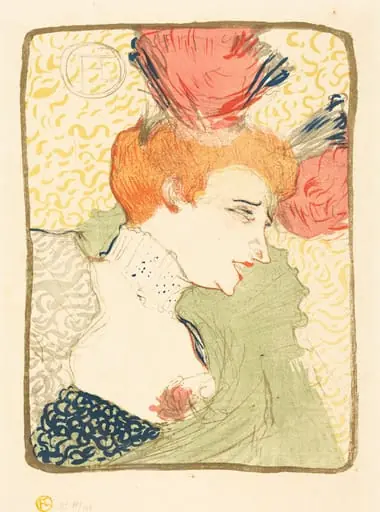 Bust of Mademoiselle Marcelle Lender (Mademoiselle Marcelle Lender, en buste)
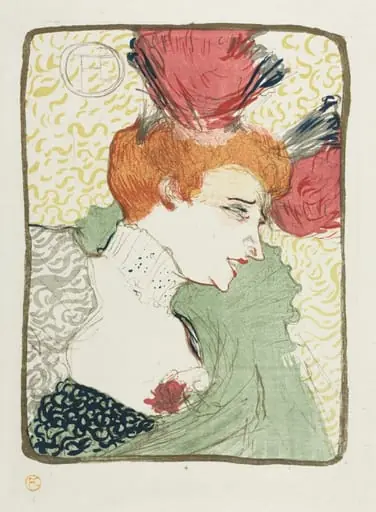 Bust of Mademoiselle Lender
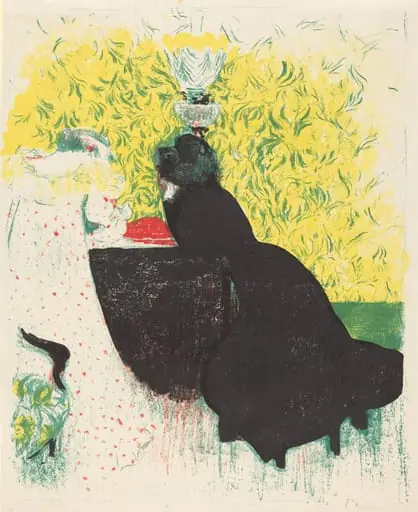 Two Sisters-in-Law (Les deux belles-soeurs)
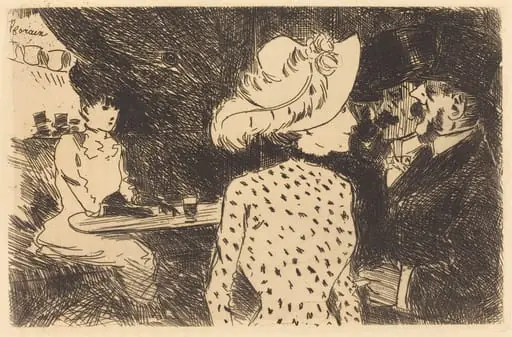 Les Folies-Bergère (planche refusée, 2e planche) (The Folies Bergère) (refused plate, second plate)
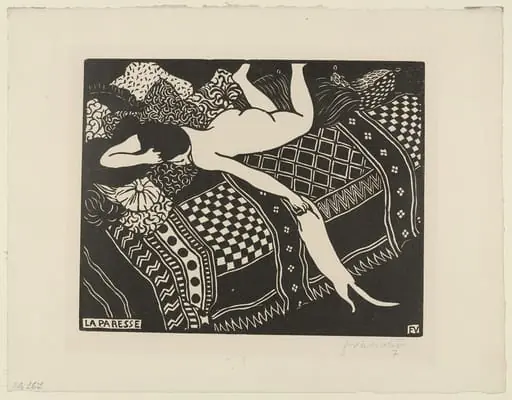
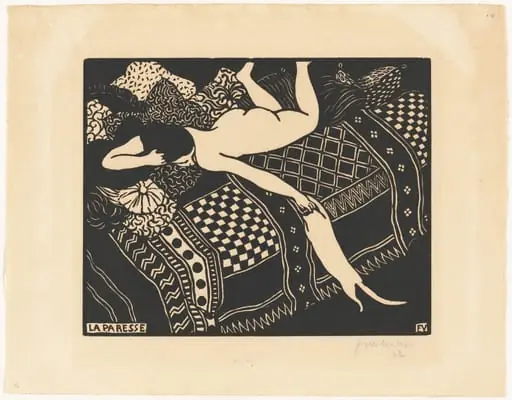 La paresse (Laziness)
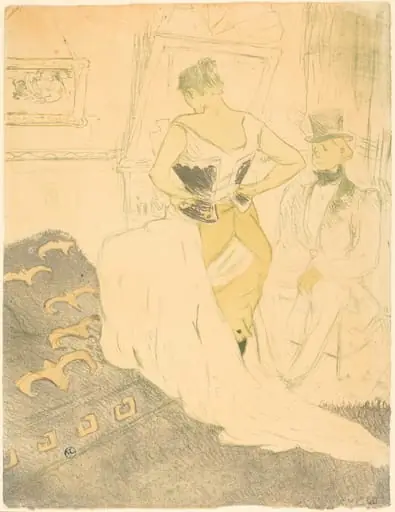 Woman in Corset (Femme en corset)
 Untitled
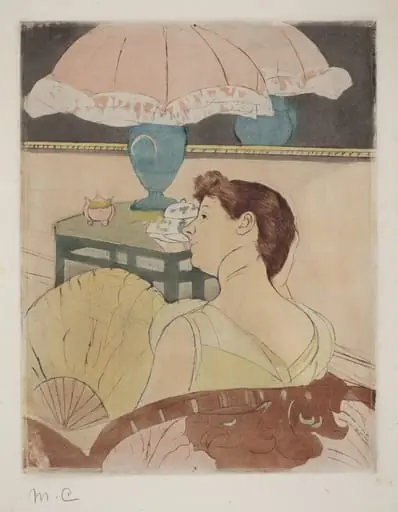 The Lamp
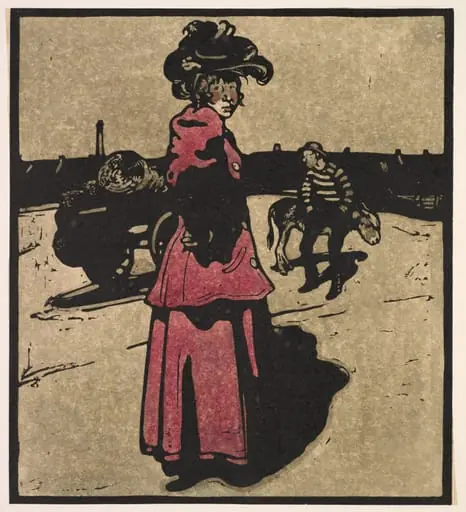 London Types: Coster
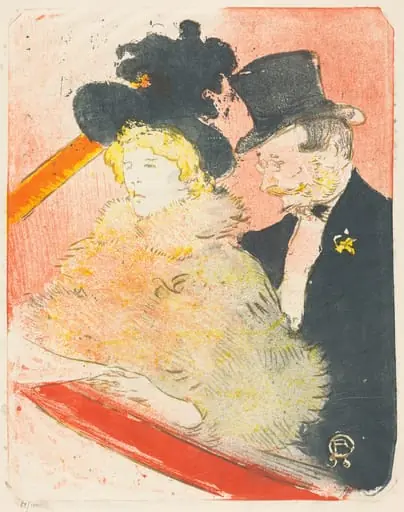 At the Concert (Au concert)
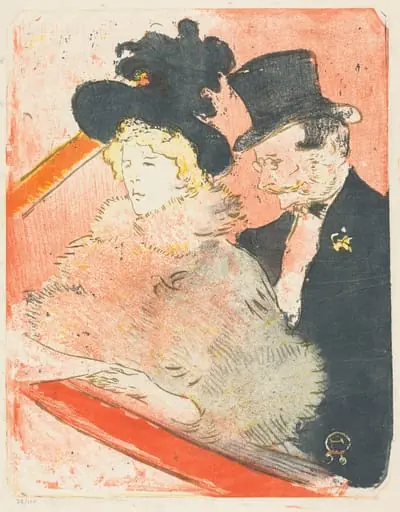 At the Concert (Au concert)
- Untitled