Artwork
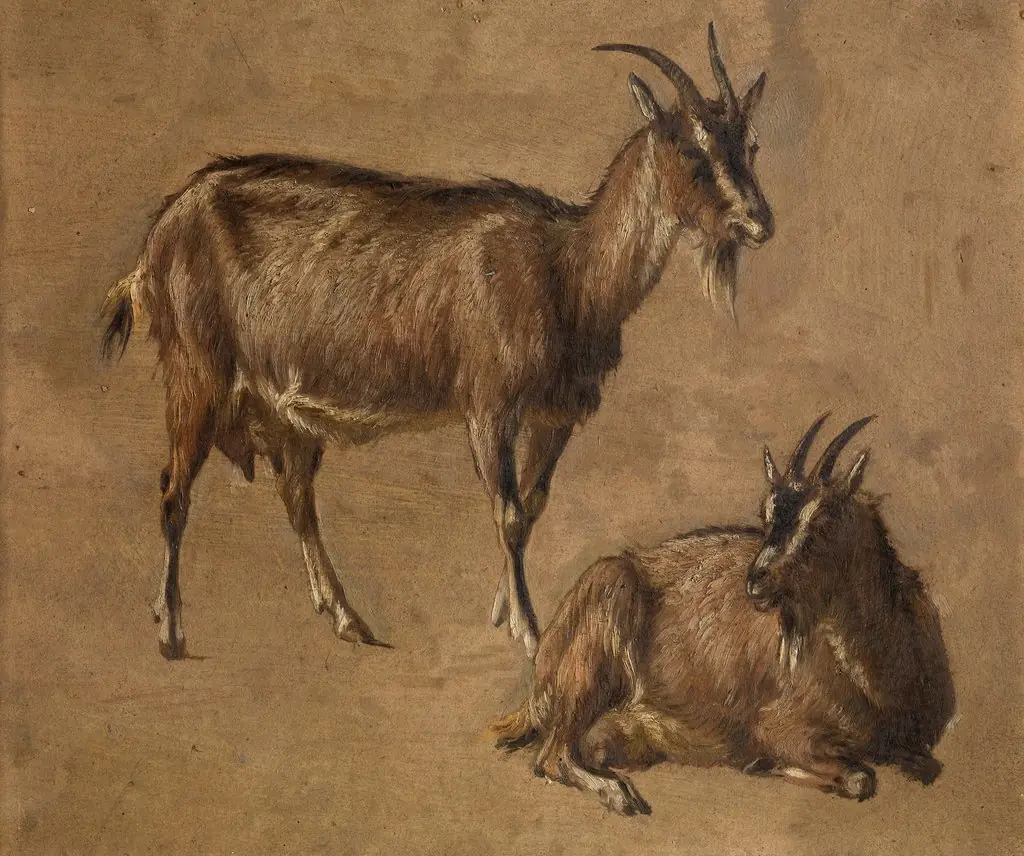
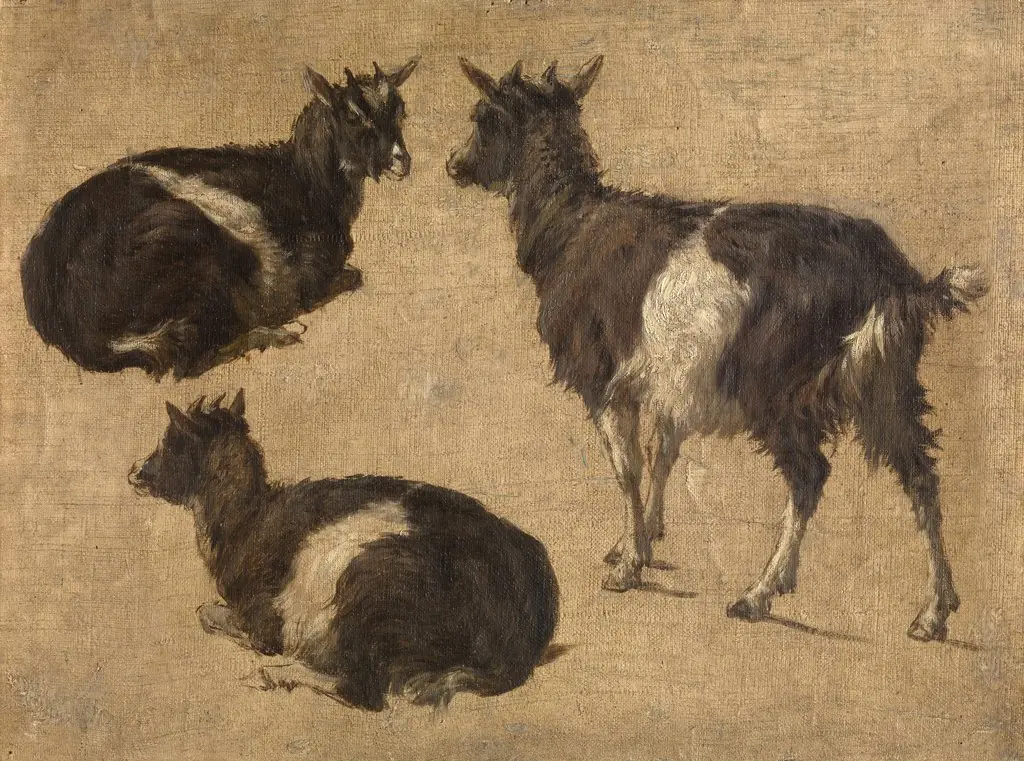
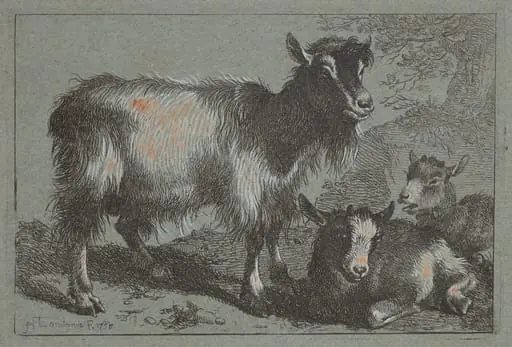
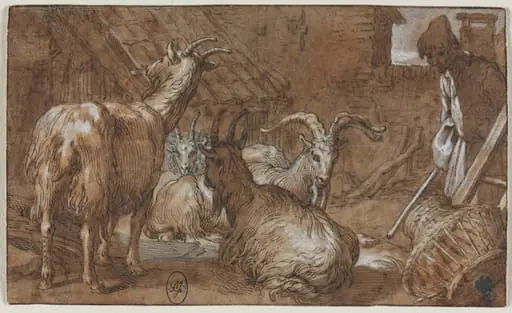
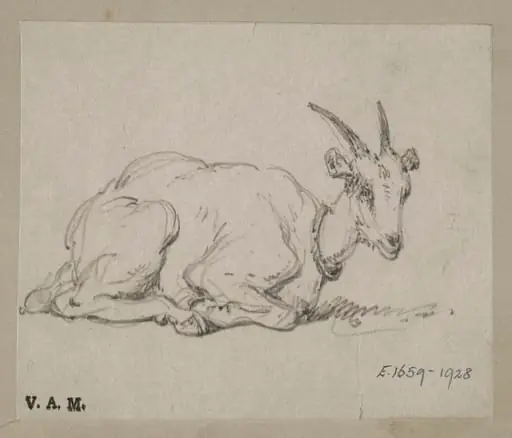
Goat Lying Down
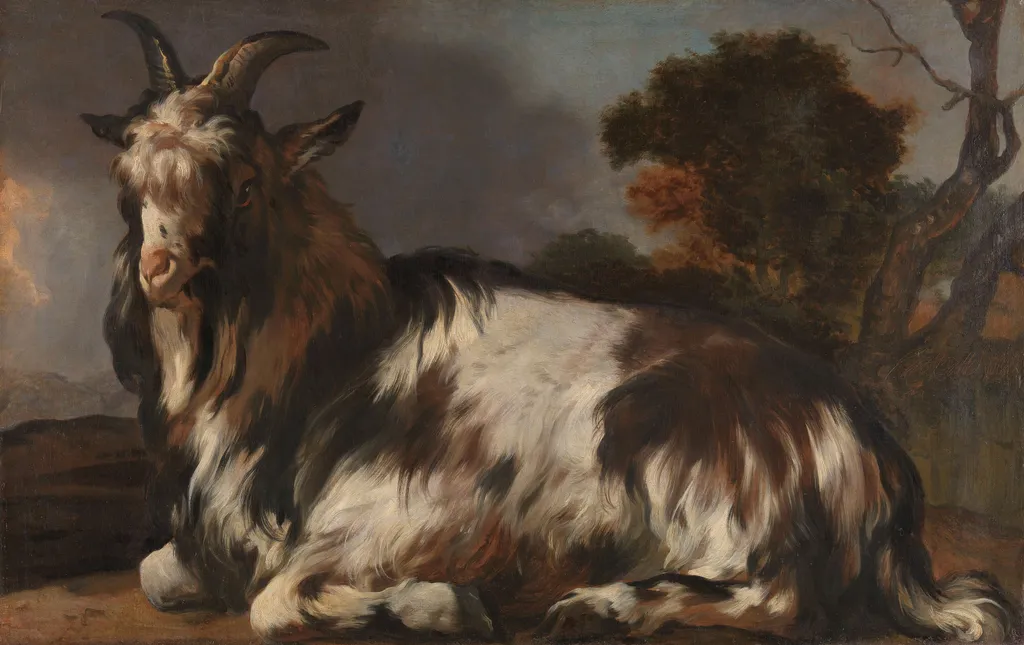
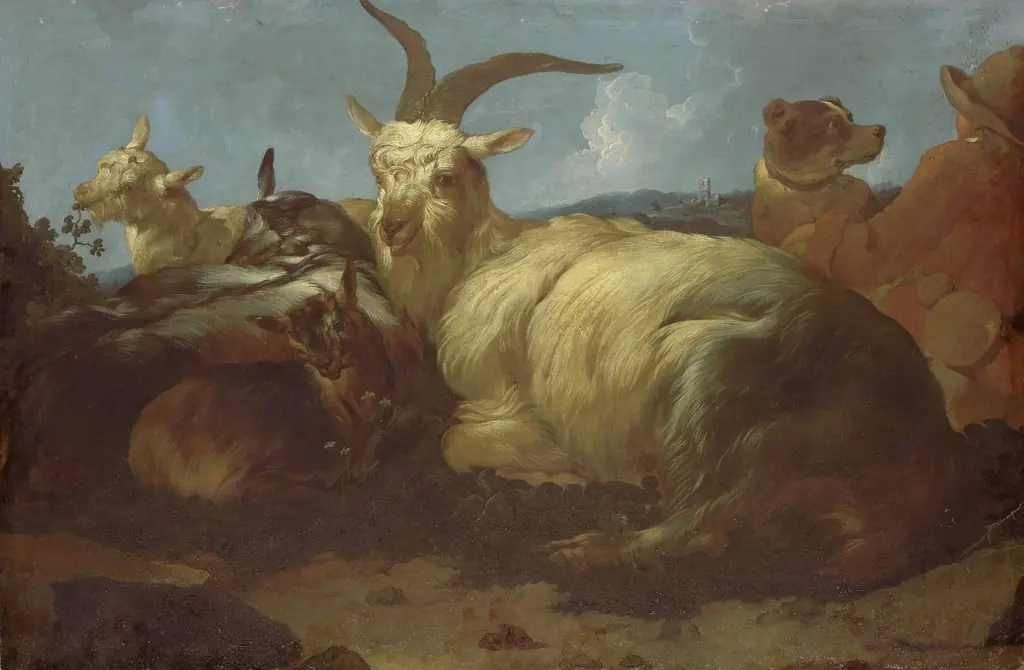
Goat Lying Down is an oil painting by the Dutch Golden Age artist Jan Baptist Weenix. It dates from 1650 and is held in the collection of the Rijksmuseum.
About this work
Technique & Style
The composition balances naturalism with idealized detail, emphasizing the animal’s form against a softly rendered background.
Executed in oil paint on canvas, the work measures 84 cm in height and 132.5 cm in width. The handling reveals a smooth, blended application typical of Dutch seventeenth-century animal painting, with careful attention to the goat’s recumbent posture and the surrounding landscape.
The composition balances naturalism with idealized detail, emphasizing the animal’s form against a softly rendered background. Subtle tonal gradations and refined brushwork contribute to the tranquil, contemplative mood of the scene.
History & Provenance
Jan Baptist Weenix created the oil painting Goat Lying Down in 1650. Executed on canvas, the work depicts a reclining goat and measures 84 cm in height by 132.5 cm in width. The painting's ownership history includes Jan Hendrik Cremer, who held the work prior to its acquisition by the Rijksmuseum.
The piece has been featured in exhibitions focusing on the Bentvueghels, a notorious art society based in Rome.
The painting Goat Lying Down by Jan Baptist Weenix, created in 1650, is part of the Rijksmuseum's collection and is catalogued under the inventory number SK-A-1865. It was formerly owned by Jan Hendrik Cremer. The work has been exhibited in The Bentvueghels. A Notorious Art Society in Rome.
Overview
Created circa 1650, Goat Lying Down is an oil painting by Jan Baptist Weenix, a Dutch artist active during the Golden Age. The work presents a solitary goat reclining on a grassy patch, set against a modest backdrop of trees and a muted sky. It exemplifies Weenix’s later interest in animal and still‑life subjects and is part of the Rijksmuseum’s collection.
Subject & Meaning
The composition focuses on a single goat, rendered with a blend of white and brown tones and a shaggy mane that frames its neck and limbs. The animal’s relaxed posture and the gentle surrounding landscape convey a quiet, naturalistic moment, reflecting the 17th‑century Dutch fascination with everyday rural life and the study of animal anatomy.
Own this work as a print
Artist & collection
Artist
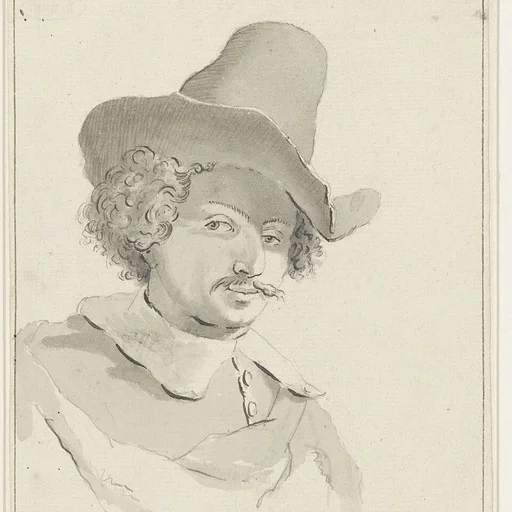
Jan Baptist Weenix, also spelled Jan Baptiste Weeninx (1621–1659), was a painter of the Dutch Golden Age.