Artwork
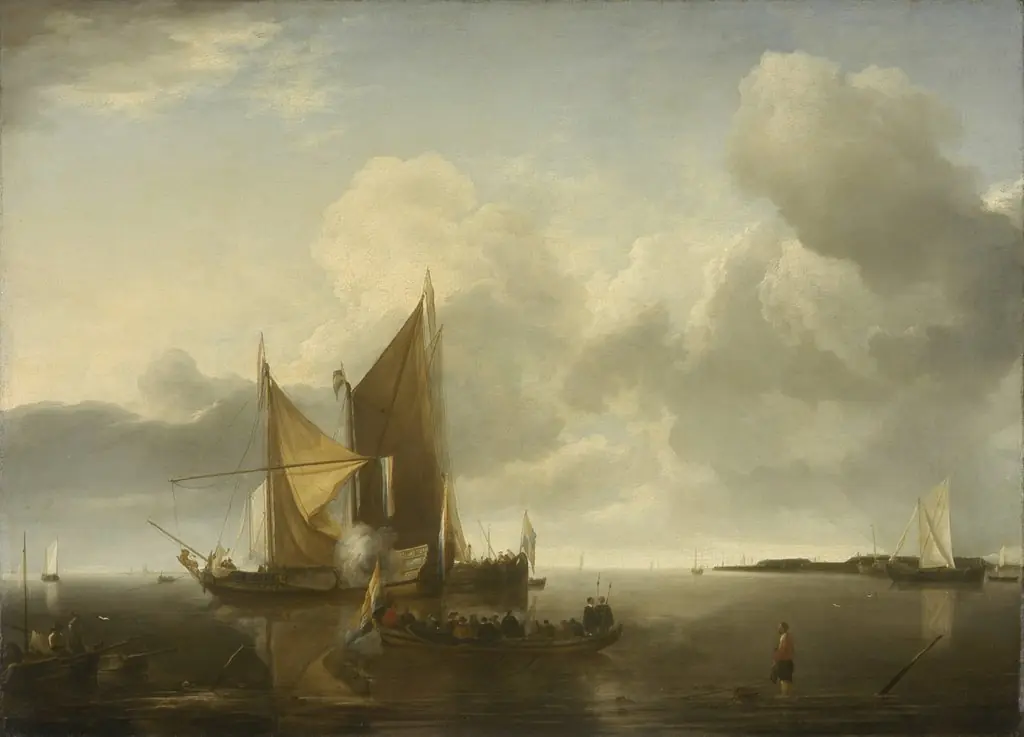
Ships at anchor on a quiet sea
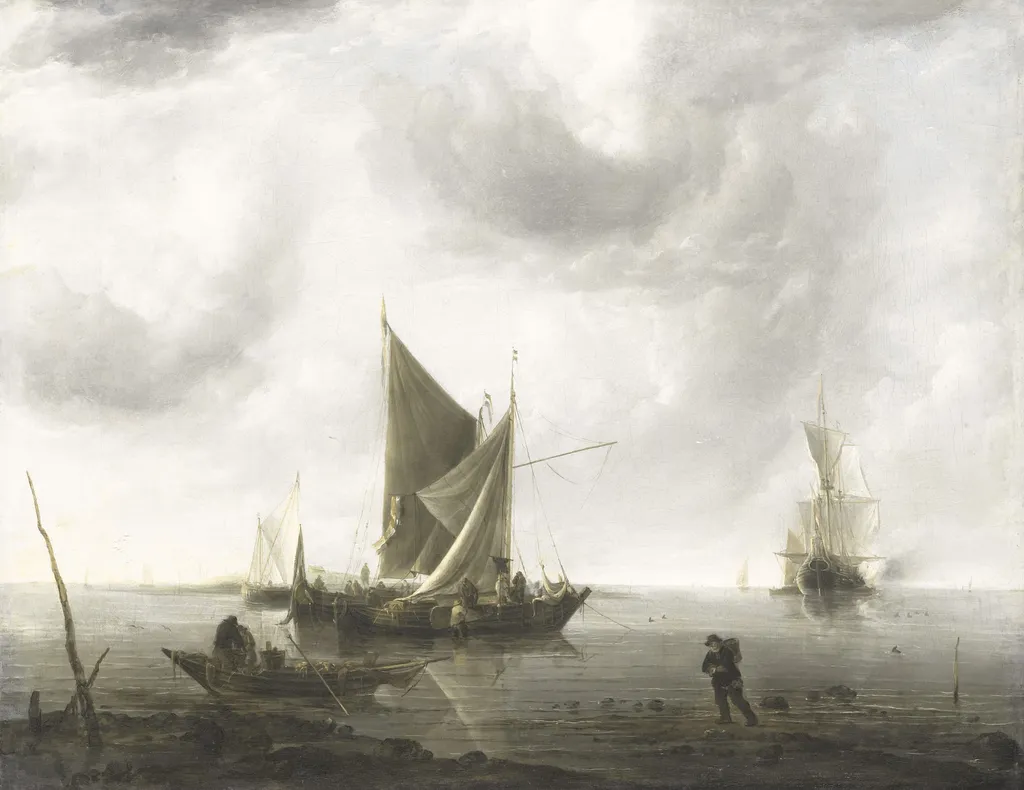
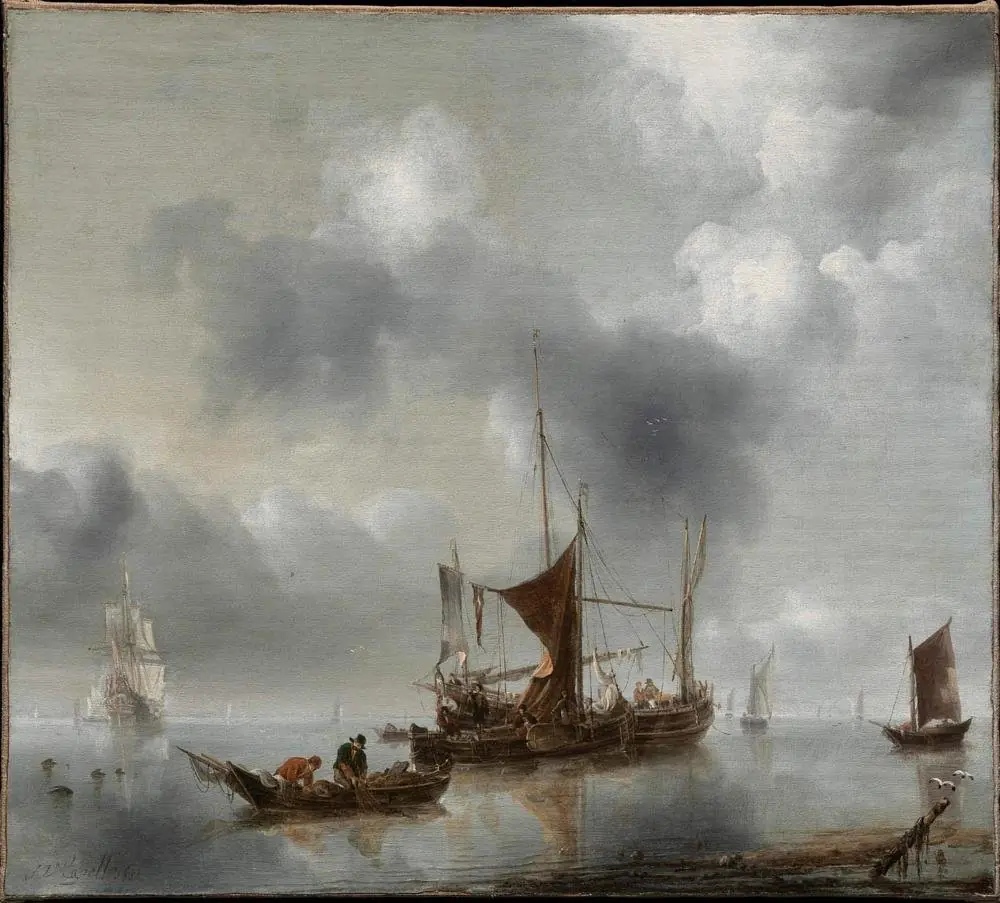
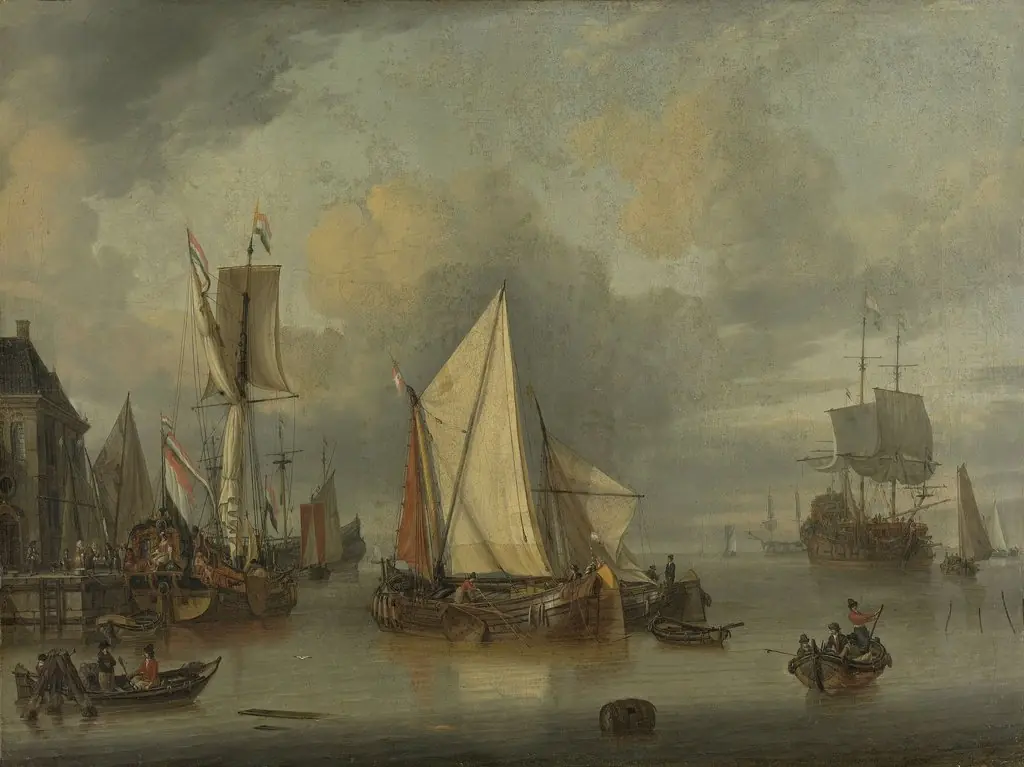
Ships at anchor on a quiet sea is an oil painting by the Dutch Golden Age artist Jan van de Cappelle. It dates from 1650 and is held in the collection of the Rijksmuseum.
About this work
Technique & Style
Compositionally, the canvas is organized around a horizontal horizon and a low vantage point, creating an expansive, serene expanse of sea.
The work is executed in oil paint on canvas, a pairing typical of Dutch marine painting of the mid-seventeenth century. The handling emphasizes translucent glazes and delicate scumbling to render calm water and cloud-filled skies, with understated impasto reserved for the hulls and rigging. Compositionally, the canvas is organized around a horizontal horizon and a low vantage point, creating an expansive, serene expanse of sea.
Stylistically, the painting exemplifies the refined tonal approach associated with Jan van de Cappelle, where subtle shifts in tone and light articulate form without dramatic contrast. The muted palette and precise observation of light on water align with contemporary Dutch marine specialists.
History & Provenance
The marine painting Ships at anchor on a quiet sea was created by Jan van de Cappelle in 1650. Executed in oil paint on canvas, the work measures 47.5 cm in height and 60.5 cm in width. It depicts boats at anchor on a calm sea, fitting the artist's specialization in marine art. The piece is currently held in the collection of the Rijksmuseum.
Overview
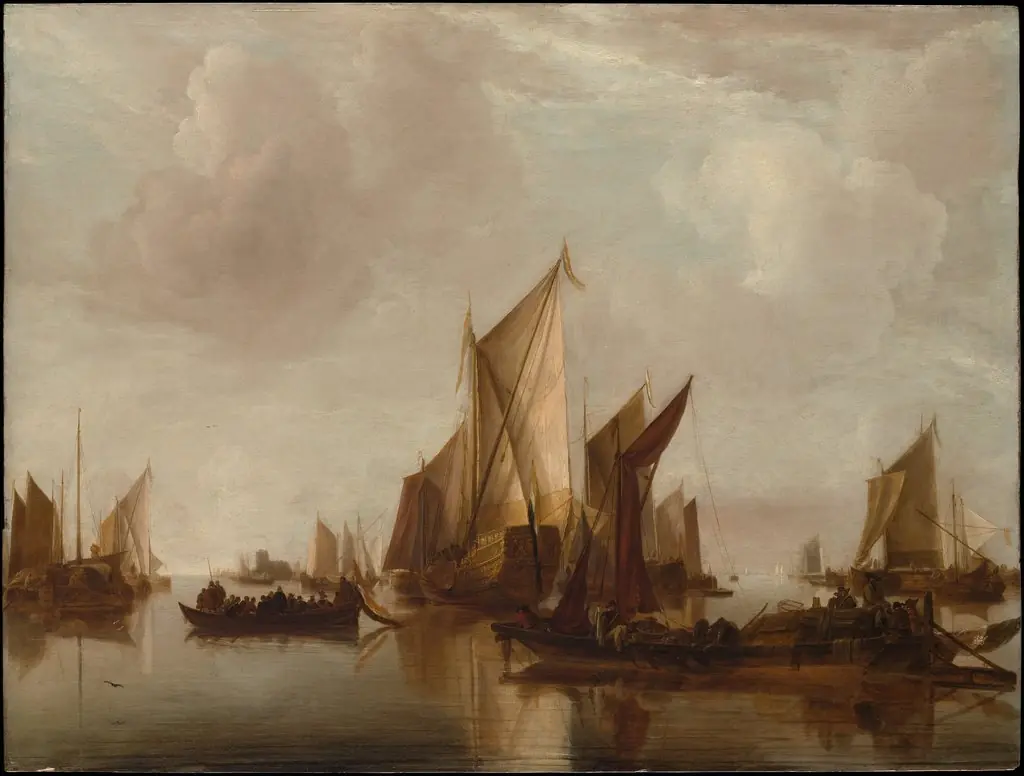
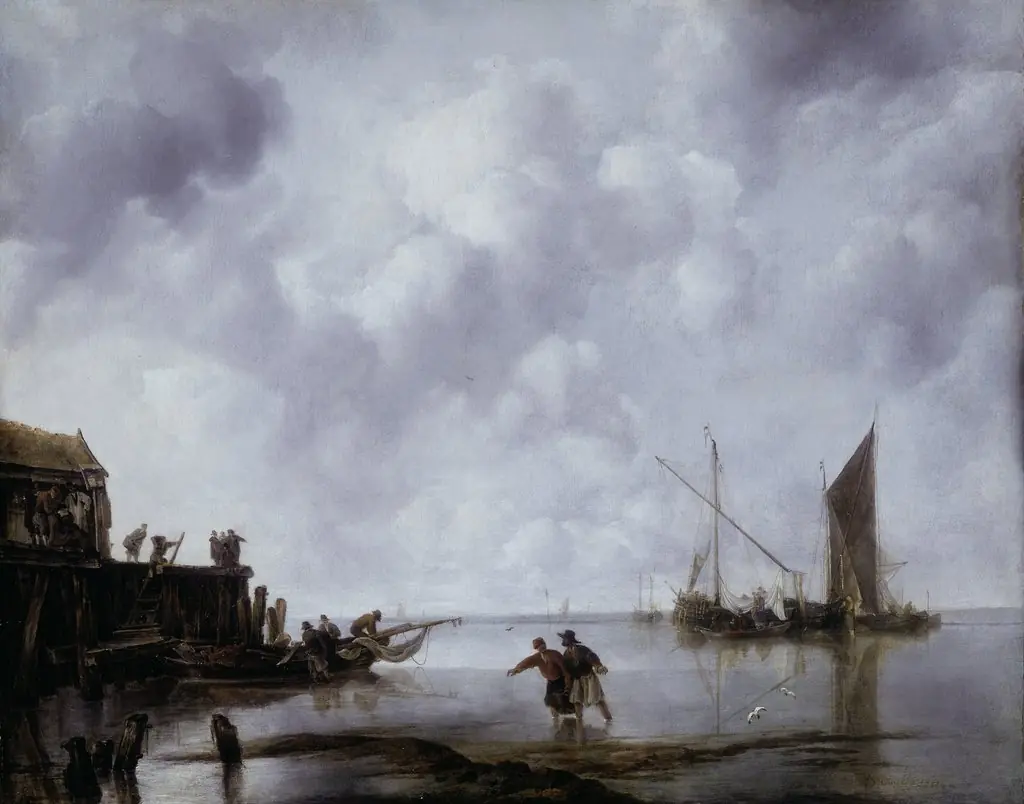
Jan van de Cappelle’s oil painting Ships at anchor on a quiet sea, executed circa 1650, presents a tranquil maritime tableau. The canvas captures a group of vessels moored in calm water beneath a muted, overcast sky. A few shore‑side figures lend a human scale to the expansive, peaceful scene, emphasizing the stillness of the moment.
Subject & Meaning
The work focuses on anchored ships, a common motif in Dutch marine art that reflects the nation’s reliance on seafaring commerce. By placing the vessels in a placid setting, van de Cappelle suggests a pause in the bustling trade routes, inviting contemplation of the sea’s quiet authority and the everyday lives of those who work along its edges.
Context
The mid‑17th‑century Dutch Republic experienced unprecedented economic growth, largely driven by overseas trade. Artists like van de Cappelle responded to this climate by documenting the vessels that powered the nation’s prosperity. The work reflects contemporary interests in realistic observation, scientific study of light, and the aesthetic appreciation of everyday nautical life.
Own this work as a print
Artist & collection
Artist
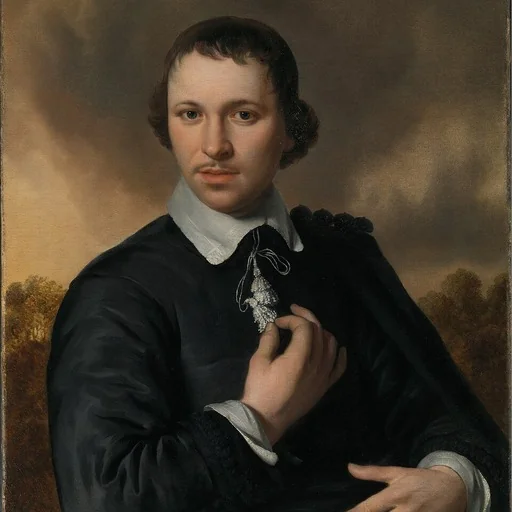
Jan van de Cappelle (or Joannes / van der / Capelle in various combinations; 25 January 1626 (baptized) – 22 December 1679 (buried)) was a Dutch Golden Age painter of seascapes and winter landscapes, also notable as an industrialist and…