Artwork
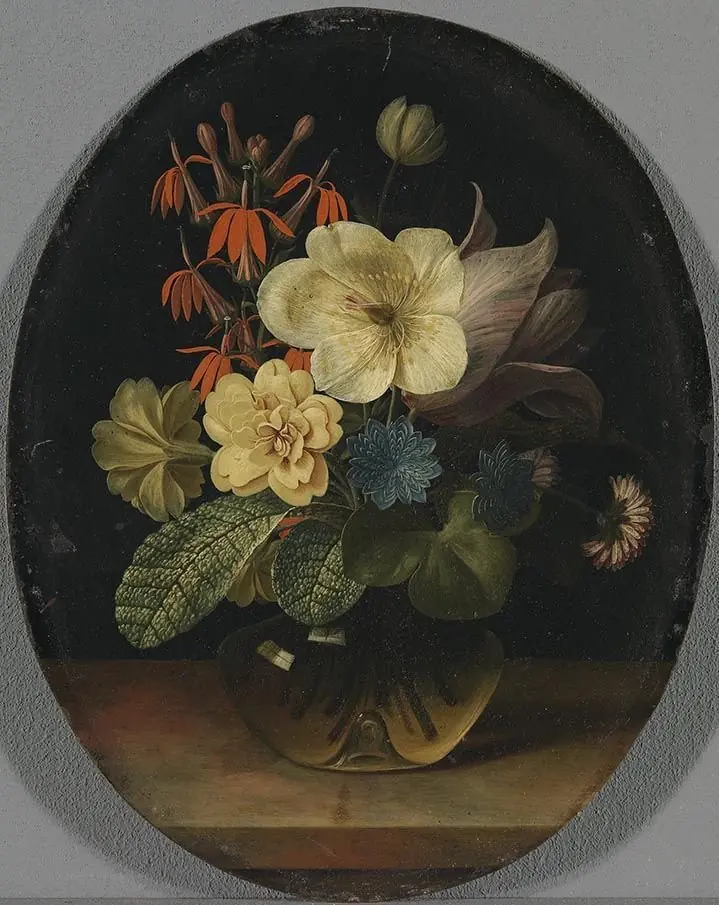
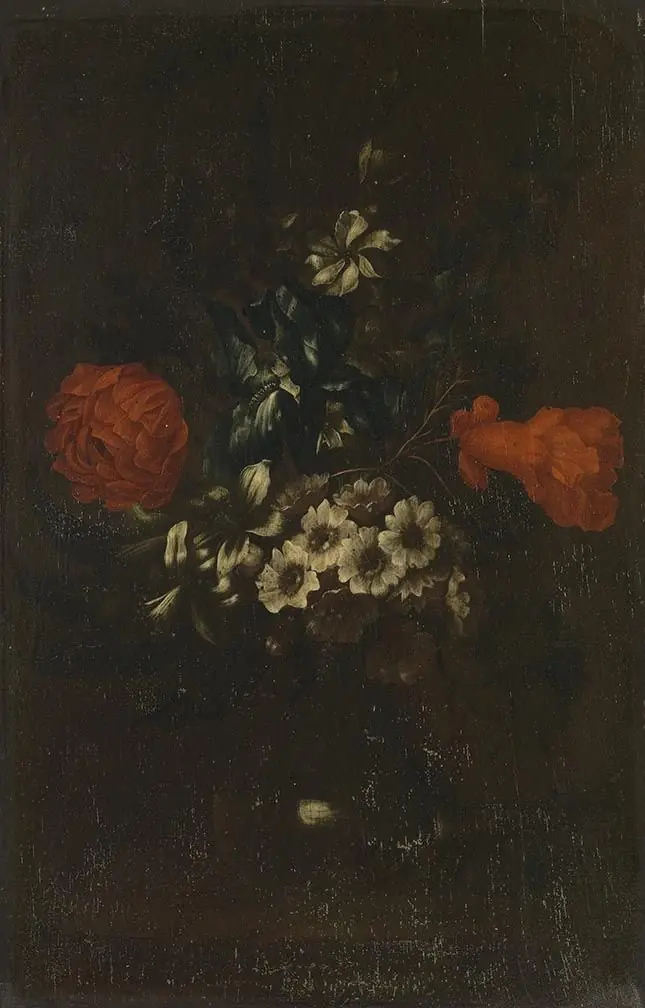
Bouquet with an hibiscus and a crocus
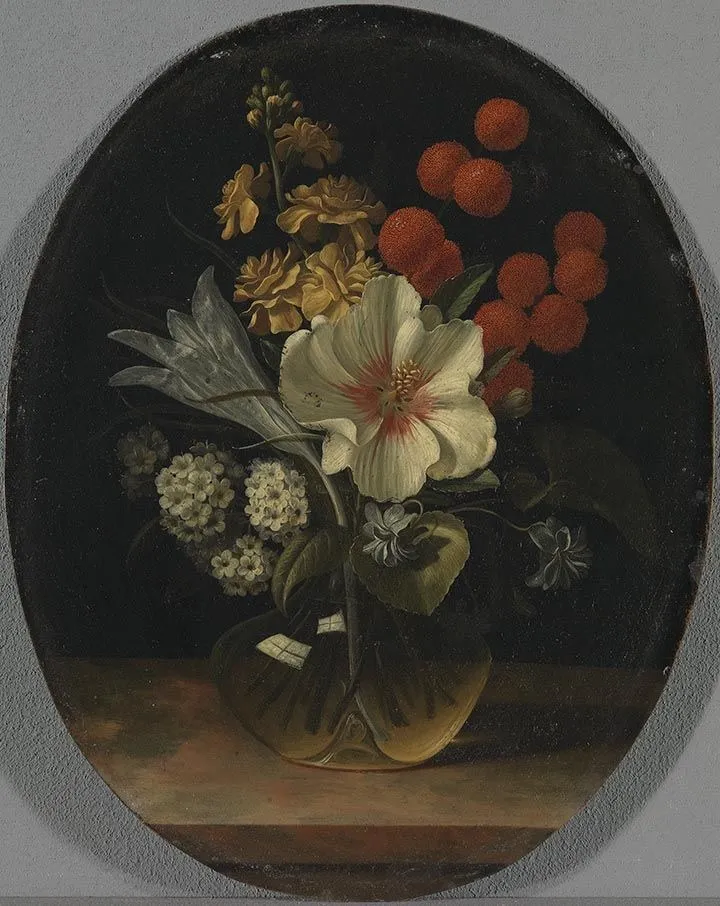
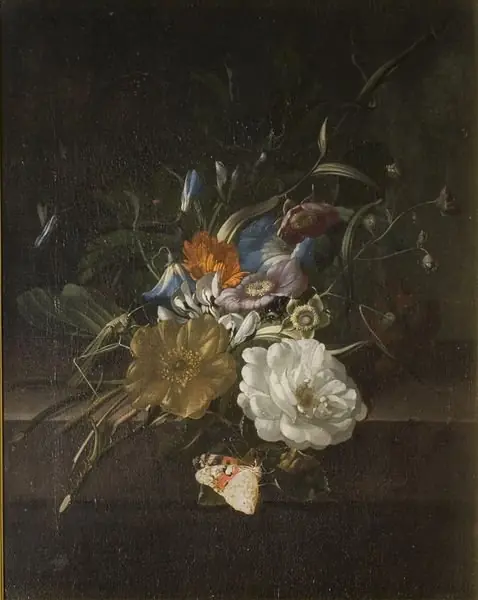
Bouquet with an hibiscus and a crocus is an oil painting by the Rococo painting artist Johann Adalbert Angermayer. It dates from 1707 and is held in the collection of the Bavarian State Painting Collections. Created in 1707, Bouquet with a Hibiscus and a Crocus is a small‑scale still‑life painted on copper.
About this work
Technique & Style
Dated 1707, the work is classified as a still life and depicts a bouquet that includes a hibiscus and a crocus, as indicated by its title.
Bouquet with an hibiscus and a crocus is an oil painting on a copper support, measuring 20.1 cm in height and 16 cm in width. Dated 1707, the work is classified as a still life and depicts a bouquet that includes a hibiscus and a crocus, as indicated by its title. The small scale and smooth metal ground allow for fine brushwork and detailed rendering of the floral subjects, characteristic of early‑18th‑century flower painting on copper.
Context
The work Bouquet with an hibiscus and a crocus is attributed to Johann Adalbert Angermayer and was created in 1707 as a still life painting on copper, now held by the Bavarian State Painting Collections in Munich. Scholarship situates his output within the early 18th-century German floral still life tradition, where meticulous rendering of botanical subjects reflected both scientific curiosity and decorative intent. The painting's composition, featuring a hibiscus alongside a crocus, exemplifies the transitional style that bridges Baroque decorative schemes and the rising naturalistic interest in horticulture among aristocratic patrons.
Legacy
The painting has influenced interpretations of early 18th-century botanical still lifes and contributed to the study of Angermayer's oeuvre within German art history, particularly regarding his use of copper supports and floral subjects. Its preservation and display at the Alte Pinakothek allow continued scholarly examination of the work's technical and compositional features.
Overview
Created in 1707, Bouquet with a Hibiscus and a Crocus is a small‑scale still‑life painted on copper. The work presents a clear glass vase set on a modest wooden shelf, its dark backdrop emphasizing the vivid floral grouping. The composition includes a pale hibiscus with a crimson center, delicate white blossoms, and a few red berries, all framed by slightly wilted green foliage.
Subject & Meaning
The painting concentrates on a transient botanical arrangement, inviting contemplation of nature’s fleeting beauty. By juxtaposing the bright hibiscus and crocus against a somber background, the artist highlights the contrast between vitality and decay, a common motif in early eighteenth‑century still‑life that underscores the impermanence of life’s pleasures.
History & Provenance
Johann Adalbert Angermayer, a Czech painter active in Prague, produced the work after studying with Johann Rudolf Byss. Known for creating cabinet‑sized still lifes, Angermayer often paired such pieces with earlier solitary compositions, forming pendant sets that were likely intended for private collections or decorative interiors.
Artist & collection
Artist
Johann Adalbert Angermayer (Czech: Jan Vojtěch Angermayer; 9 November 1674 – 18 October 1740) was a Czech painter.