Artwork
The Sculptor's Studio
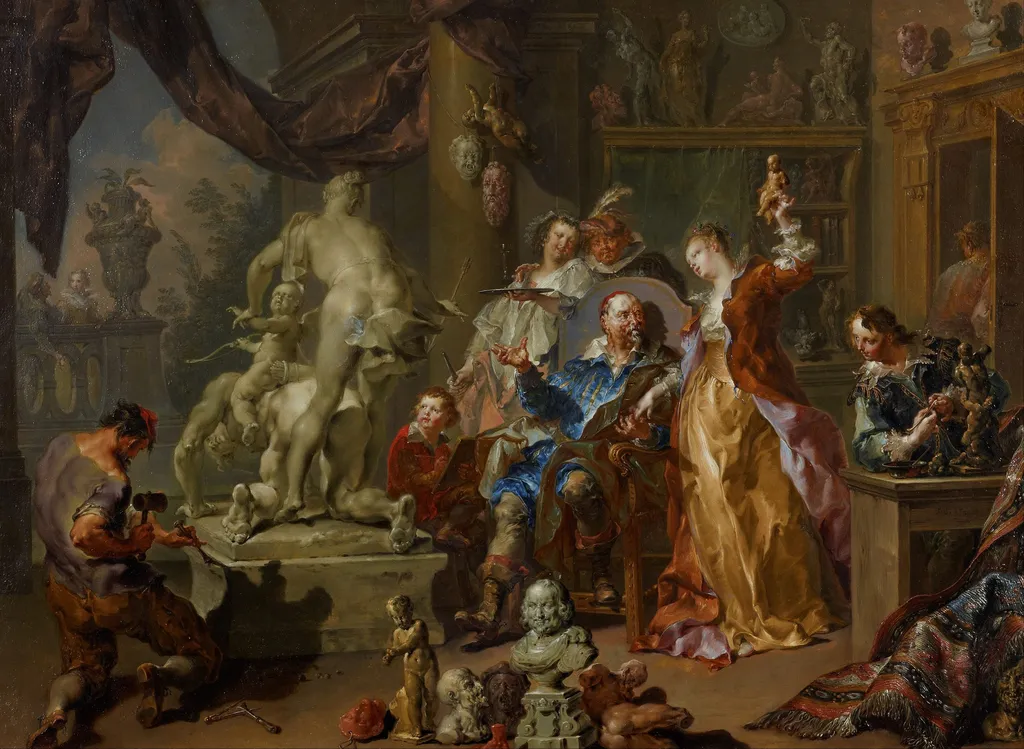
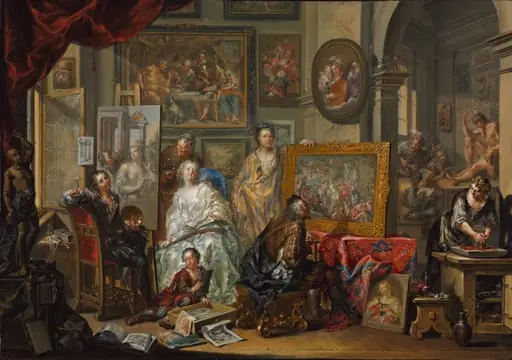
The Sculptor's Studio is an oil painting by the Rococo painting artist Johann Georg Platzer. It dates from 1730 and is held in the collection of the Art Gallery of New South Wales.
About this work
Overview
The medium, copper, offers a smooth, reflective surface that enhances the rendering of textures and light, contributing to the scene’s intimate realism.
Painted in 1730 by Johann Georg Platzer, The Sculptor's Studio is a copper panel depicting an artist at work within his cluttered workshop. Unlike grand historical or religious subjects common in the period, this piece focuses on the quiet labor of creation. The medium, copper, offers a smooth, reflective surface that enhances the rendering of textures and light, contributing to the scene’s intimate realism.
Subject & Meaning
The painting centers on a sculptor absorbed in shaping a figure, surrounded by incomplete and finished statues in various stages of refinement. The arrangement suggests a continuum of artistic process, from raw block to polished form. Tools, molds, and fragments litter the space, emphasizing the physicality and discipline of craftsmanship. The scene honors the artisan’s role without idealization, presenting art-making as a grounded, ongoing endeavor.
Technique & Style
Platzer employed fine brushwork to distinguish materials: the cool, matte surfaces of stone statues contrast with the warm glow of wooden beams and leather tools. Subtle gradations in gray and ochre create volume and depth, while careful lighting directs attention to the sculptor’s hands and the emerging form under his chisel. The copper support allows for precise detail, reinforcing the painting’s emphasis on tactile realism and material presence.
History & Provenance
The painting entered the collection of the Art Gallery of New South Wales in the 20th century, though its earlier ownership remains undocumented. Created in the early 1730s in Central Europe, it reflects the growing interest in genre scenes among aristocratic patrons who valued depictions of skilled labor. Its survival in good condition is uncommon for works on copper, which were often repurposed or damaged over time.
Context
In early 18th-century Europe, depictions of artisans at work were rare outside of printmaking or decorative arts. Platzer’s painting aligns with a broader, quiet trend among German and Austrian painters to elevate everyday trades through careful observation. The studio setting mirrors real workshops of the time, where sculptors worked alongside apprentices, surrounded by classical fragments and unfinished commissions.
Legacy
The Sculptor's Studio stands as a modest but significant record of artistic labor in the pre-industrial era. It avoids theatricality, instead offering a quiet testament to the routines and tools of sculptural practice. While not widely known, it contributes to the historical understanding of how artists viewed their own profession, not as divine inspiration, but as skilled, deliberate work.
Own this work as a print
Artist & collection

Artist
Johann Georg Platzer (1704–1761) was a prolific Austrian Rococo painter and draughtsman.