Artwork
The Leprozenhuis ('lazar house') in Amsterdam as seen from the big courtyard; to the left the roof of the Portuguese Synagogue
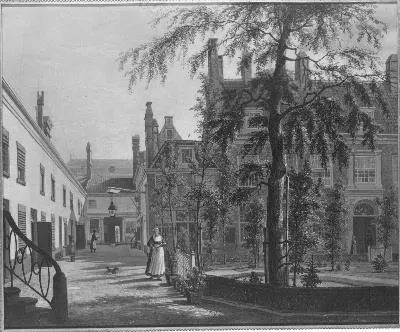
The Leprozenhuis ('lazar house') in Amsterdam as seen from the big courtyard; to the left the roof of the Portuguese Synagogue is an oil painting by Johannes Jelgerhuis. It dates from 1821 and is held in the collection of the Rijksmuseum.
About this work
Technique & Style
No evidence of later conservation is indicated in the available records, and the painting is catalogued in its original dimensions of 53 cm by 64.
The work is an oil painting on canvas executed in 1821 by Johannes Jelgerhuis. The handling is consistent with early nineteenth-century Dutch cityscape practice, employing smooth, blended passages for the architecture and more textured brushwork in foliage and distant rooftops. The composition balances topographic clarity with atmospheric recession, using a muted palette of ochres, greys, and greens to render the Leprozenhuis courtyard and the adjacent roof of the Portuguese Synagogue.
No evidence of later conservation is indicated in the available records, and the painting is catalogued in its original dimensions of 53 cm by 64.5 cm.
History & Provenance
The painting titled The Leprozenhuis ('lazar house') in Amsterdam as seen from the big courtyard; to the left the roof of the Portuguese Synagogue was created by Johannes Jelgerhuis in 1821. Executed in oil paint on canvas, the work measures 53 cm in height and 64.5 cm in width. Current holdings indicate the piece is associated with the Amsterdam Museum, the Rijksmuseum, and the Leprozenhuis in Amsterdam.
The inception date is recorded as January 1, 1821, establishing the specific moment of its creation within the early nineteenth century.
The painting is held in the collection of the Amsterdam Museum, with the work also associated with the Rijksmuseum and the Leprozenhuis. According to the Wikidata record, its location is listed as the Amsterdam Museum and the Leprozenhuis. No specific inventory or accession number is provided in the available sources, and no exhibition history is documented.
Overview
Johannes Jelgerhuis’s 1821 oil painting captures a quiet Amsterdam courtyard that once belonged to the city’s leper hospital. The composition centers on a modest, tall‑windowed building with a steep roof, while a lone figure in a dark dress walks toward it. To the left, the distinctive roof of the Portuguese Synagogue rises above a neighboring structure, anchoring the scene within its historic urban setting.
Subject & Meaning
The work records a moment of everyday life amid a former charitable institution, emphasizing the contrast between the barren, leafless trees and the enduring architecture. The solitary woman suggests a narrative of routine or pilgrimage, while the juxtaposition of the leprosarium’s austere façade with the ornate synagogue roof hints at the layered religious and social fabric of early‑19th‑century Amsterdam.
Context
The leprozenhuis, a former leper house, stood near the Portuguese Synagogue, a prominent Sephardic Jewish landmark erected in the 1670s. Jelgerhuis’s depiction reflects a period when Amsterdam’s neighborhoods were undergoing modernization, yet still retained historic institutions. The scene offers insight into the coexistence of charitable, religious, and residential spaces within the city’s compact layout.
Artist & collection
Artist
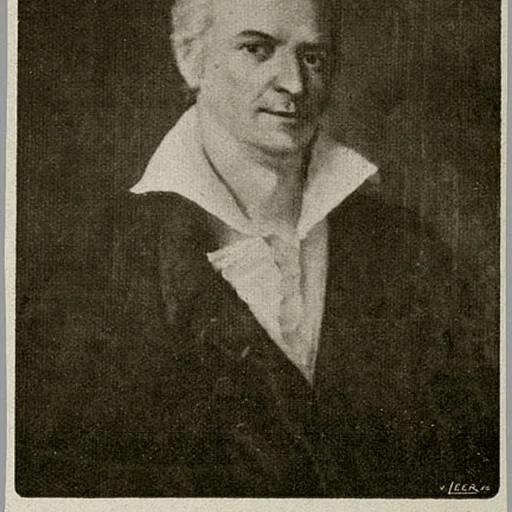
Johannes Jelgerhuis (1770 in Leeuwarden – 6 October 1836 in Amsterdam), was a 19th-century painter and actor from the Netherlands.

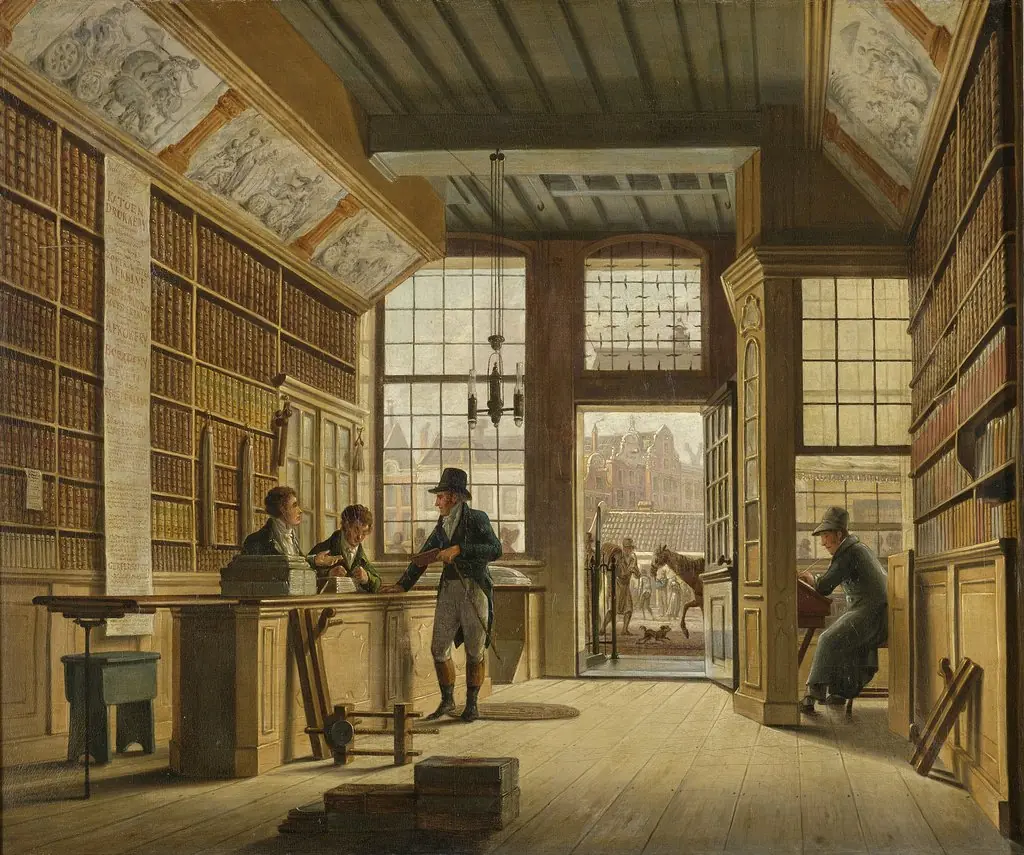
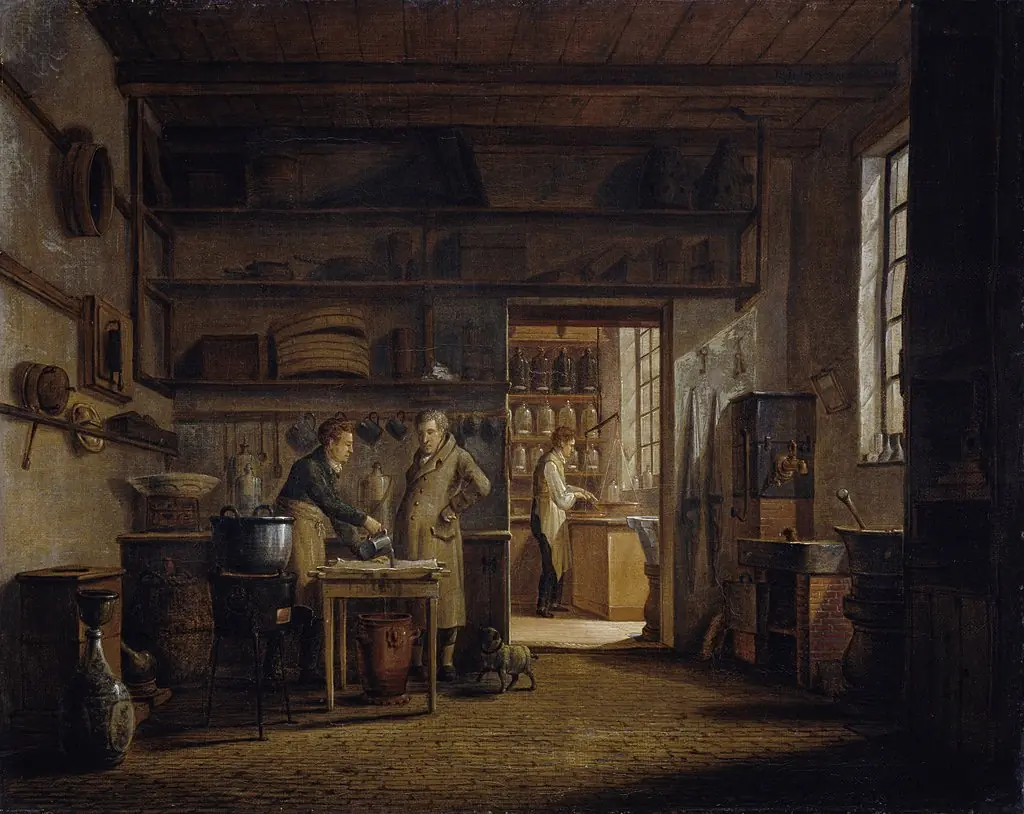
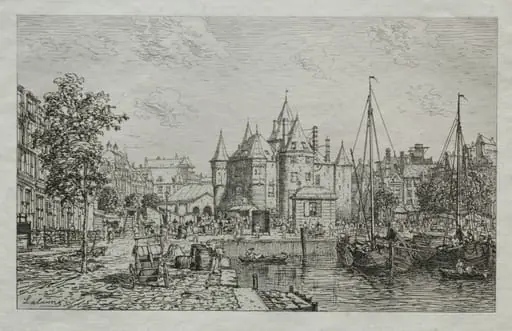
- The Wagg-Poids of the City of Amsterdam
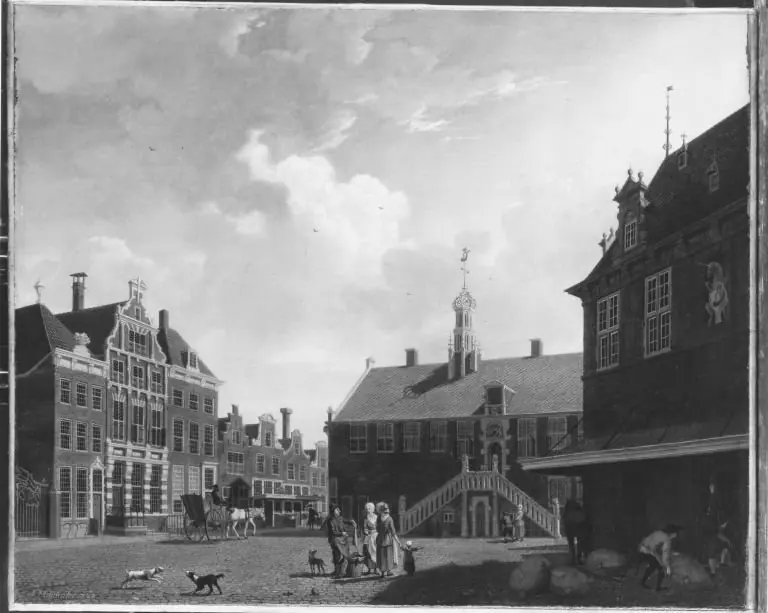 Der Marktplatz von Hoorn
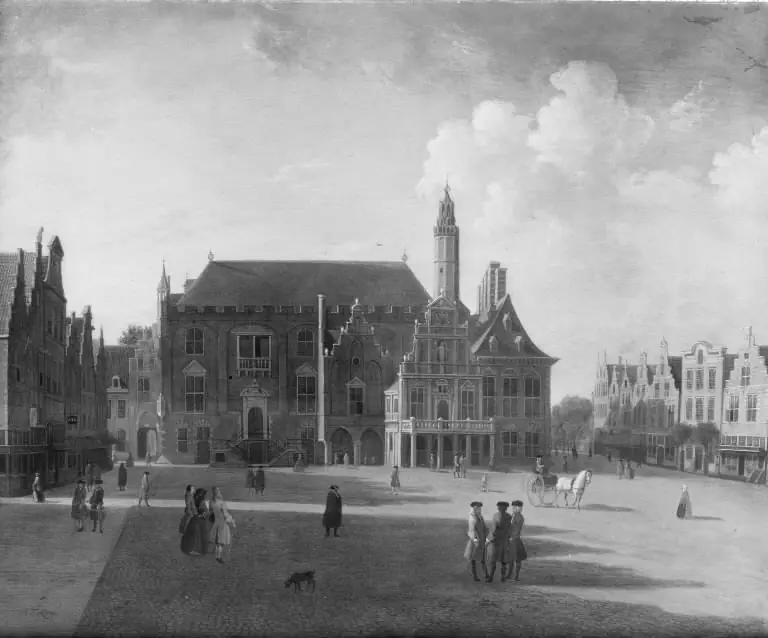 Marketplace at Haarlem, Looking towards the Town Hall
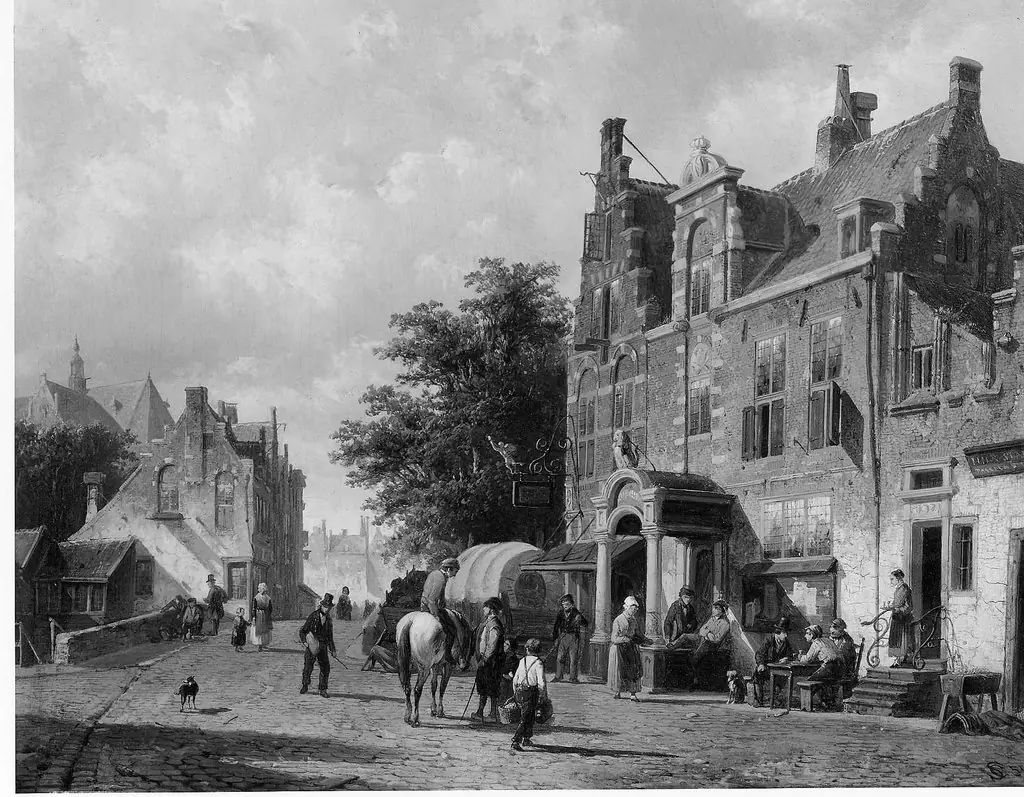 Street in Haarlem
 Marketplace at Haarlem, Looking towards the Town Hall
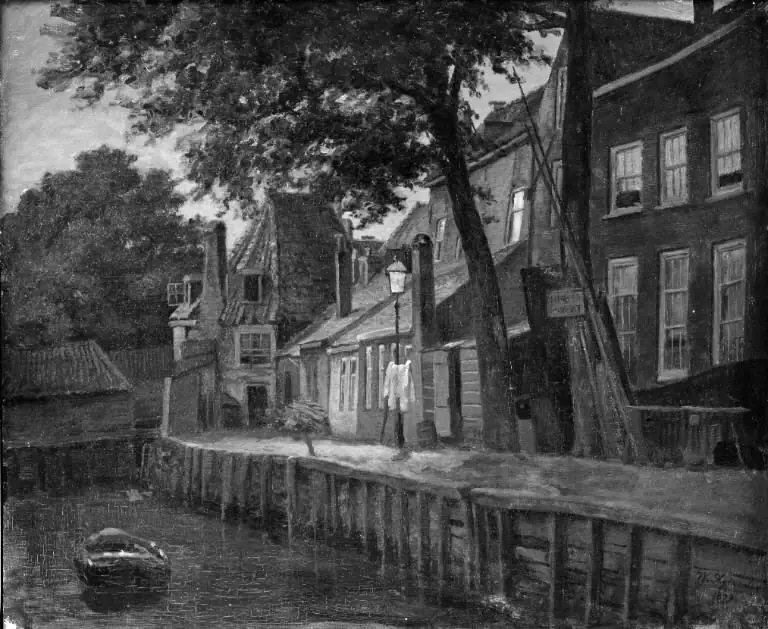 Hollandsk kanalparti
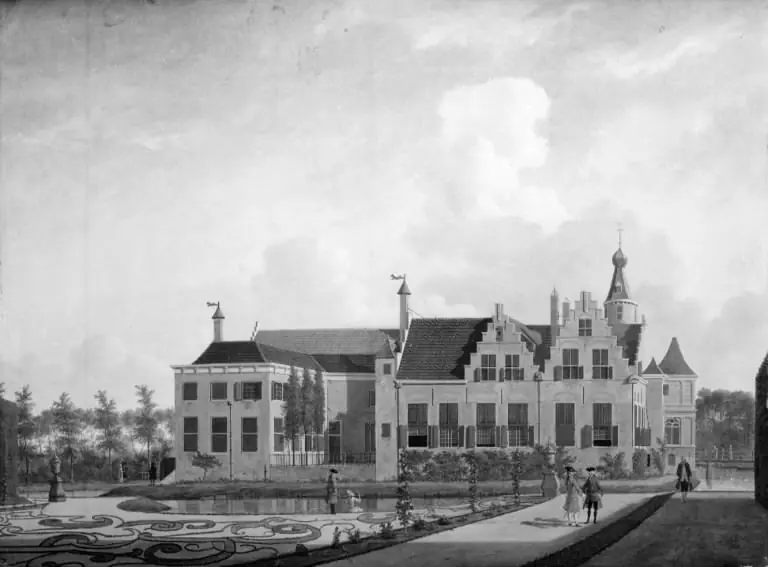 A Dutch Manor
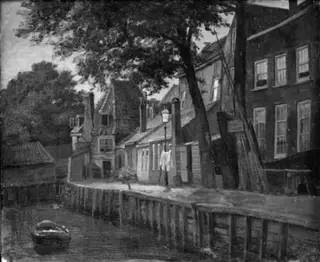 Hollandsk kanalparti
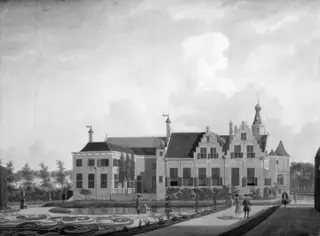 Castle Marquette, seen from South West
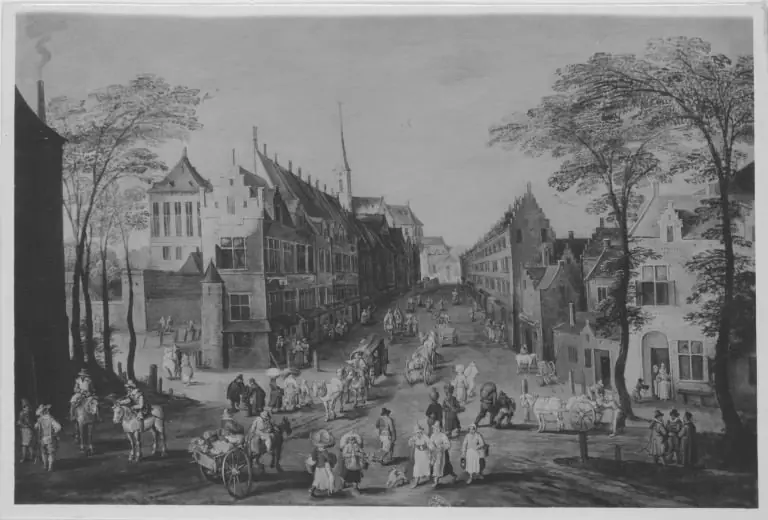 Belebte Straße in einer flämischen Stadt
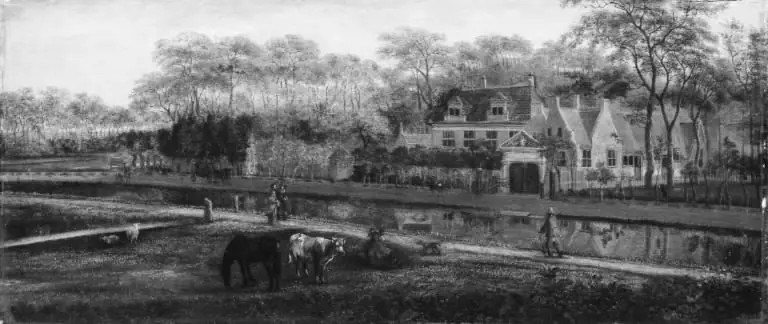 View of the Country House Oversteen
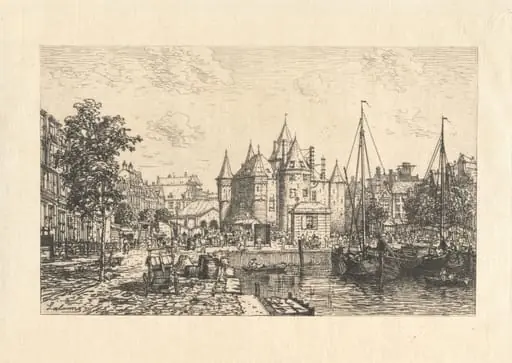 The Wagg-Poids, Amsterdam