Artwork
Untitled
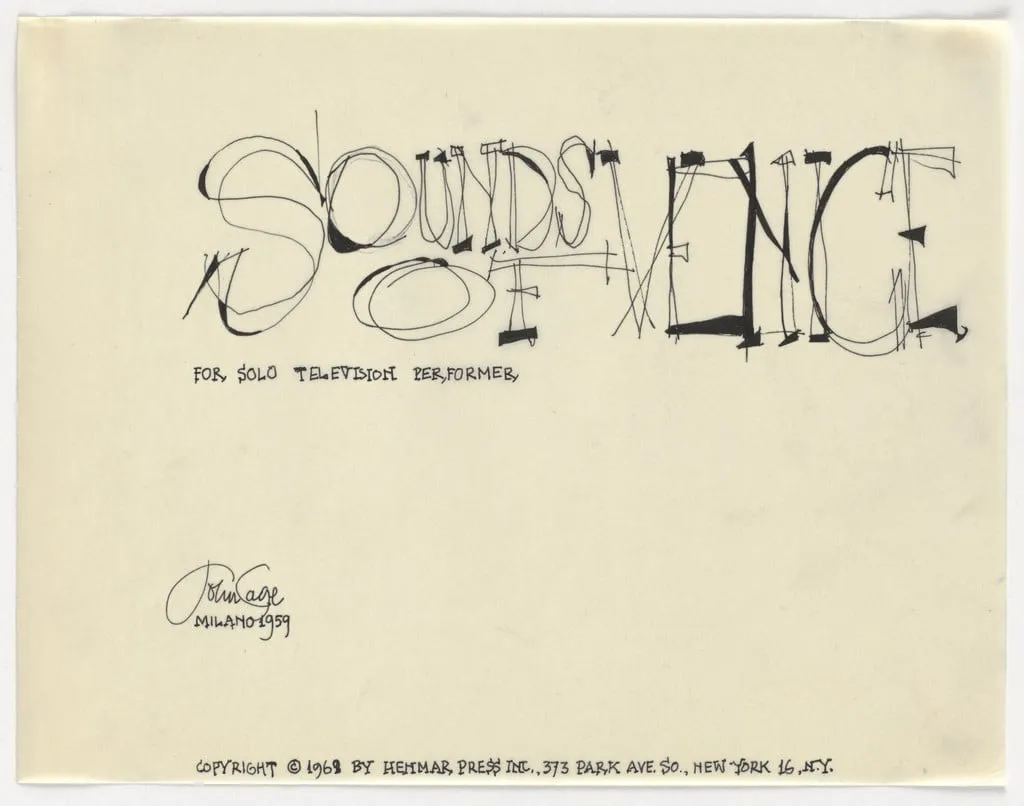
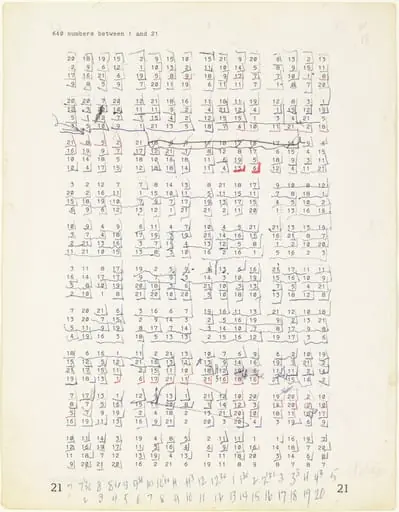
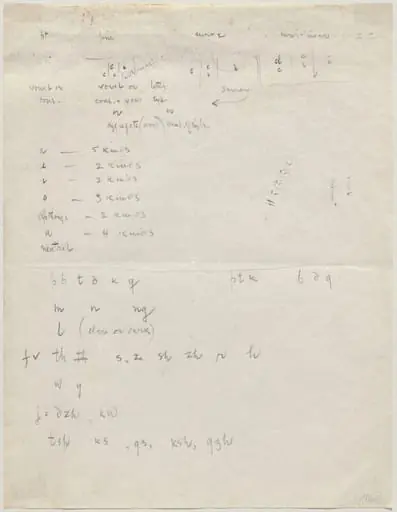
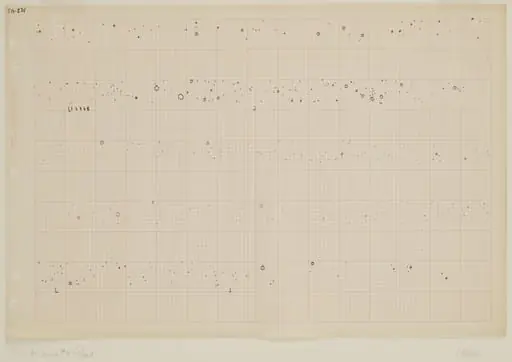
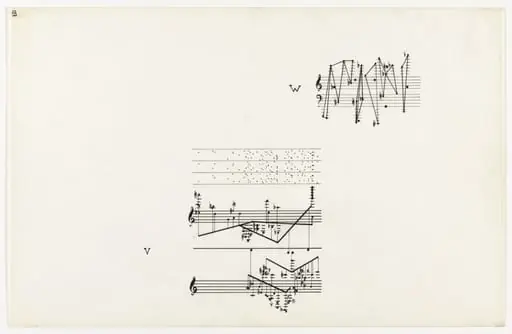
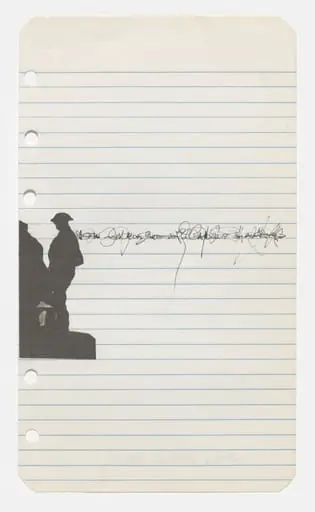
Untitled is a graphite drawing by John Cage. It dates from 1964 and is held in the collection of the Museum of Modern Art.
About this work
The artist scribbled his name, John Cage, and the year "Milano 1959" in the corner.
This drawing shows the word "SOUNDS" stretched and broken apart. Lines zigzag around the letters like arrows or musical notes. Below, small text reads "FOR SOLO TELEVISION PERFORMER" in messy handwriting.
The artist scribbled his name, John Cage, and the year "Milano 1959" in the corner. The whole thing looks like a sketch for something bigger, not a finished picture.
Next, check out John Cage to see how he turned noise into art.
Overview
Created in 1959 during John Cage’s time in Milan, this drawing consists of four transparent sheets with ink, pencil, and colored pencil. The composition centers on the fragmented word 'SOUNDS,' with jagged lines radiating around it like rhythmic pulses. Below, handwritten text identifies it as a directive for a television performer.
Cage’s signature and date appear in the corner, suggesting it was a working note rather than a polished artwork.
Subject & Meaning
The word 'SOUNDS' is deliberately disassembled, its letters stretched and interrupted by erratic lines that resemble musical notation or signal interference. The accompanying phrase 'FOR SOLO TELEVISION PERFORMER' frames the piece as an instruction, aligning with Cage’s interest in indeterminacy and performance. It implies an unseen action, sound made visible through gesture, not fixed form.
Technique & Style
Cage used transparent paper to layer elements, allowing visual overlap and ambiguity. Ink and colored pencil create a sense of spontaneity, with no attempt at refinement. The handwriting is casual, the lines unstructured, emphasizing process over finish.
This approach reflects his broader practice of embracing chance and rejecting conventional aesthetics in favor of direct, immediate expression.
History & Provenance
The drawing was made in Milan in 1959 and later entered the collection of The Museum of Modern Art. Its informal nature suggests it was not intended for public display but rather as a conceptual sketch. Its preservation indicates its value as a document of Cage’s evolving ideas, particularly those connecting sound, performance, and visual notation.
Context
In the late 1950s, Cage was deeply engaged with experimental music, chance operations, and interdisciplinary performance. This drawing emerged alongside his work with television and electronic media, reflecting his belief that art could exist beyond traditional mediums. The reference to a 'television performer' points to his interest in broadcasting as a site for unpredictable, non-linear expression.
Legacy
This work exemplifies Cage’s influence on conceptual and performance art by blurring boundaries between writing, music, and visual form. Its unfinished quality invites interpretation rather than resolution, encouraging viewers to consider art as an open system. It remains a key artifact in understanding how his ideas about sound and silence extended into the visual realm.
Artist & collection

Artist
John Milton Cage Jr. was an American composer, artist, and music theorist. A pioneer of indeterminacy in music, electroacoustic music, and non-standard use of musical instruments, Cage was one of the leading figures of…