Artwork
Untitled
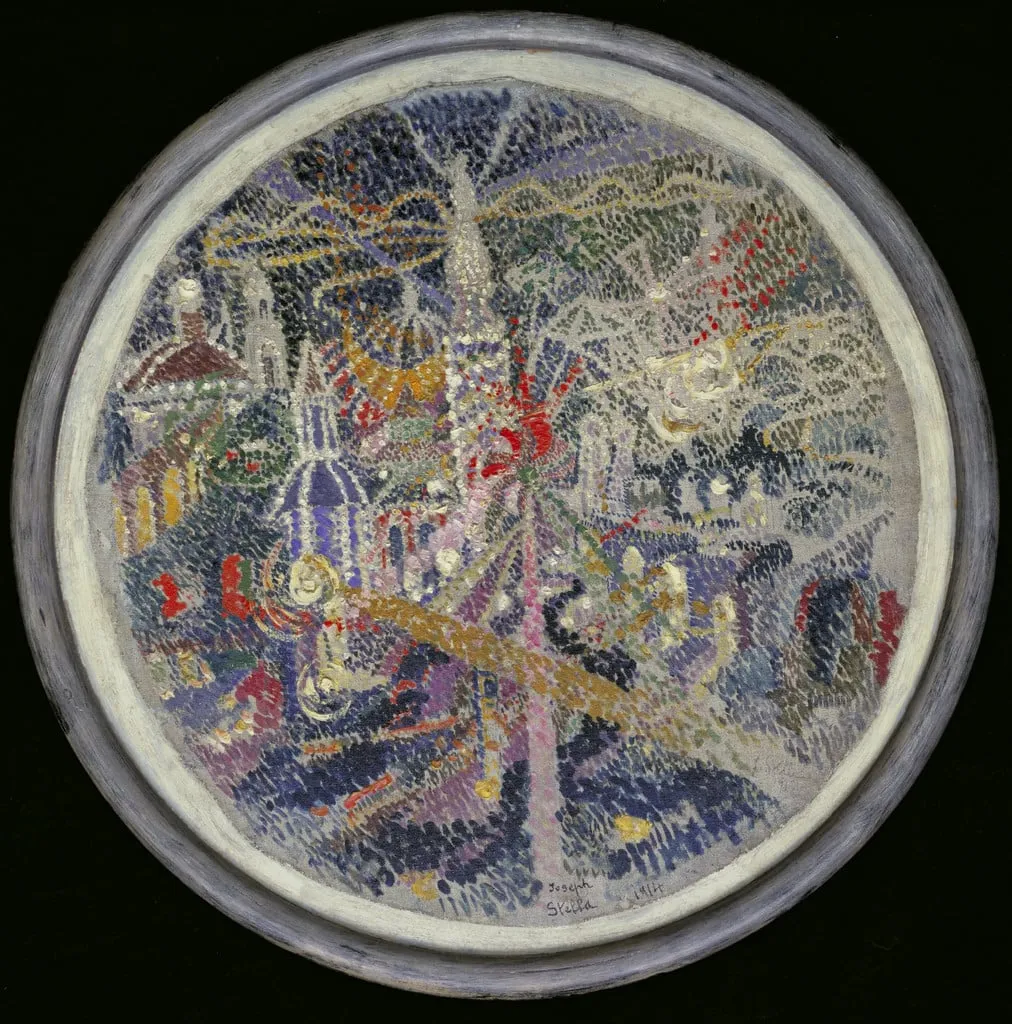
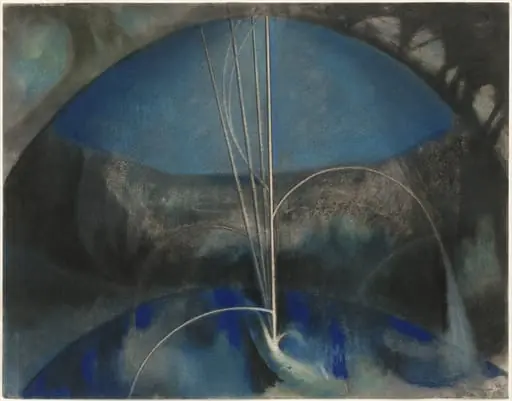
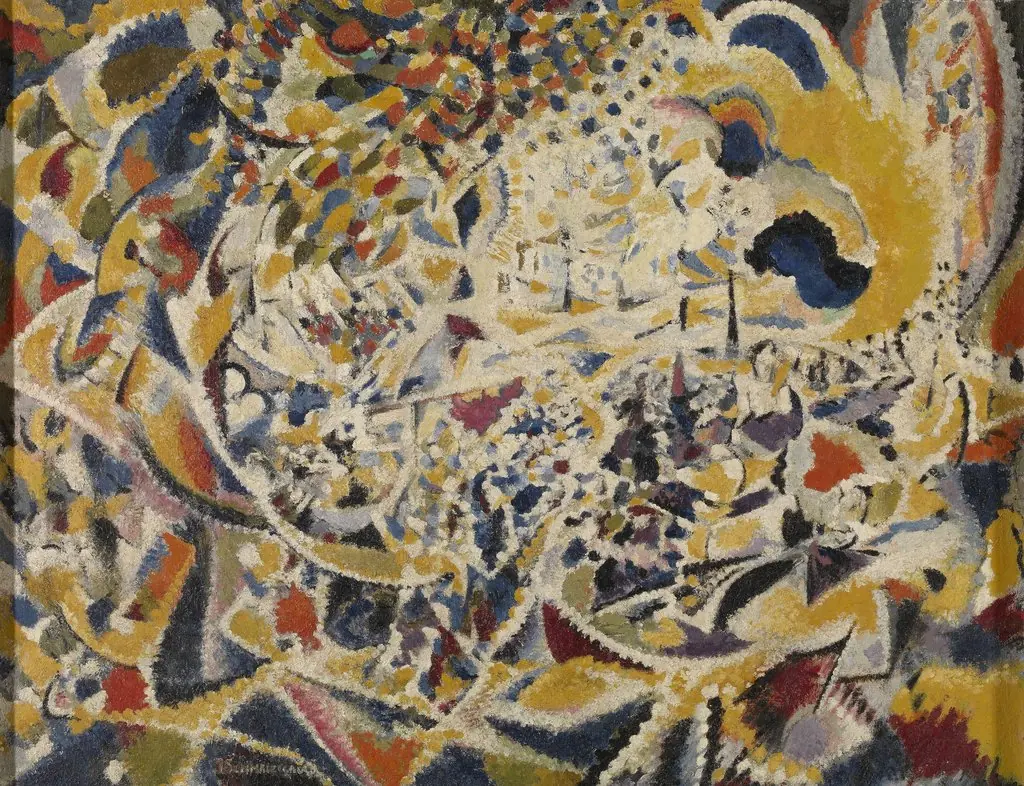
Untitled is an oil painting by the Ashcan School artist Joseph Stella. It dates from 1914 and is held in the collection of the Museum of Modern Art.
About this work
Overview
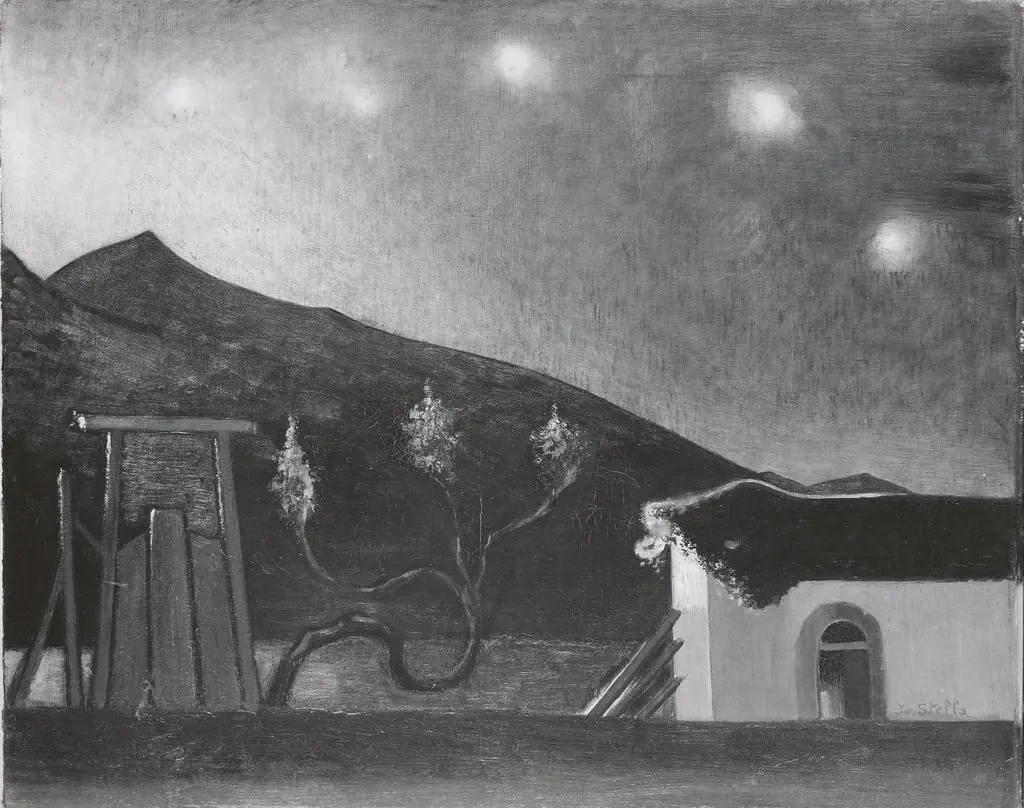
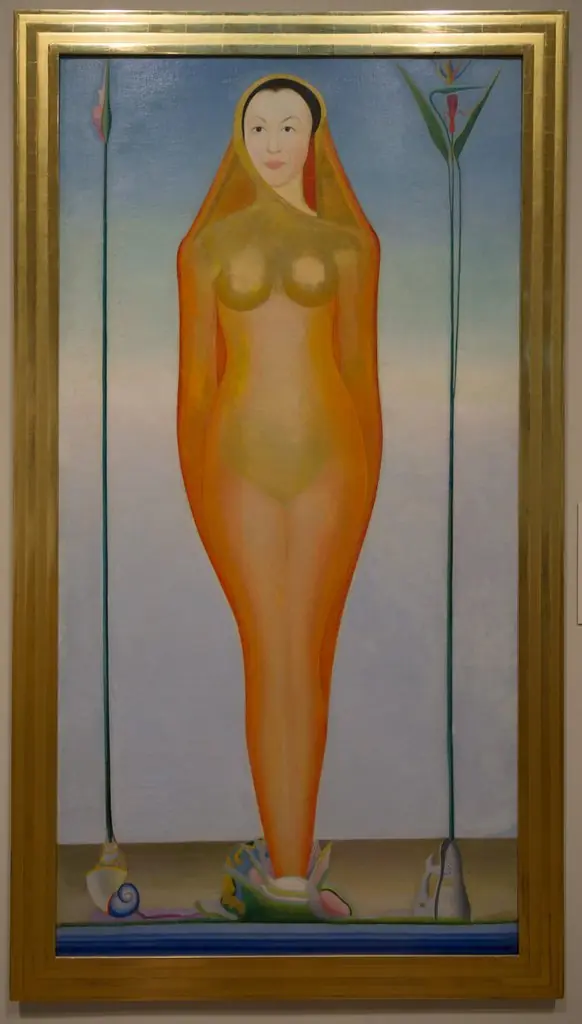
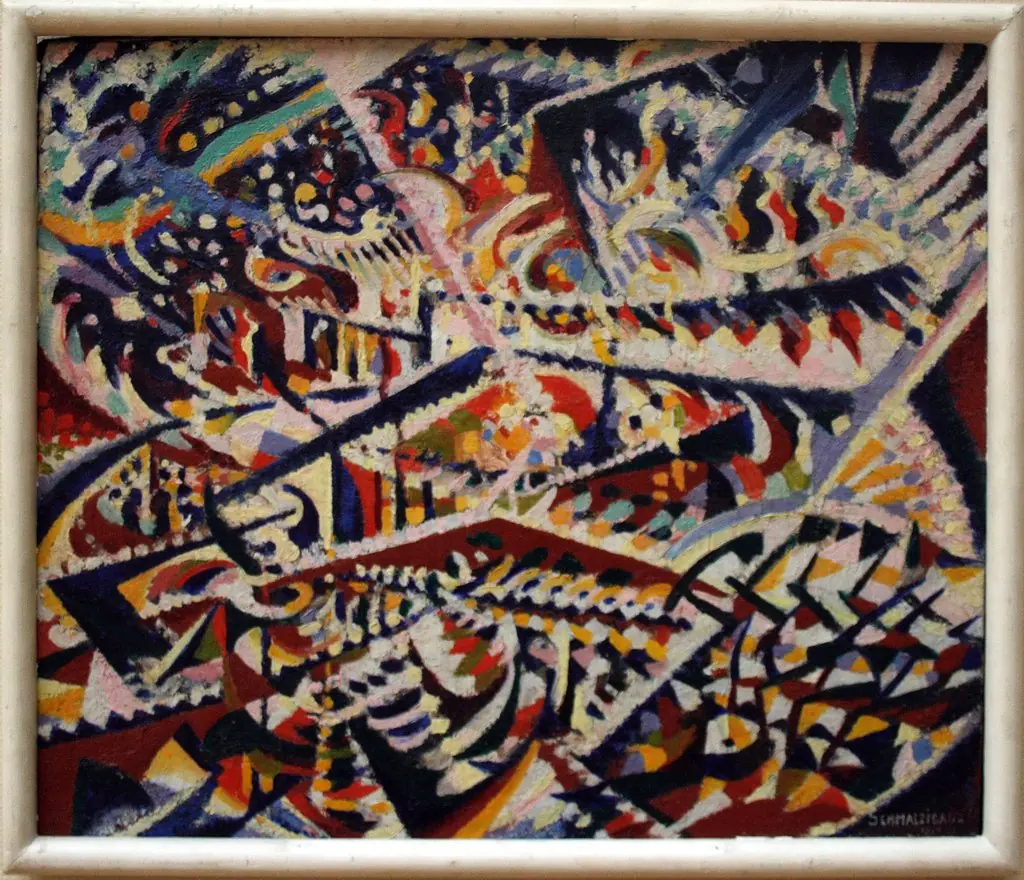
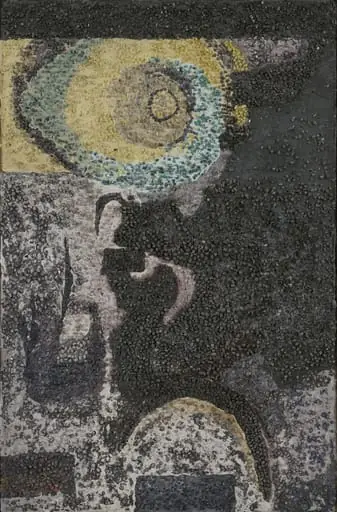
Created in 1914, this untitled work by Joseph Stella presents an urban night scene rendered in oil on canvas that has been mounted on cardboard. The composition captures the bustling atmosphere of a city after dark, with illuminated structures and a sense of kinetic energy. The painting is part of the collection at the Museum of Modern Art.
Subject & Meaning
The canvas depicts a densely built cityscape bathed in artificial light. Bright windows, street lamps, and possibly a bridge pierce a deep, shadowy backdrop, suggesting the vibrancy and constant motion of metropolitan life. The juxtaposition of illuminated forms against darkness conveys the contrast between human activity and the surrounding night.
Technique & Style
Stella employed a vigorous impasto technique, applying thick layers of oil that leave visible brushstrokes and a tactile surface. The palette is dominated by saturated blues, reds, and yellows, which stand out sharply against the darker tones. This handling of paint creates a sense of immediacy, as if the scene were captured in a rapid, expressive gesture.
History & Provenance
The painting was produced during a period when Stella was exploring modern urban subjects, reflecting the rapid growth of American cities in the early twentieth century. After its creation, the work entered the collection of the Museum of Modern Art, where it remains on display as part of the institution’s modernist holdings.
Context
Stella’s urban scenes align with broader modernist interests in industrialization and the visual impact of electric light. The work’s dynamic composition and bold color treatment echo contemporary experiments by Futurists and Precisionists, who also sought to depict the speed and intensity of modern city life.
Artist & collection

Artist
Joseph Stella was an Italian-born American Futurist painter best known for his depictions of industrial America, especially his images of the Brooklyn Bridge. He is also associated with the American Precisionist movement of the 1910s–1940s.