Artwork
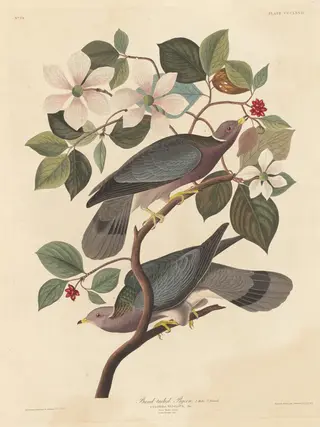
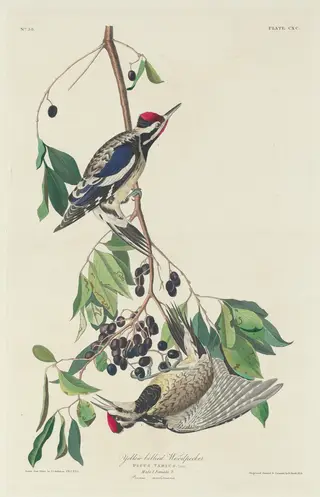
Young Yellow-bellied Woodpeckers and Band-tailed Pigeon
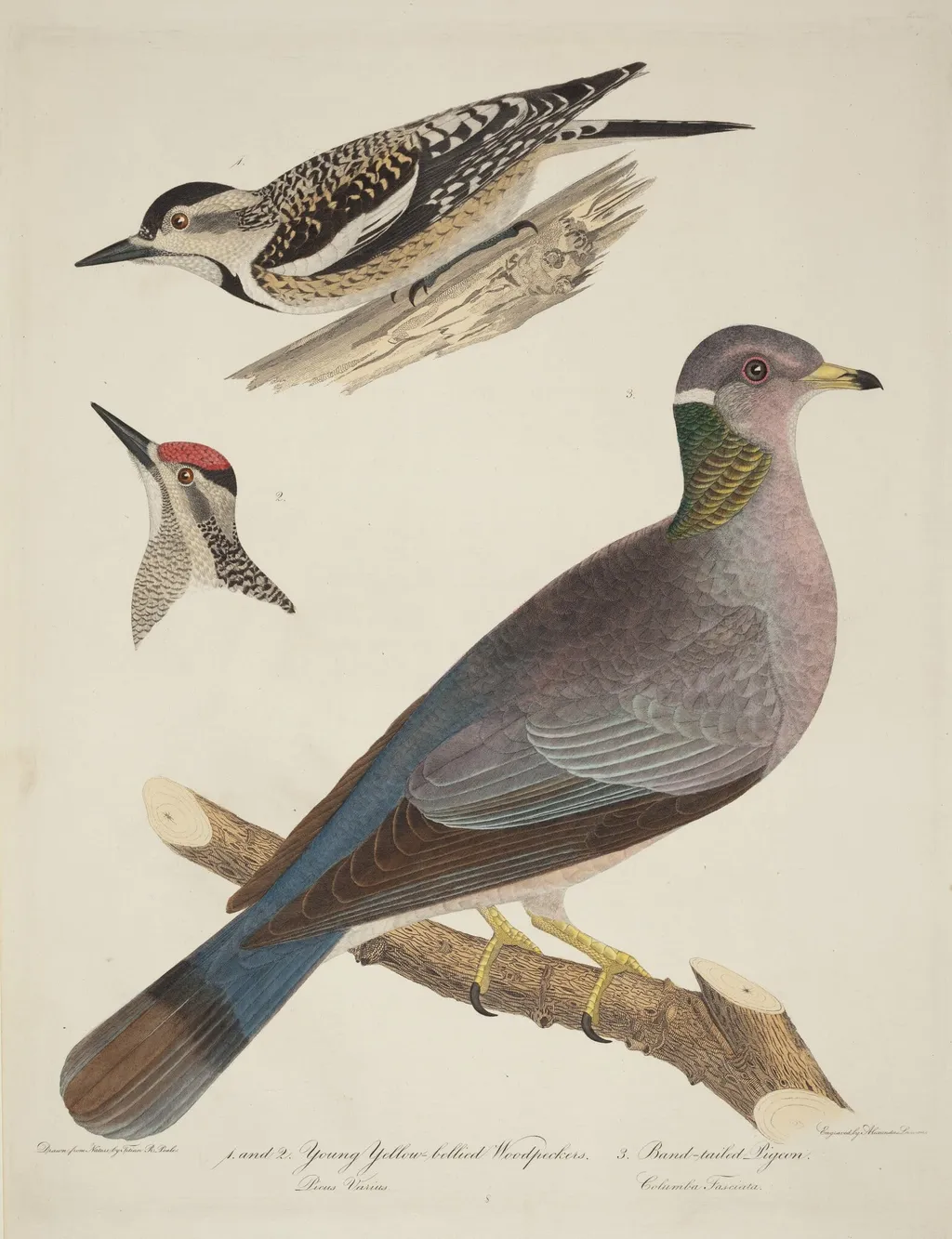
Young Yellow-bellied Woodpeckers and Band-tailed Pigeon is an ink print by the Romanticist artist Alexander Lawson. It dates from 1810 and is held in the collection of the National Gallery of Art.
- Inscription
- Inscribed:lower left in plate: Drawn from Nature by Titian R. Peale.; lower right in plate: Engraved by Alexander Lawson.; across bottom in plate: 1. and 2. Young Yellow-bellied Woodpeckers. / Picus Varius. / 3. Band-tailed Pigeon. / Columba Fasciata.
About this work
Overview
Alexander Lawson’s 1810 hand‑colored engraving, titled Young Yellow‑bellied Woodpeckers and Band‑tailed Pigeon, presents a small natural‑history tableau on wove paper. The composition features three birds rendered in vivid, carefully applied pigments against an unadorned backdrop, allowing the avian forms to dominate the visual field.
Subject & Meaning
The arrangement emphasizes the diversity of North‑American bird species without overt narrative, serving primarily as a study of form and coloration.
The print depicts a band‑tailed pigeon, the largest figure, perched on a branch with plumage that blends gray and green tones. Flanking it are two yellow‑bellied woodpeckers, one distinguished by a red crown and the other by a contrasting black‑and‑white pattern. The arrangement emphasizes the diversity of North‑American bird species without overt narrative, serving primarily as a study of form and coloration.
Technique & Style
Lawson combined traditional etching with hand‑coloring, a method that allowed fine line work to define feather texture while the subsequent application of watercolor pigments added depth and realism. Minute details, such as the grain of the branch and the subtle shading of each feather, demonstrate the artist’s meticulous approach to naturalistic representation.
Context
Created in the early nineteenth century, the print reflects a period of growing interest in scientific illustration and the cataloguing of wildlife. While specific ownership records are scarce, the work aligns with contemporary British printmaking practices that catered to both educational and decorative markets, illustrating the era’s fascination with exotic and native fauna.
Own this work as a print
Artist & collection


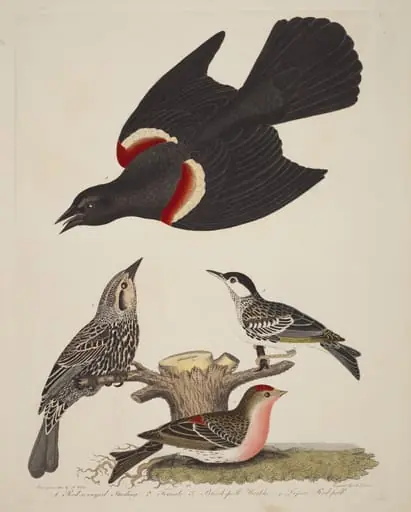 Red-winged Starling, Female Red-winged Starling, Black-poll Warbler, and Lesser Red-poll
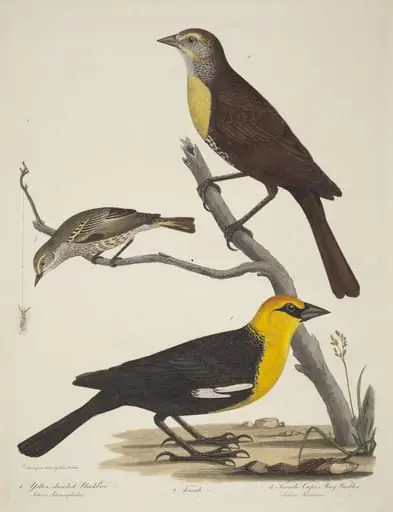 Yellow-headed Blackbird, Female Blackbird, and Female Cape May Warbler
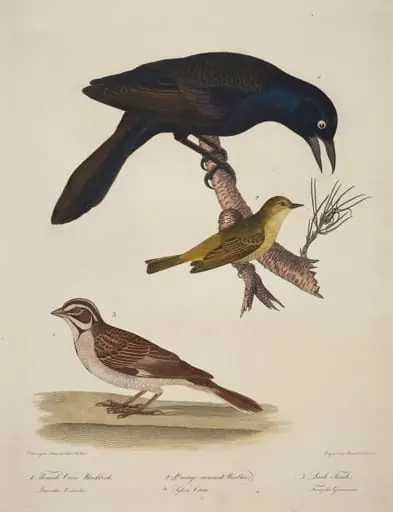 Female Crow Blackbird, Orange-Crowned Warbler, Lark Finch
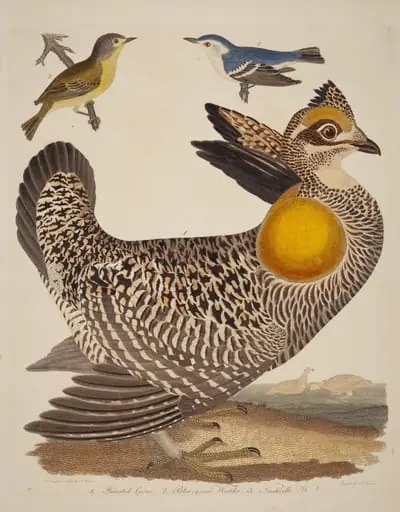 Pinnated Grous, Blue-green Warbler, and Nashville Warbler
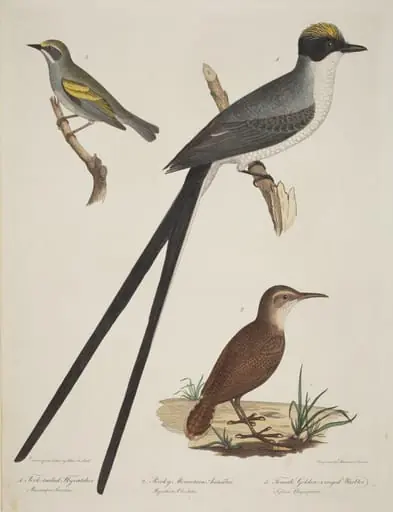 Fork-tailed Flycatcher, Rocky Mountain Anteater, and Female Golden-winged Warbler
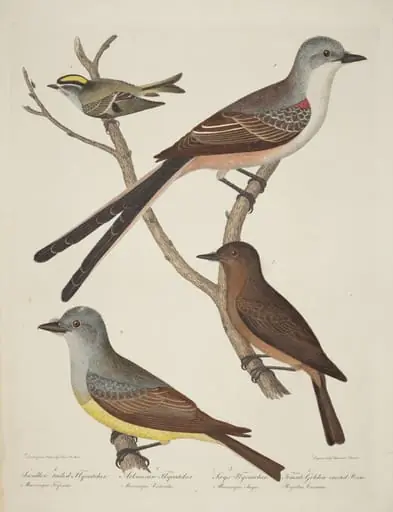 Swallow-tailed Flycatcher, Arkansas Flycatcher, Say's Flycatcher, and Female Golden-crested Wren
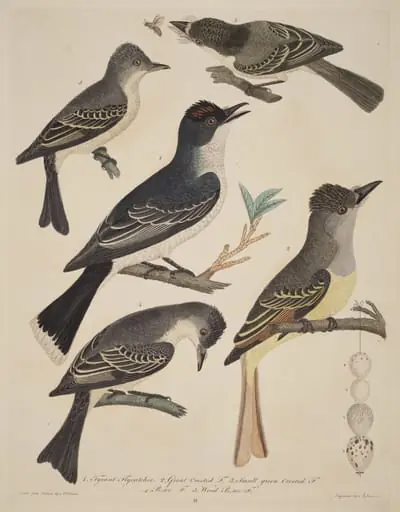 Five Birds with Their Eggs and an Insect
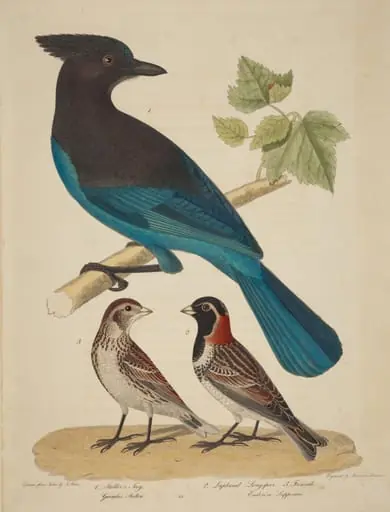 Stellar's Jay, Lapland Longspur and Female