Artwork
Bal de la Bastille
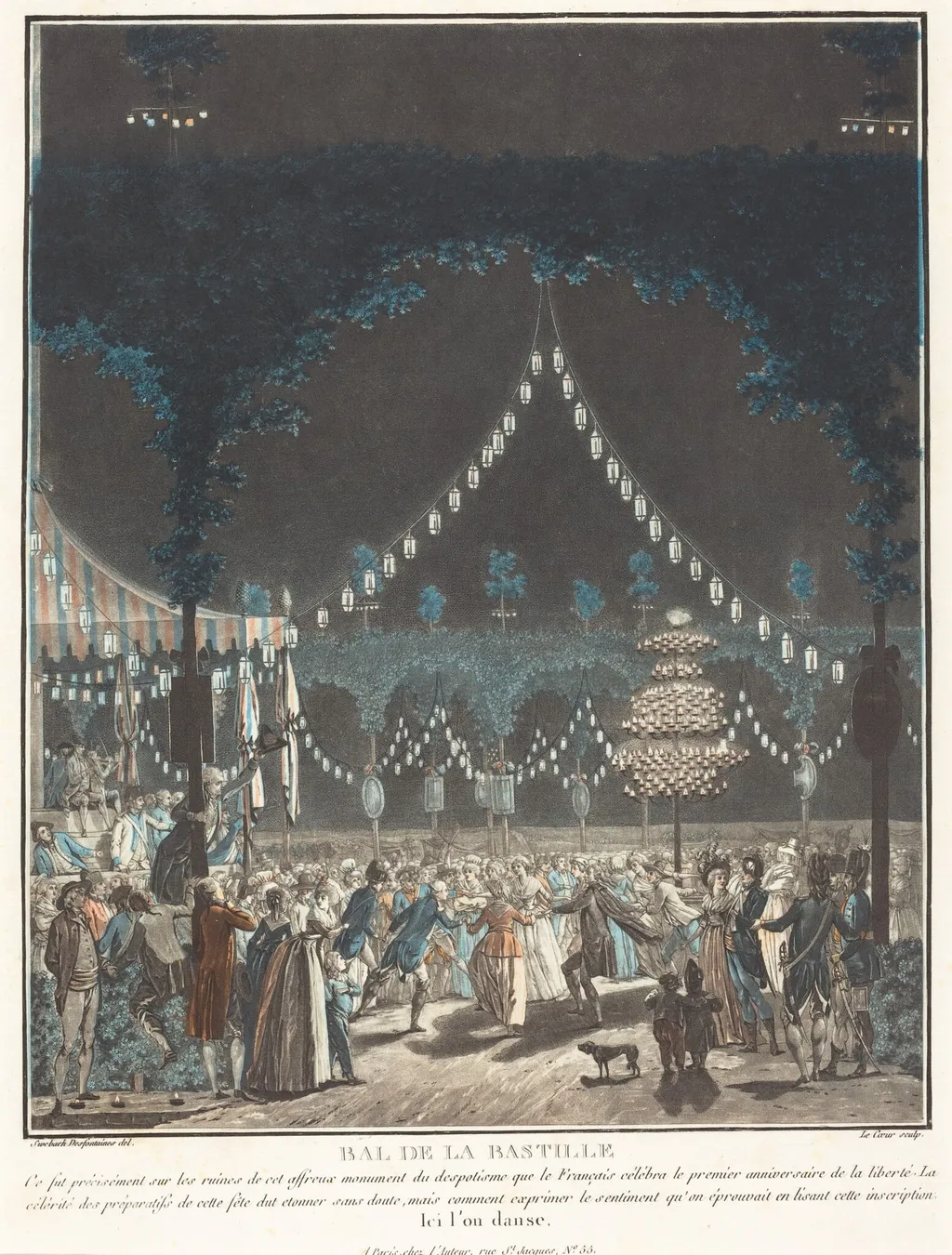
Bal de la Bastille is an ink print by the Romanticist artist Louis Le Coeur. It dates from 1790 and is held in the collection of the National Gallery of Art.
- Inscription
- Inscribed:lower left in plate: Swebach Desfontaines del.; lower right in plate: Le Coeur sculp.; lower center in plate: BAL DE LA BASTILLE / Ce fut précisément sur les ruines de cet affreux monument de despotisme que le Français célébra le premier anniversaire de la liberté. La / célérité des préparatifs de cette fête dut etonner sans doute, mais comment exprimer le sentiment qu'on éprouvait en lisant cette inscription. / Ici l'on danse / A Paris, chez l'Auteur, rue St. Jacques, No. 55.; by later hand, center left verso in charcoal: 40
About this work
Overview
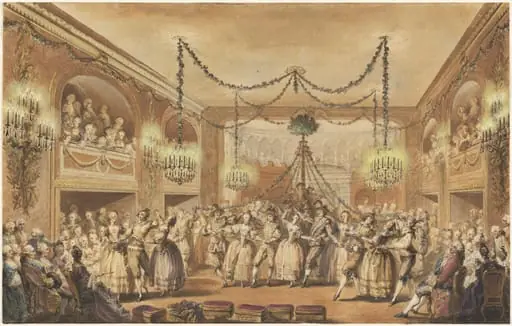
Louis Le Coeur’s 1790 print, Bal de la Bastille, presents a bustling street scene in which a multitude of figures are caught mid‑dance. Executed as an etching with wash, the work employs a limited palette of blue, red and black inks, giving the composition a vivid yet restrained visual energy.
Subject & Meaning
The image depicts a festive crowd moving through a Parisian thoroughfare, suggesting a public celebration or gathering. Though the specific occasion is not identified, the lively choreography of the figures conveys a sense of communal revelry, hinting at the social atmosphere of the period.
Technique & Style
Le Coeur combined traditional copper‑plate etching with a wash technique, allowing areas of tone to be built up with diluted ink. The use of three contrasting colors, blue, red and black, enhances depth and movement, while the line work retains the crispness typical of late‑18th‑century printmaking.
Context
Created in the early years of the French Revolution, the print offers a rare visual record of everyday life amid political upheaval. By focusing on ordinary citizens engaged in dance, the work reflects how public festivities persisted even as the nation underwent profound transformation.
Own this work as a print
Artist & collection