Artwork
Excavation of the Great Temple of Ramesses II at Abu Simbel
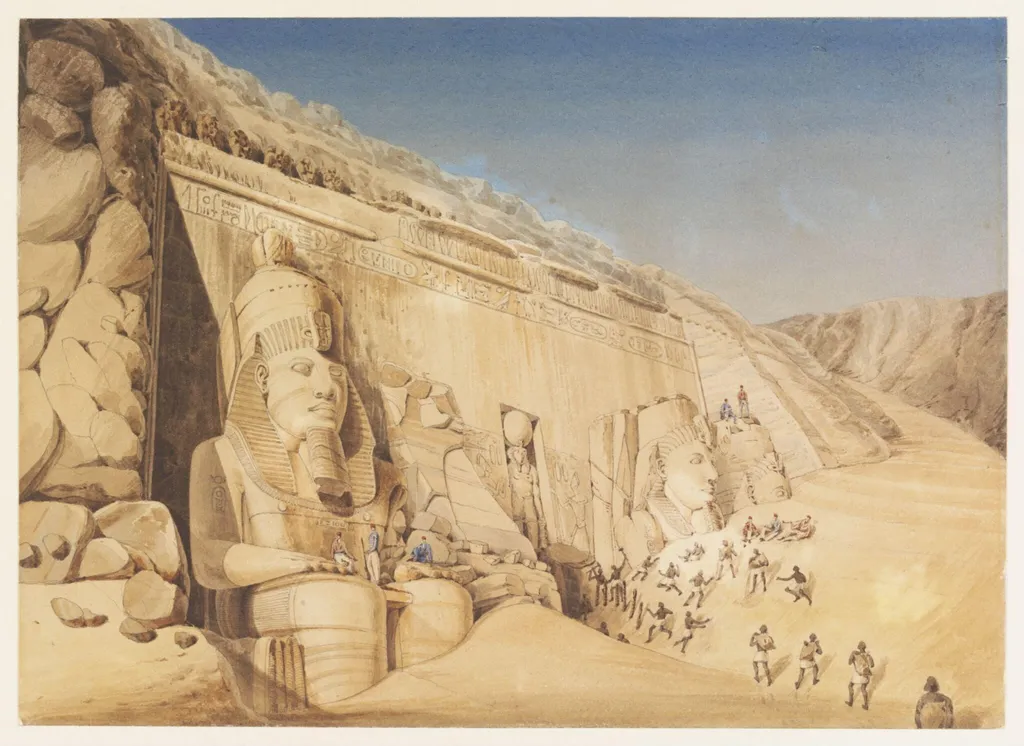
Excavation of the Great Temple of Ramesses II at Abu Simbel is a watercolor work on paper by the Orientalist artist Louis Maurice Adolphe Linant de Bellefonds. It dates from 1818 and is held in the collection of the Victoria and Albert Museum.
About this work
This watercolor was made on the spot in 1818, when the temple was buried under sand up to the necks of the statues.
You see workers in loose white shirts and red sashes digging around two giant stone faces carved into a cliff.
This watercolor was made on the spot in 1818, when the temple was buried under sand up to the necks of the statues. The artist, a French engineer, had to sketch fast before the sun moved and changed the shadows. He included tiny European visitors in top hats to show how big the statues really were.
Look up the Victoria and Albert Museum to see more early travel sketches like this.
Overview
This watercolour depicts the excavation of the Great Temple of Ramesses II at Abu Simbel, created during an expedition in 1818-19.
Subject & Meaning
The scene shows workers constructing a palisade to keep back encroaching sand from the temple facade, with giant stone statues partially buried.
Technique & Style
The artist, likely a French engineer, worked quickly on the spot to capture the scene before changing light conditions, using the inclusion of tiny European figures in top hats to convey the scale of the statues.
History & Provenance
The watercolour was made during an expedition led by Henry Salt, British Consul-General in Egypt, with the artist, possibly Linant, accompanying the party.
Own this work as a print
Artist & collection

Artist
Louis Maurice Adolphe Linant de Bellefonds
Louis Maurice Adolphe Linant de Bellefonds better known as Linant Pasha was an explorer of Egypt and, as the chief engineer of Egypt's public works, 1831–1869, an influential engineer of the Suez Canal.

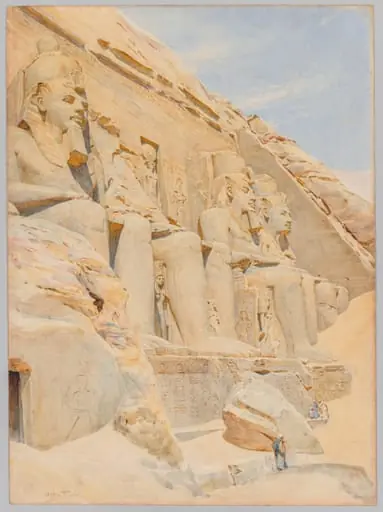 The Great Temple of Abu Simbel
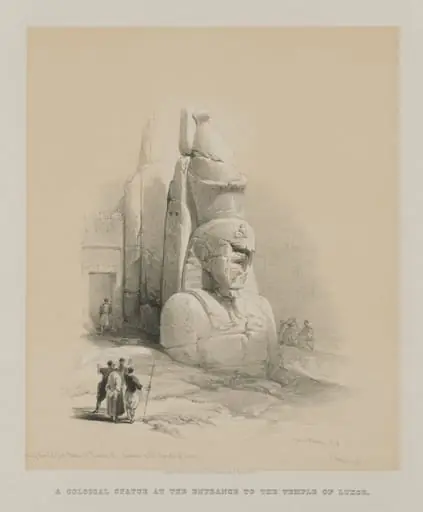 Egypt and Nubia, Volume I: One of Two Colossal Statues of Rameses II. Entrance to the Temple of Luxor
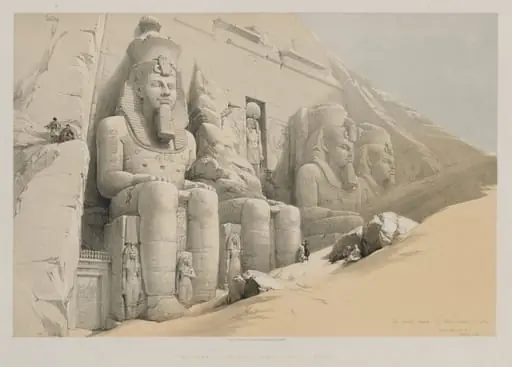 Egypt and Nubia, Volume I: The Great Temple of Aboo-Simble, Nubia
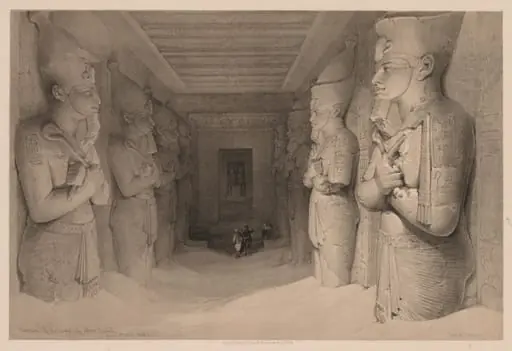 Egypt and Nubia: Volume I - No. 14, Interior of the Temple Aboo Simbel
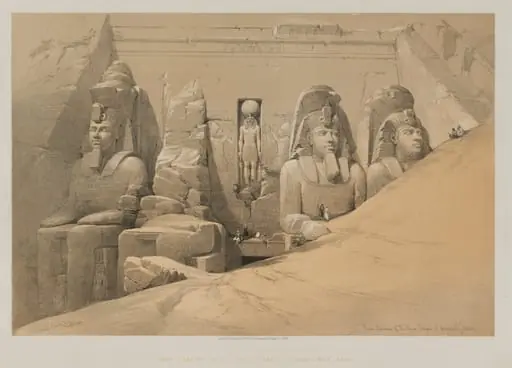 Egypt and Nubia, Volume II: Front Elevation of the Great Temple of Aboo Simbel, Nubia
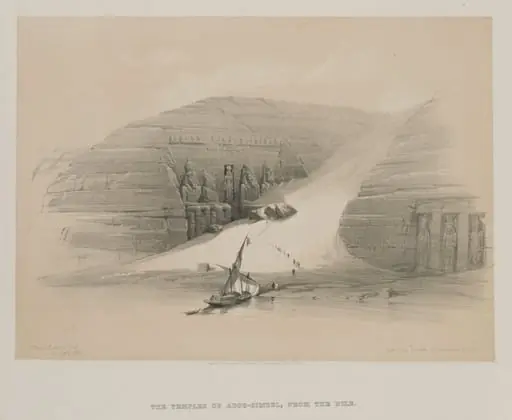 Egypt and Nubia, Volume II: Excavated Temples of Abo Simble, Nubia
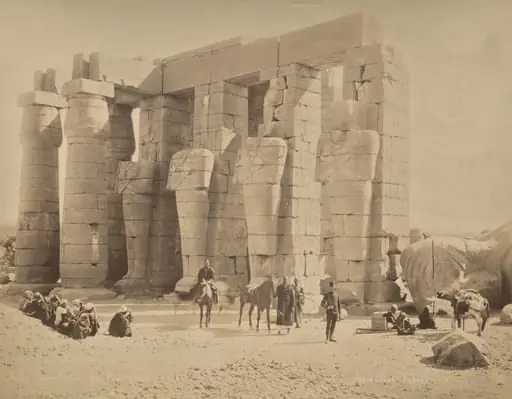 Les cariatides du Ramesseum 134
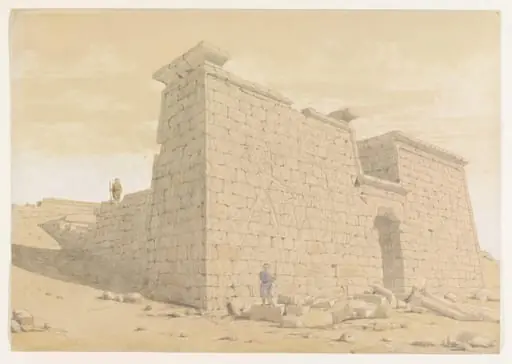 Temple of Sabooa - Nubia
 Principal range of tombs