Artwork
Morris/Fruit, Rodchenko/Triple Peaks
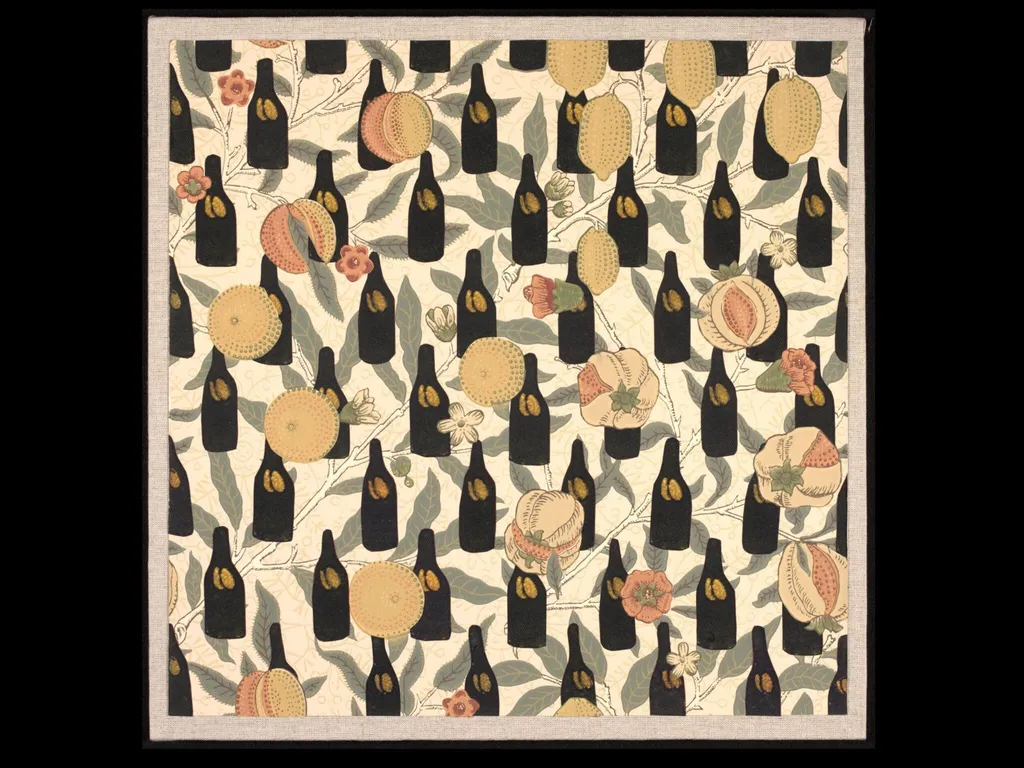
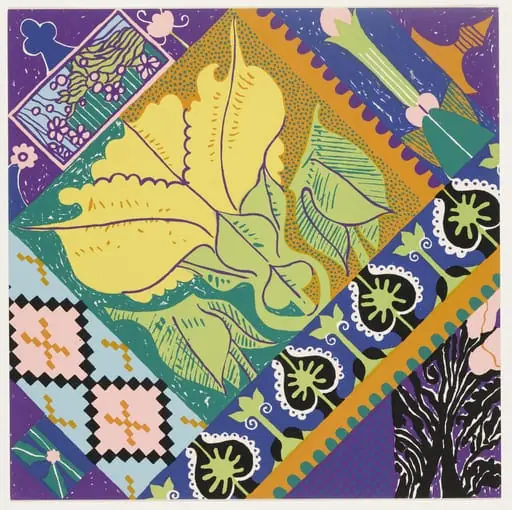
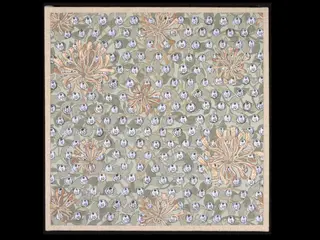
Morris/Fruit, Rodchenko/Triple Peaks is a print by David Mabb. It dates from 2006 and is held in the collection of the Victoria and Albert Museum.
About this work
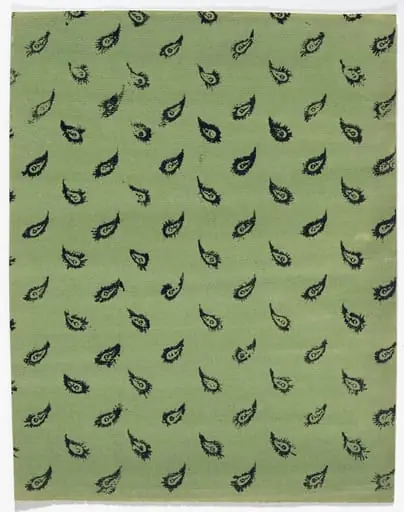
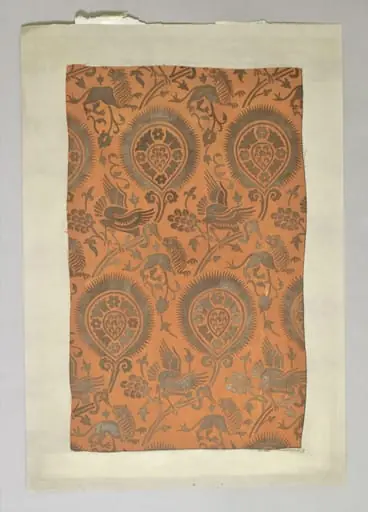
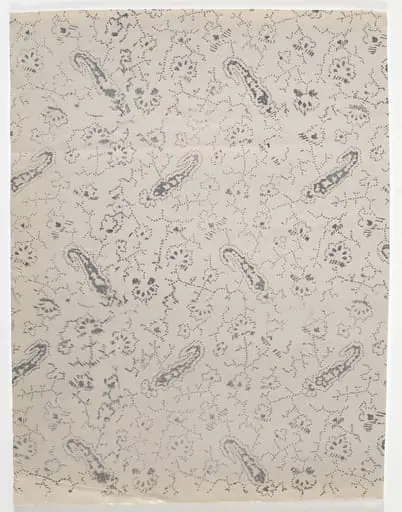
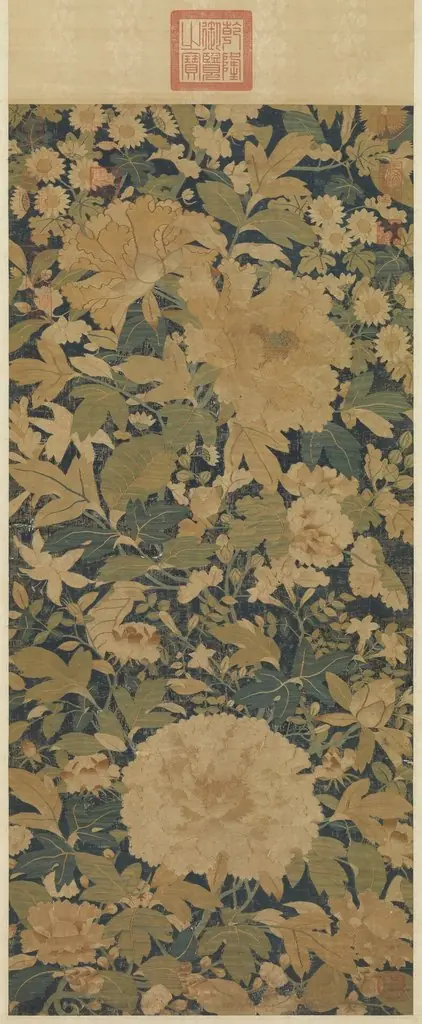
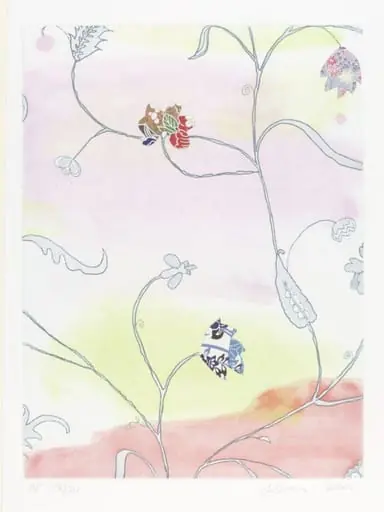
David Mabb made a print in 2006 using Morris fabrics as the background. The flowers you see are bold and colorful against that patterned cloth.
He took Morris’s designs and mixed them with images by another Socialist artist. It’s a quiet argument between two people who liked the same politics but ended up making very different art.
Look up the Victoria and Albert Museum next.
Overview
David Mabb’s 2006 print combines William Morris’s historic textile patterns with graphic elements from Alexander Rodchenko’s Constructivist designs.
David Mabb’s 2006 print combines William Morris’s historic textile patterns with graphic elements from Alexander Rodchenko’s Constructivist designs. The work emerges from a sustained inquiry into how socialist ideals shaped artistic production in different historical contexts. By layering Morris’s ornate floral motifs over Rodchenko’s geometric, industrial forms, Mabb creates a visual dialogue between two divergent approaches to art and social change.
Subject & Meaning
The piece juxtaposes Morris’s romanticized natural patterns with Rodchenko’s utilitarian, machine-age imagery. Both artists identified as socialists, yet their methods diverged: Morris idealized handcraft as a moral alternative to industrialization, while Rodchenko embraced mass production as a tool for egalitarian design. Mabb’s collage exposes this tension, suggesting that shared political goals can yield radically different aesthetic outcomes.
Technique & Style
Mabb employs a printed collage technique, overlaying photographic reproductions of Rodchenko’s abstract motifs, such as bottles and coins, onto actual Morris fabric. The hand-printed textures of the 19th-century wallpaper contrast with the sharp, linear forms of the 20th-century Soviet graphics. This material hybridity underscores the conflict between artisanal tradition and industrial modernity, rendered in a single, static composition.
History & Provenance
The work draws from Morris’s 19th-century textile archives and Rodchenko’s 1920s designs for Soviet state factories. Mabb sourced these materials through institutional collections and published reproductions, avoiding direct appropriation. The print belongs to a broader series initiated in the early 2000s, reflecting Mabb’s interest in recontextualizing historical design within contemporary critical frameworks.
Context
In early 20th-century Russia, Constructivists like Rodchenko sought to dissolve the boundary between art and daily life through functional design. Meanwhile, Morris’s Arts and Crafts movement resisted industrialization, advocating for beauty in handmade objects, even as those objects became symbols of elite taste. Mabb’s work situates these opposing visions within a shared socialist lineage, revealing how ideology can be expressed through conflicting material practices.
Legacy
The print contributes to ongoing discussions about the political potential of design, questioning whether beauty must be exclusive or can be democratized. By placing Morris and Rodchenko in dialogue, Mabb invites reflection on the limits of artistic reformism. The work does not resolve their contradictions but preserves them as a record of unresolved historical tensions in the relationship between art, labor, and class.
Artist & collection
Artist
David Mabb has a habit of crashing art history parties uninvited. He rips apart old paintings and wallpapers by hand, then slaps in bits from Soviet propaganda posters and Morris & Co. textiles. The result looks like a…