Artwork
Mauregato
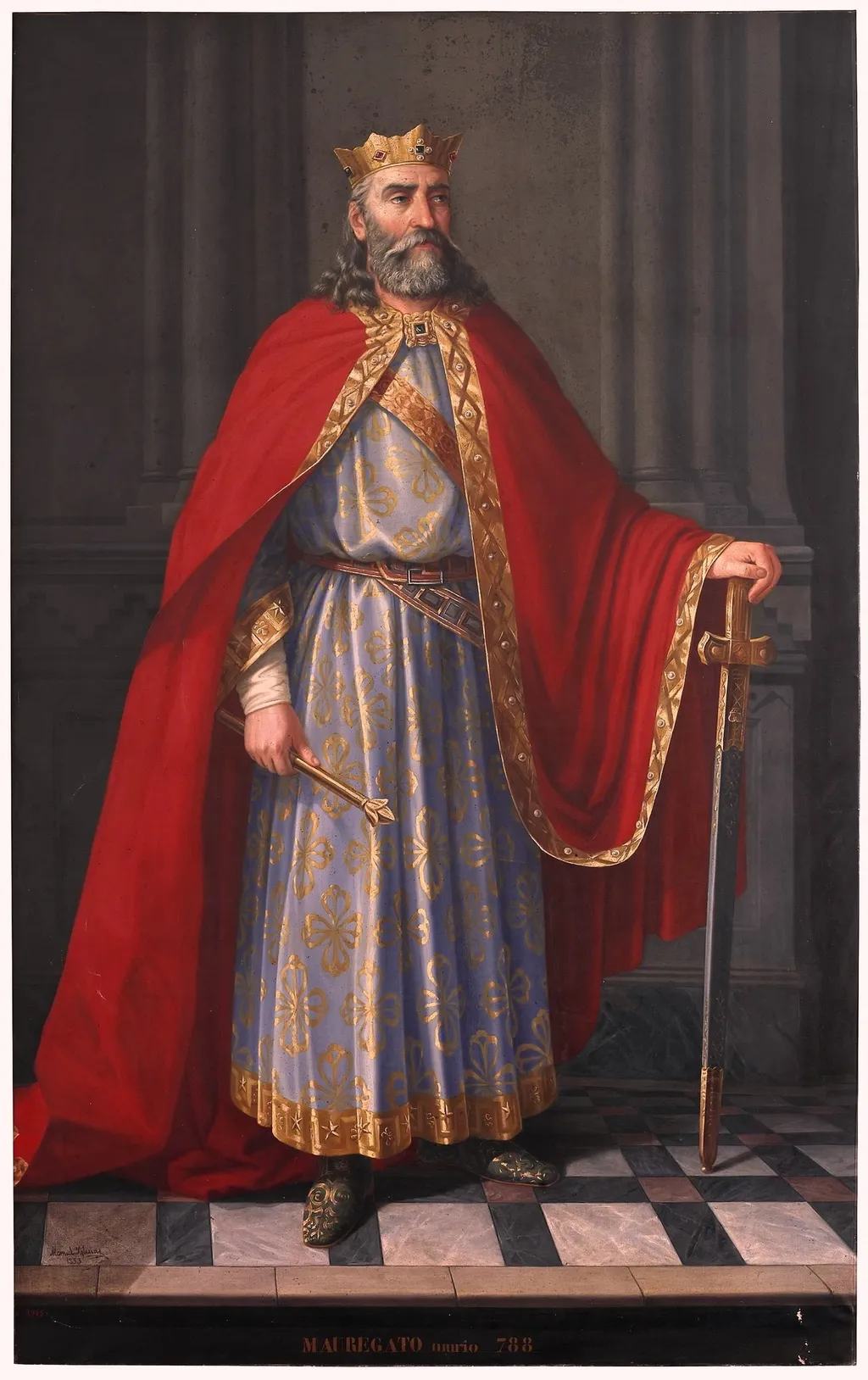
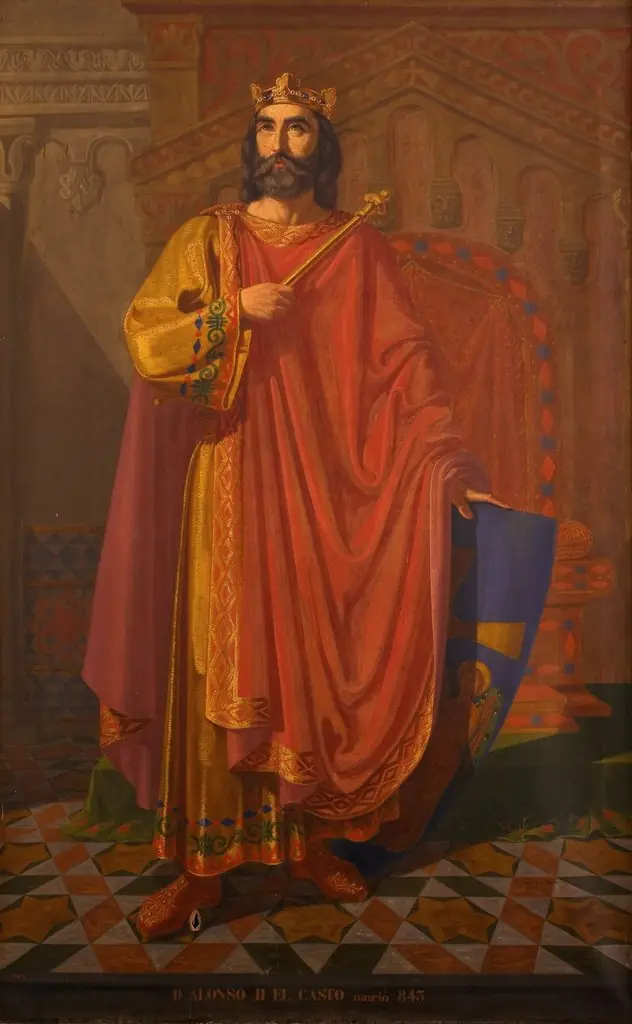
Mauregato is an oil painting by the Realist artist Manuel Iglesias y Domínguez. It dates from 1853 and is held in the collection of the Museo del Prado.
About this work
Subject & Meaning
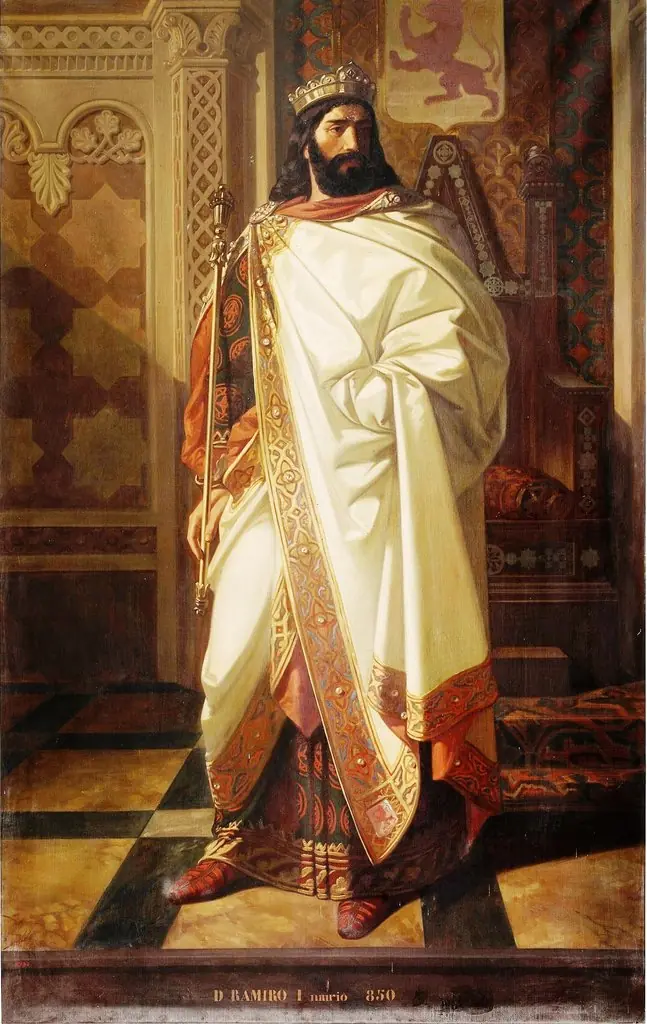
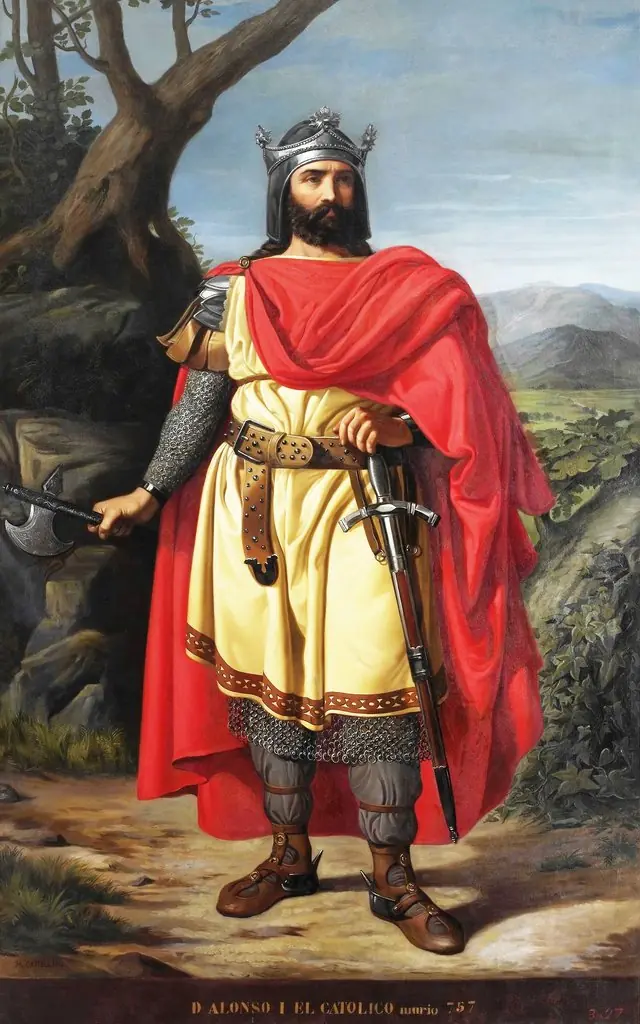
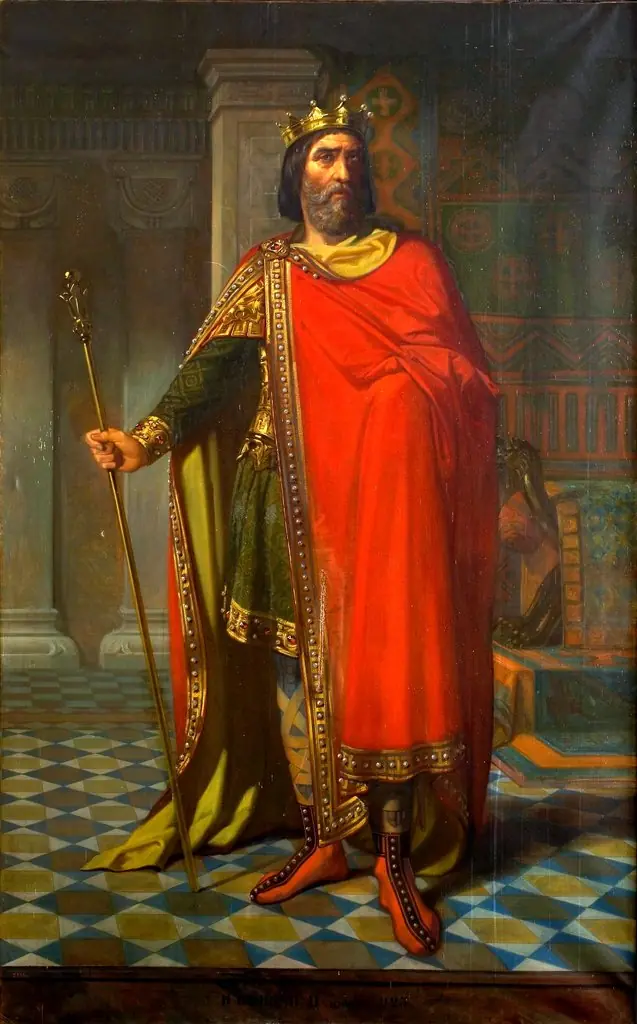
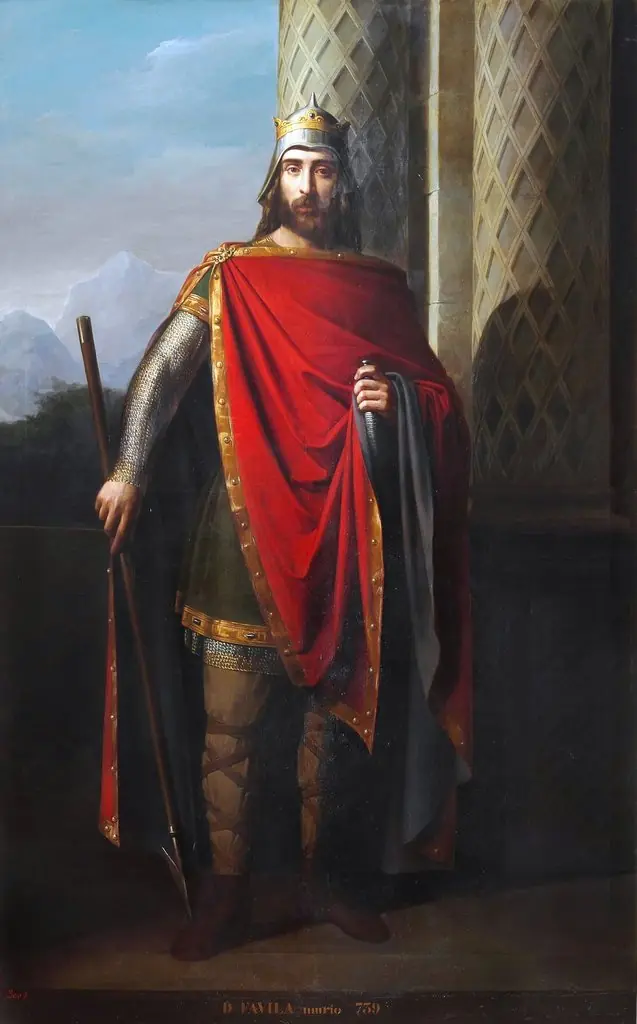
The composition centers on the figure of the monarch, who is shown bearing the regalia of his office: a crown, a sceptre, and a sword.
Mauregato is a 1853 oil painting by Manuel Iglesias y Domínguez depicting the Asturian king of the same name. The composition centers on the figure of the monarch, who is shown bearing the regalia of his office: a crown, a sceptre, and a sword. These three objects, the crown, sceptre, and sword, function together as the conventional iconography of sovereignty, signaling royal authority and the legitimate exercise of power.
The sword additionally alludes to the martial character of the reign, while the crown and sceptre together mark the subject's status as a crowned ruler rather than a mere chieftain. Through this concentrated arrangement of royal attributes, the work presents Mauregato as a legitimate king of Asturias, distilling his historical identity into the traditional emblems of monarchy.
Technique & Style
Mauregato is an oil painting executed on a canvas support by Manuel Iglesias y Domínguez in 1853. The work measures 224 cm in height and 140 cm in width. Visually, the composition depicts regalia including a sword, a sceptre, and a crown. The painting is currently held in the collection of the Museo del Prado.
History & Provenance
The painting Mauregato was created in 1853 by the Spanish artist Manuel Iglesias y Domínguez. Executed in oil on canvas, the work measures 224 cm in height and 140 cm in width. The piece depicts royal regalia, specifically a sword, sceptre, and crown.
It is currently held in the collection of the Museo del Prado in Madrid, where it remains part of the institution's holdings.
Overview
Mauregato is an oil on canvas executed in 1853 by the Spanish painter Manuel Iglesias y Domínguez. The work is part of the collection of the Museo del Prado, where it is displayed among the museum’s 19th‑century holdings. The composition centers on a solitary figure dressed in regal attire, set against a muted, dark backdrop that emphasizes his presence.
Context
Created during a period when Spanish artists often revisited historical and legendary subjects, the painting reflects contemporary interest in national identity and mythic pasts. The title references the legendary King Mauregato of Asturias, a figure associated with medieval Iberian lore, linking the work to broader 19th‑century Romantic fascination with heroic narratives.
Own this work as a print
Artist & collection
Artist
Manuel Iglesias y Domínguez painted scenes from Spain’s past in the mid-1800s. He worked in oils, often showing figures from medieval history. One of his works here, Wittiza, visigothic's king, shows that Visigoth ruler…