Artwork
Untitled
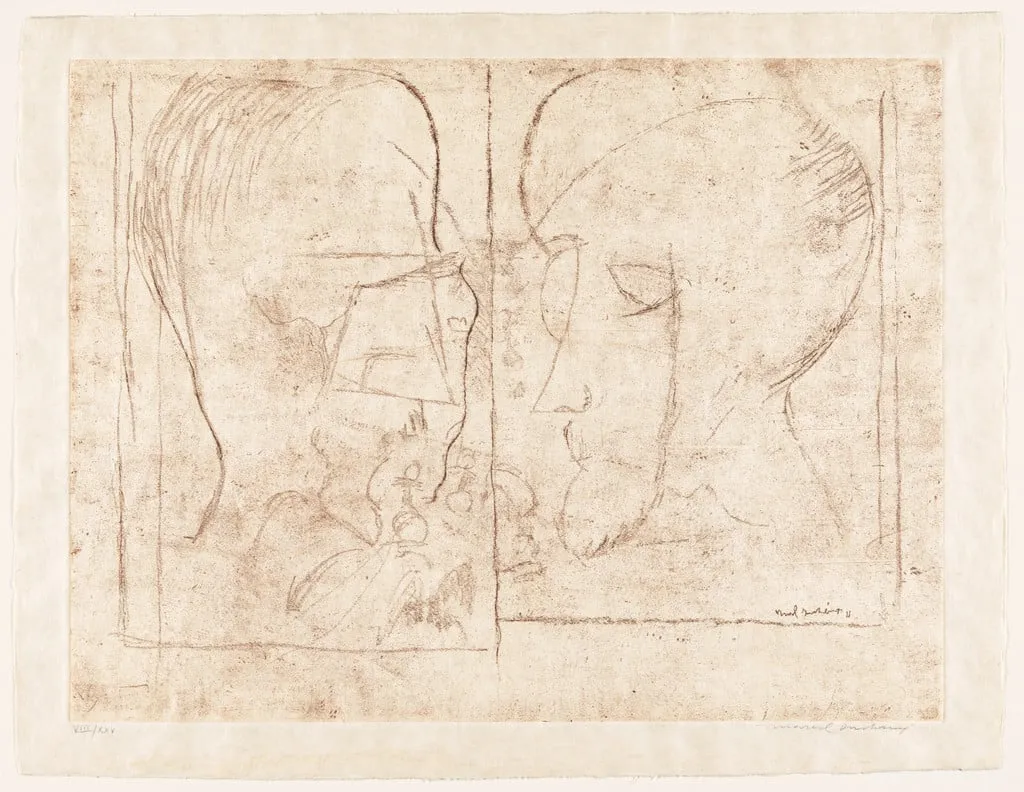
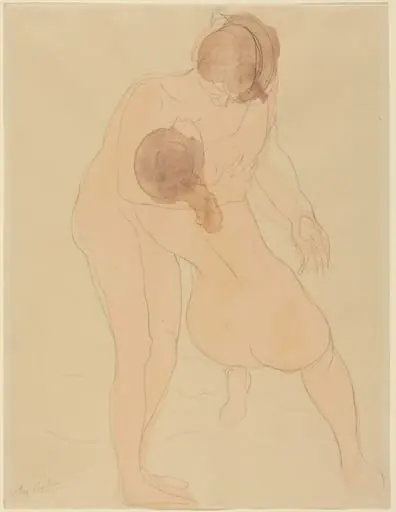
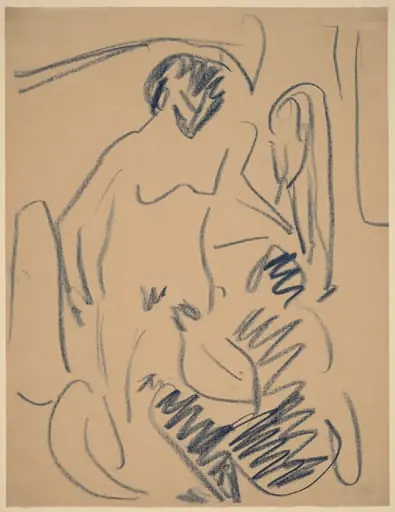
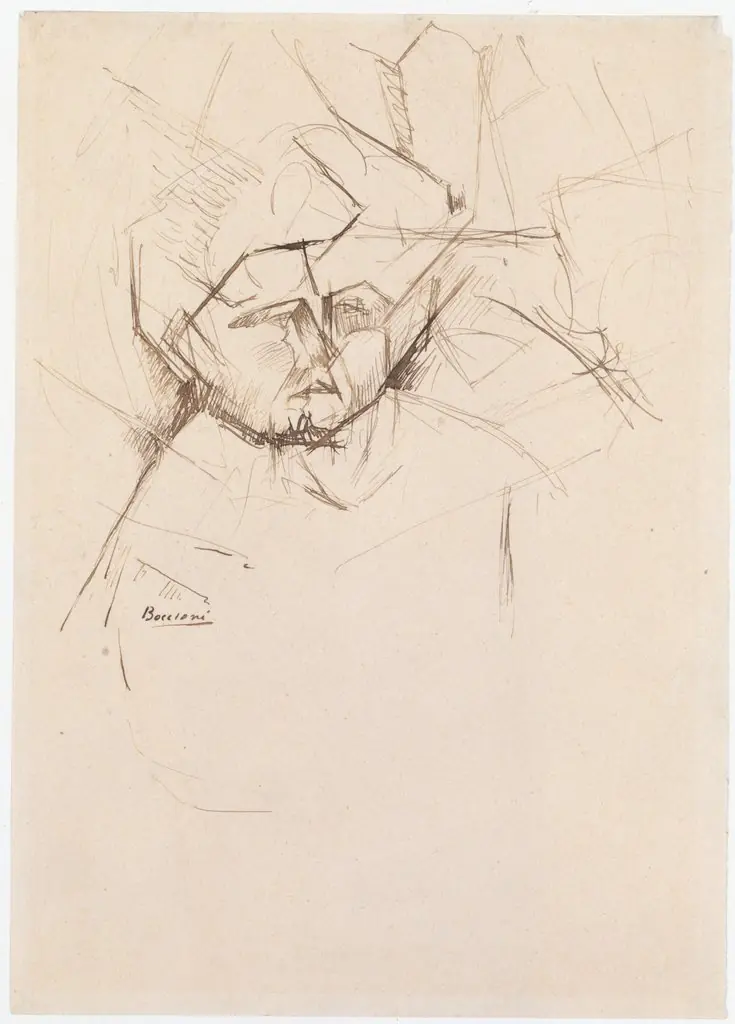
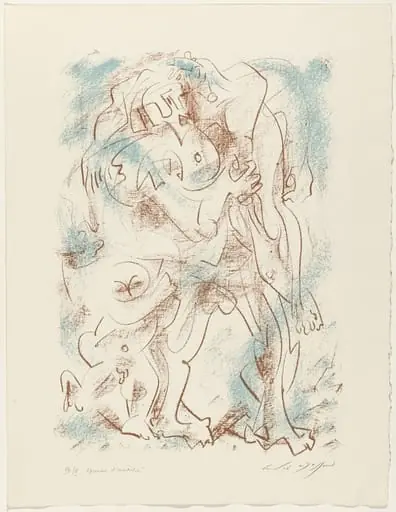
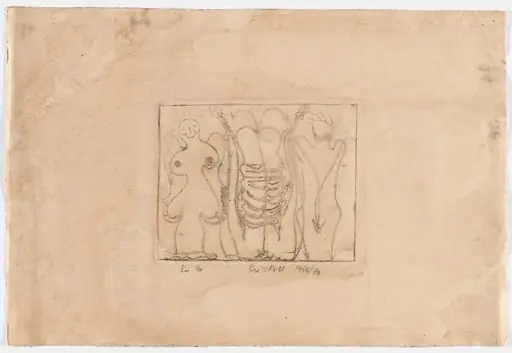
Untitled is an ink print by Marcel Duchamp. It dates from 1966 and is held in the collection of the Museum of Modern Art.
About this work
Overview
This work is one of several etchings from this period, reflecting his ongoing engagement with visual language beyond the shock tactics of his earlier career.
Marcel Duchamp produced this etching in 1966, toward the end of his life in New York, where he had resided since the 1910s. Though best known for his readymades and conceptual innovations, Duchamp returned to printmaking in his later years with quiet persistence. This work is one of several etchings from this period, reflecting his ongoing engagement with visual language beyond the shock tactics of his earlier career.
Subject & Meaning
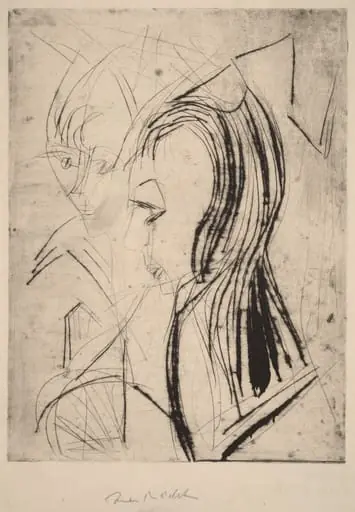
Two profile faces, oriented in opposite directions, appear side by side on the page. Their minimal rendering—simple contours without features—avoids narrative specificity. The symmetry and opposition suggest duality: introspection and exteriority, self and other. The absence of detail invites viewers to project meaning, aligning with Duchamp’s broader interest in ambiguity and the viewer’s role in completing the work.
Technique & Style
Executed in fine-line etching, the work employs restrained ink lines on a pale ground, emphasizing subtlety over drama. The technique favors economy: no shading, no texture, no background detail beyond the paper’s natural tone. This restraint echoes Duchamp’s preference for intellectual clarity over emotional expression, reducing form to its essential outlines while preserving a sense of quiet presence.
History & Provenance
Created in 1966, this etching belongs to a small group of prints Duchamp made during his final decade, largely for private circulation or limited editions. Unlike his earlier provocative works, these prints were not intended for public spectacle. They were often gifted to friends or collected by institutions with longstanding ties to his practice, reflecting his withdrawal from the art world’s commercial currents.
Context
In the 1960s, Duchamp was revered as a foundational figure in modern art, yet he largely avoided public engagement. This etching emerged amid renewed interest in his earlier work, particularly as younger artists embraced conceptual approaches. His return to printmaking was not a revival but a continuation—a quiet, personal exploration of line and form, separate from the movements he had influenced.
Legacy
This etching, like others from Duchamp’s late period, underscores his lifelong commitment to reducing art to its conceptual core. Its simplicity resonates with later minimalist and conceptual practices, not through imitation but through precedent. It stands as a quiet testament to an artist who, even in retirement, continued to question how meaning is formed—not through spectacle, but through suggestion.
Artist & collection
Artist
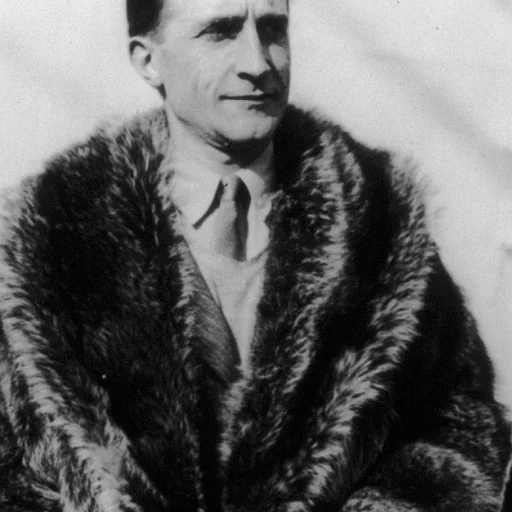
Henri-Robert-Marcel Duchamp (UK: , US: ; French: ; 28 July 1887 – 2 October 1968) was a French American artist, chess player, and inventor who played a key role in the development of the avant-garde in the United States…